
You can’t always rely on a fire extinguisher to beat every fire. Some fires, like large kitchen grease blazes, need specialized Class K extinguishers or fire blankets that smother flames without harmful chemicals.
Bigger or multipurpose extinguishers cover more scenarios, but quick evacuation is crucial when fires spread or produce toxic smoke. Proper certification and maintenance also guarantee your extinguisher won’t fail when needed.
Understanding these limits and alternatives will boost your fire safety knowledge.
Key Takeaways
- Fire blankets can beat extinguishers by quickly smothering small grease fires without residue or chemical damage.
- Evacuating and calling emergency services beats extinguishers when fires are uncontrollable or smoke is toxic.
- Specialized Class K extinguishers outperform standard units on kitchen grease fires involving animal fats and oils.
- Proper certification, maintenance, and inspection make extinguishers reliable; lack thereof can cause failure in emergencies.
- Household items like vinegar or baking soda can beat extinguishers only on small, contained grease fires when used promptly.
Limits of Fire Extinguishers You Should Know
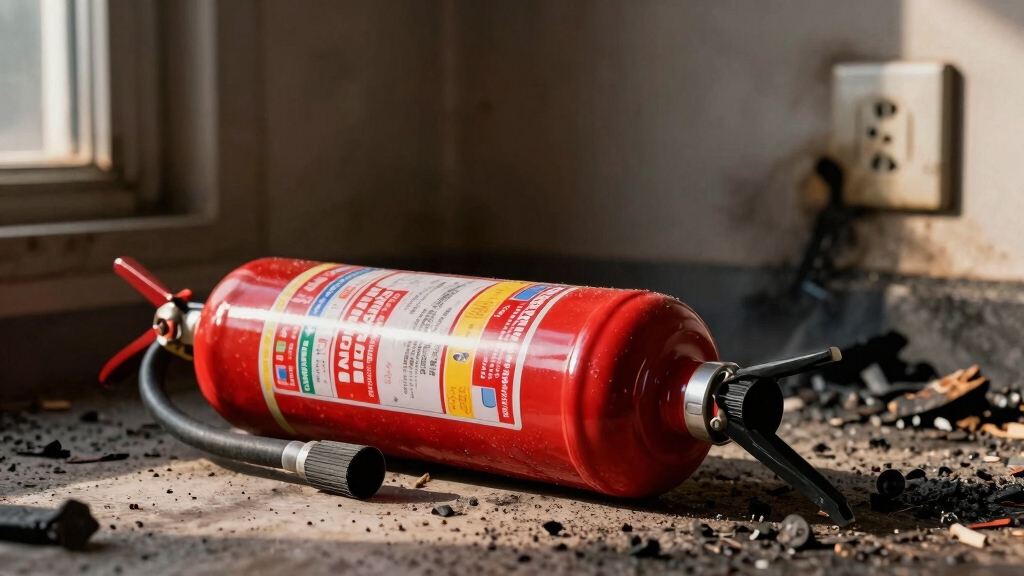
Although fire extinguishers are essential safety tools, you need to understand their limitations to use them effectively.
For example, Class K extinguishers, designed for animal fats and grease, won’t stop flaming motor oil or gasoline fires.
While a B-rated extinguisher can handle small Class K fires, the reverse isn’t true.
Single-purpose extinguishers may fail if the fire class changes or mixes, so relying solely on one type risks inadequate suppression.
Also, using a Class A extinguisher on Class B or C fires without proper certification is ineffective and dangerous.
To guarantee safety, choose extinguishers rated for the specific fire classes you expect to encounter.
Recognize that no extinguisher covers every fire scenario perfectly.
For high-risk flammable liquid and electrical fires, specialized agents like Purple K fire extinguishers provide superior suppression performance and reduced re-ignition risk.
Why Bigger or Multipurpose Extinguishers Improve Safety?
When it comes to safety, opting for bigger or multipurpose extinguishers is definitely a smart move. These extinguishers can handle multiple fire classes effectively, which means you’re better equipped to tackle different types of fires without having to switch devices.
Plus, if you go for the largest extinguisher that you can comfortably manage, you’re really setting yourself up for success. It ensures that you’re prepared for fires that might grow beyond those small, initial sizes. So, in short, having the right tools on hand can make all the difference in an emergency! Regular inspection and maintenance of your extinguisher are essential to ensure continued effectiveness and reliability.
Enhanced Fire Coverage
Choosing a larger or multipurpose fire extinguisher greatly enhances your ability to control unexpected fires effectively.
Bigger extinguishers hold more extinguishing agent and maintain higher pressure, allowing you to tackle larger or rapidly spreading flames.
Multipurpose units cover various fire types, reducing the risk of ineffective suppression when fires involve mixed materials.
This versatility means you’re prepared for diverse scenarios without switching devices, saving critical time.
Additionally, a bigger extinguisher’s extended discharge duration increases your chances of fully extinguishing a fire before it grows uncontrollable.
By selecting an extinguisher that combines size and multipurpose capabilities, you guarantee thorough fire coverage, maximize safety, and improve your response effectiveness during emergencies.
This approach is essential for protecting your home or workplace reliably.
Moreover, ABC fire extinguishers use a monoammonium phosphate based dry chemical that effectively suppresses multiple fire classes, enhancing overall fire safety.
Versatile Fire Class Ratings
Expanding fire coverage isn’t just about size. It also hinges on the extinguisher’s ability to handle multiple fire classes effectively.
When you choose a multipurpose extinguisher like an ABC-rated model, you’re prepared for diverse fire types: ordinary combustibles, flammable liquids, and electrical fires.
Relying on single-class extinguishers can leave you vulnerable if the fire involves mixed materials or unexpected fuel sources.
For instance, a Class K extinguisher designed for animal fats won’t tackle gasoline fires, but a B-rated extinguisher can manage small Class K fires.
Selecting the right extinguisher involves understanding how different types target specific elements of the fire triangle, such as interrupting chemical reactions, to maximize effectiveness.
Optimal Size Handling
Handling a fire extinguisher that’s too small for the blaze can quickly turn a manageable situation into a dangerous one. You need an extinguisher sized for potential fire magnitudes you may face.
Bigger or multipurpose extinguishers increase your safety margin by offering longer discharge time and broader compatibility. Choose the largest unit you can comfortably handle to maximize effectiveness without sacrificing control.
| Extinguisher Size | Benefit |
|---|---|
| Small | Easy to handle, limited capacity |
| Medium | Balanced size and capacity |
| Large | Extended discharge, multipurpose |
Multipurpose units cover multiple fire classes, preventing failure if the fire type changes or mixes. Proper pressure and recent manufacture dates also guarantee reliable operation.
For outdoor storage, using extinguishers designed with composite materials can improve durability and performance under varying environmental conditions.
When Fire Blankets Work Better Than Extinguishers?
Fire blankets are fantastic for tackling small grease fires. They work by cutting off the oxygen supply quickly and safely, which is crucial in those situations. Plus, they’re pretty handy when it comes to dealing with irregular fire shapes.
Unlike extinguishers, which need a direct aim and a bit of distance, fire blankets can easily cover the flames. Their residue-free approach also means they won’t damage delicate appliances or leave harmful chemicals behind.
Smothering Small Grease Fires
When dealing with small grease fires, using a fire blanket can often be more effective than a fire extinguisher. Fire blankets smother the flames by cutting off oxygen, which halts combustion quickly without spreading the fire.
You should:
- Carefully place the fire blanket over the entire burning area to ensure no oxygen reaches the flames.
- Leave the blanket in place until the fire cools to prevent re-ignition.
- Avoid using water or standard extinguishers, which can cause grease fires to flare up dangerously.
Fire blankets provide a safer, chemical-free alternative for small, contained grease fires, especially when you act swiftly. Keep in mind that for larger fires, it is crucial to evacuate and call 911 immediately to ensure safety.
Handling Irregular Fire Shapes
Irregularly shaped fires can pose a unique challenge because fire blankets often conform more easily to uneven surfaces than extinguishers can.
When flames wrap around odd shapes or multiple objects, extinguishers may struggle to deliver suppressant evenly. This reduces effectiveness.
Fire blankets work by smothering fires, cutting off oxygen directly, which proves advantageous for irregular forms.
You can quickly cover complex surfaces, guaranteeing no gaps allow oxygen in.
However, blankets are limited by size; larger fires or those in hard-to-reach areas may require extinguishers.
Remember, fire blankets excel when fires are small and localized.
Make sure you use the right tool for the fire’s shape and size to maximize safety and suppression success.
Always prioritize evacuation if the fire spreads beyond control.
For kitchen fires involving cooking oils and fats, specialized Class K extinguishers are often necessary for effective suppression.
When Household Items Can Help Fight Fires?
In cases of small grease fires, certain common household items can serve as effective fire suppressants, supplementing or even replacing traditional extinguishers. You can use these materials safely if you act quickly and understand their limitations:
- Vinegar – It suppresses Class F grease fires by disrupting combustion more effectively than water.
- Baking soda – This releases carbon dioxide when heated, smothering the flames and cutting oxygen supply.
- Dish soap foam – Applying it creates a barrier over the fire, reducing oxygen contact and slowing spread.
These items work best on contained, small fires. Never use water or inappropriate substances on grease fires, as they can cause flare-ups. Keep these alternatives in mind, but always prioritize safety and call professionals if the fire grows. For larger or uncontrollable fires, using a Class K extinguisher is the safest and most effective method.
When to Evacuate Instead of Using Fire Extinguishers?
If a fire grows beyond a small, contained area or produces toxic smoke, you must evacuate immediately rather than attempting to use a fire extinguisher.
Your safety depends on recognizing when a fire is uncontrollable or when escape routes are compromised. Never risk inhaling smoke or getting trapped.
Use extinguishers only on small, manageable fires.
Quick application of fire suppression methods increases effectiveness, but only when the fire is still controllable.
| Situation | Action | Reason |
|---|---|---|
| Fire spreads rapidly | Evacuate | Fire too large for extinguisher |
| Toxic smoke present | Evacuate | Smoke inhalation risk |
| No clear escape path | Evacuate | Safe exit is critical |
| Fire confined & manageable | Use extinguisher | Fire can be safely controlled |
Always prioritize evacuation and call emergency services when in doubt.
How Certification and Maintenance Affect Extinguisher Reliability?
Because fire extinguishers must perform flawlessly during emergencies, proper certification and regular maintenance are critical to their reliability. You need to make certain your extinguisher is certified by recognized labs like UL Solutions or FM Approvals. Without certification, you can’t trust its performance or safety.
Proper certification and regular maintenance ensure your fire extinguisher performs reliably when it matters most.
Maintenance keeps your extinguisher ready to use. You should:
- Inspect it every 30 days to confirm it’s fully charged and intact.
- Mount it 3.5 to 5 feet high, ensuring visibility and preventing tampering.
- Perform required maintenance like monthly shaking or pressure testing to avoid mechanical failure.
Neglecting these steps risks malfunction during a fire, putting you and others in danger. Stay vigilant; certification and upkeep are your extinguisher’s lifelines.
Frequently Asked Questions
How Do I Properly Dispose of an Old Fire Extinguisher?
To properly dispose of an old fire extinguisher, first check if it’s fully empty by carefully discharging it outdoors.
Never throw it in regular trash. Contact your local fire department, hazardous waste facility, or recycling center for disposal instructions.
Many areas have specific drop-off locations or events for hazardous materials. If it’s rechargeable, take it to a certified service dealer for maintenance or safe disposal.
Always follow local regulations to guarantee safe handling.
Can Fire Extinguishers Be Used on Electrical Vehicle Fires?
Yes, you can use certain fire extinguishers on electrical vehicle fires, but only those rated for Class C or multipurpose ABC extinguishers.
These handle electrical fires safely by cutting off oxygen without conducting electricity.
Avoid using water or Class K extinguishers, as they’re ineffective or dangerous.
Always make sure the fire is small and you have a clear escape route.
For larger EV fires, evacuate and call professionals immediately.
What Are the Most Common Mistakes When Using a Fire Extinguisher?
Using a fire extinguisher isn’t like waving a magic wand. It demands precision. The most common mistakes you make include aiming too close or far from the fire, using the wrong extinguisher class, or failing to check pressure beforehand.
You might also forget to pull the pin fully or spray too short a burst. Remember, if the fire grows beyond control or toxic smoke appears, your best move is to evacuate and call 911 immediately.
How Long Does It Take to Recharge a Fire Extinguisher?
Recharging a fire extinguisher typically takes about 30 minutes to an hour, depending on the type and service provider.
You’ll need to take it to a certified technician who’ll inspect, refill, and test it to make certain it’s fully operational.
Remember, recharging must follow manufacturer guidelines and certification standards to maintain safety and functionality.
Don’t attempt to recharge it yourself; improper handling compromises effectiveness and could risk your safety.
Are There Smart Fire Extinguishers With Alert Systems?
Yes, smart fire extinguishers with alert systems do exist. They monitor pressure levels and readiness, sending notifications to your phone or a central system when maintenance or replacement is needed.
These devices help guarantee your extinguisher is always functional.
You’ll find models that integrate with home security systems, providing real-time alerts during emergencies.
Investing in one boosts safety by combining traditional fire suppression with modern technology for peace of mind.
Know When to Use a Fire Extinguisher Safely
Think of a fire extinguisher as your trusty shield in battle. It’s effective but not invincible.
Sometimes, you’ll need a bigger shield or a different weapon like a fire blanket. You may even need to retreat for safety.
Knowing when to fight, when to switch tactics, and when to evacuate keeps you in control.
Keep your tools certified and well-maintained. When flames threaten, you’re always ready to protect yourself and your home wisely.