
To feel safe in your home, secure all doors, windows, and secondary entrances with sturdy locks and deadbolts. Keep garage and shed access locked.
Install visible cameras and alarm signage to deter intruders. Position motion-sensing lights to eliminate hiding spots around your property.
Protect valuables in lockable safes and secure outdoor tools to avoid aiding burglars. Maintain daily security habits and foster neighborhood watch efforts.
It all creates a strong defense you can build on for lasting peace of mind.
Key Takeaways
- Secure all doors and windows with sturdy locks and reinforce entry points to prevent forced access.
- Install a monitored home security system with visible cameras and signage to deter intruders and provide real-time alerts.
- Use motion-sensor lighting around entrances and dark areas to eliminate hiding spots and enhance nighttime visibility.
- Regularly inspect and maintain all security features, including locks, cameras, and lighting, to ensure consistent protection.
- Avoid hiding spare keys in obvious places; use locked boxes or trusted neighbors to control access.
Secure Doors and Windows to Prevent Burglaries
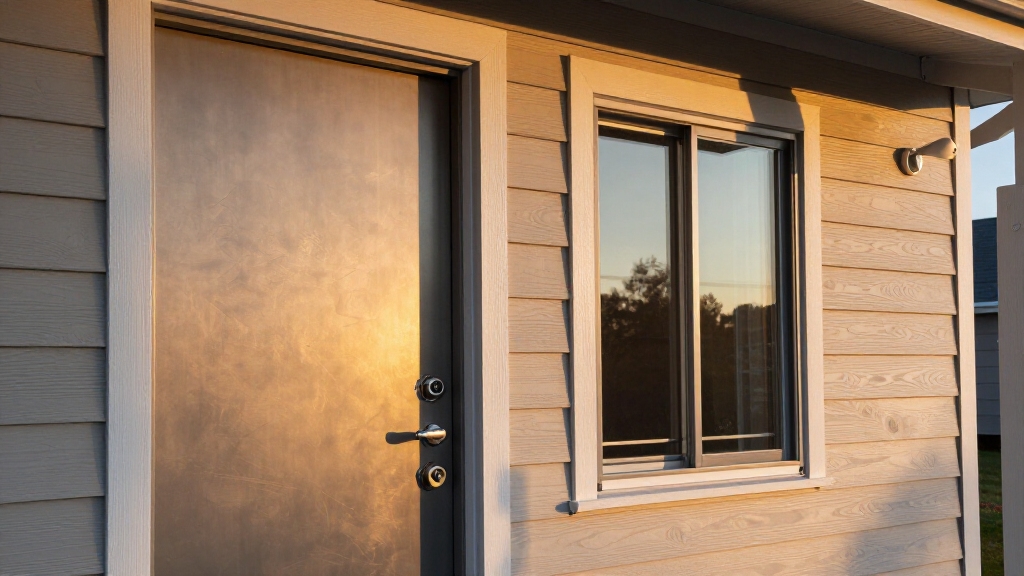
Start by securing all doors and windows, since unlatched entry points remain one of the most common ways burglars gain access to homes.
Always secure doors and windows first, as unlocked entry points are a primary way burglars enter homes.
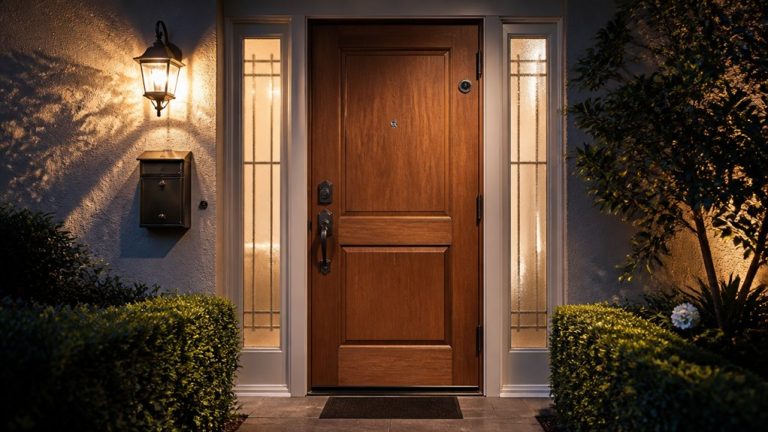
You should install solid wood or metal exterior doors to resist forced entry effectively. Fit deadbolt locks on both front and back doors to add an extra layer of security.
For sliding glass doors, consider safety glass and use blocking bars to prevent lifting or sliding. Always check that every window is fully closed and locked before leaving or going to bed.
Remember, unsecured or weak entry points invite burglars, so make it your routine to inspect and reinforce these access points daily.
This practical, hands-on approach markedly reduces your risk of unlawful entry and boosts your home’s overall safety.
Consider installing doors with reinforced core materials to enhance resistance against forced entry and improve durability.
Lock Garage, Sheds, and Side Entrances Consistently
Consistently locking your garage, sheds, and side entrances is essential to prevent burglars from exploiting these often-overlooked access points.
These entryways are frequent targets because they’re less visible and may have weaker locks.
Make sure you:
Use sturdy locks, such as deadbolts or heavy-duty padlocks, on all exterior doors.
Check locks regularly for wear or damage and replace them promptly.
Keep all doors closed and locked, even if you’re just stepping outside briefly.
Secure tools and ladders stored in sheds or garages to avoid providing burglars assistance.
Consider reinforcing door frames and strike plates with tamper-resistant fasteners to improve overall security.
Use Visible Deterrents Like Alarms and Cameras
And then there are security cameras. Not only do they record any suspicious activity, but they also act as a great deterrent. Just the sight of them can make a would-be burglar think twice about approaching your property.
Don’t forget about motion-sensor lighting, either! Installing these around entry points can eliminate hiding spots for intruders and really boost your home’s security. It’s all about making your home less appealing to those with bad intentions.
For best results, be sure to place cameras at all primary entry points and cover the perimeter with motion-activated cameras to minimize blind spots and maximize security coverage.
Alarm Signs Effectiveness
Although no security measure guarantees complete protection, using visible deterrents like alarm signs and cameras markedly lowers the chances of your home being targeted.
Burglars often avoid homes that signal active security systems, as the risk of detection increases. To maximize their effectiveness, place alarm signs and stickers in clear, prominent locations around your property.
Combine these with other visible deterrents to create a layered defense that discourages intruders before they attempt entry.
Consider these practical steps:
- Install alarm signs at all main entrances and near windows.
- Use bright, noticeable signage that indicates monitored security.
- Position signs where they’re easily visible from the street.
- Pair signs with other deterrents like motion lights to enhance impact.
This strategic visibility helps protect your home by deterring potential burglars early. Studies show that visible cameras deter about 60% of burglars by increasing their perceived risk of identification.
Security Cameras Benefits
Building on the effectiveness of alarm signs, security cameras offer an additional layer of protection by providing continuous surveillance and recording potential threats.
You can monitor your property in real time, deterring burglars who avoid homes with visible cameras.
Strategically placing cameras near entrances, windows, and blind spots maximizes coverage and reduces hiding places.
High-resolution cameras capture clear images, which can be essential for identifying intruders or suspicious activity.
Many systems allow remote access via smartphones, letting you check your home anytime.
Make sure to use visible cameras as a deterrent, combined with signage to warn intruders.
This practical approach not only discourages break-ins but also supplies valuable evidence if a crime occurs, enhancing your overall home security strategy effectively.
To optimize storage and extend footage retention, consider using motion-activated recording which captures video only when movement is detected.
Motion-Sensor Lighting
Motion-sensor lighting shines a powerful spotlight on your home’s vulnerable areas, cutting down on the shadows where intruders like to lurk.
By activating lights only when motion is detected, you startle potential burglars and draw attention quickly. This visible deterrent makes your home less attractive to criminals and complements other security measures.
To maximize effectiveness, consider these key points:
Position lights near entrances, pathways, and dark corners.
Use bright, wide-coverage bulbs to eliminate hiding spots.
Regularly test sensors to guarantee reliable activation.
Combine with alarms or cameras for layered security.
Motion-sensor lighting not only improves your home’s visibility but also signals that you’re vigilant. This discourages break-ins before they happen.
For best results, angle cameras and lighting to avoid lens washout caused by direct artificial light or sunlight.
Install Motion-Sensing Lights to Eliminate Hiding Spots
Want to make your home safer? One effective way is to install motion-sensing lights in crucial areas like entrances, pathways, and those pesky dark corners. These lights only turn on when they detect movement, which not only saves energy but also has the added benefit of surprising any would-be intruders. For even greater convenience and energy efficiency, consider integrating them with photocell sensors that automatically activate at dusk and deactivate at dawn.
Benefits of Motion Sensors
Lighting up your property with motion-sensing lights can drastically reduce the chances of intruders slipping in unnoticed. These sensors activate lights only when movement is detected, which startles potential burglars and draws immediate attention to their presence.
You’ll save energy compared to leaving lights on all night while maintaining effective surveillance.
Motion sensors offer practical benefits you can rely on:
- Deter criminals by eliminating dark hiding spots near entrances and windows
- Enhance your home’s visibility without wasting electricity
- Provide early warning by alerting you to unexpected activity
- Complement other security measures, increasing overall protection
Installing motion-sensing lights is a straightforward, cost-effective way to strengthen your home’s defenses and keep your family safe. Combining them with infrared night vision cameras can further improve low-light security and ensure clear monitoring during nighttime.
Ideal Light Placement
Position your motion-sensing lights strategically around entry points and vulnerable areas to maximize their effectiveness.
Focus on doors, windows, garages, and side entrances where intruders might attempt access.
Mount lights at heights that cover wide angles without creating blind spots or glare.
Ensure overlapping coverage between lights to eliminate shadows where someone could hide.
Avoid placing lights too close to bushes or fences, which can obstruct sensors or provide cover.
Use adjustable settings to control sensitivity, preventing false alarms triggered by small animals or passing cars.
Regularly test and maintain the lights to confirm they respond promptly in all conditions.
For optimal security, combine motion-sensing lights with camera placement strategies to cover all critical access points effectively.
Enhancing Nighttime Visibility
Consistently installing motion-sensing lights around your home markedly reduces potential hiding spots for intruders during nighttime hours.
These lights activate only when movement is detected, startling anyone near entry points and exposing dark areas that burglars exploit.
To maximize effectiveness, place motion sensors near doors, windows, garages, and pathways.
Consider the following practical tips:
Position lights to cover all vulnerable angles without creating blind spots. Use bright, energy-efficient bulbs to guarantee clear visibility. Regularly test sensors and replace batteries or bulbs promptly.
Combine motion-sensing lights with other deterrents like cameras for layered protection. Mounting outdoor cameras 8–10 feet high with a slight downward angle can further improve nighttime visibility and security.
Make Your Home Look Occupied When You’re Away
Often, burglars target homes during daytime hours when they assume no one is there, typically between 9 a.m. and 3 p.m. To deter this, make your home look occupied even when you’re away.
Leave a car in the driveway if possible; it signals presence. Arrange for someone to pick up your mail and newspapers regularly. Accumulated deliveries are a clear sign of absence.
Use timers on lights, a TV, or a radio to simulate normal household activity, especially in the evening. Manage curtains or blinds to prevent a vacant appearance without exposing valuables.
These practical steps help reduce your home’s appeal to opportunistic burglars by creating the illusion of daily activity. This markedly lowers the risk of burglary during vulnerable daytime hours.
Adopt Daily Habits to Enhance Home Security
Many simple daily habits markedly improve your home’s security by reducing vulnerabilities and deterring potential intruders.
Simple daily habits significantly enhance home security by minimizing risks and discouraging intruders.
You can actively minimize easy-entry opportunities by consistently locking all doors and windows, even when you’re inside.
Keeping exterior lights on at night, especially motion-activated ones, helps eliminate hiding spots.
Regularly check that security systems or cameras function properly to maintain an effective deterrent.
Finally, maintain clear sightlines around your property by trimming shrubs and removing obstacles that could shield suspicious activity.
- Lock all entrances and windows every time you leave or enter.
- Use motion-sensing exterior lights to illuminate potential hiding spots.
- Test your security cameras and alarms weekly for reliable operation.
- Keep bushes and trees trimmed to improve visibility around your home.
These habits strengthen your home’s defense daily.
Protect Valuables and Sensitive Documents Safely
To keep your important documents—like passports and financial papers—safe, it’s a good idea to store them in a fireproof safe or a safety deposit box. This way, you’re protecting them from both theft and potential damage.
And hey, when it comes to keys, be cautious! It’s best to avoid hiding them in obvious spots like under doormats or in flower pots. Burglars often check those common hiding places.
Secure Important Documents
Protecting your important documents is essential to maintaining your security and privacy at home. You need to keep passports, financial records, and legal papers in a secure location to prevent theft or loss.
Consider investing in a fireproof, lockable safe that’s both waterproof and bolted down to avoid removal. Additionally, make digital copies stored securely offline or in encrypted cloud services.
To secure your important documents effectively:
Store originals in a fireproof, locked safe or safety deposit box. Avoid leaving documents visible near doors or windows. Regularly update and organize your documents to prevent misplacement. Shred sensitive paperwork you no longer need to avoid identity theft.
Taking these steps guarantees your crucial information stays protected against burglary and damage.
Hide Keys Strategically
Don’t leave spare keys lying around where burglars can easily find them, such as under doormats, flowerpots, or door frames. These predictable hiding spots make unauthorized entry far too simple.
Instead, choose less obvious locations that blend naturally with your surroundings, like inside a locked combination box anchored to a discreet spot. You can also hide a key within a non-transparent outdoor decoration secured to the property.
Avoid obvious containers like fake rocks or magnetic boxes stuck under metal surfaces, as experienced intruders often check these first. You can also entrust a spare key to a trusted neighbor or nearby family member for emergency access.
Secure Outdoor Items That Could Aid Burglars
Burglars often take advantage of unsecured outdoor items like ladders, tools, or garden equipment to break into homes more easily.
You need to remove these potential aids by securing or storing them properly. Leaving items accessible gives intruders the tools to bypass locked doors or windows.
Focus on these key actions:
Store ladders and climbing aids in locked sheds or garages.
Secure garden tools with locks or chains to prevent theft and misuse.
Keep outdoor furniture and heavy objects in places that don’t offer cover or leverage.
Use motion-sensing lights near storage areas to deter nighttime tampering.
Build a Strong Neighborhood Watch to Prevent Burglary
Building a strong Neighborhood Watch network can markedly reduce burglary risks by turning vigilant neighbors into your first line of defense.
Start by organizing regular meetings to share information and establish clear communication channels, such as group texts or social media.
Encourage neighbors to report unusual activity promptly, like unfamiliar vehicles or suspicious behavior.
Coordinate schedules to guarantee someone monitors the neighborhood during peak burglary hours, especially when many homes are vacant.
Share tips on securing properties and recognize patterns that might indicate burglary planning.
Partner with local law enforcement to receive crime updates and training.
By fostering trust and cooperation, you create a collective vigilance that deters criminals.
This makes your neighborhood a less attractive target and enhances your home’s overall security.
Consistent participation is key to maintaining this effective shield.
Install and Maintain a Reliable Home Security System
While a vigilant Neighborhood Watch offers valuable eyes on your street, relying solely on community efforts leaves gaps in protection.
Installing and maintaining a reliable home security system closes those gaps by actively deterring intruders and alerting you to threats immediately. Most homes without security systems face two to three times higher burglary risk, so your investment markedly boosts safety.
Focus on these key actions:
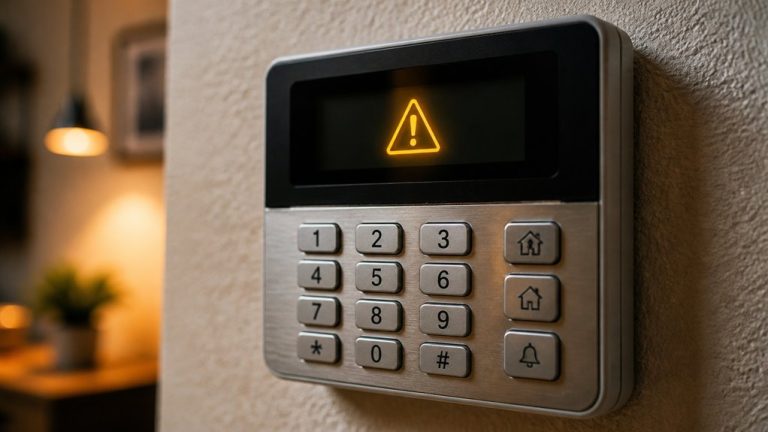
Choose a system with monitored alarms and real-time alerts to your phone.
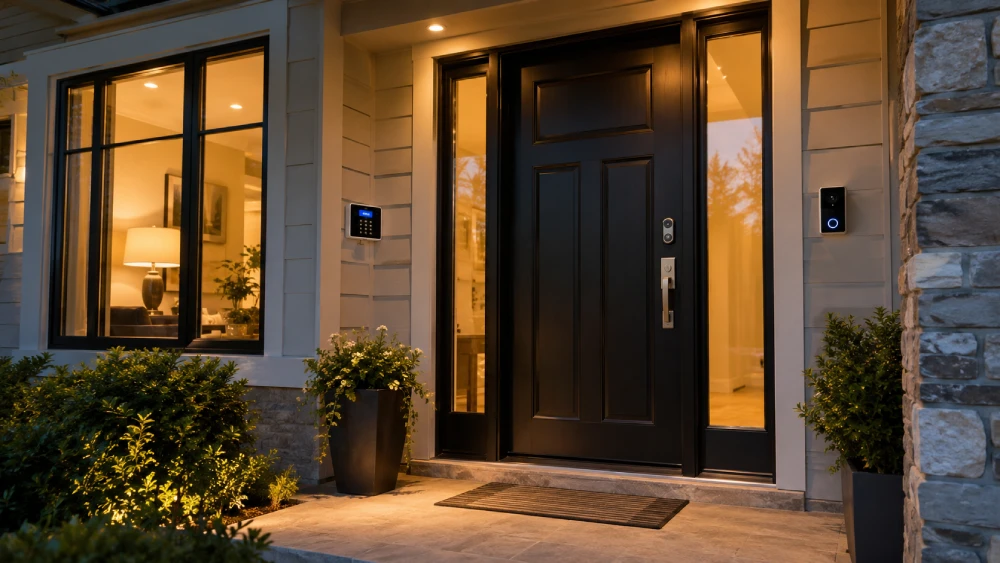
Install visible cameras and signage to deter burglars before they try entry.
Regularly test and update your system to ensure sensors and connections function properly.
Integrate motion-sensing exterior lights with your security setup for added perimeter protection.
Frequently Asked Questions
How Can I Reduce Anxiety About Home Invasions at Night?
You can reduce anxiety about home invasions at night by securing all doors and windows with deadbolt locks and using safety glass or blocking bars on sliding doors.
Install motion-sensing exterior lights and keep your property well-lit to deter intruders.
Use a reliable home security system and keep valuables out of sight.
Maintain clear sightlines outside and simulate occupancy with timers for lights and electronics.
Regularly lock all entrances, even when inside, to feel more secure.
What Are Effective Ways to Teach Children About Home Safety?
You can’t be too careful when teaching kids home safety. It’s like giving them superpowers.
Start by explaining locked doors and windows protect everyone inside. Practice “safe strangers” and emergency contacts so they know who to trust and how to call for help.
Use role-playing to rehearse scenarios, teaching them not to open doors without permission. Keep instructions clear and age-appropriate.
Regularly review these lessons to build lifelong habits.
How Do I Handle Suspicious Visitors Without Confrontation?
When you notice a suspicious visitor, don’t open the door. Speak through a locked door or window, stay calm, and ask their purpose firmly.
Avoid revealing if you’re alone. Use a peephole or camera to monitor them. If they persist or make you uneasy, call local authorities immediately.
Trust your instincts and prioritize safety. Never engage in confrontation or invite them inside. Keep your phone handy for quick access.
What Personal Safety Tools Are Recommended Inside the Home?
Think of personal safety tools as your home’s silent guardians.
You should have a reliable alarm system to alert you instantly.
Pepper spray or a stun gun are useful for close encounters.
A sturdy flashlight can help during power outages or unexpected visits.
Keep a phone nearby for emergencies.
Consider a door jammer or security bar to reinforce entry points.
These practical tools boost your confidence and readiness, helping you stay secure without confrontation.
How Can I Recover Emotionally After a Burglary?
After a burglary, give yourself time to process the shock and anxiety. It’s normal to feel vulnerable.
Talk openly with trusted friends or a counselor to express your emotions. Reclaim control by securing your home promptly and reviewing safety measures.
Establish routines that rebuild your sense of normalcy and safety. Avoid rushing decisions; focus on small, practical steps to regain confidence and restore your peace of mind gradually.
Build Better Home Security for Lasting Peace of Mind
Feeling safe at home starts with taking clear, consistent actions. Did you know homes without visible security measures are 300% more likely to be targeted by burglars?
By securing doors and windows, using alarms, motion lights, and locking all entrances, you markedly reduce risks. Protect your valuables, keep your home looking occupied, and engage with your neighborhood watch.
These practical steps build a strong defense, giving you peace of mind and real safety every day.