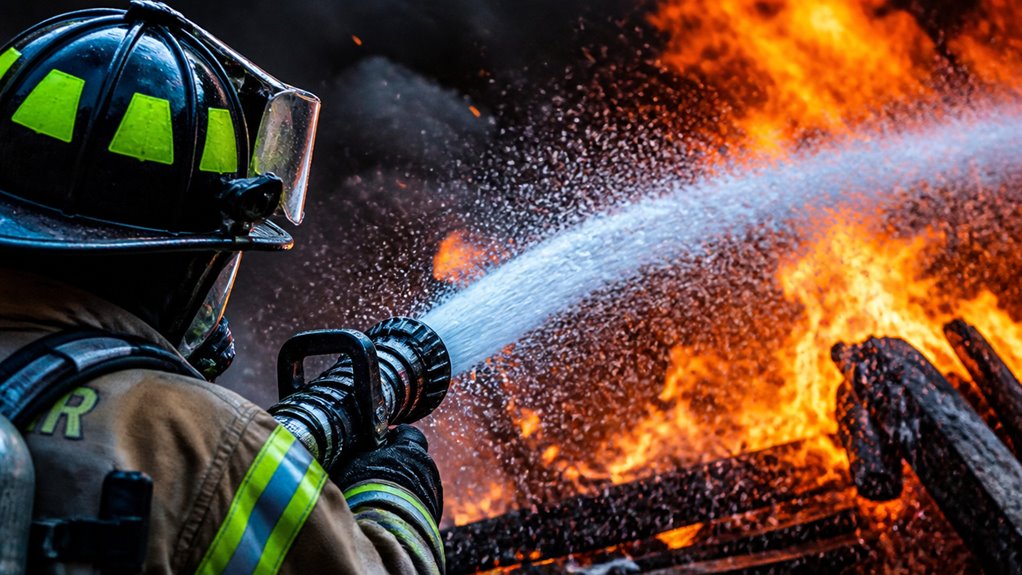

To extinguish a fire, first identify its class, like wood, flammable liquids, or electrical. Choose the right extinguisher matched to that type.
Use the PASS method: Pull the pin, Aim low at the fire’s base, Squeeze the handle, and Sweep side to side.
Keep a safe distance and never aim at flames directly. Stop and call for help if the fire grows or the extinguisher runs out.
Understanding these basics guarantees you’re prepared if flames break out.
Key Takeaways
- Identify the fire class and select the appropriate extinguisher matching the fuel type (e.g., water for Class A, wet chemical for Class K).
- Use the PASS method: Pull pin, Aim at the base, Squeeze handle, Sweep nozzle side to side until fire is out.
- Maintain a safe distance (6-10 feet) and ensure a clear escape route behind you while extinguishing the fire.
- Avoid using water on flammable liquid or electrical fires to prevent spreading or electrical shock.
- Stop fighting if the fire grows large, smoke intensifies, or extinguisher empties, and call emergency services immediately.
Understanding Fire Classes and Extinguisher Types
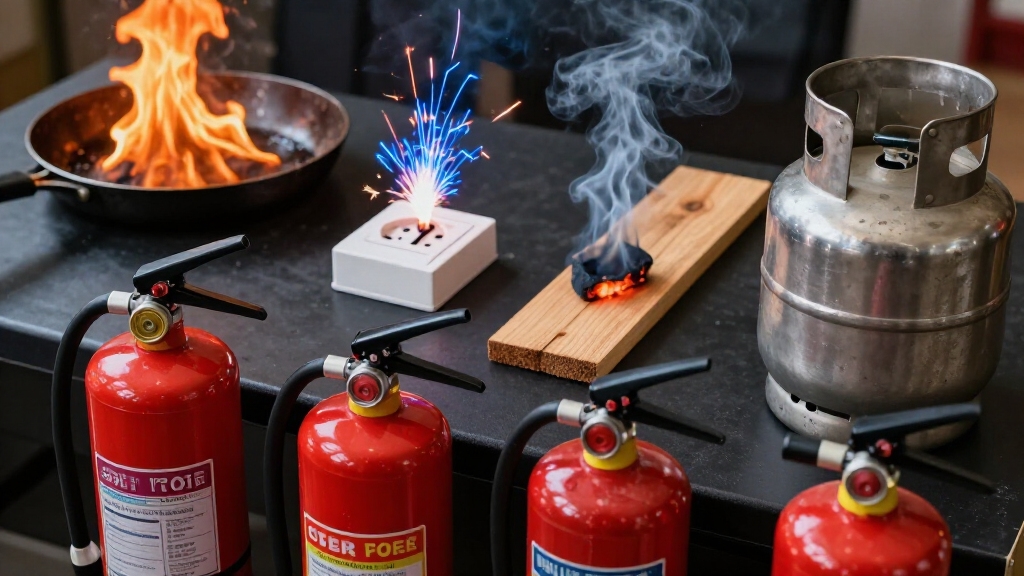
Before you try to extinguish a fire, you need to understand the fire classes and the types of extinguishers designed for each.
Understanding fire classes and matching extinguishers is essential before attempting to put out a fire.
Fires are classified by their fuel source: Class A involves ordinary combustibles like wood or paper. Class B covers flammable liquids such as gasoline. Class C includes energized electrical equipment. Class D is for combustible metals, and Class K targets cooking oils and fats.
Using the wrong extinguisher can worsen the situation or be dangerous. Each extinguisher is labeled for specific classes, so you must match the extinguisher to the fire type.
Knowing this helps you act quickly and safely, aiming the right agent at the fire’s base to disrupt its fuel source and put it out effectively. For example, ABC fire extinguishers use monoammonium phosphate powder to effectively suppress Class A, B, and C fires.
How to Choose the Right Fire Extinguisher?
Matching the extinguisher to the fire class is only the start. You also need to select the right type of extinguisher for the specific environment and fuel involved.
For instance, water or foam extinguishers work well on Class A fires but are dangerous on flammable liquid fires. Carbon dioxide extinguishers effectively handle flammable liquids and energized electrical fires.
Dry powder extinguishers cover multiple classes, including electrical risks. If you’re dealing with cooking oils or fats, a wet chemical extinguisher is essential.
Understanding the fire triangle helps clarify why different extinguishing methods target heat, oxygen, or fuel to stop combustion effectively.
How to Use a Fire Extinguisher Safely With the PASS Method?
Mastering the PASS method is essential for using a fire extinguisher effectively and safely.
First, Pull the safety pin to release the extinguisher.
Then, Aim low at the fire’s base, targeting the fuel source, not the flames.
Next, Squeeze the handle steadily to release the extinguishing agent.
Finally, Sweep the nozzle side to side across the burning material until the fire is out.
Use short bursts and stay aware of re-ignition, repeating the method if necessary.
Always keep the extinguisher upright, maintain a safe distance, and make certain you have a clear escape path behind you.
Before attempting to extinguish a fire, always assess its size and ensure you are positioned near an unobstructed exit for quick escape.
Following these steps precisely maximizes your safety and increases the chance of successfully controlling a small fire before it spreads.
How to Aim and Position Yourself When Using a Fire Extinguisher?
Position yourself strategically when using a fire extinguisher to maximize safety and effectiveness.
Stand about 6 to 10 feet from the fire, ensuring your escape route remains clear behind you.
Maintain a safe distance of 6 to 10 feet with a clear escape path behind you.
Keep the extinguisher upright and aim the nozzle low, directing the agent at the fire’s base where the fuel feeds the flames.
Avoid aiming directly at the flames, as this wastes the extinguishing agent.
Maintain a firm, steady stance to control the extinguisher easily.
Use short bursts, sweeping side to side to cover the entire base of the fire evenly.
Stay alert for signs the fire might spread or reignite, and be prepared to back away if conditions worsen.
Positioning yourself correctly protects you and improves your chances of putting out the fire swiftly.
Always assess whether the fire is manageable before attempting to use the extinguisher.
Common Fire Extinguisher Mistakes to Avoid
You really want to steer clear of some common mistakes when using a fire extinguisher. For starters, picking the wrong type of extinguisher can be a game changer, and not in a good way.
Plus, aiming at the flames instead of the base is a big no-no. And don’t even think about standing too close to the fire!
These blunders can seriously cut down your chances of extinguishing the flames safely and effectively. Always make sure the extinguisher matches the fire type before use to avoid making the situation worse.
Incorrect Extinguisher Choice
Although it might seem straightforward, choosing the wrong extinguisher can make a fire worse or put you in greater danger.
You must match the extinguisher to the fire’s class to avoid spreading flames or causing hazardous reactions.
For example, using water on a grease fire can cause a burst of flames, while a regular extinguisher won’t work on metal fires.
To avoid this mistake, remember:
Use Class A extinguishers for ordinary combustibles like wood or paper.
Select carbon dioxide or dry powder extinguishers for flammable liquids and electrical fires.
Choose wet chemical extinguishers specifically for kitchen grease fires.
Picking the right extinguisher guarantees your safety and improves your chances of putting the fire out quickly and effectively.
Always verify the extinguisher’s label to ensure it is rated for Class C fires when dealing with energized electrical equipment.
Aiming At Flames
Focus your extinguisher at the base of the fire rather than the flames themselves. The flames are just the visible part; the real fuel burning lies at the base. If you aim at the flames, the extinguishing agent won’t reach the fuel source effectively, wasting precious time and agent.
Instead, point the nozzle low, near the burning material, ensuring you cut off the fire’s fuel and stop it from spreading. Remember to sweep side to side across the base, covering all burning areas evenly. Avoid fixating on the flickering flames; they can mislead you.
Proper aim maximizes your extinguisher’s impact, helping you control the fire swiftly and safely. Don’t let careless targeting reduce your chances of putting the fire out successfully. Using the PASS technique ensures you apply the agent correctly for maximum effectiveness.
Standing Too Close
Maintaining a safe distance plays a crucial role in effective fire extinguishing. Standing too close puts you at risk of burns, inhaling smoke, and losing control of the extinguisher.
You need to stay about 6 to 10 feet away to manage the fire safely and efficiently.
When you stand too close, you expose yourself to intense heat and toxic fumes, increasing injury risk.
You limit your ability to aim accurately at the fire’s base.
You also reduce reaction time if the fire suddenly flares up or spreads.
Keep your escape path behind you and never let the fire trap you.
By maintaining distance, you enhance your safety and maximize the extinguisher’s effectiveness.
Always prioritize your safety first; extinguishing the fire comes second.
For ongoing safety, regularly maintain and test your fire extinguishing equipment to ensure reliable operation when needed.
How Fire Extinguishers Work on Different Types of Fires?
When you choose a fire extinguisher, you need to match it to the specific type of fire you’re facing. Each extinguisher targets different elements of the fire triangle: heat, fuel, or oxygen.
Selecting the right fire extinguisher means targeting the specific element fueling the fire triangle.
For Class A fires (ordinary combustibles), water or foam cools and soaks the fuel. Class B fires (flammable liquids) require carbon dioxide or dry powder to smother flames and cut off oxygen.
Class C fires involve energized electrical equipment, so you must use non-conductive agents like CO2 or dry powder to avoid shock. Class D fires (combustible metals) need specialized powders that absorb heat without reacting dangerously.
For kitchen fires involving oils (Class K), wet chemical extinguishers cool and create a barrier between fuel and oxygen. Using the wrong extinguisher risks spreading the fire or causing harm.
Dry chemical agents like Purple K fire extinguishers are highly effective on Class B and C fires due to their rapid interruption of the chemical chain reaction and non-conductive properties.
When to Stop Fighting a Fire and Call for Help?
If the fire grows beyond a small, manageable size or you feel unsafe at any point, you must stop fighting immediately and call for help.
Your safety comes first, so don’t hesitate to alert emergency services when the situation escalates.
Recognize these warning signs to know when to retreat:
- Fire spreads quickly or produces heavy smoke and intense heat.
- You run low or empty your extinguisher without controlling the flames.
- Your exit path becomes blocked or the fire comes between you and the door.
Always maintain a clear escape route behind you.
Never attempt to fight a fire if it compromises your safety or grows too large.
Calling for professional help guarantees the fire is handled effectively and reduces risk to you and others.
Damaged or discharged extinguishers may no longer function reliably, highlighting the importance of proper maintenance and inspection.
Frequently Asked Questions
How Often Should Fire Extinguishers Be Inspected or Maintained?
You should inspect fire extinguishers monthly to make certain they’re fully charged, accessible, and undamaged.
A professional maintenance check is required annually to test pressure, seals, and mechanical parts.
After any use, even partial, get them serviced immediately.
Regular inspections keep extinguishers reliable and ready for emergencies.
Annual maintenance extends their lifespan and guarantees compliance with safety regulations.
Don’t skip these steps; they’re vital for your safety.
Can Expired Fire Extinguishers Still Be Effective?
Think of an expired fire extinguisher like a worn-out flashlight. It might still glow but won’t be reliable in a crisis.
You shouldn’t count on expired extinguishers because their pressure and chemicals degrade over time, reducing effectiveness.
Always check the pressure gauge and expiration date. If expired, replace or service it immediately.
Relying on an expired extinguisher risks failure when you need it most, so stay proactive and safe.
What Should I Do if the Fire Extinguisher Malfunctions?
If your fire extinguisher malfunctions, don’t waste time trying to fix it.
Immediately evacuate the area and call emergency services.
Make sure your escape route stays clear and safe.
If the fire is small and you have another extinguisher available, use it carefully.
Always prioritize your safety over property.
Afterward, report the faulty extinguisher so it can be inspected, maintained, or replaced to guarantee reliable use next time.
Are There Special Extinguishers for Outdoor or Wildfires?
Yes, you’ll find special extinguishers designed for outdoor or wildfire use.
These often contain dry chemical powders or foam that can handle vegetation fires.
These extinguishers are rugged and effective on Class A fuels like wood and brush.
However, for large wildfires, portable extinguishers aren’t enough.
You’ll need professional firefighting equipment and techniques.
Always prioritize safety and call emergency services if a wildfire threatens your area.
How Do I Dispose of a Used or Damaged Fire Extinguisher?
Don’t throw it in the trash, don’t leave it lying around, and don’t try to refill it yourself.
Instead, take your used or damaged fire extinguisher to a local hazardous waste disposal site, a fire extinguisher servicing company, or a recycling center that accepts them.
Always release any remaining pressure safely beforehand.
This guarantees proper handling, prevents accidents, and complies with local regulations, keeping you and your community safe.
Choose the Right Extinguisher Before Acting
Knowing how to extinguish a fire can save lives. Did you know that using the right extinguisher increases your chance of putting out a small fire by 80%?
Always choose the correct type and follow the PASS method: Pull, Aim, Squeeze, and Sweep. Position yourself safely and avoid common mistakes like standing too close.
Remember, if the fire grows or you feel unsafe, evacuate immediately and call for help. Your safety comes first.