
Yes, most ATM machines have cameras to enhance security and monitor transactions.
These cameras can be built into the machine or installed externally, capturing your face, hand movements, card usage, and keypad activity with time-stamped images.
They help detect fraud, tampering, and unauthorized access by combining visible deterrence and detailed surveillance footage.
While criminal use of hidden cameras remains a risk, layered camera systems improve overall security.
You’ll find further insights on how these cameras work and protect you.
Key Takeaways
- Most ATM machines have security cameras to monitor transactions and deter theft or fraud.
- Cameras can be built inside the ATM housing or mounted externally nearby for broader coverage.
- Internal cameras capture user faces, hand movements, card usage, and keypad activity for security.
- External cameras record the ATM surroundings and user approach paths to detect suspicious behavior.
- Cameras support fraud prevention, dispute resolution, and investigations by providing time-stamped video evidence.
Do Most ATM Machines Have Security Cameras?
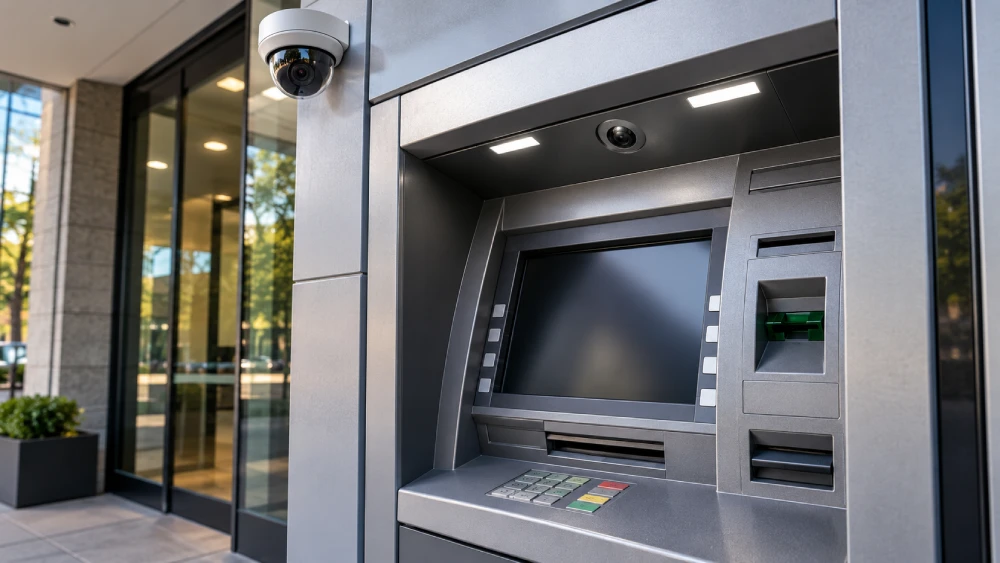
Most ATM machines typically have some form of security camera coverage, though the exact configuration varies widely.
You’ll find that some ATMs include built-in cameras inside the machine housing to capture the user and transaction area. Others rely on external cameras mounted nearby.
These external cameras often monitor the kiosk, approach paths, and surrounding spaces. Camera presence depends on factors like the bank, ATM operator, location, and machine model.
Commercial security products offer both visible and concealed camera options, allowing tailored setups. You should note that not every ATM has an internal unit; some depend entirely on store or bank surveillance systems.
Understanding this variability helps you recognize that camera coverage is common but far from uniform across all ATMs. Proper camera placement is essential to ensure clear lines of sight and effective monitoring around ATM locations.
Do Banks Use Built-In ATM Cameras?
Although ATM camera configurations vary, banks frequently install built-in cameras inside their machines to capture user interactions and transaction details.
These integrated cameras typically focus on the transaction area, recording face images, hand movements, and card usage during withdrawals or deposits.
Built-in units often feature low-light sensitivity and high dynamic range to maintain image clarity under variable lighting conditions.
Banks use this footage primarily for fraud detection, dispute resolution, and security investigations.
The cameras can be discreetly embedded within the ATM housing to reduce tampering risks while ensuring coverage of critical user interface zones.
However, not all bank ATMs have internal cameras; some rely on external or third-party surveillance.
Still, built-in cameras remain a common, effective security measure for monitoring transaction authenticity and deterring criminal activity.
To maximize security, these cameras are often positioned with a slight downward angle and placed to avoid blind spots for comprehensive coverage and monitoring.
Where Are ATM Cameras Typically Installed?
You’ll find ATM cameras installed in a few key spots to really boost security coverage.
For starters, internal cameras usually focus on the user and the transaction area. This way, they can capture any suspicious activity right where the action happens.
Then, there are external cameras that keep an eye on the kiosk itself and the area around it. This helps to deter any potential threats before they even get close.
Oh, and let’s not forget about concealed and pinhole cameras. These little guys can snag close-up facial images without being easily spotted, which is super handy for identifying anyone who might be up to no good.
Each camera is assigned a unique UID (unique identifier) that ensures secure remote access and device authentication within the network.
Internal Camera Placement
ATM manufacturers and operators strategically position internal cameras within the machine housing to capture clear images of users and transaction areas. Typically, these cameras are mounted above or beside the keypad and screen, angled to record the user’s face and hand movements during the transaction.
The placement minimizes blind spots and guarantees critical moments, like card insertion and PIN entry, are visible. Some ATMs employ concealed or pinhole cameras embedded in the fascia to enhance face recognition without alerting users.
Cameras often include wide dynamic range and low-light capabilities to maintain image quality in varied lighting. This internal setup focuses solely on user interaction zones, supporting fraud detection and evidence collection while complementing external surveillance systems without overlapping their coverage areas.
Strategic positioning with minimal overlap ensures internal ATM cameras cover key areas effectively without redundant coverage.
External Surveillance Coverage
When monitoring the area around cash withdrawal points, external surveillance cameras are typically installed on nearby walls, ceilings, or poles to cover the kiosk entrance, approach paths, and surrounding environment.
These cameras focus on capturing clear facial images and body movements of individuals entering or exiting the ATM vicinity. Placement aims to minimize blind spots while providing wide-angle views to detect suspicious behavior before or after transactions.
You’ll often find additional coverage from host locations like convenience stores, which supplement ATM security with their own CCTV systems.
External cameras usually feature low-light capabilities and dynamic range adjustment to maintain image quality across varying lighting conditions.
This layered surveillance approach enhances overall security by increasing situational awareness and recording potential incidents beyond just the transaction interface.
Many external cameras also incorporate infrared night vision to ensure clear imaging even in complete darkness, supporting 24/7 monitoring around ATMs.
Concealed And Pinhole Cameras
Security systems often incorporate concealed and pinhole cameras to capture detailed facial images and user actions without drawing attention.
These cameras are typically installed inside the ATM housing, positioned strategically above the keypad or screen to record users during transactions.
Their compact size and discreet placement allow them to monitor PIN entry and card use while minimizing visibility.
In addition to internal units, some ATMs rely on concealed cameras embedded in the kiosk structure or nearby fixtures to cover blind spots and approach paths.
This layered configuration enhances security by providing multiple angles for facial identification and activity monitoring.
When you use an ATM, expect hidden cameras to function alongside visible ones, ensuring thorough surveillance designed to deter fraud and support investigations without alerting potential offenders.
Many of these cameras utilize infrared LEDs and sensors with large apertures to enable clear night vision in low-light conditions.
What Do ATM Cameras Capture During Transactions?
Surveillance cameras at cash machines capture critical visual data that supports transaction monitoring and fraud prevention.
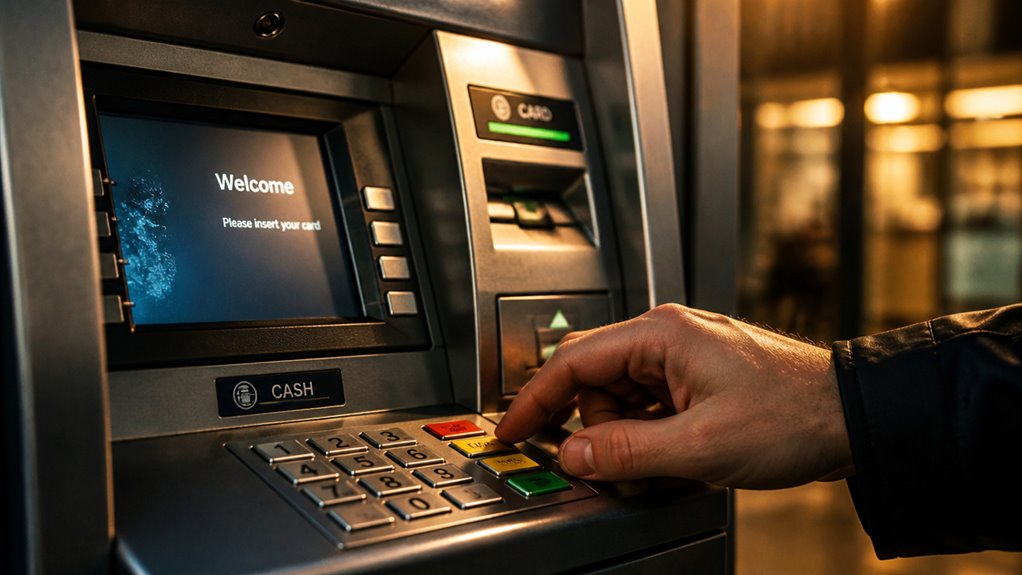
During your interaction with an ATM, these cameras record time-stamped images of your face, hand movements, card insertion, and keypad usage.
ATMs capture time-stamped images of your face, hand movements, card use, and keypad activity during transactions.
They also capture the immediate environment around the machine, documenting any suspicious activity or unauthorized access attempts.
Many systems feature low-light and high-dynamic-range capabilities to guarantee clear footage regardless of lighting conditions.
The recorded data serves as objective evidence in dispute resolution, fraud investigations, and criminal proceedings.
While the exact camera setup varies, you can expect the footage to include clear views of your identity and transaction actions.
This helps banks verify legitimate use and reconstruct transaction events if necessary.
Regular inspections and maintenance ensure the reliability of surveillance equipment and help detect any tampering or malfunction.
How ATM Cameras Stop Fraud, Theft, and Tampering?
ATM cameras are pretty impressive when it comes to stopping fraud, theft, and tampering. They use advanced techniques to keep an eye on what’s happening. For instance, they capture detailed images of card usage and user behavior, which helps in spotting any suspicious activity. It’s like having a vigilant guard always watching over the transaction.
But that’s not all! These systems also keep tabs on the machine’s physical integrity. If someone tries to tamper with it, the cameras can detect that and send out alerts for any unauthorized access attempts. So, it’s not just about seeing what’s happening; it’s also about ensuring the machine itself stays safe.
All these measures work together to create a layered defense. This combination really helps in reducing theft and fraud effectively, making ATM transactions much safer for everyone involved. Additionally, the presence of visible cameras creates a psychological barrier that discourages potential offenders from targeting ATMs.
Fraud Prevention Techniques
Deterring fraud, theft, and tampering at ATMs relies heavily on strategically placed cameras that capture clear, time-stamped images of users and their actions.
These cameras provide critical evidence and act as a deterrent by increasing the perceived risk for criminals.
When you use an ATM, the system records your facial features, hand movements, and card interactions, which helps identify suspicious behavior.
The effectiveness of fraud prevention depends on:
- Camera placement that minimizes blind spots and guarantees facial visibility for accurate identification.
- High-quality imaging with low-light and high-dynamic-range capabilities to maintain clarity under varying conditions.
- Integration with bank security systems to support real-time monitoring and post-incident investigations.
Additionally, placing cameras in tamper-resistant locations and securing cabling enhances system reliability and prevents interference.
Tampering Detection Methods
Although ATM cameras primarily serve to monitor user activity, they play a key role in detecting tampering attempts by capturing detailed images of suspicious interactions with the machine.
Cameras inside the ATM housing focus on the transaction area, recording unusual device manipulations or unauthorized access attempts.
External cameras monitor the kiosk and approach paths to identify individuals loitering or using suspicious tools.
Some systems integrate AI-assisted analysis to trigger alerts upon detecting internal tampering or skimming device installation.
Time-stamped footage supports forensic investigations by reconstructing the sequence of events.
Proper camera placement and secure mounting at optimal heights are essential to maximize coverage and prevent tampering, ensuring reliable surveillance effectiveness.
How External ATM Cameras Improve Security?
Positioning cameras externally around ATMs enhances security by capturing broader environmental context and user approach patterns.
These cameras don’t just focus on the transaction area; they monitor the entire kiosk and its surroundings.
This wider perspective helps you and security personnel detect suspicious behaviors early.
External cameras improve security by:
- Recording approach paths to identify individuals loitering or acting unusually before reaching the ATM.
- Monitoring entry points and nearby areas to prevent tampering, vandalism, or unauthorized access attempts.
- Providing additional video evidence that complements internal ATM footage, aiding investigations of fraudulent or criminal activity.
Do Criminals Use Hidden Cameras to Steal PINs?
External cameras help monitor activity around ATMs. However, criminals have developed methods to bypass these security measures.
One common tactic involves installing hidden pinhole cameras aimed directly at the PIN pad to capture your keystrokes. These concealed devices are often placed inside overlays or fixtures attached to the ATM, making them difficult to detect.
Criminals then retrieve the recorded footage to decode your PIN and combine it with stolen card data, facilitating unauthorized withdrawals. Such hidden cameras typically use micro-lens technology and low-light sensors to guarantee clear image capture even in varying lighting conditions.
You should always inspect the ATM for unusual attachments or loose components before entering your PIN. These may indicate the presence of a covert recording device designed to compromise your security.
What Privacy Issues Should You Know About ATM Cameras?
When you use an ATM, you should be aware that camera systems may capture more than just your transaction details. This raises important privacy considerations. ATM cameras record your face, hand movements, and sometimes the surrounding area. This means your identity and behavior are monitored.
ATM cameras capture your face, hand movements, and surroundings, highlighting important privacy concerns during transactions.
The retention period of such footage varies by institution and jurisdiction, affecting your data’s privacy duration. Additionally, privately operated ATMs often involve multiple overlapping camera systems, increasing exposure to surveillance beyond bank control.
Key privacy issues include:
- Footage retention policies differ, impacting how long your data is stored and who can access it.
- Hidden or external cameras may record without your explicit knowledge, complicating informed consent.
- Multi-party surveillance at non-bank locations raises concerns about unauthorized data use or sharing.
How to Protect Yourself When Using an ATM With Cameras?
Although ATM cameras enhance security, you should take specific precautions to protect your personal information during transactions.
Always shield the keypad with your hand or body when entering your PIN to prevent cameras from capturing it.
Inspect the ATM for unusual devices like skimmers or pinhole cameras, especially around the card slot and keypad.
Use ATMs located in well-lit, high-traffic areas monitored by multiple cameras to reduce fraud risk.
Avoid using ATMs operated by unknown third parties, as their camera setups may not adhere to strict security standards.
Finally, regularly monitor your bank statements to promptly detect unauthorized transactions.
This ensures any suspicious activity linked to camera surveillance can be reported immediately.
These measures collectively mitigate risks associated with ATM camera exposure.
Frequently Asked Questions
How Long Is ATM Camera Footage Typically Stored by Banks?
You’ll find that ATM camera footage is typically stored by banks for anywhere between 30 to 90 days, depending on their internal policies and local regulations.
Some institutions might retain recordings longer if needed for investigations or legal reasons.
Storage duration also varies with the security provider and jurisdiction.
It’s vital to keep in mind that footage is usually overwritten after this period unless flagged for suspicious activity or disputes.
Can ATM Cameras Identify Individuals Wearing Masks or Hats?
You see faces, you see hats, you see masks. ATM cameras can capture all, but identifying masked or hatted individuals is challenging.
Advanced systems use AI-assisted face detection to analyze partial facial features, head shape, and movement patterns. Low-light and high-dynamic-range imaging help enhance visibility.
However, obscured faces reduce accuracy. While cameras gather clues, they don’t guarantee precise identification when masks or hats conceal key facial data.
Are All ATM Cameras Monitored in Real-Time by Security Personnel?
No, not all ATM cameras are monitored in real-time by security personnel.
Most cameras record footage for later review, especially during investigations, rather than live surveillance.
Real-time monitoring typically happens only in high-risk locations or specific bank branches with dedicated security staff.
You should assume footage is stored and analyzed when suspicious activity occurs, but continuous live monitoring isn’t standard due to resource constraints and varying security protocols.
Do ATM Cameras Record Audio Along With Video Footage?
You’d think ATM cameras are spying on your every word, but no—they don’t record audio, just video.
This limitation respects privacy laws and reduces legal risks for banks. The cameras focus on capturing visual evidence like faces, card use, and suspicious behavior during transactions.
Audio recording would require explicit consent and complicate data handling. So, while your actions are monitored, your conversations remain unheard by ATM security systems.
How Do ATM Camera Systems Handle Low-Light or Nighttime Conditions?
ATM camera systems handle low-light or nighttime conditions by incorporating advanced features like infrared (IR) illumination and high-dynamic-range (HDR) imaging.
These technologies enhance visibility without compromising user privacy.
IR LEDs provide invisible light to capture clear facial and transactional details, while HDR balances bright and dark areas, ensuring consistent image quality.
This allows you to have reliable surveillance regardless of lighting, improving security and evidence accuracy during nighttime usage.
How Do ATM Cameras Help Protect Transactions?
Think of ATM cameras as vigilant guardians stationed at every transaction portal.
Just like a lighthouse guides ships safely through dark waters, these cameras monitor every move, deterring fraud and theft while capturing critical evidence.
Although they raise privacy concerns, their presence is essential for security.
By staying aware and cautious, you can navigate ATM use confidently, knowing these silent sentinels work tirelessly to protect your financial journey.