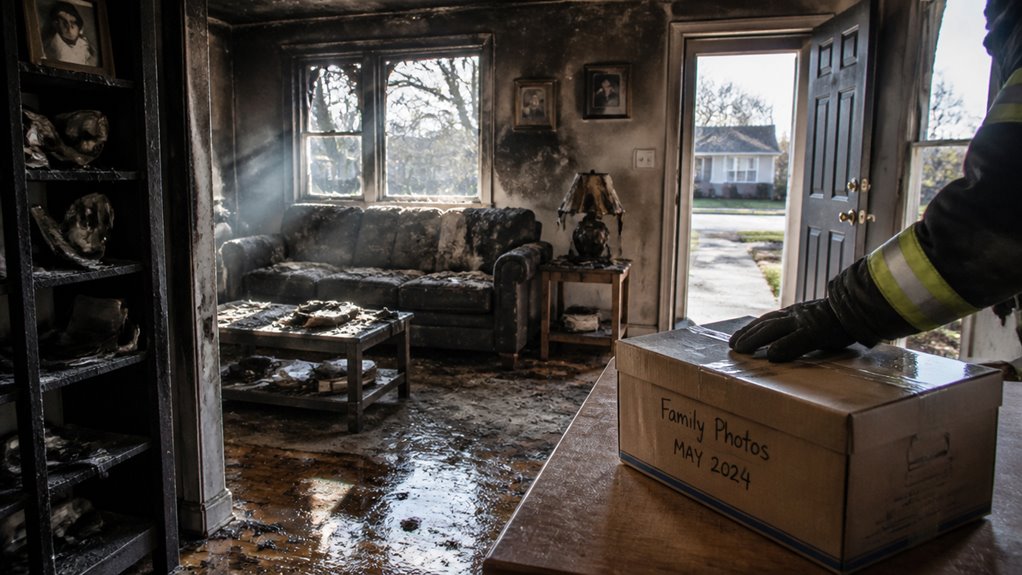

After a house fire, first make sure everyone’s safe and wait for the fire department’s all-clear before reentering. Call 911 immediately and provide injury details if needed.
Secure your property by boarding up openings and shut off utilities until inspected. Contact your insurance company promptly, document damage thoroughly, and arrange temporary housing.
Avoid cleanup until professionals assess structural safety and hazards. Following these steps helps protect your family and property while setting the stage for a smooth recovery process ahead.
Key Takeaways
- Wait for fire department clearance before re-entering and ensure everyone, including pets, is safe outside the home.
- Report the fire and any injuries to 911 immediately and provide first aid as needed until responders arrive.
- Secure your property by boarding up openings and replacing locks after fire department approval.
- Document all damage with photos and receipts, and contact your insurance company promptly to start claims.
- Arrange for professional inspections and cleanup before repairs, using PPE and coordinating with licensed contractors.
Ensure Safety and Evacuate After a Home Fire
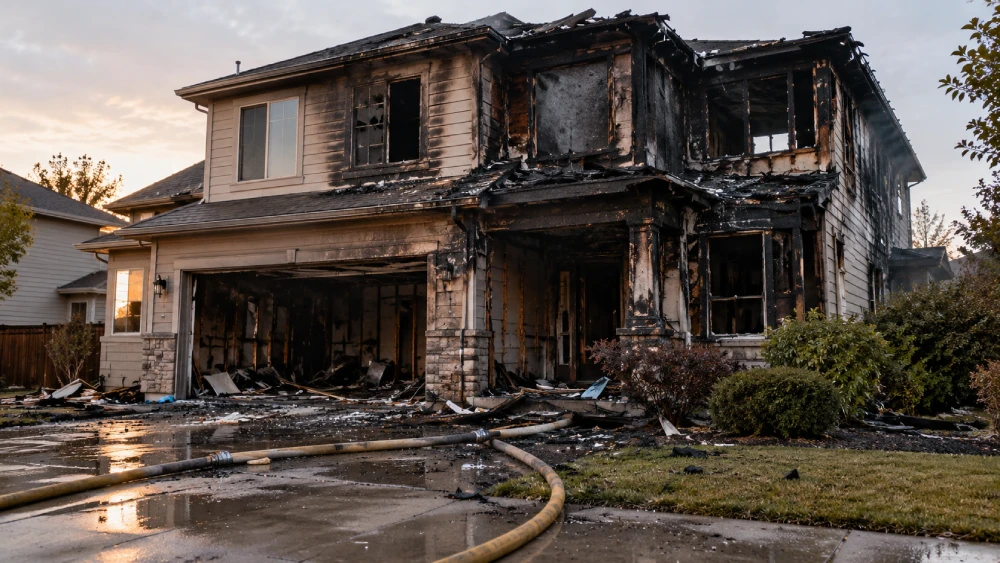
Although your instinct might be to rush back inside, don’t re-enter your home until the fire department has given you the all-clear. Your first priority is to make certain everyone, including pets, is accounted for and safe outside.
Avoid re-entering to retrieve belongings or pets; wait for professional guidance. Stay clear of the structure to prevent exposure to smoke, flames, or hazardous conditions.
If anyone is injured, call 911 immediately and provide first aid, especially for burns, while waiting for emergency responders. Don’t attempt to handle utilities or damaged wiring yourself; leave that to qualified personnel.
Prioritize your safety and that of others by following these steps precisely to prevent further harm after a house fire. Always proceed to the designated assembly area at least 200 feet from the building and remain there until given the all-clear.
Account for Everyone and Call 911 Immediately
Once you’ve confirmed no one is inside the home, immediately account for every person and pet who was present. Knowing everyone’s whereabouts is critical to inform emergency responders and avoid unnecessary risks.
Next, call 911 immediately to report the fire, even if it seems under control. Provide clear details about injuries, smoke, or flames. If anyone is injured, administer basic first aid while waiting for help.
| Step | Action |
|---|---|
| 1. Confirm presence | Check all family members and pets |
| 2. Call 911 | Report fire and injuries |
| 3. Provide details | Describe fire location and status |
| 4. Give first aid | Treat burns or injuries if safe |
| 5. Await help | Stay clear of hazards and wait |
Regular fire drills can help develop muscle memory for calm responses that improve safety in real emergencies.
Your prompt actions save lives and speed emergency response.
Secure Your Property From Weather and Intruders
Once the fire department has cleared your home, it’s really important to secure any broken doors, windows, and openings right away. This helps protect your property from weather damage and keeps out any unwanted visitors.
Try to limit movement inside the house as much as you can. This helps prevent spreading soot and minimizes further damage to areas that weren’t affected.
Taking these steps quickly not only helps preserve your property but also supports a smoother recovery process. So, don’t wait too long—act fast!
Additionally, consider installing weatherproof security cameras to monitor your property and deter intruders during the recovery phase.
Protect Openings Immediately
Secure all broken doors, windows, and other openings as soon as it’s safe to do so to protect your property from weather damage and unauthorized entry.
Use sturdy plywood or heavy-duty plastic sheeting to cover openings securely. Fasten materials tightly with nails or screws to withstand wind and prevent easy removal.
Check for any gaps or weak points that could allow rain or pests inside. If locks are damaged, replace or secure them promptly.
Keep in mind that securing your property also helps maintain insurance coverage by mitigating further damage.
Avoid entering the home before fire officials clear it. Document all protective measures taken for your claim.
Acting quickly at this stage safeguards your home’s structure and belongings, reducing risks and costs associated with exposure or theft.
Additionally, setting reminders to remove temporary covers can help ensure ongoing protection and prevent further damage.
Limit Movement Indoors
Although you may feel compelled to inspect every corner of your home, limiting movement indoors is essential to prevent spreading soot, ash, and debris to unaffected areas.
Restrict access to burned sections and avoid walking through clean spaces to keep contamination contained. Use barriers or tape to isolate damaged zones when possible.
This approach not only preserves your home’s condition but also reduces cleanup complexity and cost. Additionally, moving minimally protects your health by limiting exposure to hazardous particles.
Wear protective gear if you must enter. Keep pets and family members out of the house until professionals clear it.
Always confirm structural and environmental safety before reentry to ensure your well-being.
Check Utilities and Hazards Before Reentering
Before you step back inside your home, make sure all utilities remain off until professionals give the green light. Reactivating power or gas prematurely can cause explosions or electrical shocks and worsen fire damage. Always wait for clearance from fire or utility officials before restoring services.
Ensure all utilities stay off until professionals confirm it’s safe to prevent hazards and further damage.
Check for hazards carefully:
- Look for damaged wiring, exposed electrical components, or sparks. Avoid touching anything electrical.
- Smell for gas leaks or hissing noises. If detected, evacuate immediately and call emergency services.
- Observe structural stability. Avoid areas with unstable debris or weakened floors and ceilings.
Wear protective gear if you must enter briefly. Prioritize safety by ensuring ventilation only after clearance. Never attempt utility repairs yourself; always rely on certified professionals. Remember to call the fire department to inspect the site even if the fire appears out.
Contact Your Insurance and Document Fire Damage
Contact your insurance company promptly to initiate the claims process and ensure you receive the support you need. Notify them as soon as possible to avoid delays and guarantee proper guidance throughout the recovery.
Document all fire damage thoroughly by photographing and videotaping affected rooms, belongings, vehicles, and landscaping before cleanup begins. Create a detailed list of destroyed or missing essential items and important documents.
Keep all receipts related to temporary housing, food, repairs, and emergency purchases, as these may be reimbursable. Consult your insurer about what should be cleaned, replaced, or preserved before disposal to avoid jeopardizing your claim.
Staying organized and proactive during this stage will help facilitate a smoother, more efficient recovery process. It is also important to maintain detailed records of inspections and any safety system tests to support your claim and ensure ongoing property safety.
Arrange Temporary Housing and Replace Important Documents
Once you’ve notified your insurance and documented the damage, focus on securing temporary housing and replacing essential documents.
Finding a safe place to stay is critical for your well-being and peace of mind during recovery.
Simultaneously, replacing key documents helps you maintain access to necessary services and benefits.
Here’s what to prioritize:
- Arrange temporary shelter through family, friends, your insurer, or relief agencies like the Red Cross.
- Replace crucial documents such as IDs, Social Security cards, passports, and insurance papers promptly.
- Inform your mortgage company, landlord, and utility providers about your situation and address changes.
Keep all receipts for temporary housing and emergency expenses, as these may be reimbursable.
Act swiftly to stabilize your living situation and protect your identity after the fire. Many local fire departments offer free smoke alarm installation to help improve your home’s safety during recovery.
Start Fire Damage Cleanup After Official Inspections
Although it can be tempting to plunge into cleanup immediately, you must wait for official inspections and assessments to ensure the structure is safe and hazards are identified.
Fire officials and building inspectors will evaluate damage, check for unstable areas, and confirm that utilities remain shut off or are safe to restore.
Once cleared, start by removing irreparably damaged materials, taking care to isolate these from salvageable areas.
Use appropriate personal protective equipment, such as gloves and respirators, to avoid exposure to soot and ash.
Employ HEPA-filter vacuums and specialized cleaners to address smoke residue effectively.
Replace HVAC filters and ventilate the home if authorized to reduce lingering odors and airborne contaminants.
Following this methodical approach guarantees safety and prepares your home for the next recovery phase.
Additionally, ensuring that fire extinguishers have undergone routine maintenance can prevent future fire emergencies and aid in early fire suppression.
Plan Repairs and Long-Term Home Recovery
Before diving into any repairs, it’s essential to start with a thorough inspection and damage assessment. This step is crucial for ensuring safety and proper restoration.
Once that’s done, you’ll want to coordinate with contractors and your insurance company. It’s a good idea to manage the repairs in clear stages, so everything stays organized.
Also, don’t forget to keep detailed records of everything. Tracking each step of the claim and restoration process not only protects your interests but can also help speed up your recovery.
Additionally, be aware that fires can reignite after extinguishment, so continuous monitoring of the affected areas is important to prevent unexpected flare-ups.
Inspection and Damage Assessment
Before starting any major cleanup or repairs, you should have a thorough inspection and damage assessment conducted by qualified professionals. This step guarantees you understand the full extent of structural damage, fire impact, and safety hazards.
Professionals will identify what can be salvaged versus what must be replaced, helping you avoid costly mistakes.
Focus on three critical areas:
- Structural Integrity: Inspect load-bearing walls, roof supports, and foundation for damage.
- Electrical and Plumbing Systems: Assess wiring, outlets, pipes, and gas lines for fire or heat damage.
- Smoke and Water Residue: Evaluate soot contamination and water damage from firefighting efforts to plan proper cleaning.
This assessment forms the foundation for your recovery plan and insurance claims, guaranteeing your home’s safety and stability before moving forward.
Coordinating Repairs and Restoration
Once the inspection and damage assessment are complete, you can start organizing the repairs and restoration process.
Begin by prioritizing structural repairs to guarantee safety and prevent further damage. Coordinate with licensed contractors experienced in fire damage to handle demolition, debris removal, and rebuilding.
Schedule repairs in logical stages, keeping communication open among contractors, insurance adjusters, and yourself. Use professional restoration services for soot and smoke residue removal, employing specialized equipment like HEPA vacuums.
Replace air filters and ventilate the home as authorized to improve indoor air quality. Maintain a clear timeline and stay involved to monitor progress and quality.
Planning repairs methodically guarantees efficient recovery and helps restore your home to a safe, livable condition without unnecessary delays or costs.
Documentation and Claim Tracking
Keep detailed records and stay organized throughout the claims process to guarantee a smooth recovery.
Document every step from damage assessment to repair estimates to ensure accurate compensation and prevent delays.
Use digital folders or physical binders to keep all materials accessible and orderly.
Focus on these essentials:
- Photograph and video all damage before cleanup, capturing rooms, belongings, and structural impacts.
- Maintain receipts for repairs, temporary housing, and emergency expenses to support reimbursement claims.
- Log all communications with insurance adjusters, contractors, and emergency services, noting dates and key points.
Frequently Asked Questions
How Can I Prevent Mold Growth After Fire Damage?
To prevent mold growth after fire damage, you need to dry out the property quickly and thoroughly.
Use dehumidifiers and fans once the area is safe to enter. Remove wet materials like carpets, drywall, and insulation promptly.
Keep windows open for ventilation if conditions allow. Address any water used during firefighting immediately to avoid moisture buildup.
Monitor humidity levels and clean surfaces with mold-inhibiting solutions to stop mold before it starts.
What Items Should I Prioritize Salvaging First?
You should prioritize salvaging essential documents and irreplaceable valuables first. Think passports, birth certificates, and family heirlooms before moving to replaceable items like clothing or furniture.
While fragile keepsakes need careful handling, bulky damaged goods can wait. Secure important electronics and medications next, but only if it’s safe to do so.
Act quickly but cautiously to preserve what truly matters, balancing urgency with safety and professional guidance.
Are There Any Tax Deductions Related to Fire Loss?
Yes, you can claim tax deductions for fire loss, but only the portion not reimbursed by insurance.
You’ll need to itemize your casualty loss on IRS Form 4684 and include it on your tax return.
Keep detailed records of damaged property, repair costs, and insurance reimbursements.
Consult a tax professional, as rules vary by state and situation.
Also, save receipts for emergency expenses; they may be deductible or reimbursable.
How Do I Handle Fire-Damaged Pets or Animals?
You should immediately check your pets for injuries or signs of smoke inhalation and contact a veterinarian for urgent care.
Keep them calm and confined to a safe area away from soot and debris.
If your pets need temporary shelter, reach out to animal rescue organizations or shelters.
Avoid exposing them to hazardous materials and follow professional advice for cleaning or treating burns and respiratory issues to ensure their full recovery.
Can I Use a Generator Safely During Power Outages After a Fire?
Using a generator after a fire is like walking a tightrope; you must tread carefully.
You can use it safely only if the fire department and utility companies give the green light.
Never plug it directly into your home’s electrical system without a transfer switch.
Keep it outdoors, away from windows, to prevent carbon monoxide poisoning.
Always follow manufacturer instructions and keep fuel stored safely to avoid sparking another disaster.
What to Do After Fire in House: Final Recovery Steps?
After a fire, focus first on safety and swift steps. Secure your space, schedule inspections, and start sorting through insurance claims.
Stay steady, seek support, and safeguard important documents.
Remember, recovery requires resilience and routine repairs. Restoring your residence responsibly is essential.
By acting attentively and addressing all aspects, you’ll navigate the aftermath with confidence and care. This ensures your home heals and your family feels secure once more.