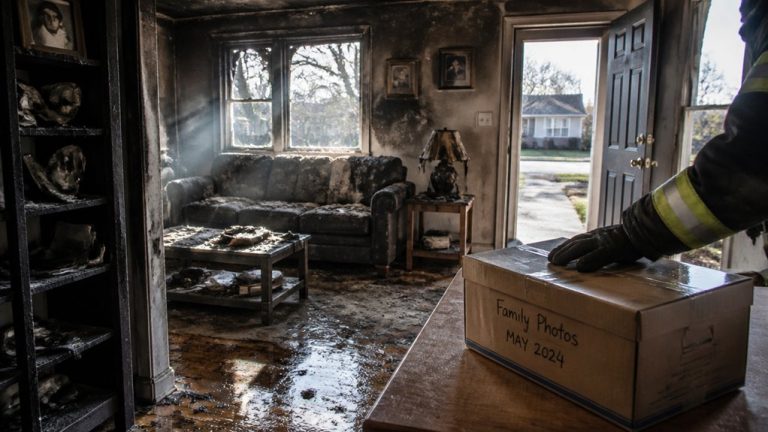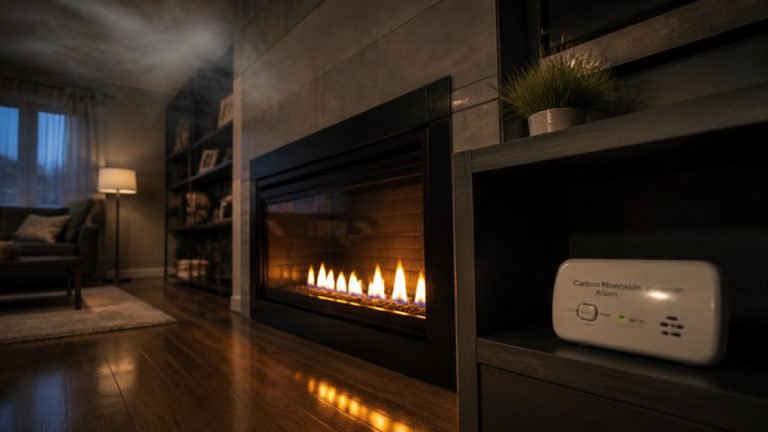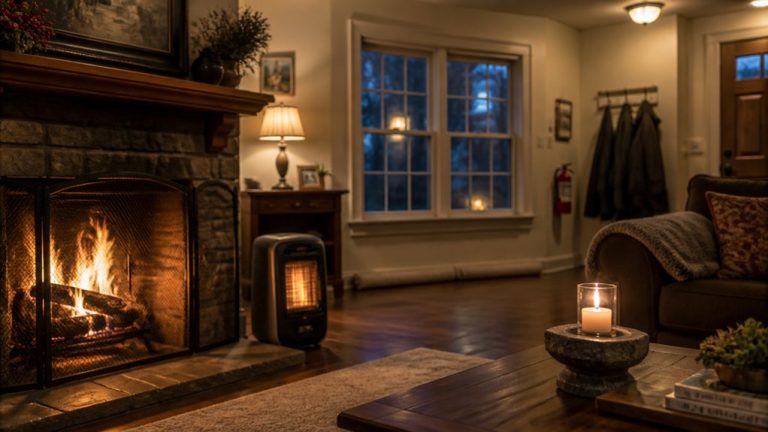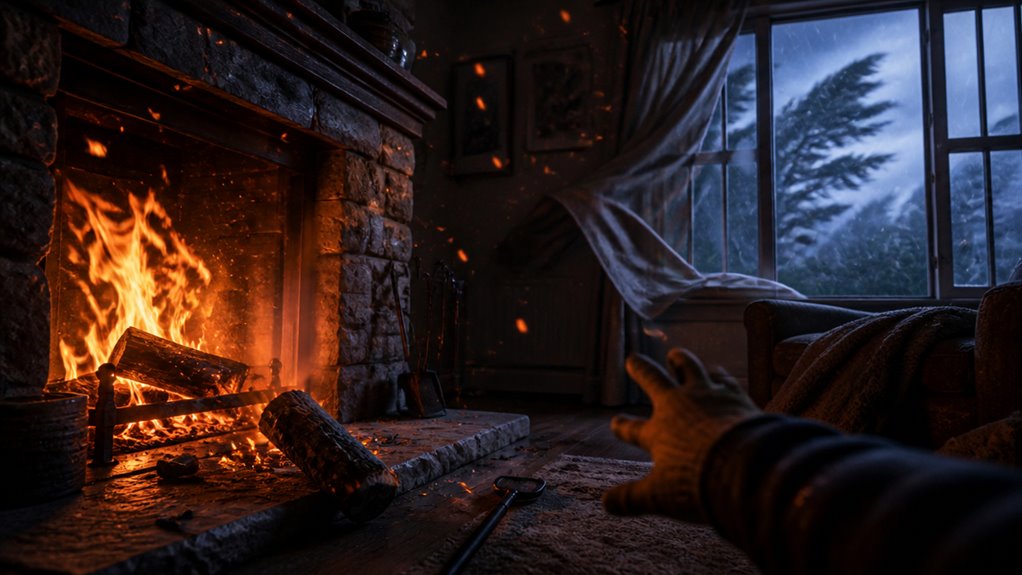

You shouldn’t use your fireplace during high winds because they disrupt the draft, pushing smoke and toxic gases like carbon monoxide back into your home.
Winds over 40 mph can cause dangerous downdrafts, backdrafts, and ember escape, raising fire risks inside and outside.
Even lower winds with gusts or shifting directions can be hazardous.
Check local wind advisories and inspect your chimney before lighting a fire.
Understanding how to prevent these dangers will help you stay safe and warm.
Key Takeaways
- Using a fireplace during high winds (40 mph or more) is unsafe due to disrupted draft causing smoke and carbon monoxide backflow indoors.
- High winds can carry embers outside, increasing fire spread risk and causing dangerous flare-ups by feeding oxygen to embers.
- Gusts and shifting winds cause draft instability, leading to smoke reversal and ember escape even in lower wind speeds.
- Always inspect chimney and flue for damage before use, and avoid fireplace use during high wind advisories or warnings.
- Safer alternatives include electric or infrared heaters, which eliminate risks of smoke, embers, and carbon monoxide poisoning during windy conditions.
Risks of Using a Fireplace During High Winds
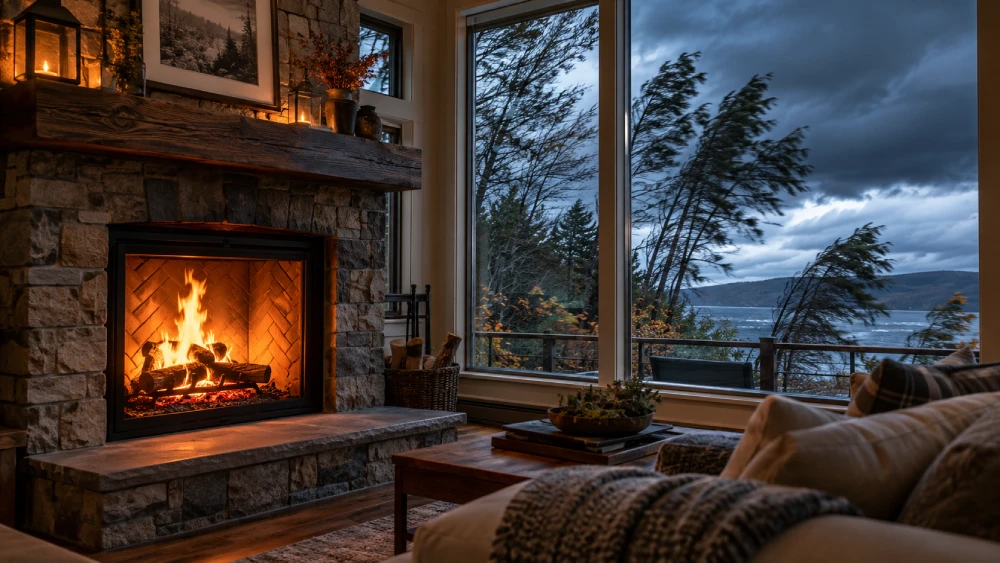
Because high winds can disrupt the normal draft of your fireplace, using it during such conditions poses significant risks.
High winds disrupt fireplace draft, creating significant safety risks when used during such conditions.
Strong winds can cause downdrafts or backdrafts, forcing smoke and dangerous gases like carbon monoxide back into your living space.
You risk exposure to toxic fumes and reduced air quality if venting fails.
Additionally, wind can carry embers away from the chimney, increasing the chance of fire spreading outside your home.
Pressure fluctuations caused by wind may destabilize the fireplace draft, especially if your chimney is damaged or poorly maintained.
To protect yourself and your property, avoid using your fireplace during high winds and inspect your chimney regularly.
Prioritize safety by recognizing these hazards before lighting any fire under such conditions.
In windy conditions, it is recommended to prefer smothering methods over water sprays to safely extinguish fires and prevent scattering sparks.
Wind Speed and Fireplace Safety Warnings
You really should avoid using your fireplace when wind speeds hit 40 mph or more. Those strong gusts can mess with the draft, and that means smoke might end up coming back inside your home—definitely not what you want!
But here’s something to keep in mind: even if the wind speed is lower, shifting crosswinds can still create dangerous downdrafts. So, it’s always best to think about the local conditions and any warnings that are in place.
Additionally, understanding how steam production displaces oxygen in fires can help explain why wind conditions significantly affect fireplace safety.
High Wind Speed Thresholds
When wind speeds reach roughly 40 to 57 mph, experts classify this range as high wind conditions and strongly advise against using fireplaces. At these speeds, the risk of downdrafts, smoke backflow, and ember spread increases markedly. Winds above 58 mph are considered extreme and make fireplace use highly unsafe.
You should always check local wind advisories before lighting a fire and avoid using fireplaces during these thresholds. Improper ventilation during high winds can increase the risk of carbon monoxide buildup indoors.
| Wind Speed Range (mph) | Risk Level | Fireplace Use Recommendation |
|---|---|---|
| 0 – 39 | Low | Use with normal precautions |
| 40 – 57 | High | Avoid use |
| 58+ | Extreme | Do not use |
Always prioritize safety and postpone fireplace use during high wind events.
Impact of Gusts
Although sustained wind speeds provide a general guideline for fireplace safety, gusts can pose equally significant risks.
These rapid shifts can disrupt the normal draft, causing dangerous downdrafts or backdrafts that push smoke and carbon monoxide into your living space.
Even if overall wind speeds seem moderate, gusts can destabilize chimney airflow, increasing the likelihood of smoke reversal or ember escape.
You should never ignore wind advisories or local warnings about gusty conditions when considering fireplace use.
Always inspect your chimney and venting system thoroughly before lighting a fire.
If you notice smoke entering your home or erratic draft behavior, extinguish the fire immediately.
Prioritize safety by postponing fireplace use until wind conditions stabilize and venting functions properly.
Improper airflow can reduce the effectiveness of oxygen displacement by smoke and gases, increasing indoor air hazards.
Local Conditions Matter
Gusts highlight the variability of wind’s impact on fireplace safety, underscoring that a single wind speed number doesn’t tell the whole story.
Even if winds are below the 40 mph advisory threshold, gusts or changing directions can cause dangerous downdrafts. These can push smoke and harmful gases back indoors.
You need to monitor local wind warnings carefully. High wind advisories and storm alerts are clear signals to avoid using your fireplace.
Beyond speed, factors like chimney design, roof height, and nearby structures influence how wind affects venting. Always inspect your chimney and test draft behavior before lighting a fire.
If smoke reverses or odors appear, put out the fire immediately and wait for safer conditions. Prioritizing local conditions lets you make informed decisions and maintain safety during unpredictable winds.
Regular maintenance and inspection of your chimney are essential to prevent malfunctioning detectors from causing false alarms related to smoke intrusion.
How Wind Causes Fireplace Draft Problems?
Because strong winds interact unpredictably with your chimney and roof structure, they can disrupt the normal upward flow of smoke and gases from your fireplace.
Strong winds can unpredictably alter chimney airflow, disrupting the safe ventilation of smoke and gases.
This interference often results in downdrafts or backdrafts, where wind pressure pushes smoke and harmful combustion gases back into your living space instead of venting outside.
You need to be aware that these draft problems increase the risk of carbon monoxide exposure and indoor air contamination.
Additionally, wind-driven pressure changes can destabilize your fireplace’s draft, especially if your chimney or roof has vulnerabilities such as gaps or damage.
Sparks and embers may also be carried away by gusts, raising fire hazards.
Understanding these risks is vital for preventing dangerous conditions during high-wind periods.
Wind can also increase oxygen flow, which may cause embers to reignite and lead to unexpected flare-ups.
Checking Your Fireplace and Chimney Before Use
Before lighting a fire, you should thoroughly inspect your fireplace and chimney to make sure they’re in safe working order.
Start by checking for any visible damage, such as cracks, gaps, or loose bricks.
Confirm the chimney cap and damper are intact and operate smoothly.
Make certain the flue is clear of obstructions and that the fireplace vents properly to the outside without leaks.
Test the draft by lighting a match or a small piece of paper near the firebox; smoke should rise steadily up the chimney.
Never use your fireplace if you detect smoke backing into the room or if you have high wind warnings.
Finally, verify your carbon monoxide detectors are functioning correctly to protect against harmful gases.
For enhanced safety, it is important to maintain asset lifecycle management records for all your home safety devices.
Handling Fireplace Smoke Backdraft Indoors
Even after confirming your fireplace and chimney are in good condition, you might still encounter smoke backing into your home during high winds.
If this happens, immediately extinguish the fire to prevent exposure to harmful combustion gases.
Avoid opening the damper until the fire is fully out and conditions stabilize.
Keep doors and curtains closed to limit smoke spread and reduce ignition risk from embers.
Use carbon monoxide alarms to detect dangerous fumes early.
If smoke backdraft occurs repeatedly, don’t ignore it; schedule a professional inspection to check for hidden damage or venting issues worsened by wind.
During extinguishing, always keep the damper open to allow smoke to exit safely and prevent indoor buildup.
Safer Heat Alternatives for Windy Days
When those high winds roll in, it’s not the best time to be using your fireplace, right? Instead, why not think about electric heaters? They’re a great alternative because they don’t produce any combustion gases or embers—definitely a safer choice!
Have you tried infrared heating? It’s pretty cool! It delivers efficient, direct warmth, which is perfect for keeping you cozy without messing up your indoor air quality.
Plus, it’s nice to know you can enjoy warmth without any worries.
And let’s not forget about portable heat solutions! They’re super handy for providing immediate warmth wherever you need it.
It’s all about staying comfortable while keeping fire risks to a minimum during those blustery days.
For longer-lasting warmth during outages, consider using inverter generators which offer efficient, quiet operation and extended runtime.
Electric Heaters Benefits
Consider switching to electric heaters during windy conditions to maintain warmth safely without the risks associated with fireplaces. Electric heaters don’t rely on combustion, so they eliminate dangers like carbon monoxide poisoning, smoke backdraft, or embers escaping.
You avoid unstable drafts and chimney damage concerns common in high winds. Many models have built-in safety features such as automatic shutoff if tipped or overheated, reducing fire hazards indoors. They’re easy to operate and provide consistent, controllable heat without venting requirements.
While electric heaters consume electricity, they offer peace of mind when outdoor conditions pose too many risks for traditional fireplaces. Always choose a heater certified by recognized safety standards and never leave it unattended.
Using electric heaters during windy days is a cautious, reliable way to keep your home warm and safe. Regular maintenance and cleaning of heating devices can help prevent false alarms that might disrupt your household safety.
Infrared Heating Advantages
Safety stands at the forefront when choosing heating options during windy conditions. Infrared heating offers distinct advantages.
Unlike fireplaces, infrared heaters don’t rely on combustion, eliminating risks of smoke, carbon monoxide, or downdrafts. When winds are strong, infrared heat provides a safer, cleaner alternative that you can trust.
Here’s why infrared heating is a prudent choice on windy days:
- Direct Heat Transfer: Infrared heaters warm objects and people directly, reducing heat loss caused by air movement.
- No Venting Required: They don’t produce exhaust gases or require chimney venting, so you avoid dangerous backdrafts or smoke infiltration.
- Energy Efficiency: Infrared units use less power to maintain comfort, making them economical and environmentally responsible.
Choosing infrared heating helps you maintain safety and warmth without compromising air quality or fire risk during high winds.
Portable Heat Solutions
Relying on portable heat solutions offers a practical way to stay warm without the hazards that fireplaces pose during high winds. You can choose electric heaters, oil-filled radiators, or ceramic space heaters, all of which eliminate combustion risks and the potential for backdraft or ember escape.
When selecting a unit, prioritize models with built-in safety features like tip-over shutoff and overheat protection. Always follow manufacturer instructions and never leave portable heaters unattended. Keep them away from flammable materials and make sure your space is well-ventilated.
Portable heat solutions provide controlled warmth, reducing fire risk associated with wind-driven chimney problems. By opting for these safer alternatives on windy days, you protect your home and health while maintaining comfort without compromising safety.
Preventing Wind-Related Fireplace Hazards
Although you might be tempted to use your fireplace during windy conditions, preventing wind-related hazards requires proactive steps. High winds can cause dangerous downdrafts, backdrafts, and ember spread.
Using a fireplace in windy conditions can cause hazardous downdrafts, backdrafts, and ember spread—exercise caution.
To minimize risks, you should:
- Inspect your chimney, flue, damper, and cap for damage before use. Make certain the fireplace vents properly to the outside without leaks.
- Avoid using the fireplace when wind advisories or high wind warnings are in effect, especially if winds exceed 40 mph.
- Install a chimney cap or wind-direction device designed to reduce downdrafts. Schedule regular professional chimney inspections and cleanings.
Taking these precautions helps maintain safe ventilation and reduces fire hazards. If you detect smoke entering your home or unstable draft, extinguish the fire immediately. Seek professional help before restarting.
Frequently Asked Questions
Can Using a Fireplace During High Winds Void My Home Insurance?
Using a fireplace during high winds can potentially void your home insurance if it leads to damage or fire and you ignored safety warnings.
Insurers expect you to follow local guidelines and maintain your fireplace properly.
If you use it against warnings, they might deny claims related to fire or smoke damage caused by downdrafts or embers spreading.
Always check your policy and avoid fireplace use during high winds to protect your coverage.
Are Wood Stoves Safer Than Open Fireplaces in Windy Conditions?
Yes, wood stoves are generally safer than open fireplaces in windy conditions because they’re enclosed, reducing the risk of sparks and embers escaping.
However, you still need to guarantee proper venting and chimney maintenance to prevent downdrafts or backdrafts.
Always check for wind advisories before use and keep carbon monoxide detectors active.
If wind is strong, it’s best to avoid any combustion appliances to minimize fire and health risks.
How Do I Know if My Chimney Cap Is Effective Against Wind?
You’ll know if your chimney cap is effective against wind by observing smoke behavior during windy conditions.
Smoke should rise smoothly without backdraft or downdraft.
Inspect the cap for secure attachment, no visible damage, and proper mesh size to block embers yet allow airflow.
Consider professional inspection and testing, especially if you notice smoke spillage or odors indoors.
Regular maintenance guarantees it withstands wind pressures and prevents sparks from escaping, keeping you safe.
Can High Winds Cause Chimney Structural Damage Over Time?
Yes, high winds can cause chimney structural damage over time. They exert repeated pressure and force on your chimney, potentially loosening bricks, mortar, or chimney caps.
If your chimney isn’t properly maintained or protected, wind-driven debris or vibrations might worsen cracks or gaps. To prevent damage, you should schedule regular inspections, secure chimney caps, and address any visible wear promptly.
Ignoring these signs increases your risk of costly repairs and safety hazards.
Is It Safe to Use Gas Fireplaces During High Wind Events?
Using gas fireplaces during high winds is as risky as balancing on a tightrope in a storm.
You shouldn’t use them because strong winds can disrupt proper venting, causing dangerous backdrafts or carbon monoxide buildup inside your home.
Always check for wind advisories and make certain your fireplace vents correctly.
If you notice smoke or odors, turn it off immediately and wait for calmer conditions to avoid health hazards and fire risks.
Know When to Avoid Using Your Fireplace in Windy Weather
You shouldn’t risk using your fireplace during high winds. It’s just not safe.
Wind can cause dangerous smoke backdrafts, chimney draft problems, and even increase fire hazards.
Before lighting a fire, you must check your chimney thoroughly.
Even then, consider safer heat alternatives. Remember, we’re not living in the age of dragons; modern safety demands caution.
Protect yourself and your home by avoiding fireplace use when the wind is howling outside.