
To locate a listening device, start with a thorough visual sweep. Inspect outlets, smoke detectors, lamps, and furniture closely for unusual damage or added bulk.
Make calls near suspicious spots to listen for static or clicks hinting at an active bug. Use your smartphone’s camera and apps to spot infrared lights and magnetic signals.
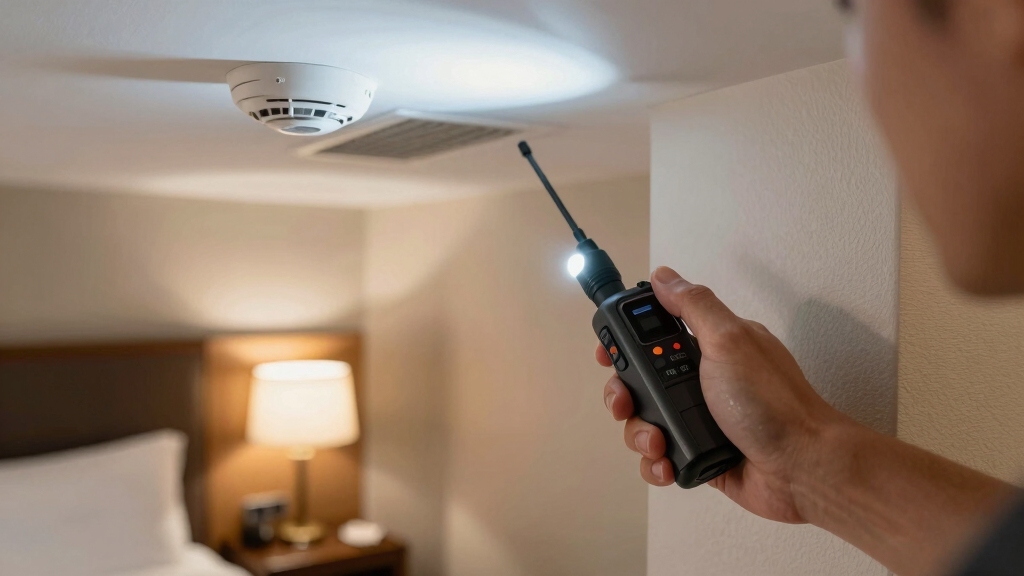
For wireless devices, methodically scan with an RF detector, filtering out normal signals. Combine these methods for the best detection; more detailed strategies can help you uncover even well-hidden devices.
Key Takeaways
- Conduct a thorough visual inspection of rooms, focusing on electrical fixtures, furniture, and everyday electronics for hidden devices.
- Use RF scanners to detect unusual radio frequency signals and filter out common household electronics interference.
- Make phone calls near suspicious areas to listen for static, clicking, or interference indicating active listening devices.
- Utilize smartphone cameras and apps to spot infrared lights or magnetic signals from covert cameras and bugs.
- Combine visual checks, RF detection, audio tests, and app scans for a comprehensive and effective sweep.
Spot Listening Devices With a Visual Sweep
When conducting a visual sweep to spot listening devices, focus on subtle signs like buzzing sounds or unusual placement of movable objects.
Check electrical outlets and fixtures for damage or tampering, as bugs often hide there. Inspect common household items—clocks, lamps, smoke detectors, and light fixtures—since their small size allows devices to blend in easily.
Methodically scan upward, downward, left, and right, paying close attention to odd placements or anything that seems out of place. Don’t overlook corners, behind furniture, and inside electronic casings.
Move objects carefully, noting if anything feels heavier or different. Stay systematic: clear one area fully before moving on.
This detailed approach guarantees you minimize blind spots and catch concealed devices effectively. Using a peephole viewer can also help discreetly observe areas for suspicious activity without exposing yourself.
Detect Listening Devices Using Phone Call Interference
Although you mightn’t realize it, phone call interference can reveal the presence of nearby listening devices. When you make a call, listen closely for static, echo, or clicking noises. These often indicate an active bug transmitting signals.
This method requires no extra tools, making it a quick and efficient preliminary check. If you notice disruptions, immediately investigate the area for hidden devices.
Systematically move through the room, repeating calls near suspicious spots like electrical outlets, lamps, or smoke detectors. Be methodical; interference usually occurs when the bug is powered and transmitting.
While not foolproof, detecting unusual call disturbances offers a practical starting point to uncover covert listening devices before deploying more advanced detection techniques.
For more thorough detection, combining ferromagnetic detection with RF signal–based detectors can improve chances of locating transmitting and non-transmitting devices.
Scan for Hidden Listening Devices With Your Smartphone Camera
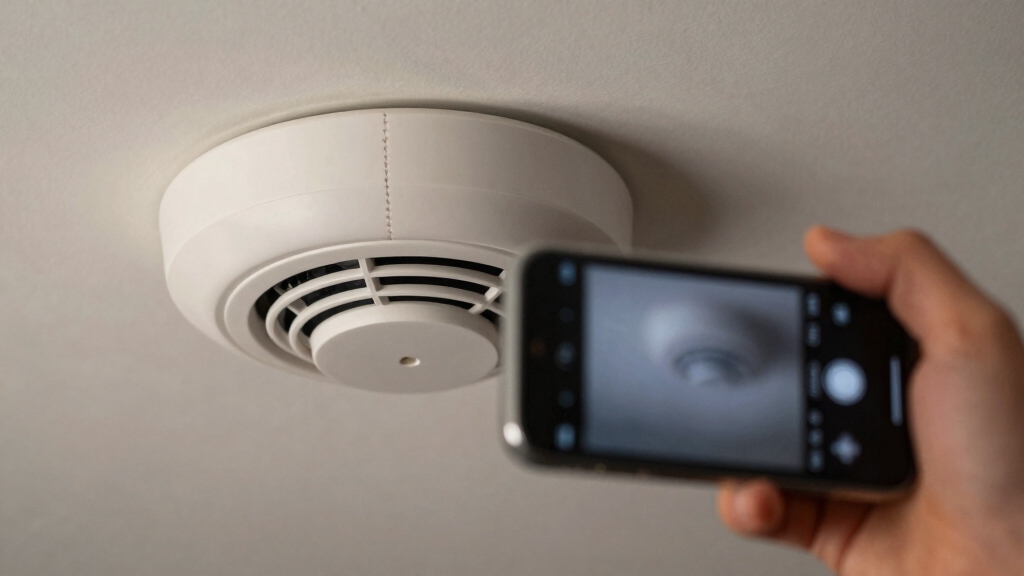
Use your smartphone camera to reveal hidden listening devices by detecting infrared lights invisible to the naked eye. Point your camera at suspicious areas such as smoke detectors, lamps, or electrical outlets.
Watch for small, unusual glowing spots indicating active infrared LEDs on covert devices. Both iPhone and Android cameras can detect these signals, with apps like Glint Finder enhancing detection.
| Step | Action |
|---|---|
| 1 | Open camera app |
| 2 | Scan room systematically (up, down, sides) |
| 3 | Focus on common hiding spots |
| 4 | Look for unusual infrared glows |
| 5 | Recheck suspicious areas with flashlight |
This method helps you quickly identify hidden bugs without extra tools. Using a convex lens can improve your ability to focus on small details, making detection easier in some cases.
Use RF Scanners to Find Wireless Listening Devices
To kick things off, it’s important to get a grasp on how RF scanners work when it comes to detecting those sneaky wireless signals from hidden devices.
Keep an eye out for any unexpected signal spikes or interference—these could be signs of an active bug hiding out somewhere. Now, while you’re scanning, don’t forget to pair that with a good old-fashioned visual inspection.
This combo can really help you pinpoint suspicious areas and boost your chances of catching anything that’s been hidden away.
Additionally, understanding how radio frequency interference from nearby electronics can mimic or mask these signals improves detection accuracy.
Understanding RF Scanner Basics
When tracking down wireless listening devices, understanding how an RF scanner works can make all the difference.
An RF scanner detects radio frequency signals emitted by transmitting bugs. You’ll want to power it on and sweep methodically across rooms, focusing on walls, furniture, and electronics where devices hide.
Pay attention to spikes in signal strength, which indicate nearby active transmitters. Remember, scanners pick up a wide range of frequencies, so filtering out common household signals like Wi-Fi and Bluetooth is essential to avoid false alarms.
Move slowly and cover all angles—up, down, and side to side—to catch hidden devices transmitting at different frequencies. Mastering these basics guarantees you efficiently pinpoint suspicious signals without missing covert bugs.
Also, be aware that environmental factors such as interference from household electronics can cause false positives, so proper interpretation of scanner readings is crucial.
Identifying Signal Interference
Although some signals may blend into background noise, an RF scanner helps you identify unusual interference patterns that often indicate active wireless listening devices.
When scanning, watch for sudden spikes or irregular fluctuations in signal strength that don’t correspond to known devices. Systematically sweep areas while noting persistent frequencies or bursts of transmission.
Certified professionals often use specialized detection tools to enable non-destructive entry while preserving safe integrity.
| Signal Type | Description | Action |
|---|---|---|
| Constant Signal | Steady, unchanging frequency | Investigate nearby electronics |
| Intermittent Burst | Short, repeating transmissions | Pinpoint source with scanner |
| Background Noise | Random fluctuations, low strength | Usually harmless |
Combining Visual Inspection
Since many listening devices cleverly blend into their surroundings, combining a thorough visual inspection with the use of RF scanners greatly increases your chances of detection.
Start by scanning common hiding spots: smoke detectors, lamps, clocks, and electrical outlets. Look for unusual placements, damage, or small modifications.
Use your RF scanner to sweep the area systematically. Move it slowly across walls, furniture, and electronic devices. Pay attention to signal spikes indicating wireless transmitters.
If the scanner picks up strong frequencies, focus your visual inspection there, searching for hidden wires or miniature components.
This methodical approach guarantees you don’t miss cleverly concealed devices. By integrating visual cues with RF detection, you maximize your ability to locate both active and dormant listening devices effectively.
For enhanced detection, consider that some listening devices utilize magnetic catch systems which may remain dormant until triggered electronically.
Check Common Hiding Spots in Your Home for Listening Devices
Start by thoroughly inspecting common hiding spots in your home where listening devices often lurk.
Begin by carefully examining typical areas where hidden listening devices may be concealed in your home.
Focus on areas that blend with everyday objects to avoid detection. Follow these steps:
- Check electrical fixtures like light bulbs, smoke detectors, and outlets for unusual damage or tampering.
- Inspect furniture, especially behind or underneath couches, tables, and shelves where devices can be concealed.
- Examine everyday electronics such as clocks, lamps, and radios, as their casings can hide small bugs.
- Scan wall cavities and behind picture frames, since thin devices can be slipped into narrow spaces.
Be methodical, scanning each area carefully and systematically from all angles. This detailed approach increases your chances of uncovering hidden listening devices before they compromise your privacy.
Keep in mind that professional services often charge emergency surcharges that can range significantly if you require urgent help identifying such devices.
Detect Spy Equipment With Mobile Apps
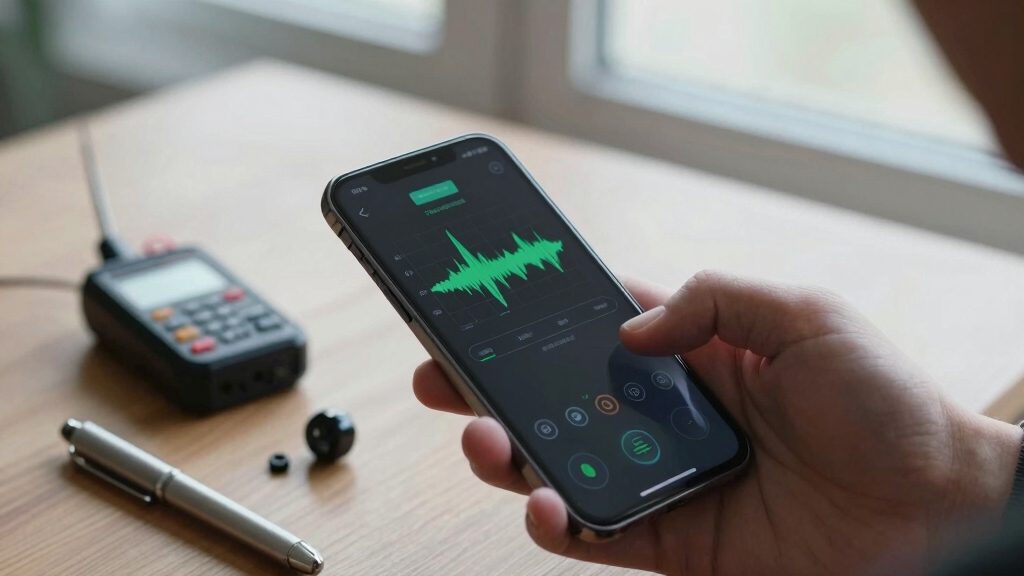
How can you leverage your smartphone to detect hidden spy equipment? Mobile apps offer a convenient first step for a quick sweep.
Use apps like Hidden Camera Detector Free or Hidden Devices Detector to scan your surroundings. These apps utilize your phone’s magnetic, RF, NFC, and radiation sensors to identify suspicious metal objects, wires, or signals often associated with spy bugs.
Methodically scan rooms, focusing on areas where devices commonly hide, such as electrical fixtures or furniture. While these apps provide useful alerts, remember they’re less reliable than dedicated RF detectors for serious concerns.
For thoroughness, combine app use with visual checks and listen for call interference. This layered approach maximizes your chances of spotting concealed surveillance gear efficiently.
In addition, understanding the operating frequencies of common spy devices can improve your detection accuracy when using these apps.
Spot Unusual Damage or Signs of Hidden Listening Devices
After using mobile apps to scan for hidden devices, pay close attention to physical signs that might reveal concealed listening equipment. Look for unusual damage or alterations that seem out of place.
Here’s what to check:
- Inspect electrical outlets and fixtures for fresh scratches, loose covers, or tampering. These spots often house bugs.
- Examine everyday objects like clocks, lamps, or smoke detectors for abnormalities or added bulk.
- Notice any unusual placement of movable items that might be used to hide devices.
- Listen for faint buzzing or ringing sounds, which can indicate active electronic components nearby.
Being methodical and observant helps you catch subtle clues. This narrows down possible hiding spots for listening devices without relying solely on technology. Understanding security pins can also help you recognize tampering attempts involving lock mechanisms that might conceal such devices.
Combine Detection Methods for a Complete Listening Device Sweep
To carry out a thorough listening device sweep, you’ll need to combine multiple detection methods for the best results.
Effective listening device sweeps require using several detection techniques together for comprehensive coverage.
Start with a visual inspection, checking for unusual placements or damaged fixtures. Use your smartphone’s camera or specialized apps to scan for infrared lights signaling hidden cameras.
Employ RF scanners to detect active transmitting bugs by monitoring strange radio frequencies. Incorporate phone call interference checks; listen for static or clicks that suggest eavesdropping.
Don’t rely on a single technique; advanced devices can evade one method but reveal themselves through another. Systematically sweep every room, vehicle, and electronic device, moving in all directions.
Frequently Asked Questions
Can Professional Sweep Services Guarantee Finding All Listening Devices?
Professional sweep services can’t guarantee finding all listening devices because some bugs use advanced technology that evades detection.
However, they use all-encompassing tools like RF scanners, infrared detectors, and magnetic sensors, greatly increasing the chances of uncovering hidden devices.
If you want thorough protection, you should choose experienced professionals who combine technical equipment with detailed visual inspections.
How Often Should I Perform a Listening Device Sweep in My Home?
You should perform a listening device sweep at least every few months, or immediately after any suspicious incident like unexplained phone interference or buzzing sounds.
Regular checks help catch devices hidden in common spots such as smoke detectors or electrical outlets.
If you’ve recently had guests with questionable intent or renovations, sweep more often.
Use a combination of visual inspections, phone call tests, and RF scanners for thorough, methodical coverage.
Are There Legal Restrictions on Searching for or Removing Listening Devices?
You generally have the right to search your own property for listening devices, so legal restrictions are minimal when protecting your privacy.
However, avoid tampering with devices on others’ property without permission. That could break laws.
When removing devices, make sure you’re not violating wiretapping or surveillance statutes, especially in shared or rented spaces.
If unsure, consult local laws or an attorney to stay compliant and protect your rights effectively.
What Should I Do if I Find a Suspected Listening Device?
When you find a suspected listening device, don’t jump the gun.
First, document its exact location with photos and notes.
Avoid tampering or removing it yourself, as this could destroy evidence or violate laws.
Contact local law enforcement or a professional security expert to handle it properly.
Meanwhile, secure your environment by checking for other devices methodically, ensuring no stone is left unturned in protecting your privacy.
Can Listening Devices Record Through Walls or Glass Surfaces?
Yes, listening devices can record through walls or glass surfaces, but their effectiveness depends on material thickness and device sensitivity.
Walls, especially thick or insulated walls, reduce sound quality, while glass transmits sound better, making it easier to capture conversations.
If you suspect surveillance, focus on areas near windows or thin walls. Use specialized detection tools and conduct thorough inspections to identify hidden devices exploiting these transmission properties.
Turning Your Home Back into a Secret Sanctuary
So, unless you want your toaster gossiping about your midnight snacks or your lamp spilling secrets to the neighbors, it’s wise to get serious about hunting down those sneaky listening devices.
With a keen eye, your smartphone’s camera, and a trusty RF scanner, you’ll turn your home into a fortress of silence. Remember, a thorough sweep beats paranoia because nothing says privacy like evicting tiny, unwanted eavesdroppers before they even say “hello.”