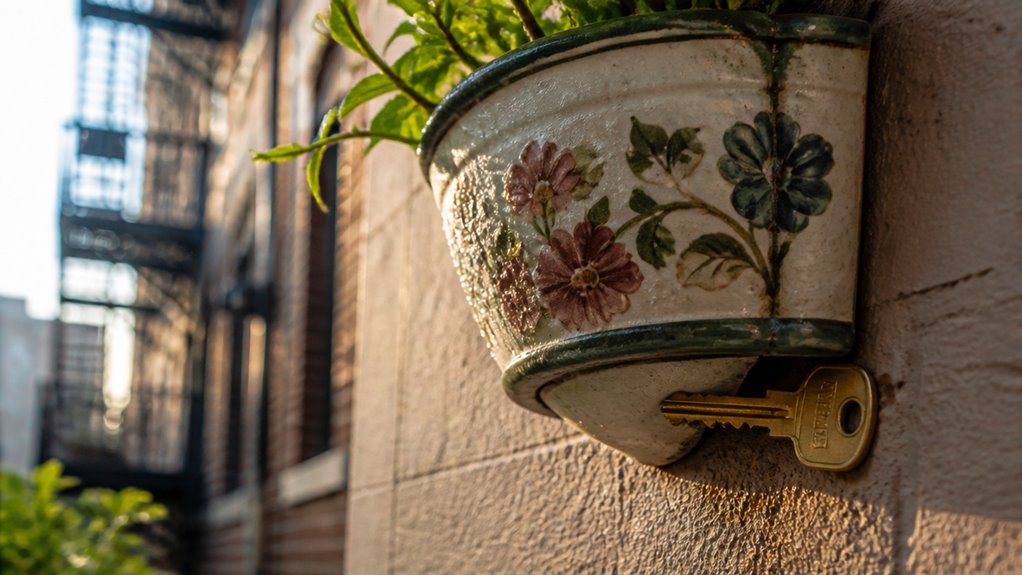

You should avoid common outdoor spots like doormats and flower pots since burglars check these first.
Instead, follow your apartment’s rules by placing keys only where management permits, avoiding shared areas or visible locations.
Consider entrusting keys to trusted neighbors or using a secure combination lockbox mounted discreetly on approved surfaces.
Regularly maintain any lockbox to prevent tampering.
These steps balance accessibility and security. Explore further to optimize your spare key’s safety and compliance.
Key Takeaways
- Avoid common outdoor spots like doormats, flower pots, and door frames, as burglars check these first.
- Check apartment rules and get landlord approval before placing any exterior key storage device.
- Use trusted neighbors, friends, or building staff to hold spare keys off-site for safer access.
- Consider a secure combination lockbox mounted discreetly in permitted, low-visibility locations to reduce theft risk.
- Regularly inspect and maintain lockboxes to ensure security and prevent tampering or damage.
Why Avoid Common Outdoor Spare Key Hiding Spots?
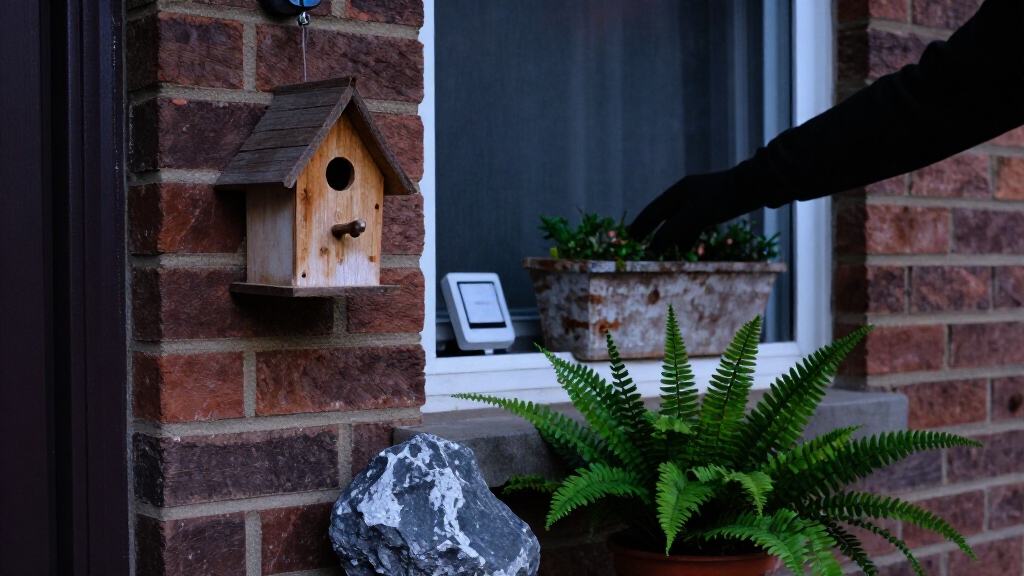
Although hiding a spare key outdoors might seem convenient, you should avoid common spots like under doormats or flower pots. Burglars check these areas first.
These locations are predictable and offer minimal security, making your key vulnerable to quick discovery.
Door frames, lintels, and easily accessible exterior features also pose high risks due to their obviousness.
Fake rocks or outdoor ornaments don’t improve security appreciably, as experienced intruders recognize these as decoys.
In apartment settings, shared entrances and limited private outdoor space amplify exposure risks.
Since these hiding spots are near entries, they facilitate unauthorized access without forced entry evidence.
Instead, you should prioritize off-site custody or secure lockboxes approved by building management to maintain effective key security and reduce theft risk. Open and respectful communication and neighbor relations can also help address concerns about external security measures in shared living environments.
Understanding Apartment Rules for Spare Key Storage
Common outdoor hiding spots for spare keys often violate apartment policies or lack practical security.
When you live in an apartment, building rules usually restrict mounting lockboxes on shared property or exterior features.
Apartment rules often prohibit installing lockboxes on shared or exterior areas.
Additionally, shared hallways and entrances increase exposure risk, making traditional yard-based hiding spots ineffective.
You should review your lease agreement and management guidelines carefully before placing any key storage device.
Controlled access methods like approved lockboxes or interior storage comply better with these constraints.
Avoid locations visible from common areas or easily reachable by strangers.
Your approach must balance accessibility with security while respecting property rules.
Ultimately, understanding and adhering to apartment-specific restrictions guarantees your spare key storage method remains both lawful and secure, preventing unauthorized access or lease violations.
Obtaining written landlord approval before installing any exterior storage device helps avoid disputes and ensures compliance with lease terms.
Trusted People for Spare Key Custody
You can markedly improve the security and accessibility of your spare apartment key by entrusting it to a reliable individual. This strategy minimizes the risk of unauthorized access while ensuring quick entry during emergencies or lockouts.
Choose someone who’s consistently available and trustworthy to reduce vulnerability.
Consider these practical options for spare key custody:
- Trusted Neighbor: Keeps your key nearby, ideal for emergencies or pet care without exposing the key outdoors.
- Close Friend or Family Member: Offers rapid access when living in proximity, balancing convenience and security.
- Building Staff: Superintendents or authorized personnel may store your key securely, subject to building policies.
Avoid hiding spare keys in obvious spots such as doormats or flowerpots and instead use a locked combination box or trusted individuals for safer access.
Using Secure Lockboxes in Apartments
Offering controlled access without exposing your key to obvious outdoor risks, secure lockboxes have become a practical solution for apartment dwellers.
When selecting a lockbox, choose a sturdy model with a reliable combination or key code system to prevent unauthorized access.
Mount it only in locations permitted by your building’s management, avoiding shared property or high-visibility spots near entrances.
Position the lockbox discreetly to reduce detection risk by casual observers or intruders.
Portable lockboxes offer flexibility for temporary use or travel but require you to keep them secure at all times.
Always test the lockbox’s durability and code reset features to guarantee consistent security.
For added safety, consider mounting lockboxes on solid surfaces to ensure stability and prevent tampering.
Reducing Risks When Hiding Spare Keys
Although hiding a spare key might seem straightforward, minimizing risks requires careful planning and adherence to security principles.
Hiding a spare key demands thoughtful planning and strict attention to security to effectively minimize risks.
You want to avoid obvious spots and make certain the key’s location isn’t easily discovered or accessible to intruders.
Follow these guidelines to reduce risks effectively:
- Avoid Common Hiding Spots: Doormats, flower pots, and door frames are the first places burglars check. Steer clear of these to prevent easy discovery.
- Use Trusted Custodians: Leave your spare key with a nearby trusted neighbor, friend, or building staff. Off-site custody greatly reduces exposure.
- Comply with Building Policies: Mount lockboxes only where permitted. Make certain they’re discreetly placed away from high-traffic areas to avoid routine exposure.
Additionally, consider consulting a professional locksmith who can provide secure lockbox options and advice to keep your spare key safe.
Top Alternatives to Outdoor Spare Key Hiding
To boost your security and make it easier to get into your place, why not leave your spare key with someone you trust? Neighbors or building staff can be great options since they can help you out whenever you need access.
Another idea is to use a secure, code-operated lockbox. Just install it in a discreet spot, and you’ll keep your key safe while minimizing the chances of it being discovered.
Both of these approaches are way better than hiding your key outside in traditional spots. Plus, they usually fit right in with apartment regulations, so you don’t have to worry about any issues there!
Using a lockbox secured with a code is a recommended method in the knowledge base to resist theft and protect your spare key.
Trusted Individuals Access
Relying on trusted individuals for spare key access provides a secure and practical alternative to hiding keys outdoors.
By entrusting your spare key to a reliable person, you minimize risks associated with common outdoor concealment spots.
Here are three practical options:
- Neighbor or Nearby Friend: Choose someone close enough for prompt access during emergencies or lockouts. This ensures swift entry without compromising security.
- Family Member: Assign a family member who can manage key access responsibly. This is especially useful if they live nearby or often visit.
- Building Staff: When permitted by building policies, a superintendent or property manager can securely store your spare key. This offers authorized emergency access.
Using trusted individuals removes the vulnerability of common hiding spots and complies with apartment-specific security considerations.
It provides controlled, off-site key custody.
For enhanced home security, combining multi-point locks with trusted key access can provide layered protection against unauthorized entry.
Secure Lockbox Options
Consider installing a secure lockbox as a reliable alternative to traditional outdoor key hiding spots in apartments. Lockboxes with combination codes offer controlled access without relying on obvious concealment.
Choose a portable shackle lockbox and mount it only where permitted by building management. Avoid shared hallways or exterior fixtures. Position the lockbox out of sight from routine foot traffic to reduce discovery risk.
Using a lockbox prevents the need to leave keys in vulnerable locations like under doormats or flower pots, which burglars check first. Remember, the lockbox’s physical placement is as vital as its locking mechanism. Regularly inspect and maintain the lockbox and its mounting hardware to ensure lock effectiveness and prevent easy tampering.
Frequently Asked Questions
Can I Hide a Spare Key Inside My Apartment Safely?
Yes, you can safely hide a spare key inside your apartment by choosing a discreet, low-traffic area inaccessible to visitors, like inside a locked drawer or a secured box.
Avoid obvious spots and make certain it’s away from windows or doors.
Using a small lockable container or a personal safe increases security.
This method reduces risks associated with outdoor hiding, guaranteeing your key remains secure and accessible only to you or trusted individuals.
How Do I Discreetly Share Spare Key Access With Multiple Roommates?
To discreetly distribute duplicate door keys, designate dependable, discrete dwellers: your roommates. Deploy a digital document listing each key carrier, updating access as needed.
Consider a coded, compact lockbox in a concealed, compliant corner inside the apartment for collective convenience. Avoid obvious outdoor spots or shared property.
Communicate clear protocols for key use and return, ensuring security, accountability, and seamless shared access without exposing your spare to unnecessary risks or suspicion.
What Are the Best Smart Lock Options for Keyless Entry?
The best smart locks for keyless entry include August Wi-Fi Smart Lock, Schlage Encode, and Yale Assure Lock SL. They offer robust encryption, easy app control, and integration with voice assistants.
Choose one with auto-lock and unlock features, plus guest access management. Verify compatibility with your door and apartment rules.
Prioritize models with battery alerts and secure Bluetooth or Wi-Fi connectivity to maintain convenience and security in your keyless access system.
How Often Should I Change the Combination on a Lockbox?
You should change the combination on a lockbox at least every three to six months to maintain security.
Additionally, update it immediately if you suspect unauthorized access or if someone with the code no longer needs access.
Regularly rotating the code minimizes the risk of breaches and guarantees only trusted individuals can retrieve your spare key.
Always choose a strong, unpredictable combination and avoid sharing it unnecessarily.
Are Insurance Policies Affected by How I Store Spare Keys?
Think of your spare key storage as a lock within your insurance policy’s safety vault.
Yes, how you store spare keys can impact your coverage. Insurers expect reasonable security measures; leaving keys in obvious spots might void claims if a burglary occurs.
You should use secure methods like trusted individuals or approved lockboxes to maintain policy validity. Documenting your key storage approach helps demonstrate your diligence during claims assessments.
Keep Your Spare Apartment Key Safe and Accessible
Hiding a spare key in an apartment is like negotiating a maze. You need precision and caution.
Avoid common outdoor spots that invite theft and always respect your apartment’s rules. Trust only reliable people with your spare key or invest in a secure lockbox designed for apartments.
Reducing risks means combining smart choices with practical solutions. When in doubt, opt for alternatives like digital locks or smart key systems to keep your home both accessible and secure.