

Door handles are typically made from metals like stainless steel, brass, bronze, aluminium, and zinc alloy, each offering unique durability, corrosion resistance, and aesthetic qualities.
Stainless steel suits high-traffic or exterior doors due to its resilience and low upkeep, while brass and bronze provide traditional warmth and natural patina.
Aluminium and zinc alloy offer lightweight, cost-effective options. Nonmetal materials like wood and ceramic add style but require more care.
Understanding these factors helps you choose the right material for your needs.
Key Takeaways
- Door handles are commonly made from metals like stainless steel, brass, bronze, aluminium, and zinc alloy for durability and aesthetic variety.
- Stainless steel offers corrosion resistance and minimal upkeep, ideal for high-traffic and exterior doors.
- Brass and bronze provide traditional warmth and develop a protective patina, with bronze also having bactericidal properties.
- Aluminium is lightweight, corrosion-resistant, recyclable, and suits modern minimalist designs.
- Nonmetal options like wood, glass, ceramic, and porcelain offer unique aesthetics but require careful maintenance and handling.
How to Choose Door Handle Materials: Key Factors to Consider?
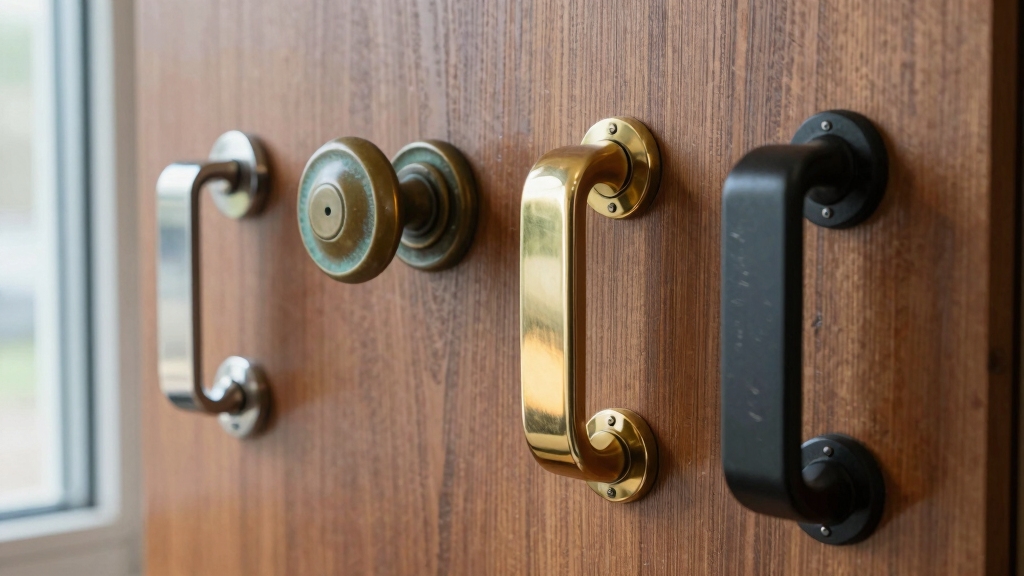
When selecting door handle materials, you should focus on factors such as durability, corrosion resistance, aesthetic compatibility, maintenance requirements, and cost-effectiveness to ensure reliable peak performance and longevity.
Start by evaluating the environmental exposure: metals like stainless steel and brass offer superior corrosion resistance for exterior or humid conditions.
Next, align material choice with your design intent. Brass and bronze complement traditional aesthetics, while stainless steel and aluminium suit modern, minimalist styles.
Evaluate maintenance demands; stainless steel cleans easily, whereas bronze naturally develops a protective patina.
Finally, balance upfront costs against lifespan and upkeep. Zinc alloys provide affordability, while premium metals justify higher prices with durability.
Additionally, consider the role of reinforced core materials in enhancing the overall strength and security of door components for critical applications.
Durability and Maintenance of Door Handle Materials
Durability and maintenance play pivotal roles in determining the long-term performance of door handle materials. You need to assess how materials respond to wear, environmental exposure, and cleaning requirements to guarantee sustained functionality and appearance.
For example: Metals like stainless steel resist corrosion and require minimal upkeep, ideal for high-traffic or exterior doors. Wood demands regular protective finishes to prevent degradation from moisture and abrasion. Fragile materials such as glass and ceramic offer aesthetic appeal but need careful handling to avoid chips or cracks.
Understanding these factors helps you select door handles that balance durability with manageable maintenance. Prioritize materials matching your environment and use frequency to optimize lifespan and reduce replacement costs.
For enhanced security and longevity, consider integrating door handles with hardened steel anti-drill plates and reinforced mounting hardware.
Common Door Handle Materials: Metals and Nonmetals Compared
Selecting door handle materials requires a clear understanding of the distinct properties metals and nonmetals bring to various applications.
Metals like brass, stainless steel, bronze, zinc alloy, and aluminium offer superior durability and corrosion resistance. They provide specific benefits such as bronze’s bactericidal copper content and aluminium’s lightweight strength.
They excel in high-traffic or exterior environments due to these attributes.
Nonmetals—wood, glass, ceramic, porcelain, and MDF—provide aesthetic versatility but demand careful maintenance. For instance, wood requires protective finishes, and glass or ceramic risks chipping.
While metals generally guarantee longevity and easier upkeep, nonmetals contribute unique textures and finishes suited for specific design goals. Understanding these technical distinctions helps you choose a door handle that balances performance with appearance effectively.
Additionally, considering surface preparation can be key to ensuring the durability of coatings or finishes applied to nonmetal door handles.
Matching Door Handle Materials to Your Home’s Style
A door handle’s material markedly influences your home’s overall aesthetic and functionality. Selecting the right material aligns your hardware with your interior’s design language while addressing durability and maintenance needs.
The material of your door handle shapes both the look and practicality of your home.
For example, brass and bronze complement traditional or rustic themes with their warm, patina-developing surfaces. Conversely, stainless steel and aluminium suit modern, minimalist interiors, offering corrosion resistance and sleek finishes.
Consider these focal points when matching materials:
- Design coherence: Choose wood for warm, vintage atmospheres or glass for contemporary elegance.
- Environmental factors: Opt for corrosion-resistant metals like stainless steel in humid or exterior settings.
- Maintenance and longevity: Bronze’s bactericidal property reduces upkeep, while stainless steel guarantees easy cleaning in high-traffic areas.
Additionally, incorporating elements such as peepholes can enhance the security and convenience of your door hardware, as their design maximizes inside visibility while restricting outside viewing, contributing to overall home safety with a widened field of view.
This analytical approach guarantees your door handles enhance both style and function efficiently.
Budgeting for Door Handle Materials: Costs and Value Options
Understanding the relationship between door handle materials and your home’s style helps inform your budgeting decisions.
Zinc alloy offers the most affordable option with good corrosion resistance and versatility, making it ideal for budget-conscious projects.
Aluminium balances cost and durability, serving well in weather-exposed areas while supporting sustainability through recyclability.
Stainless steel and brass, though more expensive, provide superior longevity and resistance, justifying their higher price in high-traffic or luxury settings.
Wood’s cost varies by species and finish, offering customization but requiring maintenance.
Glass and ceramic handles elevate costs markedly, suitable for statement pieces rather than everyday use due to fragility.
To optimize value, prioritize material performance aligned with your usage environment.
Balance upfront cost against lifespan and maintenance demands to guarantee cost-effective selection.
Additionally, incorporating tamper-resistant fasteners and durable lock components can enhance security and reduce long-term replacement costs.
Frequently Asked Questions
Can Door Handles Be Customized With Engravings or Logos?
Yes, you can customize door handles with engravings or logos.
Materials like brass, stainless steel, and bronze are ideal since they allow precise etching or laser engraving without compromising structural integrity.
Non-metal options such as wood can also be carved or branded, though with different techniques.
Consider the material’s surface hardness and finish to guarantee the customization remains durable and visible.
This adds a personalized, professional touch aligned with your design goals.
Are There Eco-Friendly or Sustainable Door Handle Material Options?
Yes, you can choose eco-friendly door handles made from aluminium, which is highly sustainable due to its infinite recyclability and energy-efficient production.
Wood is another option if sourced responsibly, offering renewability and biodegradability, though it needs protective finishes for durability.
Avoid materials with heavy environmental footprints or non-recyclable composites.
Prioritize materials that balance performance with lifecycle sustainability to meet eco-conscious standards while maintaining door handle functionality.
How Do Door Handle Materials Affect Home Security Features?
Think of door handle materials as the first line of defense in your home’s security fortress.
Strong metals like stainless steel and brass provide robust resistance against forced entry and wear. Their corrosion resistance guarantees locks function smoothly over time, reducing vulnerabilities.
Conversely, weaker materials like wood or ceramic might compromise security due to susceptibility to damage.
Choosing the right material directly enhances your door’s protective capabilities and long-term reliability.
What Are the Most Allergy-Friendly Door Handle Materials?
You’ll find allergy-friendly door handles in materials like stainless steel and bronze.
Stainless steel resists corrosion and is easy to clean, reducing allergen buildup.
Bronze’s copper alloys have bactericidal properties, eliminating 99.9% of bacteria and minimizing irritants.
Avoid porous materials like wood or MDF, which can trap allergens.
Glass and ceramic handle surfaces well but require careful maintenance to prevent cracks where allergens might accumulate.
Prioritize smooth, non-porous metals for peak hygiene.
Can Door Handles Be Recycled or Repurposed After Removal?
You can recycle or repurpose door handles almost endlessly, like turning a drop of water into an ocean.
Metal handles, especially aluminum, stainless steel, brass, and bronze, are highly recyclable and maintain material integrity through multiple cycles.
Non-metal types like wood or glass may require more specialized processing but can be repurposed creatively.
Always separate materials properly to maximize recycling efficiency and reduce environmental impact, ensuring sustainability in your renovations.
Hold Onto Quality: Making the Right Material Choice
When choosing door handle materials, picture the perfect balance between strength and style resting at your fingertips.
You want durability that withstands daily use without demanding constant upkeep. Metals like brass or stainless steel offer resilience, while nonmetals provide unique aesthetics.
Consider how each material complements your home’s character and fits your budget. By analyzing these factors precisely, you guarantee your door handle isn’t just functional—it becomes a lasting statement of quality and design.