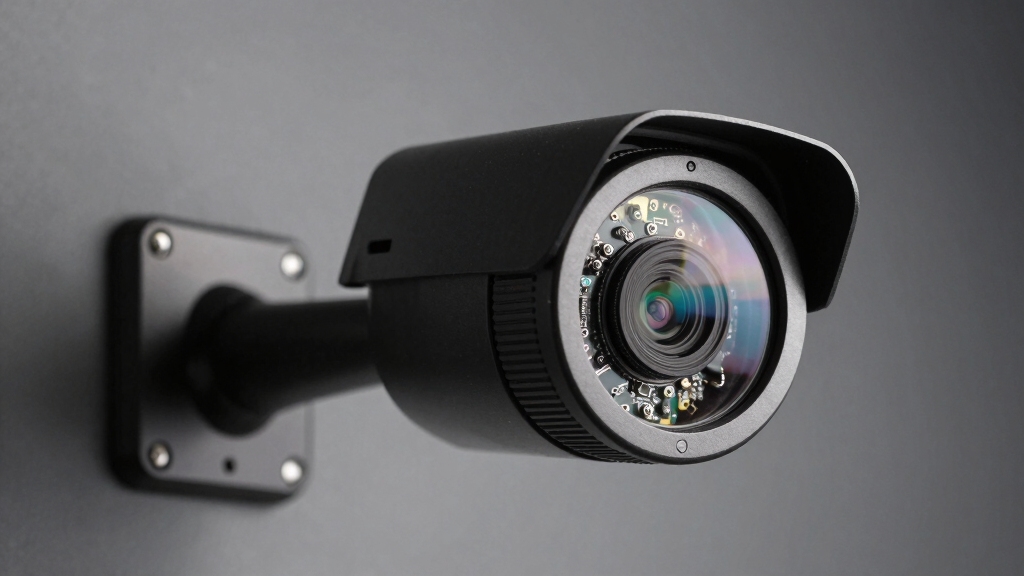

An AHD camera transmits high-definition video over coaxial cables, delivering clear 720p to 1080p resolution with minimal latency.
It converts analog signals into HD format, preserving signal quality over distances up to 500 meters without compression or buffering.
You’ll benefit from improved image detail and stable real-time video, all while using existing analog infrastructure.
If you want to understand how AHD compares to other systems and optimize your setup, keep exploring the key features and best practices.
Key Takeaways
- An AHD camera transmits high-definition analog video over coaxial cables, typically in 720p or 1080p resolution.
- It converts analog signals into HD video with minimal latency and uncompressed transmission for better detail.
- AHD cameras support long-distance transmission up to 500 meters without significant signal degradation.
- They are compatible with existing analog systems and allow easy upgrades without rewiring.
- AHD cameras offer near-real-time video quality, outperforming IP cameras in latency and avoiding network bandwidth issues.
What Is an AHD Camera and How Does It Work?
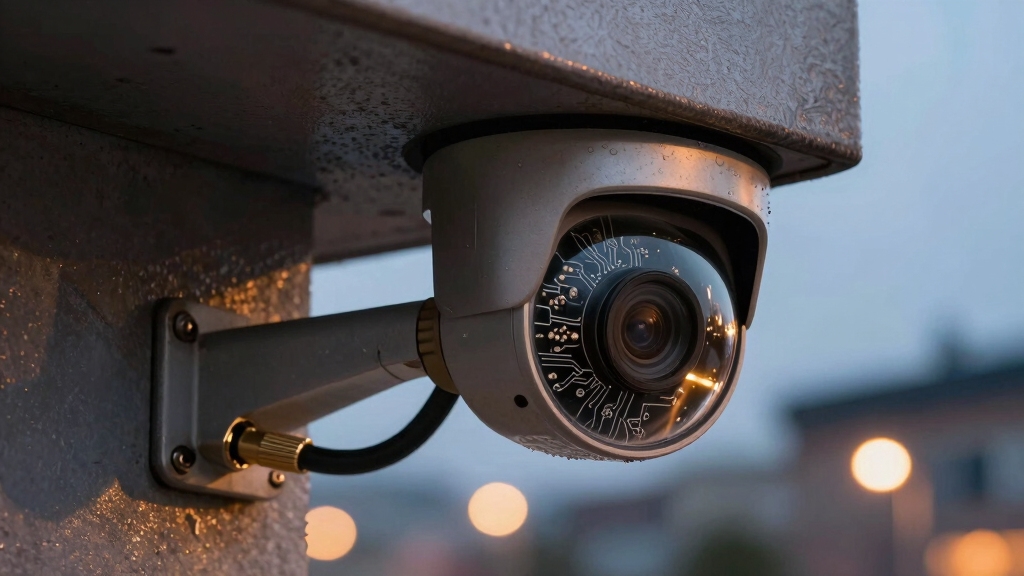
Although often confused with HDR technology, an AHD camera refers to an Analog High Definition camera that transmits high-resolution video signals over coaxial cables.
This enables you to capture sharp, detailed images in surveillance systems without relying on IP networks.
AHD cameras convert analog signals into HD video formats, typically 720p or 1080p, using modulation techniques compatible with existing infrastructure.
The camera’s sensor captures real-time video, encodes it, and sends it through coaxial cables, minimizing latency.
Unlike IP cameras, AHD doesn’t compress video into network packets, so you avoid bandwidth issues inherent in network streaming.
Installation is straightforward, as AHD supports long-distance transmission up to 500 meters without signal degradation.
This makes it ideal for upgrading analog CCTV systems while maintaining robust, high-definition surveillance.
However, AHD cameras require separate power sources and coaxial cabling similar to traditional DVR setups, which can increase installation complexity compared to PoE technology.
What Makes AHD Cameras Different?
AHD cameras really stand out because they transmit high-definition video using analog signals over coaxial cables. This is a significant difference when you compare them to digital IP cameras.
What’s cool about this method is that it can support resolutions of up to 1080p or even higher. And the best part? It works seamlessly with existing analog infrastructure, so you don’t have to overhaul everything if you decide to switch to AHD.
Understanding how AHD balances signal transmission and resolution helps you see why it’s such a unique player in the world of surveillance technology. However, unlike IP cameras, AHD systems lack encryption on their analog signals, which can make them more vulnerable to tampering.
Analog High Definition
When comparing surveillance options, Analog High Definition (AHD) cameras stand out by transmitting high-resolution video signals over traditional coaxial cables. This allows you to upgrade existing analog systems without rewiring.
AHD technology supports resolutions up to 1080p and beyond, delivering clear, detailed images that surpass standard analog cameras. Unlike IP cameras, AHD avoids network latency and bandwidth issues because it uses direct point-to-point transmission.
This analog format maintains real-time video with minimal compression, ensuring low latency and high frame rates. Additionally, AHD cameras are backward compatible with older DVRs, simplifying integration.
Their signal modulation techniques reduce interference and preserve video integrity over long cable runs. By combining high resolution with analog infrastructure, AHD offers a cost-effective, scalable solution for upgrading surveillance quality efficiently.
To ensure comprehensive security in connected systems, it is also important to implement network security measures to protect devices and data from unauthorized access.
Signal Transmission Method
By leveraging direct coaxial cable connections, AHD cameras transmit high-definition video signals with minimal delay and interference.
Unlike IP cameras that rely on network infrastructure, AHD employs analog signal modulation over coax, preserving signal integrity over long distances without compression.
This direct transmission reduces latency and complexity, making it ideal for real-time surveillance.
| Feature | AHD Transmission | Traditional Analog |
|---|---|---|
| Cable Type | Coaxial (RG59/RG6) | Coaxial (RG59) |
| Signal Type | Analog HD (720p to 4K) | Composite Analog |
| Max Distance | Up to 500 meters | Around 300 meters |
| Latency | Near zero | Near zero |
You’ll benefit from clearer images and easier integration using existing coax infrastructure. This stability is similar to how signal integrity is maintained in other analog RF transmission systems.
Resolution and Compatibility
How does an AHD camera stand out in terms of resolution and compatibility? AHD (Analog High Definition) cameras provide high-resolution video, typically 720p or 1080p, over coaxial cables. This enhances image clarity without upgrading existing infrastructure. Their compatibility with traditional analog systems makes them versatile for security setups.
Key distinguishing features include:
- Resolution Flexibility: Supports multiple HD resolutions (720p, 1080p, 4MP, even 5MP) for detailed imaging.
- Backward Compatibility: Works with older analog DVRs using the same coax cable.
- Plug-and-Play Installation: No need for new wiring; you can use existing analog cabling.
- Multi-Protocol Support: Compatible with other HD analog standards like HD-TVI and HD-CVI, simplifying integration.
Additionally, fine-tuning sensitivity adjustments in connected monitoring devices can optimize detection accuracy and reduce false alerts.
This balance of high definition and interoperability defines what makes AHD cameras uniquely effective.
Common Applications for AHD Cameras
Frequently deployed in environments with challenging lighting, AHD cameras excel at capturing clear, detailed images where traditional cameras struggle.
You’ll find them widely used in security surveillance, especially in areas with mixed lighting or shadows, such as parking lots and building entrances. Their high dynamic range guarantees identification of subjects even under backlit or low-light conditions.
Additionally, AHD cameras are common in traffic monitoring systems, where varying light intensities from headlights and streetlights demand precise exposure control.
In industrial settings, these cameras monitor production lines with fluctuating illumination, maintaining image clarity for quality assurance.
You can also rely on AHD technology in retail environments to detect fine details despite changing indoor lighting. For optimal performance, it is important to ensure unobstructed lens placement to maintain image clarity and device longevity.
How Do AHD Cameras Stack Up Against IP and Analog?
When you dive into the world of security cameras, comparing AHD cameras to IP and analog systems can be quite eye-opening. One key difference you’ll notice is in signal quality. AHD cameras offer higher resolution over coaxial cables compared to traditional analog systems. So, if clarity is a priority for you, AHD might be the way to go.
Now, let’s talk about installation and maintenance. AHD cameras are often easier to set up thanks to their plug-and-play nature. You won’t have to deal with the complex network configurations that come with IP cameras. That’s a big win if you’re looking for something straightforward!
However, when it comes to cost and scalability, things can get a little more complicated. AHD cameras are generally more affordable upfront, which is great for budget-conscious buyers. But keep in mind, they mightn’t be as flexible for larger expansions down the line compared to IP solutions. So, if you’re planning for growth, that’s something to consider!
Additionally, understanding how to perform physical and visual inspections can help ensure your AHD camera system remains secure from hidden surveillance devices.
Signal Quality Comparison
Although AHD cameras utilize analog transmission, they deliver markedly improved signal quality compared to traditional analog cameras. They support higher resolutions up to 1080p or beyond, minimizing signal degradation over coaxial cables.
When comparing AHD to IP and analog cameras, consider these factors:
- Resolution: AHD supports HD video, surpassing analog’s typical 480p, while IP cameras can reach 4K+.
- Signal Integrity: AHD maintains stable quality over long coaxial runs, unlike analog, which suffers from noise and attenuation.
- Latency: AHD offers near-real-time video with minimal delay, outperforming IP cameras that may introduce buffering.
- Compression: IP cameras use digital compression, improving bandwidth use, whereas AHD transmits uncompressed video. This preserves detail but requires more cable capacity.
This balance gives AHD cameras a distinct advantage in signal quality over analog, with simpler infrastructure than IP systems. Additionally, using shielded cables can help reduce interference and maintain signal quality in AHD camera installations.
Installation And Maintenance
Beyond signal quality, installation and maintenance play a significant role in choosing between AHD, IP, and analog cameras.
You’ll find AHD cameras easier to install than IP cameras since they use coaxial cables like analog systems. This requires no network configuration, reducing setup complexity and troubleshooting time.
Unlike IP cameras, AHD cameras don’t demand switches, routers, or IP addressing. This simplifies ongoing maintenance.
However, AHD systems lack the remote firmware update capabilities common in IP cameras, so you’ll need physical access for upgrades.
Compared to analog, AHD offers higher resolution without adding installation complexity. Cable runs can extend up to 500 meters without signal degradation, minimizing repeaters.
Proper installation and periodic inspection are crucial, as environmental factors like moisture and wiring issues can cause malfunctions similar to those found in sensor systems, highlighting the importance of regular maintenance checks.
Cost And Scalability
Because budget constraints and future expansion plans often dictate security system choices, understanding the cost and scalability of AHD cameras compared to IP and analog options is essential.
AHD systems provide a balance between affordability and resolution, offering HD video over coax without costly network infrastructure.
Consider these factors:
- Initial Cost: AHD cameras and coax cabling are generally less expensive upfront than IP systems, which require switches and PoE injectors.
- Installation Complexity: AHD uses existing analog wiring, minimizing labor and time compared to IP’s network setup.
- Scalability: IP systems scale more easily via network expansion, while AHD scalability depends on DVR channel capacity and cable runs.
- Maintenance: AHD’s analog nature limits remote diagnostics, whereas IP cameras support centralized management and firmware updates.
Choosing AHD means balancing moderate scalability with lower initial costs and simpler installation. Additionally, integrating security features such as wide-angle peepholes can complement camera coverage for enhanced entryway safety.
How to Pick the Right AHD Camera?
When selecting the right AHD camera, evaluate your specific lighting conditions and desired image quality carefully. These factors directly influence the camera’s HDR capabilities. Consider sensor type, exposure method, and dynamic range to match your environment, whether it’s high-contrast scenes or low-light settings.
| Feature | Consideration | Impact |
|---|---|---|
| Sensor Type | Multi-exposure or single-shot HDR | Determines noise reduction and detail |
| Dynamic Range | Wide vs. standard | Affects highlight and shadow retention |
| Image Processing | In-camera stacking or software | Influences real-time HDR and latency |
| Connectivity | Analog or digital output | Matches your existing surveillance system |
Focus on these technical specs to ensure your AHD camera delivers consistent, clear images in all lighting conditions.
Tips for Installing Your AHD Camera System
During installation, positioning your AHD camera system strategically is vital to maximize its HDR capabilities and overall performance. Proper placement guarantees optimal light capture and dynamic range utilization, preventing loss of detail in shadows or highlights.
Strategic placement of your AHD camera ensures optimal HDR performance and preserves detail in all lighting conditions.
Follow these tips for precise installation:
- Choose stable mounting points to minimize vibrations, guaranteeing sharp multi-exposure captures.
- Avoid direct exposure to intense light sources like the sun or bright lamps to reduce lens flare and sensor overload.
- Position cameras at angles capturing varied lighting zones, maximizing HDR’s wide dynamic range benefits.
- Guarantee cable runs are shielded and of appropriate length to maintain signal integrity and reduce interference.
How to Fix Common AHD Camera Problems?
Addressing common AHD camera problems requires a systematic approach that targets issues such as image distortion, connectivity failures, and exposure inconsistencies.
First, check all cable connections for secure fittings and damage. Faulty coaxial or power cables often cause signal loss or flickering.
Next, inspect the camera lens for smudges or scratches that can distort the image. Clean carefully with a microfiber cloth.
If exposure appears off, adjust the camera’s iris or gain settings to balance brightness. Avoid overexposure in high-contrast scenes.
For intermittent video, verify the power supply stability and replace adapters if voltage fluctuates.
Finally, update firmware to ensure compatibility and optimize performance. Following these steps will help you efficiently troubleshoot and resolve typical AHD camera issues.
Why AHD Cameras Are Great for Surveillance?
Surveillance systems frequently rely on AHD cameras due to their ability to deliver high-resolution images over long distances using coaxial cables without latency or compression artifacts.
You benefit from clear, real-time footage essential for effective monitoring. Here’s why AHD cameras suit surveillance:
- High Resolution: They provide HD video (720p to 1080p+), ensuring detailed image capture for identification.
- Long Transmission Range: Coaxial cables can carry video signals up to 500 meters without quality loss, ideal for large premises.
- Low Latency: Unlike IP cameras, AHD guarantees near-instantaneous video feed, critical for timely responses.
- Compatibility and Cost-Effectiveness: They integrate with existing analog infrastructure, reducing upgrade costs while maintaining quality.
Using AHD cameras, you achieve reliable, sharp surveillance suited to demanding environments.
Frequently Asked Questions
Can AHD Cameras Record in Low Light or Nighttime Conditions?
Yes, AHD cameras can record in low light or nighttime conditions effectively. They utilize advanced sensor technology and often incorporate HDR functionality, which captures multiple exposures to enhance image detail in shadows and highlights.
This capability reduces noise and improves visibility in dim environments. You’ll benefit from consistent, clear footage even when lighting rapidly changes, making AHD cameras suitable for security or surveillance during night hours.
What Types of Cables Are Compatible With AHD Camera Systems?
You’ll use coaxial cables, specifically RG59 or RG6, as they’re standard for AHD camera systems, ensuring high-quality analog video transmission.
These cables support long-distance runs without significant signal loss.
Additionally, you can pair them with BNC connectors for secure, reliable connections.
For power, use separate 12V DC cables or combined Siamese cables that bundle coaxial and power lines.
This simplifies installation and maintains signal integrity in your AHD setup.
Are AHD Cameras Compatible With Smart Home Security Systems?
You might think AHD cameras can’t integrate with smart home security systems, but they actually can.
While AHD uses analog signals over coaxial cables, many smart home hubs support video input via compatible DVRs or hybrid systems.
By connecting your AHD camera through a network-enabled DVR, you can access feeds remotely, automate alerts, and sync with other smart devices.
This ensures precise, real-time security monitoring within your smart home ecosystem.
How Does Weather Affect the Performance of AHD Cameras?
Weather impacts your AHD camera’s performance by affecting image clarity and hardware durability. Rain, fog, or snow can reduce visibility, causing blurry or obscured footage.
Extreme temperatures may degrade sensor sensitivity and electronics over time. However, many AHD cameras feature weatherproof housings and infrared LEDs to maintain functionality in low light or adverse conditions.
Proper installation and regular maintenance help guarantee consistent performance despite environmental challenges.
Can AHD Cameras Support Audio Recording Alongside Video?
Yes, AHD cameras can support audio recording alongside video, but it depends on the model.
You’ll need cameras equipped with built-in microphones or audio input ports to connect external mics.
The audio signal is typically transmitted over a separate cable or integrated into the coaxial cable using specific adapters.
Make sure your DVR or recording system supports audio input to capture synchronized sound with the video feed effectively.
AHD Cameras: The Balance of Quality and Simplicity
You might think choosing an AHD camera is just another tech decision, but it’s actually a smart move you’ll appreciate.
Coincidentally, its blend of high resolution and easy installation fits perfectly with both your budget and security needs.
By understanding how AHD works and what sets it apart, you’re not just picking a camera; you’re investing in reliable, detailed surveillance that’s surprisingly straightforward to manage and troubleshoot.