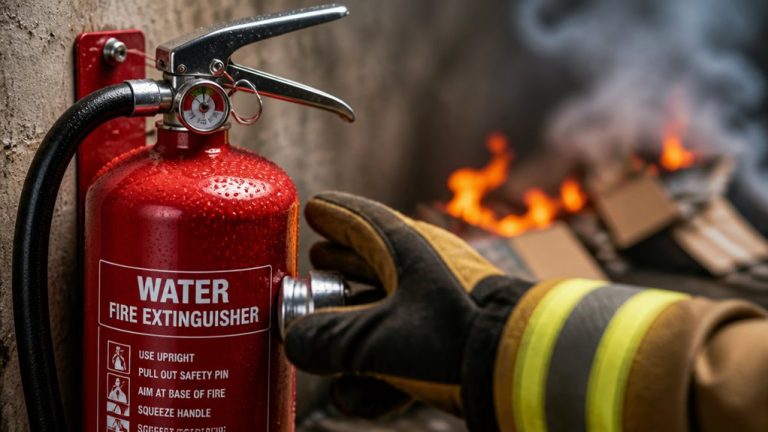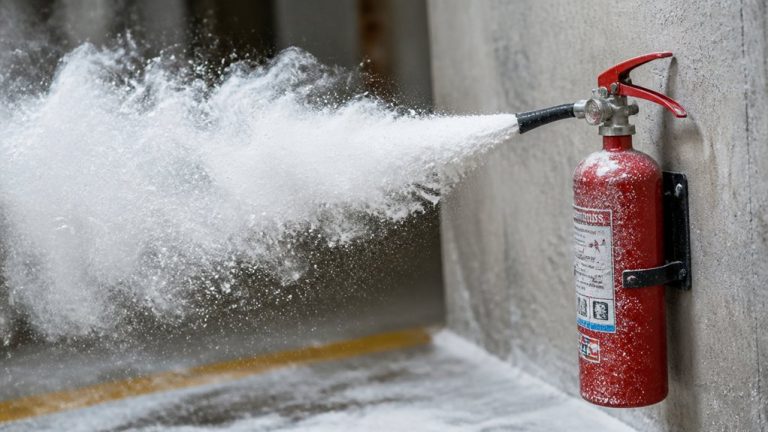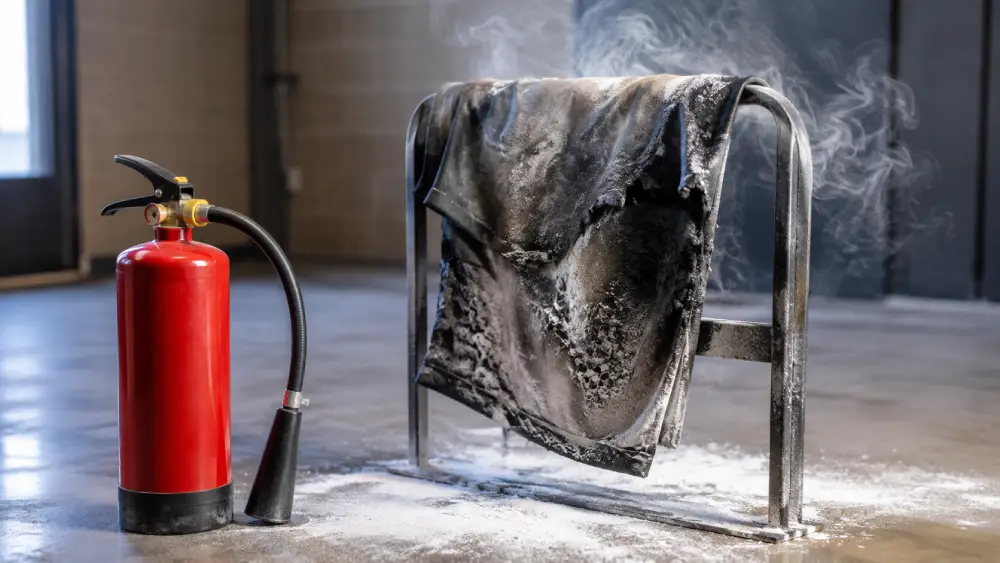

You shouldn’t use a fire extinguisher directly on a person unless their clothes are actively burning and no safer option like stop, drop, and roll or a fire blanket is available.
Extinguishers can irritate skin, eyes, and lungs. Some types risk frostbite or breathing problems.
Water-based ones are gentler but limited to certain fires. Knowing the right steps to quickly stop flames and care for injuries can make a big difference in an emergency.
Key Takeaways
- Using a fire extinguisher directly on a person is generally unsafe and only recommended if the person is fully on fire with no safer option available.
- The preferred method to stop flames on a person is to use “stop, drop, and roll” or a fire blanket.
- Dry chemical extinguishers can irritate skin, eyes, and lungs, causing pain and respiratory issues if used on people.
- CO2 extinguishers should never be used on people due to frostbite and breathing hazards.
- After extinguishing flames, call emergency services immediately and seek medical attention for any injuries or exposure effects.
Can You Use a Fire Extinguisher on a Person?
You should almost never use a fire extinguisher directly on a person unless they’re actively on fire and no safer option is available. In such a rare emergency, your goal is to stop the flames quickly to prevent severe injury or death.
Only use a fire extinguisher on a person if they’re on fire and no safer option exists.
Remember, extinguishers aren’t designed to treat burns or injuries; they only suppress fire. Avoid using carbon dioxide extinguishers on people, as they risk frostbite and breathing issues.
Dry chemical agents can irritate skin, eyes, and lungs, so use them only if absolutely necessary. After extinguishing flames, call emergency services immediately.
Your priority should be removing the person from the heat source safely, using safer methods like fire blankets or “stop, drop, and roll” if possible. Always follow up with proper medical care after any fire incident.
Keep in mind that the spray duration of fire extinguishers is typically around 21 seconds, so quick and effective use is essential in emergencies.
Risks of Using Fire Extinguishers on Skin or Clothing
While extinguishing flames on a person may be necessary in an emergency, using a fire extinguisher directly on skin or clothing carries significant risks. The chemicals and agents inside can irritate your skin, eyes, and lungs, causing redness, pain, or breathing difficulties.
Carbon dioxide extinguishers pose additional dangers like frostbite and oxygen displacement, especially in confined spaces. Inhaling powder or fumes may lead to coughing, dizziness, or more severe respiratory problems. Using an extinguisher isn’t a treatment; it’s a last resort to stop active flames.
After extinguishing, you must remove contaminated clothing, rinse exposed skin with soap and water, move to fresh air, and seek immediate medical attention. Be aware that improper use can worsen injuries, so always prioritize safer, alternative methods first. Immediate actions such as moving to fresh air and using respiratory protection are crucial if inhalation occurs.
Which Fire Extinguisher Types Are Safer for Use on People?
Although no fire extinguisher type is completely safe for use on people, some are less hazardous than others when putting out flames on clothing or skin in an emergency.
You should avoid CO2 extinguishers due to frostbite and breathing risks. Dry chemical extinguishers can irritate skin and lungs but are often used because of effectiveness.
Water extinguishers are gentler but are only suitable for Class A fires. Here’s a quick comparison:
| Extinguisher Type | Safety on Skin | Key Risk |
|---|---|---|
| Water | Higher | Electrical hazard |
| Dry Chemical | Moderate | Irritates skin, lungs |
| CO2 | Low | Frostbite, oxygen displacement |
Use the least harmful type available, aiming to extinguish flames swiftly and seek medical help immediately. ABC fire extinguishers use a non-conductive agent that helps prevent electrical shock, making them a common choice for fires involving energized equipment.
What to Do If Someone’s Clothes Catch Fire?
Knowing which type of fire extinguisher poses the least risk to a person helps prepare you for emergencies.
The immediate priority when someone’s clothes catch fire is stopping the flames as quickly and safely as possible.
Don’t hesitate to act; seconds count. First, shout for help and call emergency services immediately.
Then, follow these critical steps:
- Stop, drop, and roll to smother flames. This is the safest and most effective method.
- Use a fire blanket or heavy cloth to carefully pat out the fire if available.
- Avoid using extinguishers directly on skin unless no other option exists. Never use CO2 extinguishers on people.
Once flames are out, seek urgent medical attention. Your swift, calm response can save a life.
Remember, just as bypassing zones on an alarm system should be done selectively and temporarily to avoid vulnerabilities, fire safety actions require careful, appropriate responses to maintain overall protection and minimize risks from faulty equipment.
How to Care for Skin, Eyes, and Breathing After Fire Extinguisher Exposure?
If you come into contact with fire extinguisher residue, act quickly to protect your skin and eyes from irritation.
Rinse your eyes with clean, lukewarm water for at least 15 minutes without rubbing.
Wash exposed skin thoroughly with soap and water, and remove contaminated clothing immediately to prevent further irritation.
After exposure, move to fresh air to reduce inhalation risks.
Pay close attention to symptoms like coughing, chest tightness, dizziness, or shortness of breath.
If you experience persistent redness, pain, swelling, vision changes, or breathing difficulties, seek medical attention promptly.
Remember, fire extinguishers aren’t designed for direct contact with people.
Your goal after exposure is to minimize harm and get professional care as soon as possible.
Wear gloves, goggles, and a mask or respirator during cleanup to reduce exposure to fine particles and prevent further irritation.
Frequently Asked Questions
How Often Should Fire Extinguishers Be Inspected and Maintained?
You should inspect your fire extinguisher monthly to make certain it’s fully charged, accessible, and free from damage.
Professional maintenance and a thorough check are necessary annually to keep it reliable.
Don’t skip these steps; neglect can lead to failure during emergencies.
Always follow manufacturer guidelines and local fire codes.
Regular care guarantees your extinguisher performs when you need it most, protecting lives and property effectively.
Can Fire Extinguishers Be Reused After Discharge?
You generally can’t reuse fire extinguishers after discharge. Once you’ve used one, it needs to be properly refilled and serviced by a professional to guarantee it works safely and effectively next time.
Don’t try to refill it yourself. Always inspect and maintain your extinguisher regularly, and after any use, get it checked immediately. This keeps you prepared and protects you during emergencies.
What Is the Best Way to Dispose of an Old Fire Extinguisher?
The best way to dispose of an old fire extinguisher is to contact your local fire department or hazardous waste disposal facility.
Don’t just throw it in the trash, as pressurized cylinders can be dangerous.
You’ll need to either fully discharge it outside in a safe area or let professionals handle it.
Many communities have specific disposal or recycling programs for fire extinguishers, so check local guidelines to stay safe and compliant.
Are There Training Courses Available for Using Fire Extinguishers Properly?
Yes, you can find training courses specifically designed to teach you how to use fire extinguishers properly.
These courses often cover extinguisher types, operation techniques, and safety precautions.
You’ll gain hands-on experience and learn when and how to act during a fire emergency.
Look for local fire departments, safety organizations, or online platforms offering certified fire safety training to ensure you’re prepared and confident in using extinguishers correctly.
Can Pets Be Safely Protected During a Fire Extinguisher Use?
When it comes to pets, don’t throw the baby out with the bathwater. You can’t always protect them directly with a fire extinguisher.
Instead, focus on getting them away from danger quickly and safely. Extinguisher chemicals can irritate their eyes and lungs, so avoid spraying near them.
Use a fire blanket or create a safe escape route. Always prioritize their safety by removing them from harm before using any extinguisher nearby.
Final Answer: Can You Use a Fire Extinguisher on a Person?
When someone’s on fire, you need to act fast.
But remember, not all fire extinguishers are safe for use on people.
You can’t just spray without caution, as chemicals may harm skin, eyes, or lungs.
Always choose safer options like water or foam extinguishers if available.
If clothes catch fire, stop, drop, and roll immediately.
As the saying goes, “An ounce of prevention is worth a pound of cure.”
So prioritize safety and know your extinguisher before using it on a person.