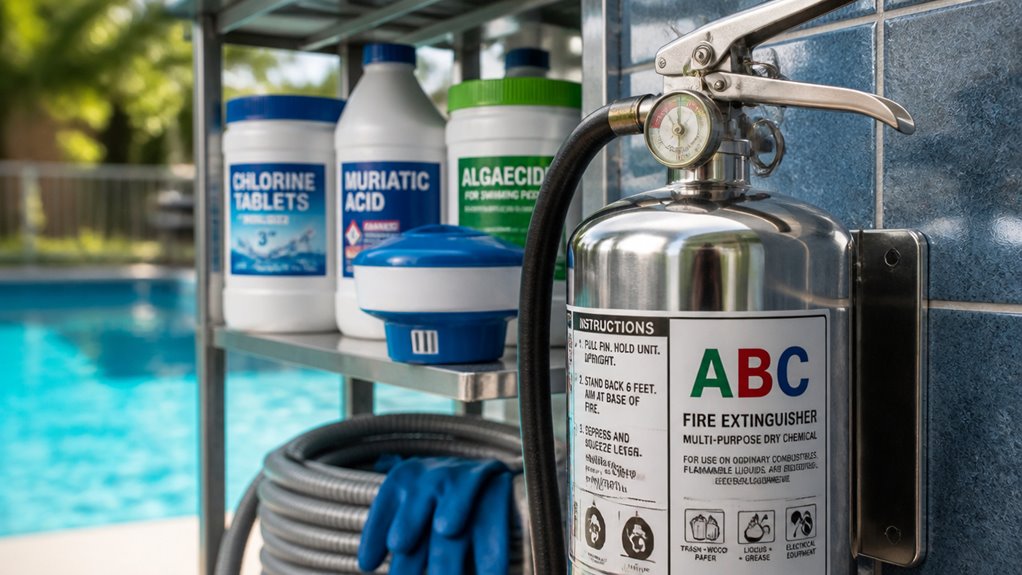

You should use stored-pressure water or water-mist extinguishers rated for oxidizers when handling pool chemical fires involving chlorine or bromine.
Avoid multipurpose dry chemical, CO2, halon, or halocarbon extinguishers, as they can worsen these fires or cause dangerous reactions.
Always confirm extinguisher compatibility with the chemical’s Safety Data Sheet and local codes.
Proper selection and safe use are essential to control fires effectively and prevent re-ignition or hazardous incidents.
Additional guidance covers storage, PPE, and emergency response measures.
Key Takeaways
- Use stored-pressure water extinguishers for oxidizing pool chemicals like chlorine and bromine to cool and limit fire spread safely.
- Water-mist extinguishers are preferred in confined pump or chemical rooms handling pool chemicals for effective fire suppression.
- Avoid multipurpose dry chemical and carbon dioxide extinguishers, as they can worsen oxidizer fires or cause hazardous reactions.
- Confirm extinguisher selection aligns with the chemical’s Safety Data Sheet (SDS) and complies with local fire codes and NFPA standards.
- Ensure extinguishers are inspected regularly and maintained by licensed fire protection services for reliable emergency use.
How Chlorine and Bromine Chemicals Can Catch Fire?
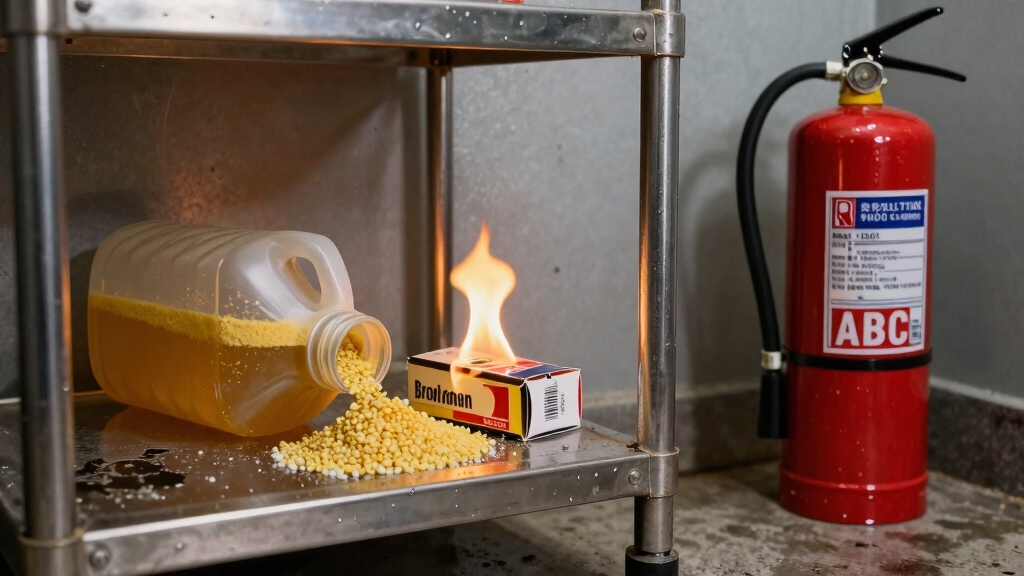
Although chlorine and bromine chemicals are primarily used as oxidizers rather than fuels, they can catch fire under specific conditions. These conditions include contamination, improper storage, or exposure to heat sources.
You need to understand that these chemicals are highly reactive. If mixed with organic materials, combustible substances, or incompatible chemicals, they may ignite or accelerate combustion.
Improper storage, such as inadequate ventilation or proximity to heat, raises the risk of thermal decomposition. This can release flammable gases or vapors.
Additionally, mechanical shock or contamination with reducing agents can trigger violent reactions. You must handle and store these oxidizers carefully to prevent accidental fires.
Ensure segregation from combustibles and maintain stable environmental conditions. Awareness of these hazards helps you implement effective fire prevention measures in pool chemical storage areas.
Due to the potential for releasing flammable gases during decomposition, continuous monitoring and proper containment procedures are essential to minimize fire risks.
Fire Code and NFPA Requirements for Pool Chemical Extinguishers
When you select fire extinguishers for pool chemical storage areas, you must follow specific fire code and NFPA requirements to guarantee safety and compliance.
NFPA 430 and NFPA 400 both emphasize that only water-type extinguishers are suitable for oxidizer storage, including chlorine and bromine pool chemicals.
Multipurpose dry chemical extinguishers are prohibited as they can react dangerously with these oxidizers.
Local authorities may mandate stored-pressure water extinguishers with a minimum 2A rating.
Your choice should align with the chemical’s Safety Data Sheet (SDS) and site-specific conditions.
Make sure extinguishers are installed per code, avoiding incompatible agents like CO2 or halocarbon types unless explicitly approved.
Always coordinate extinguisher selection with emergency procedures and hazard assessments to minimize fire risks and chemical reactions during incidents.
It is important to note that stored-pressure design extinguishers offer reliable discharge and operation within a broad temperature range, ensuring effectiveness in various storage environments.
Best Fire Extinguishers for Pool Chemicals
Since pool chemicals like chlorine and bromine act as strong oxidizers, you must use fire extinguishers that won’t react adversely with them.
Stored-pressure water extinguishers and water-mist types are the best options for pool chemical storage areas. They effectively cool the chemicals, limiting fire spread without introducing reactive agents.
Water-based extinguishers reduce the risk of dangerous chemical reactions and toxic vapor release.
Always select extinguishers in accordance with the chemical’s Safety Data Sheet (SDS) and local fire codes, such as NFPA 400 and NFPA 430.
Make certain the extinguisher’s rating matches the specific hazard; typically, a Class A rating suffices due to the cooling mechanism.
For your safety, verify compatibility before installation and familiarize yourself with emergency procedures to address incipient fires safely.
Clean agent fire extinguishers, while excellent for sensitive electronics and occupied spaces, are generally not recommended for pool chemical fires due to their different extinguishing mechanisms and fire class effectiveness, as detailed in fire class effectiveness.
Fire Extinguishers to Avoid Near Pool Chemicals
While stored-pressure water and water-mist extinguishers are suitable for pool chemical hazards, not all extinguisher types are safe to use near oxidizing chemicals like chlorine and bromine.
You should avoid multipurpose dry chemical extinguishers, especially those containing ammonium compounds, as they can react adversely with these oxidizers.
Carbon dioxide extinguishers are also prohibited in many oxidizer storage guidelines due to potential incompatibility.
Likewise, halon and halocarbon clean agents are generally unsuitable unless explicitly approved by the authority having jurisdiction.
Foam extinguishers may be permissible in some scenarios, but you must verify compatibility against the chemical’s Safety Data Sheet and local codes.
Using incompatible extinguishers risks exacerbating the fire or causing hazardous chemical reactions.
Always exclude these types when managing pool chemical fire safety.
Dry chemical powders can become corrosive when exposed to moisture, which may cause additional damage if residue is not properly cleaned up, so proper maintenance and cleanup are essential to safety (residue characteristics).
Choosing the Right Extinguisher for Pool Chemicals
Although selecting a fire extinguisher for pool chemical storage might seem straightforward, you must prioritize compatibility with the specific oxidizers involved, such as chlorine or bromine compounds.
Water or water-mist extinguishers are your best choice. They cool the chemicals and reduce fire spread without triggering dangerous reactions.
Avoid multipurpose dry chemical, CO2, and halon extinguishers near oxidizers. Follow SDS and local fire codes strictly.
| Extinguisher Type | Suitability for Pool Chemicals |
|---|---|
| Water (Stored-Pressure) | Highly recommended for chlorine/bromine oxidizers |
| Water Mist | Preferred in confined pump or chemical rooms |
| ABC Dry Chemical | Not recommended; may react dangerously |
| CO2 | Avoid; not suitable for oxidizer fires |
| Halon/Halocarbon | Generally unsuitable unless approved |
Choose carefully to ensure safe, effective fire response.
Safe Storage Practices for Pool Chemicals
When it comes to storing pool chemicals, it’s really important to keep incompatible substances separate. For instance, you definitely want to keep chlorine and acids apart to avoid any dangerous reactions.
Let’s talk about your storage area, too. Make sure everything is clearly labeled so you can easily find what you need. It’s also a good idea to have spill containment measures in place—just in case. Plus, having accessible emergency procedures can really help if something goes wrong.
And don’t forget: always plan for quick shutdowns! It’s smart to have the right personal protective equipment on hand whenever you’re handling these chemicals. Safety first! Additionally, consider keeping a 10 lb ABC extinguisher nearby for better coverage in areas where flammable liquids may be stored.
Chemical Segregation Guidelines
Because improper chemical segregation can lead to dangerous reactions, you must store pool chemicals according to strict compatibility guidelines.
Separate oxidizers like chlorine and bromine from acids and organic materials to prevent violent interactions.
Make certain proper ventilation and use corrosion-resistant shelving to avoid contamination.
Always label storage areas clearly and maintain spill containment measures.
Key practices include:
Store acids and oxidizers in separate, well-ventilated areas. Use dedicated containers resistant to chemical degradation.
Maintain clear, visible labeling and signage for each chemical group. Implement secondary containment to control accidental releases.
Adhering to these guidelines minimizes risk, protects personnel, and ensures regulatory compliance.
Your careful segregation strategy plays a critical role in safe pool chemical management and fire prevention.
Additionally, ensuring proper storage conditions and regular professional inspections can prevent hazards related to corrosion and chemical damage in storage areas.
Emergency Preparedness Measures
When storing pool chemicals, establishing thorough emergency preparedness measures is crucial to limit hazards and guarantee swift, effective responses.
You should make certain chlorine and acids are segregated to prevent dangerous reactions. Clearly label all containers and storage areas, and keep spill kits and personal protective equipment, like chemical-resistant gloves and splash goggles, readily accessible.
Install stored-pressure water or water-mist extinguishers, as these are compatible with oxidizing pool chemicals. Avoid multipurpose dry chemical or CO2 extinguishers, which can worsen oxidizer fires.
Develop and post written emergency procedures, including shutdown protocols for pool circulation systems. Train personnel on proper extinguisher use and the PASS technique.
Finally, monitor for re-ignition after suppression, as pool chemicals may continue off-gassing or reacting, necessitating vigilance even after initial fire control.
Ensure that fire extinguisher signage is mounted at an optimal height with clear visibility to support quick identification during an emergency.
PPE and Procedures for Pool Chemical Fires
When dealing with hazardous pool chemical fires, it’s crucial to wear the right personal protective equipment (PPE). Make sure you have splash goggles, chemical-resistant gloves, boots, and aprons on. These items are your first line of defense against potential dangers.
Now, let’s talk about handling procedures. It’s really important to follow strict guidelines to reduce your exposure and avoid any unwanted chemical reactions while responding to a fire. Keeping things safe is the name of the game!
In case of an emergency, your priority should be a safe evacuation. Don’t hesitate to alert emergency services right away. If the fire is small and manageable, you can use only approved extinguishers. Just remember to stay calm and focused!
Ensure that any fire extinguisher used is properly inspected and refilled by a licensed fire protection service to guarantee effectiveness and safety during use.
Essential Personal Protective Equipment
Equip yourself with the proper personal protective equipment (PPE) before handling pool chemical fires. This minimizes exposure to hazardous substances.
Pool chemicals like chlorine and bromine are highly reactive and can release toxic vapors or cause burns. Wearing the right PPE reduces risk and improves safety during emergency response.
Ensure you have:
- Chemical-resistant gloves to prevent skin contact with corrosive agents.
- Splash goggles or a face shield to protect eyes from hazardous splashes.
- Impervious boots and aprons to guard against spills and contaminant absorption.
- Respiratory protection if toxic fumes or dust are present.
Always inspect your PPE for damage before use. Proper donning and doffing techniques are critical to avoid cross-contamination. Your safety depends on strict adherence to these protective measures. Additionally, understanding the chemical compatibility of fire extinguishing agents with pool chemicals is essential to avoid hazardous reactions during suppression.
Safe Handling Procedures
Follow strict protocols to safely handle pool chemical fires. Prioritize proper use of PPE and adherence to established procedures.
Always wear splash goggles, chemical-resistant gloves, boots, and aprons to guard against harmful vapors and splashes. Use water or water-mist extinguishers only, as dry chemical agents can trigger adverse reactions with oxidizers.
| PPE Item | Purpose |
|---|---|
| Splash goggles | Protect eyes from chemical splashes |
| Chemical-resistant gloves | Prevent skin contact with chemicals |
| Boots and aprons | Shield lower limbs and torso |
Handle chemicals in well-ventilated areas. Avoid mixing incompatible substances and follow the chemical SDS.
Never use extinguishers incompatible with oxidizers. Maintain clear access to extinguishers and ensure training on their correct use. Proper storage and handling minimize risks by preventing physical damage to extinguishers that could compromise safety during emergencies.
Emergency Response Steps
When responding to a pool chemical fire, prioritize donning the full set of personal protective equipment: splash goggles, chemical-resistant gloves, boots, and aprons. This minimizes exposure to hazardous vapors and splashes.
Immediately assess the fire’s size and the chemical involved before acting. Use only water or water-mist extinguishers approved for oxidizer fires. Avoid dry chemical or CO2 types. Follow established emergency procedures precisely to limit risk.
Key emergency response steps include:
- Isolate the area and evacuate non-essential personnel.
- Shut down pool circulation pumps to prevent chemical spread.
- Apply the PASS technique with a compatible water-based extinguisher carefully.
- Continuously monitor for re-ignition or hazardous vapor release after suppression.
Always prioritize safety and call emergency services if the fire escalates.
When to Use a Pool Chemical Extinguisher and When to Call Emergency Services?
Although small fires involving pool chemicals may seem manageable, you should only attempt to extinguish them if you have the appropriate water-based extinguisher and the scene is safe.
If the fire grows, produces toxic vapors, or involves reactive oxidizers, evacuate immediately and call emergency services.
Use the PASS technique when operating extinguishers and monitor for re-ignition.
| Situation | Action | Extinguisher Type |
|---|---|---|
| Small, contained fire | Attempt extinguishing | Water or water-mist |
| Fire spreads or reacts | Evacuate, call emergency | N/A |
| Unknown chemical involvement | Avoid extinguishing | N/A |
| Post-extinguishing | Monitor for re-ignition | N/A |
Frequently Asked Questions
How Often Should Pool Chemical Fire Extinguishers Be Inspected?
You should inspect pool chemical fire extinguishers monthly to ensure they’re fully charged, accessible, and undamaged.
Conduct an annual maintenance check by a certified professional to verify internal components and pressure.
Follow NFPA standards and local fire codes closely, since these extinguishers protect highly reactive oxidizers.
Always document inspections and address any issues immediately to maintain reliability during emergencies.
Regular checks prevent malfunction and ensure your extinguisher operates safely and effectively.
Can Pool Chemical Extinguishers Be Used on Electrical Fires?
You shouldn’t use water-based pool chemical extinguishers on electrical fires because water conducts electricity, posing shock hazards.
While these extinguishers are ideal for oxidizer fires, they’re unsafe around energized equipment.
Instead, use a CO2 or clean-agent extinguisher rated for electrical fires (Class C).
Always make sure the extinguisher type matches the fire class and environment to avoid worsening the situation or risking personal injury.
When uncertain, call emergency services.
What Training Is Required for Staff Using Pool Chemical Extinguishers?
You need training in extinguisher identification, proper use, and safety precautions. Understand the specific water-based extinguisher for oxidizers.
Learn the PASS technique and recognize when to evacuate or call emergency services. Practice donning PPE like goggles and gloves.
Know chemical hazards from SDS and rehearse spill response and shutdown procedures. This training guarantees you act swiftly, safely, and effectively.
Minimizing risks from reactive pool chemicals during fire incidents is essential.
Are There Special Disposal Methods for Used Pool Chemical Extinguishers?
Yes, you must follow special disposal methods for used pool chemical extinguishers. Since they may contain residual oxidizing agents or water-based agents, treat them as hazardous waste per local regulations.
Don’t simply discard them in regular trash. Contact your local hazardous waste facility or fire safety equipment supplier for proper disposal instructions.
Always drain and depressurize the extinguisher safely before transport. Wear appropriate PPE to avoid chemical exposure.
How Do Temperature Changes Affect Pool Chemical Extinguisher Performance?
Isn’t it just perfect when extreme heat or freezing cold decides to meddle with your extinguisher’s performance?
Temperature shifts can alter pressure inside water-mist or stored-pressure extinguishers, risking reduced discharge effectiveness.
You must store them within specified temperature ranges to maintain reliability.
If temperatures drop too low, water can freeze, rendering the extinguisher useless.
High heat may increase pressure dangerously.
Keep Pool Chemical Storage Safer
When handling pool chemicals, you’re safeguarding more than just your water. You’re protecting your whole environment.
Choosing the right fire extinguisher and storing chemicals properly helps you gently steer clear of unexpected flames.
Remember, a calm, well-prepared response can prevent small sparks from becoming overwhelming challenges.
Always prioritize your safety gear and know when to call for professional help.
Taking these careful steps guarantees your pool area stays a safe, tranquil oasis.