
Yes, temperatures directly impact your fire alarm system’s reliability. High heat can degrade components, cause false alarms, and reduce sensor responsiveness.
Cold slows battery chemistry, triggers malfunctions, and weakens signals. Moisture further complicates detection by disrupting sensor accuracy.
Proper placement away from vents and heat sources, routine battery care, and timely maintenance are essential to prevent temperature-induced errors.
Understanding these effects helps you guarantee your alarm performs at its best under varying environmental conditions.
Key Takeaways
- High temperatures can cause sensor desensitization, false alarms, and accelerated battery depletion, reducing fire alarm system reliability.
- Cold temperatures slow battery chemical reactions, causing intermittent power, delayed alerts, and increased false alarms.
- Humidity and moisture from condensation or high relative humidity can impair sensor accuracy and trigger false alarms.
- Improper alarm placement near vents, heat sources, or uninsulated areas leads to overheating, sensor malfunctions, and unreliable performance.
- Regular maintenance, including battery replacement and sensor cleaning, ensures optimal function despite temperature-related stresses.
How High Temperatures Affect Fire Alarm Performance?
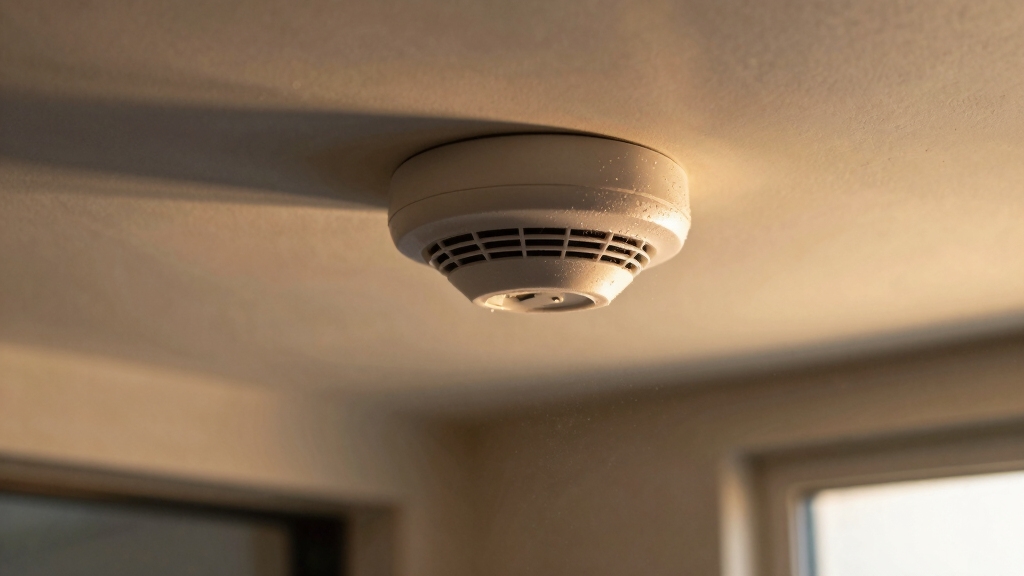
Although fire alarm systems are engineered to function within specific temperature ranges, high temperatures can markedly impair their performance by causing component degradation, false alarms, and malfunctions.
High temperatures can significantly degrade fire alarm system performance, leading to malfunctions and false alarms.
When ambient heat exceeds design limits, sensitive sensors may deteriorate, reducing detection accuracy. Control panels and wiring risk overheating without adequate ventilation, increasing failure probability.
Devices installed near vents, skylights, or heat-generating equipment tend to exhibit unreliable behavior due to localized temperature spikes. In spaces like garages, temperatures over 100°F often trigger nuisance alarms if alarms lack appropriate thermal ratings.
Prolonged exposure to heat also accelerates battery depletion, compromising system readiness. To maintain optimal function, you must ensure proper ventilation, avoid placing detectors near heat sources, and select components rated for expected temperature ranges. This minimizes false activations and extends system lifespan.
Additionally, heat-induced air currents can carry dust or steam into sensing chambers, contaminating sensors and causing erroneous alarms.
What Cold Weather Does to Fire Alarm Systems?
Experiencing cold weather can markedly impact fire alarm systems by slowing battery chemical reactions and reducing current output. This often leads to malfunctions or nuisance alarms.
You may notice smoke detectors beeping intermittently or failing to respond promptly because battery efficiency drops significantly below optimal operating temperatures.
Additionally, freezing conditions pose risks to systems with water-based components or exposed wiring, potentially causing damage or performance degradation.
Key cold-weather effects include:
- Decreased battery capacity causing false or weak alarms.
- Increased risk of mechanical damage to exposed system parts due to ice formation.
- Reduced current flow impairing signal transmission and detector sensitivity.
To maintain reliability, you should conduct seasonal inspections before winter. Make certain batteries are stored and operated within recommended temperature ranges. Many smoke detectors rely on backup batteries that can also be affected by cold temperatures, emphasizing the importance of regular maintenance and testing.
Why Humidity and Moisture Cause False Fire Alarms?
When humidity and moisture levels rise, smoke alarms become increasingly prone to false alarms due to the sensors’ heightened sensitivity to airborne water particles.
Water vapor can scatter or refract the detector’s light beam, triggering the optical sensor erroneously.
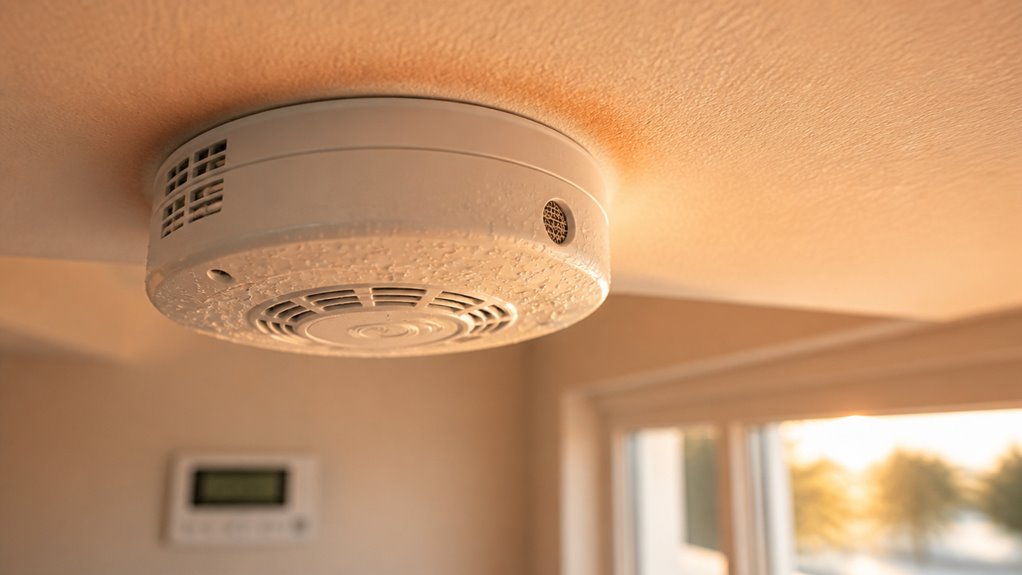
Additionally, moisture may cause condensation on internal components, impairing sensor accuracy and causing erratic readings.
This is particularly common in warm, wet climates or during peak wet seasons when indoor humidity spikes.
Environments with poor ventilation, such as bathrooms or kitchens, exacerbate this issue.
To mitigate false alarms, ensure proper air circulation, use dehumidifiers, and limit exposure to moisture around detectors.
Understanding this interaction between moisture and sensor technology helps you avoid unnecessary disruptions and maintains system reliability.
Ionization detectors are especially vulnerable to false alarms when relative humidity exceeds 85% humidity levels.
Where to Install Fire Alarms to Avoid Temperature Issues?
To make certain fire alarms function reliably, you must install them away from areas prone to extreme or fluctuating temperatures. Avoid locations near heat sources or cold drafts where temperature swings can impair sensor accuracy and battery performance.
Position alarms in stable environments that fall within manufacturer-specified temperature ranges to minimize false alarms and component degradation.
Focus on these key placement considerations:
Keep alarms away from vents, skylights, and heat-generating equipment to prevent overheating or false triggering.
Avoid uninsulated garages or attics experiencing temperature extremes beyond device ratings.
Make sure control panels and wiring are installed in well-ventilated, temperature-controlled spaces to maintain system integrity.
Additionally, regular battery maintenance is essential to ensure backup power reliability, especially when temperature fluctuations may affect battery lifespan and detector performance.
Parts of Your Fire Alarm Most Affected by Temperature
Proper placement of fire alarms minimizes exposure to temperature extremes. However, understanding which components are most vulnerable to heat and cold helps you maintain system reliability.
Batteries are highly sensitive. Heat accelerates degradation, while cold reduces chemical reaction rates, impairing output. Sensors and detectors also suffer; prolonged heat can desensitize them, causing false alarms or missed detections, and cold can slow response times.
Control panels and wiring require protection from overheating and UV exposure. Excessive heat may cause component failure or erratic signals.
Additionally, suppression system pressures fluctuate with temperature, risking performance lapses.
You should ensure adequate ventilation, insulation, or shading for these parts, especially in variable environments like garages or attics, to maintain the system’s consistent and accurate operation. Regular battery maintenance and replacement every six months is essential to keep backup power reliable despite temperature stresses.
Why Battery Care Matters for Fire Alarm Performance?
Consistently maintaining your fire alarm batteries is essential for ensuring reliable system performance. Batteries are highly sensitive to temperature fluctuations, which can degrade their chemical efficiency and reduce current output.
This degradation may cause intermittent beeping or complete system failure when you need it most. Proper battery care involves monitoring voltage, replacing batteries before expiration, and storing spares within recommended temperature ranges (40°F to 100°F).
Neglecting these steps risks false alarms or undetected fires. Temperature extremes accelerate battery wear, compromising alarm readiness. Insufficient voltage output can trigger nuisance alarms or silence alerts.
Proper storage and timely replacement optimize battery lifespan and performance. Using batteries with stable voltage output helps prevent unexpected failures caused by temperature-induced voltage drops.
Seasonal Maintenance Tips to Prevent Temperature Failures
Scheduling seasonal maintenance plays a critical role in preventing temperature-related failures in fire alarm systems.
Regular seasonal maintenance is essential to prevent temperature-induced failures in fire alarm systems.
You should inspect control panels, wiring, and detectors before summer and winter, documenting environmental conditions to identify overheating or cold stress trends.
Make certain batteries are stored and tested within recommended temperature ranges, replacing them if performance drops.
Clean smoke alarms and sensors to remove dust and moisture buildup, which can increase false alarms under temperature extremes.
Verify that alarms aren’t positioned near vents, skylights, or heat-generating equipment to avoid heat-induced malfunctions.
Check ventilation in enclosures housing critical components to prevent overheating.
Finally, engage professional servicing at least biannually to perform thorough testing and adjustments.
This ensures your system operates reliably despite seasonal temperature fluctuations.
Regular site inspections using NFPA-based checklists help identify potential temperature-related compliance issues early and maintain system reliability.
How Temperature Changes Affect Detector Sensitivity?
While temperature fluctuations might seem minor, they directly impact the sensitivity of fire detectors by altering sensor responsiveness and signal accuracy.
When ambient temperatures shift outside the designed operational range, detector components may react slower or produce erratic signals. This can compromise early fire detection.
High heat can desensitize sensors, while cold can reduce battery output, both affecting alarm reliability.
Key impacts include:
- Reduced sensor responsiveness from prolonged heat exposure, leading to delayed or missed alerts.
- Cold temperatures slowing battery chemistry, causing intermittent power drops and false alarms.
- Sudden temperature shifts generating inconsistent sensor outputs, increasing false alarm risk.
Understanding these effects helps you maintain peak detector performance by ensuring proper placement and timely maintenance aligned with your environment’s temperature variability.
Additionally, replacing batteries promptly when low voltage causes chirping is crucial for reliable operation, as recommended in battery replacement safety guidelines.
How Multi-Sensor Fire Alarms Reduce False Alarms in Extreme Temperatures?
Temperature fluctuations can markedly impair traditional fire alarm sensors, causing false alarms or delayed responses. Multi-sensor fire alarms mitigate this by integrating multiple detection methods, such as smoke, heat, and carbon monoxide sensors. This allows the system to cross-verify signals before triggering an alarm.
This sensor fusion reduces the impact of temperature-induced anomalies on any single detector. Additionally, many multi-sensor alarms incorporate temperature compensation algorithms that adjust sensitivity based on ambient conditions. This maintains detection accuracy despite extreme heat or cold.
However, it is important to note that smoke alarms do not detect combustible gases, so dedicated gas detectors are necessary for comprehensive hazard monitoring.
Frequently Asked Questions
Can Temperature Extremes Damage Fire Alarm Wiring or Control Panels Permanently?
Yes, extreme temperatures can permanently damage fire alarm wiring and control panels.
Prolonged heat can degrade insulation and cause wiring to become brittle or melt.
Cold can make materials contract and crack.
Control panels exposed to high temperatures risk overheating, leading to component failure.
To protect your system, guarantee adequate ventilation, use insulated wiring, and install components in shaded or temperature-controlled environments to maintain long-term reliability.
How Do Temperature Fluctuations Impact Fire Suppression System Pressures?
Think of your fire suppression system pressure like a balloon that expands and contracts with heat and cold.
Temperature fluctuations cause pressure to rise in summer and drop in winter, impacting system performance.
You need to monitor these shifts closely because excessive pressure can strain pipes and valves.
Low pressure may reduce suppression effectiveness.
Regular maintenance and pressure checks guarantee your system operates reliably despite temperature swings.
Are There Specific Fire Alarm Models Designed for Extreme Temperature Environments?
Yes, you can find fire alarm models specifically engineered for extreme temperature environments.
These devices feature temperature compensation technology to maintain detection accuracy despite heat or cold.
Look for alarms rated for high or low temperature ranges, with insulated housings and robust batteries designed to function reliably in harsh conditions.
Selecting multi-sensor detectors with heat and smoke detection enhances performance in variable climates, reducing false alarms and ensuring system stability.
What Is the Recommended Battery Storage Temperature for Optimal Fire Alarm Function?
You should store fire alarm batteries between 40°F and 100°F to maintain peak performance.
Battery chemical reactions slow markedly below 40°F, reducing current output and increasing false alarms.
Studies show battery efficiency can drop by up to 20% in cold conditions.
Keeping batteries within this temperature range preserves their charge capacity and reliability.
This ensures your fire alarm functions correctly, especially during critical moments when accurate detection is essential.
How Often Should Professional Fire Alarm Servicing Be Scheduled Yearly?
You should schedule professional fire alarm servicing at least twice a year to guarantee peak system performance.
This biannual maintenance helps detect temperature-related issues, such as overheating or cold-induced malfunctions, before they impair functionality.
Regular inspections identify environmental impacts on sensors, batteries, and control panels, allowing prompt adjustments or replacements.
Keep Your Alarm Reliable in Hot and Cold Conditions
Think of your fire alarm system as a finely tuned instrument. Extreme temperatures can throw its performance out of harmony. High heat may dull its senses, while cold can freeze its response time.
Moisture and humidity add static, triggering false alarms. By placing alarms wisely, maintaining batteries, and using multi-sensor technology, you ensure your system stays sharp.
Regular seasonal check-ups keep your fire alarms performing like clockwork, no matter the temperature swings.