
To dispose of a fire extinguisher properly, first check its pressure and identify the agent type, treating charged ones as hazardous.
Partially or fully charged extinguishers should be taken to Household Hazardous Waste facilities or approved collection sites, often with prior fire department contact.
Empty units must be fully discharged, depressurized, and labeled before recycling metal parts.
Special care is needed for halogenated or foam types, as local laws vary.
Keep following to understand specific discharge methods and local disposal options.
Key Takeaways
- Check the pressure gauge and treat any charged extinguisher as hazardous until fully discharged.
- Discharge extinguishers outdoors in a safe, open area following local regulations before disposal or transport.
- Take charged or partially charged units to Household Hazardous Waste facilities or authorized collection events.
- Fully depressurize and remove the head from empty extinguishers, labeling them as empty for recycling.
- Follow special handling rules for halogenated and foam extinguishers, including manufacturer returns and safe discharge practices.
Identify Your Fire Extinguisher’s Pressure and Agent Type
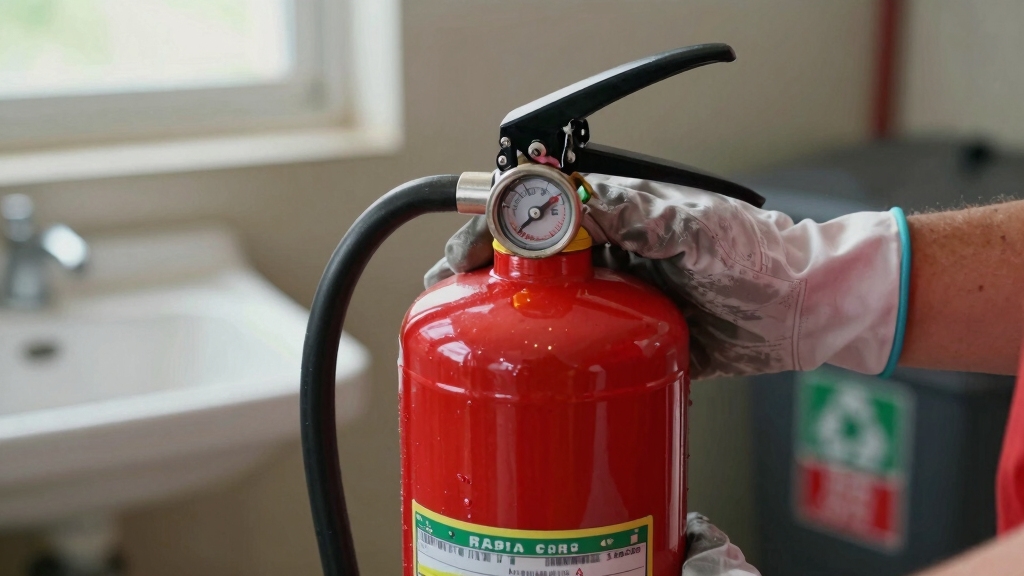
Before disposing of your fire extinguisher, you need to identify its pressure status and the type of extinguishing agent it contains. These factors directly affect the proper disposal method.
First, check the pressure gauge to see if it’s fully charged, partially charged, or empty. If the gauge shows pressure, treat the extinguisher as hazardous until properly discharged.
Next, determine the agent type. Common agents include dry chemical powder, foam, or halogenated compounds, each requiring specific handling. For example, halogenated extinguishers may need special return to manufacturers, especially in places like California.
You must also confirm local regulations since some areas classify all extinguishers as hazardous regardless of status. Accurately identifying pressure and agent type guarantees you follow safe, compliant disposal procedures without risking contamination or injury.
Due to compromised pressure, seals, and safety mechanisms, damaged or discharged extinguishers are generally not reusable and require proper disposal or replacement.
Disposal Options for Charged and Partially Charged Extinguishers
When you have a charged or partially charged fire extinguisher, you can’t simply toss it in the trash due to the residual pressure and chemicals that pose safety and environmental risks.
Your best option is to take it to a Household Hazardous Waste (HHW) facility or a designated collection event, where trained personnel handle pressurized containers safely.
Take charged fire extinguishers to Household Hazardous Waste facilities for safe, professional disposal.
Some fire departments accept these units, but always call ahead to confirm.
If local fire services don’t accept them, specialty disposal facilities or environmental agencies can guide you to an approved location.
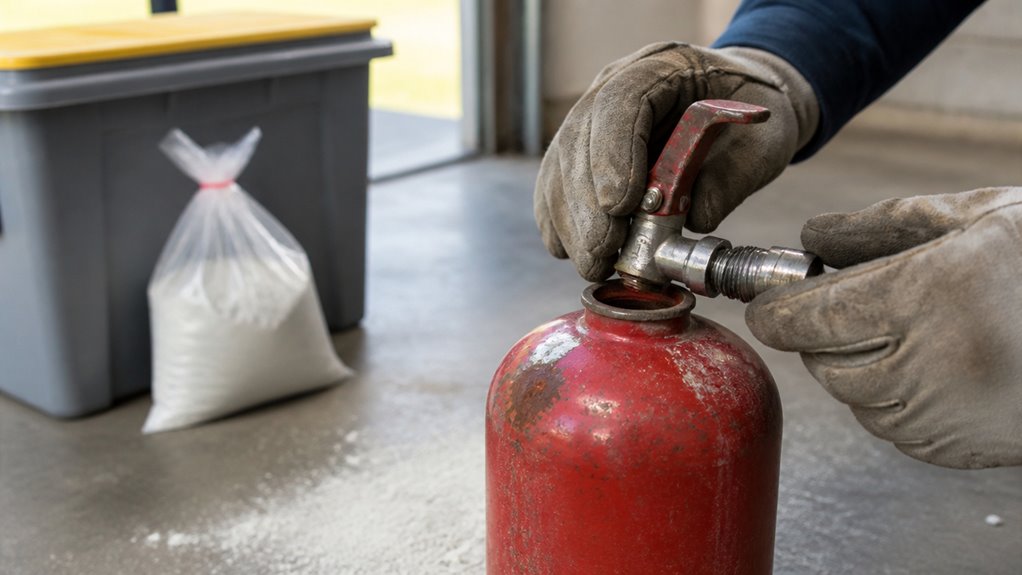
Before transport, discharge the extinguisher outdoors in a safe area, away from people and property, and label it clearly.
Always check local regulations first, as some jurisdictions classify all charged extinguishers as hazardous waste requiring special handling.
Additionally, proper disposal should be performed in accordance with NFPA standards to ensure safety and compliance.
Disposing of Empty Fire Extinguishers
Once you’ve fully discharged and depressurized your fire extinguisher, you can focus on proper disposal methods for empty units.
First, remove the extinguisher head to make certain no pressure remains and to comply with many local recycling rules.
Label the unit as empty to clarify its status during handling and transport.
Next, check with your local waste authority or recycling center to confirm if they accept empty extinguishers or if any special procedures apply.
Most facilities accept the metal cylinder for scrap recycling once it’s fully depressurized, but rules vary widely.
Avoid placing it in regular trash unless local guidelines explicitly allow it.
Separate non-metal parts when possible to improve recycling efficiency.
Always follow local disposal instructions to prevent contamination and guarantee safety during disposal.
Proper maintenance and regular inspection ensure reliable performance and safe handling throughout the extinguisher’s lifecycle, including disposal of empty units as recommended for Class C extinguishers.
When and Where to Safely Discharge Your Fire Extinguisher?
Although discharging a fire extinguisher may seem straightforward, you must choose a safe, open outdoor location well away from buildings, vehicles, and enclosed spaces. This helps minimize risks from accidental discharge and chemical exposure.
Select a level, non-flammable surface and avoid windy conditions that may blow chemicals toward you or others. After discharge, allow the canister to sit for a few days to ensure all pressure dissipates.
Confirm no trapped pressure remains by carefully testing the lever. Always check local regulations before venting, as some areas require specific discharge protocols.
For optimal safety and effectiveness, it is recommended to perform discharge in controlled bursts rather than continuous spraying to conserve agent and maintain pressure.
| Step | Key Point |
|---|---|
| Location | Open outdoor area, away from hazards |
| Surface | Level, non-flammable |
| Weather | Calm, minimal wind |
| Post-discharge wait | Several days before disposal |
Disposal Rules for Halogenated and Foam Fire Extinguishers
After safely discharging your fire extinguisher outdoors and confirming it’s fully depressurized, pay special attention to halogenated and foam extinguishers.
Discharge your fire extinguisher outdoors and ensure it’s fully depressurized before handling halogenated and foam types.
These types require careful handling because their agents can pose environmental hazards and may be regulated differently.
- Halogenated extinguishers often must be returned to manufacturers or authorized facilities for proper agent recovery, especially where local laws dictate.
- Foam extinguishers can release harmful runoff. Avoid discharging near water sources and contain any residue.
- Separate non-metal components to improve recycling of metal parts.
- Always check local regulations before disposal, as some areas classify all extinguishers as hazardous waste regardless of condition.
Following these steps guarantees compliance, protects the environment, and reduces risks associated with improper disposal of these specialized extinguishers.
It is critical to ensure full discharge and depressurization by a certified professional before disposal to prevent injury and environmental harm.
Finding Local Fire Extinguisher Disposal Options
When searching for local fire extinguisher disposal options, you need to prioritize safety and compliance with community regulations.
Start by contacting your local Household Hazardous Waste (HHW) facility or municipal waste authority to confirm whether they accept charged, partially charged, or empty extinguishers.
Many jurisdictions require empty cylinders to be fully depressurized and have the head removed before recycling.
If your extinguisher contains halogenated agents or foam, check for specific return programs or disposal restrictions.
Fire departments may accept extinguishers, but always call ahead to verify.
Attend HHW collection events if available, as they offer safe drop-offs.
Avoid placing pressurized units in regular trash to prevent hazards.
Confirm local rules carefully because disposal requirements vary widely.
Improper handling can lead to environmental harm or fines.
Expired fire extinguishers must be properly depressurized and disposed to prevent hazardous incidents and ensure environmental safety.
Frequently Asked Questions
How Often Should I Inspect My Fire Extinguisher for Disposal Readiness?
You should inspect your fire extinguisher monthly to make sure it’s ready for use or disposal.
Check the pressure gauge to confirm it’s in the green zone and look for any damage or corrosion.
If the extinguisher is discharged or shows signs of wear, prepare it for proper disposal.
Regular inspections help you catch when it’s empty or compromised.
This way, you can safely discharge and recycle or drop it off at a hazardous waste facility.
Can I Refill My Fire Extinguisher Myself at Home?
You shouldn’t refill your fire extinguisher yourself at home.
Refilling requires specialized equipment, knowledge of the correct agent type, and proper pressure calibration to guarantee safety and effectiveness.
Improper refilling can cause malfunction or hazards.
Instead, take it to a certified professional or authorized service center for inspection, maintenance, and refilling.
This guarantees your extinguisher will work correctly when you need it and complies with safety regulations.
What Are the Signs My Fire Extinguisher Is No Longer Effective?
You’ll know your fire extinguisher is no longer effective if the pressure gauge shows it’s not in the green zone, indicating low or no pressure.
Also, check for physical damage like dents, rust, or corrosion, which can compromise function.
If the extinguisher is past its expiration date or hasn’t been serviced in years, it’s time for replacement.
Finally, if you’ve used it before, it likely needs professional recharging or replacement.
Are There Any Safety Precautions During Fire Extinguisher Storage?
Picture a silent guardian ready at your side. That’s your fire extinguisher in storage.
You should keep it in a cool, dry place, away from direct sunlight and extreme temperatures to prevent damage.
Make sure it’s mounted or stored upright, easily accessible without obstructions.
Avoid humid areas that cause corrosion.
Check pressure gauges regularly. These steps keep your extinguisher reliable and ready when you need it most.
How Do I Properly Clean My Fire Extinguisher Before Disposal?
To properly clean your fire extinguisher before disposal, first fully discharge it outdoors in an open area, away from buildings and people.
Let it sit for a few days to make sure all pressure dissipates.
Wipe down the exterior with a damp cloth to remove dust and residue.
Avoid releasing chemicals into drains or soil.
Finally, label it as empty and remove the head if local recycling rules require it before disposal.
Final Steps for Safe Fire Extinguisher Disposal
Disposing of your fire extinguisher properly is like tending a garden. You must nurture safety and responsibility to prevent harm.
Just as neglecting a seed can lead to overgrowth or decay, ignoring proper disposal risks danger to your home and environment.
By knowing your extinguisher’s type, safely discharging charged units, and using local disposal options, you’re cultivating a secure space.
Take charge and handle your extinguisher with care to protect what matters most.