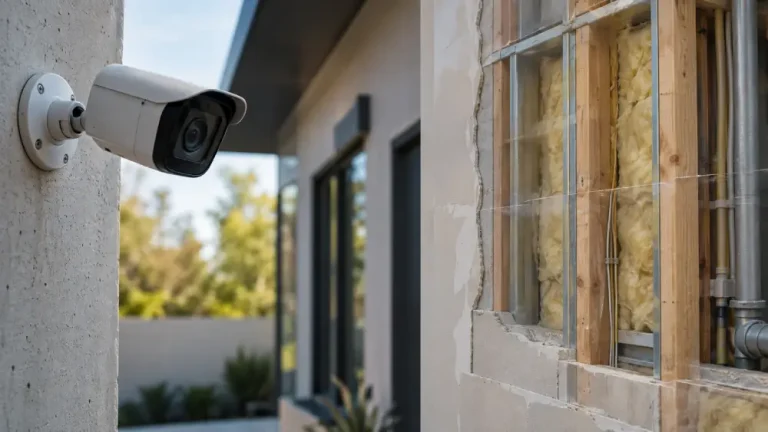

CCTV security cameras capture and transmit video through a closed network, allowing you to monitor your property in real time without public broadcasting.
You’ll find cameras convert optical images into electronic signals for live or recorded viewing, helping protect homes and businesses by deterring intruders and providing clear evidence if needed.
These systems use wired or wireless connections, often include night vision, and support secure remote access.
Explore how their features and setups fit your specific security needs.
Key Takeaways
- CCTV security cameras capture and transmit video footage through a closed network to designated monitors or recorders.
- They convert optical images into electronic signals for live streaming or continuous recording.
- CCTV systems protect property and people by deterring intruders and providing clear evidence of incidents.
- They operate on a closed-circuit principle, ensuring video signals are not publicly broadcast.
- CCTV cameras come in various types like bullet, dome, PTZ, and support features such as night vision and motion detection.
How CCTV Cameras Work?
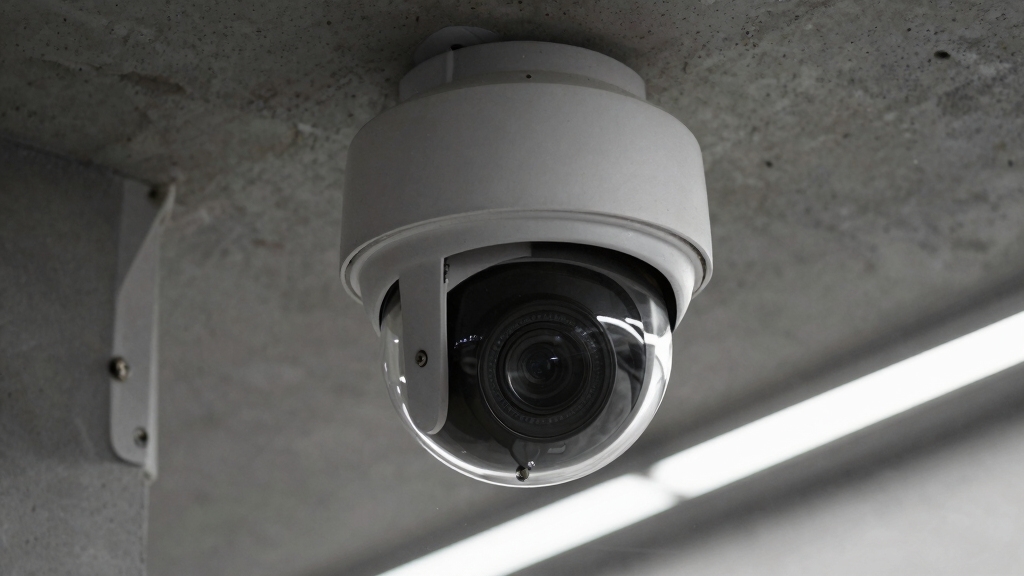
Understanding how CCTV cameras work starts with recognizing that they capture video footage and transmit it through a closed network to designated monitors or recording devices.
CCTV cameras capture and transmit video through a secure, closed network to specific monitors or recorders.
These systems operate on a closed-circuit principle, meaning the video signals aren’t broadcast publicly but sent directly to authorized viewing points.
When you position a CCTV camera, it continuously records or streams live video by converting optical images into electronic signals.
These signals travel via cables or wireless connections to digital or analog recorders, where footage is stored for later review.
You can then access the live or recorded video through monitors located in secure areas.
This architecture guarantees controlled surveillance, allowing you to monitor specific zones effectively without signal leakage or unauthorized access.
For wired systems, careful cable routing and protection are essential to maintain signal integrity and ensure long-term reliability.
Key Components of a CCTV Camera System
A CCTV system essentially revolves around a few key components that work together to keep things secure. You’ve got your cameras, recorders, cables, and monitors—each playing a crucial role in the overall setup.
Now, let’s talk about the different types of cameras. You’ll encounter bullet cameras, dome cameras, PTZ cameras, and LPR cameras. Each one has its unique strengths, tailored for specific surveillance needs depending on where you’re installing them and what you’re trying to achieve.
Choosing the right camera also involves considering factors like coverage area, lighting conditions, and environmental resistance to ensure optimal performance and durability.
Core System Components
A CCTV camera system relies on several core components working together to capture, transmit, and display video footage effectively. When setting up your system, you’ll want to understand these fundamental parts to guarantee reliable operation and clear surveillance.
Cameras: Capture live video; can be analog or digital.
Recorder (DVR/NVR): Stores footage locally, enabling playback and archiving.
Cables: Transmit video signals; coaxial for analog, Ethernet (PoE) for digital.
Monitors: Display real-time or recorded video for active monitoring.
Power Supply: Provides consistent electrical power to cameras and system components.
Each component plays a critical role in maintaining video quality, system stability, and ease of access. This ensures your CCTV setup functions seamlessly. Modern systems often use H.265 compression to efficiently manage video storage and transmission without sacrificing quality.
Camera Types Overview
Several camera types serve distinct roles within a CCTV system, each designed to meet specific surveillance needs and environmental conditions.
Bullet cameras, with their long, cylindrical shape, are ideal for outdoor monitoring due to their range and weather resistance.
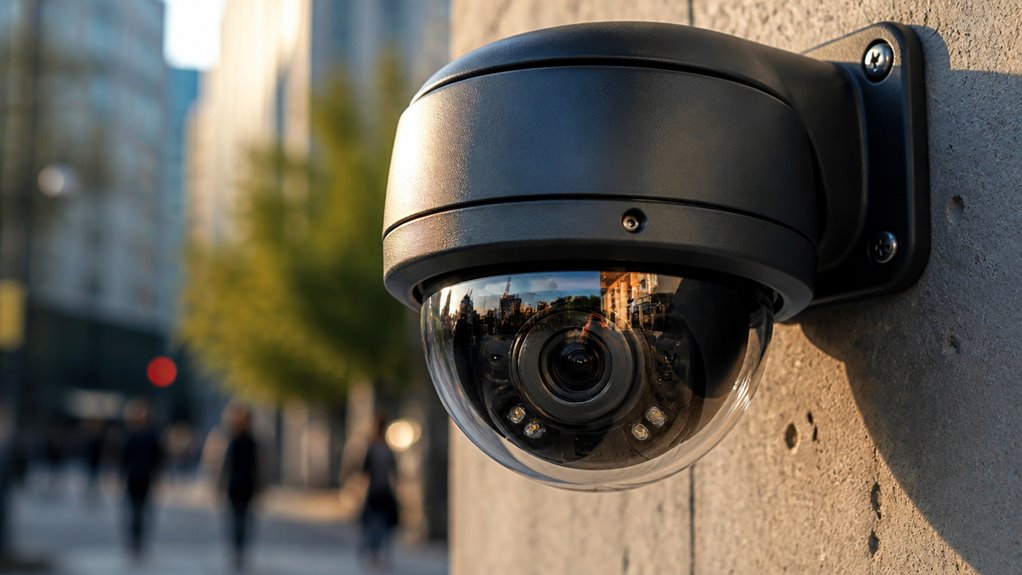
Dome cameras, often equipped with infrared night vision, suit both indoor and outdoor use, offering discreet surveillance with wide coverage.
PTZ cameras allow you to pan, tilt, and zoom, enabling dynamic tracking of subjects across large areas.
Turret cameras provide durability and easy maintenance, while LPR cameras specialize in capturing license plates in varied lighting and motion conditions.
Selecting the right camera type guarantees optimized image quality, coverage, and system efficiency tailored to your security requirements.
For best results, consider mounting heights and angles to maximize field of view and minimize blind spots.
Different Types of CCTV Cameras Explained
CCTV camera types vary markedly based on their design, functionality, and intended environment, giving you options tailored to specific security needs. Selecting the right camera depends on factors like location, lighting, and required coverage.
Here are five prominent types:
Bullet cameras: Cylindrical, ideal for outdoor long-range viewing.
Dome cameras: Compact, versatile for indoor/outdoor use, often with IR night vision.
PTZ cameras: Allow remote pan, tilt, and zoom for dynamic monitoring.
Turret cameras: Ball-and-socket design, resistant to glare and dust.
LPR cameras: Specialized for capturing and decoding vehicle license plates under challenging conditions.
Each type integrates distinct features like resolution, night vision, and motion detection.
This enables you to optimize surveillance performance effectively. Additionally, choosing between NVR and DVR systems impacts installation, video quality, and scalability of your CCTV setup.
Wired vs. Wireless CCTV Cameras?
When you’re picking between wired and wireless CCTV cameras, there are a few things to keep in mind. First off, think about how complicated the installation will be. Wired systems need physical cabling, which can be a bit of a hassle. On the other hand, wireless cameras give you more flexibility in terms of placement.
Next, let’s talk about signal reliability. Wired connections usually provide a consistent and uninterrupted data stream, which is super important for security. Wireless signals, while convenient, can sometimes face interference, which could lead to those annoying dropped connections.
And then there’s the power and connectivity aspect. Wired cameras typically draw power through the cables themselves, while wireless models often depend on batteries or other separate power sources. So, you’ll want to consider how often you’d need to change batteries or ensure those power sources are reliable.
Additionally, wired CCTV systems require separate coaxial and power cables, increasing installation complexity compared to wireless options.
Installation and Setup
Setting up a security camera system requires careful assessment of whether to go wired or wireless, as each option presents distinct installation challenges and benefits.
Wired systems demand running cables through walls or ceilings, ensuring stable power and data transmission. Wireless cameras simplify placement, relying on WiFi but may need battery replacements or power adapters.
Before installation, assess your site’s infrastructure and security needs.
Key points to consider:
Wired setups offer consistent power via PoE and stable connections.
Wireless systems reduce physical wiring complexity and enable flexible positioning.
Wired installation requires professional cable management to avoid tampering.
Wireless cameras face interference risks but simplify retrofit applications.
Evaluate power source availability and network coverage for peak performance.
Choose based on your environment, balancing installation complexity with operational requirements.
Additionally, wired IP cameras benefit from Power-over-Ethernet (PoE) technology, which delivers both power and data over a single cable, simplifying installation and improving reliability.
Signal Reliability
Signal reliability often plays a pivotal role in determining whether you choose wired or wireless CCTV cameras for your security system.
Wired systems, using Ethernet or coaxial cables, offer consistent, uninterrupted signals with minimal interference. Wireless systems depend on WiFi or radio frequencies, which can be affected by obstacles, signal congestion, or distance. This dependence can potentially cause intermittent footage loss.
| Aspect | Wired CCTV Cameras | Wireless CCTV Cameras |
|---|---|---|
| Signal Stability | High; direct cable connection | Variable; prone to interference |
| Range | Limited by cable length | Extended; limited by signal strength |
| Interference | Minimal | Susceptible to WiFi congestion |
Choosing wired guarantees reliable surveillance, while wireless offers flexibility but requires careful signal management. Additionally, wired cameras benefit from PoE technology that simplifies power and data delivery through a single cable, enhancing overall connection stability.
Power and Connectivity
Beyond signal stability, power delivery and connectivity options define the practical setup and maintenance of wired versus wireless CCTV cameras. Wired cameras typically rely on Power over Ethernet (PoE) or direct power cables, ensuring continuous power and stable data transmission.
Wireless cameras use WiFi connectivity and run on batteries or local power sources. This offers installation flexibility but requires regular battery maintenance.
Consider these factors when choosing:
Wired cameras offer consistent power and uninterrupted footage.
Wireless cameras simplify installation in hard-to-wire locations.
Wired setups demand cable management and infrastructure planning.
Wireless models may face interference or signal dropouts.
Battery-powered wireless cameras need periodic recharging or replacement.
Understanding these trade-offs helps you optimize your CCTV system’s reliability and convenience. Additionally, motion-triggered recording in battery-operated wireless cameras significantly extends battery life compared to continuous recording.
Night Vision Features in CCTV Cameras
When lighting conditions drop below a certain threshold, night vision features in CCTV cameras kick in to maintain clear surveillance. These cameras use infrared (IR) LEDs to illuminate the area without visible light, enabling the sensor to capture images in complete darkness.
The IR illumination range varies by model, typically spanning 30 to 100 feet. Cameras with automatic IR cut filters switch between day and night modes, ensuring accurate color reproduction in daylight and enhanced contrast in darkness.
You’ll find most dome and bullet cameras equipped with this technology. Night vision is critical for 24/7 monitoring, allowing you to detect intruders and record usable footage regardless of ambient light. This capability markedly extends your CCTV system’s effectiveness beyond daylight hours.
To optimize performance when monitoring through glass, it is recommended to use cameras with adjustable or external IR illuminators to minimize IR reflection and glare.
Smart Features in CCTV Cameras
Although traditional CCTV systems provide essential surveillance, smart features markedly enhance their functionality and user experience. These advancements allow you to actively monitor, analyze, and respond to security events with greater efficiency.
Smart CCTV cameras leverage AI and connectivity to transform passive recording into proactive security. Key smart features you’ll find include:
- Motion detection with alerts: Sends real-time notifications to your device upon movement detection.
- Person detection: Differentiates humans from other motion sources to reduce false alarms.
- Two-way audio: Enables direct communication through the camera for immediate interaction.
- Remote access via apps: Lets you view live and recorded footage from anywhere.
- Integration with smart home systems: Allows automation and centralized control of security devices.
Incorporating these features boosts your situational awareness and response capabilities.
Storing and Accessing Your CCTV Footage Safely
When it comes to storing your CCTV footage, you’ve got two main options: local storage using DVR or NVR systems, or cloud storage that comes with recurring fees. Each choice has its pros and cons, especially when you think about how you’ll access and secure your videos remotely.
Now, regardless of the route you choose, implementing strong encryption and authentication protocols is key. It’s all about keeping your data safe!
With secure remote access, you can easily monitor live or recorded footage without worrying about compromising its integrity. So, think about what works best for you and make sure to prioritize your security!
Local Versus Cloud
Choosing between local and cloud storage for your CCTV footage materially impacts how you secure and access your video data.
Local storage uses NVRs or DVRs on-site, giving you direct control and no monthly fees. However, it risks data loss if hardware fails or is stolen.
Cloud storage uploads footage to remote servers, providing off-site backup and easy access. Yet, it often requires subscription fees and depends on internet reliability.
Consider these factors when choosing:
- Security: Local limits exposure; cloud encrypts data in transit and at rest.
- Accessibility: Cloud offers anywhere access; local requires VPN or direct connection.
- Cost: Local involves upfront hardware; cloud needs ongoing fees.
- Reliability: Local depends on physical device; cloud depends on internet and provider uptime.
- Storage capacity: Local is limited by device; cloud can scale dynamically.
Secure Remote Access
Managing remote access to your CCTV footage demands a balance between convenience and security. You must ensure that remote connections use strong encryption protocols like AES-256 bit to protect data in transit.
Employ multi-factor authentication (MFA) on your CCTV system’s app or web portal to prevent unauthorized access. Avoid default passwords by setting complex, unique credentials for each device.
When storing footage remotely, prefer secure cloud services with end-to-end encryption or robust local Network Video Recorders (NVRs) that restrict physical and network access. Regularly update your system firmware to patch vulnerabilities.
Also, configure firewalls and VPNs to limit access to trusted devices only. These steps reduce risks of data breaches and guarantee safe, reliable retrieval of your surveillance recordings anytime, anywhere.
How CCTV Cameras Help Prevent Crime?
CCTV cameras deter crime by creating a visible presence that discourages potential offenders from acting. When you install CCTV, you actively reduce opportunities for theft, vandalism, and other illegal activities.
The cameras provide continuous monitoring, capturing real-time events and recording evidence that can be used for prosecution.
You benefit from:
- Immediate detection of suspicious behavior through motion alerts
- Deterrence of crime by visible surveillance coverage
- Documentation of incidents with high-definition recordings
- Support for law enforcement investigations via clear footage
- Remote monitoring enabling timely responses from anywhere
Common Uses for CCTV Cameras in Homes and Businesses
Whether you’re securing a home or a business, surveillance cameras play a critical role in protecting property and people.
In homes, CCTV systems monitor entrances, driveways, and vulnerable indoor areas. They deter intruders and provide clear evidence if incidents occur.
In businesses, cameras oversee entry points, cash registers, inventory storage, and employee workspaces. This helps reduce theft and guarantees compliance with safety protocols.
Both settings benefit from real-time monitoring and motion detection alerts, allowing immediate response to unusual activities.
Night vision capabilities extend surveillance effectiveness 24/7. Remote access lets you view live or recorded footage from anywhere.
Choosing the Right CCTV Camera System
Selecting the right surveillance system starts with evaluating your specific security needs, environment, and budget constraints.
Begin choosing a surveillance system by assessing your security needs, environment, and budget limitations.
You need to take into account factors such as camera type, installation location, and desired features to optimize performance and cost-efficiency.
Focus on these key considerations:
Camera type: Choose between bullet, dome, PTZ, or LPR based on coverage and visibility requirements.
Resolution: Opt for HD (1080p or higher) to guarantee clear identification.
Night vision: Essential for low-light or nighttime monitoring.
Connectivity: Decide on wired (PoE/coax) or wireless (WiFi, battery-powered) based on infrastructure.
Storage and access: Evaluate local NVR/DVR versus cloud storage options with remote viewing capabilities.
Frequently Asked Questions
Are CCTV Cameras Legal to Install in Public Spaces?
Yes, you can legally install CCTV cameras in public spaces, but you must follow local laws and regulations regarding privacy and data protection.
You’ll need to guarantee cameras focus on public areas and don’t infringe on private properties.
Posting clear signage about surveillance is often required, and footage must be securely stored.
Always check specific legal frameworks in your jurisdiction to avoid violations related to consent and data use.
How Often Should CCTV Cameras Be Maintained or Serviced?
You should maintain CCTV cameras at least twice a year to guarantee peak performance.
Studies reveal that 30% of security failures result from neglected camera upkeep.
Regular servicing includes cleaning lenses, checking connections, verifying recording functions, and updating firmware.
Frequent inspections help you detect issues like signal loss or image degradation early, preventing costly downtime.
If cameras operate in harsh environments, increase maintenance frequency to quarterly for consistent reliability.
Can CCTV Footage Be Used as Evidence in Court?
Yes, you can use CCTV footage as evidence in court, provided it’s authentic and properly preserved.
To guarantee admissibility, you must maintain a clear chain of custody and avoid tampering.
High-quality, timestamped videos with encryption like AES-256 help validate integrity.
Courts accept footage that clearly shows relevant events and individuals.
Always follow legal protocols for data handling and privacy to strengthen your case with reliable video evidence.
Do CCTV Cameras Work in Extreme Weather Conditions?
Imagine a busy highway camera catching clear footage during a snowstorm. That’s how well some CCTV cameras perform under extreme conditions.
Yes, CCTV cameras designed for harsh environments use weatherproof housings and temperature-resistant components.
For example, outdoor dome cameras with IP66 or higher ratings withstand rain, dust, and freezing temperatures.
You’ll find models with built-in heaters or fans to maintain operation from -40°F to 140°F. This ensures reliable surveillance regardless of weather.
What Are the Privacy Concerns Related to CCTV Surveillance?
You face privacy concerns with CCTV because constant surveillance can infringe on personal freedoms and create a sense of being watched.
Unauthorized access or hacking risks exposing sensitive footage.
You must guarantee cameras are placed responsibly, avoid monitoring private areas, and comply with data protection laws.
Encryption and controlled access help protect recorded data.
Balancing security benefits with respect for privacy is vital to prevent misuse and maintain trust.
Final Thoughts on CCTV Security Cameras and Protection
When it comes to securing your property, remember: “An ounce of prevention is worth a pound of cure.”
CCTV cameras offer you real-time monitoring, crime deterrence, and valuable evidence if needed.
Understanding their components, types, and storage options helps you choose the right system tailored to your needs.
Whether wired or wireless, day or night vision, investing in the right CCTV setup guarantees you stay one step ahead in protecting what matters most.