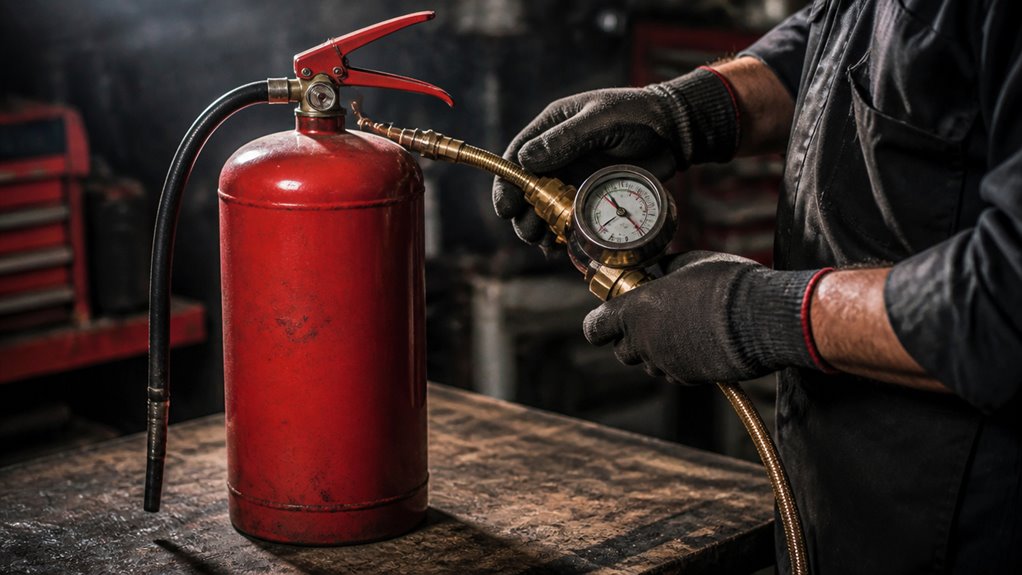

You can expect to pay between $20 and $150 to recharge a fire extinguisher, depending on its type, size, and specialized agent.
Smaller dry chemical units start around $20, while larger or specialty models like Class K or clean agents may exceed $150.
Additional fees for travel, service calls, or after-hours work can add $25 to $150.
The extinguisher’s condition and compliance needs also influence costs.
Explore further to understand how these factors shape your total expense.
Key Takeaways
- Fire extinguisher recharge costs vary by type, ranging from $20–$50 for standard dry chemical units to over $300 for specialty clean agents.
- Recharge prices increase with extinguisher size, e.g., $9 for 2.5-pound ABC units and up to $36.75 for 20-pound CO₂ models.
- Additional fees like travel ($25–$75), service calls ($30–$60), and after-hours premiums ($80–$150+) can raise total recharge costs.
- Hydrostatic testing every 5–12 years may add $20–$180 to maintenance expenses, especially for damaged or corroded tanks.
- Bulk servicing and scheduling recharges during regular hours can reduce per-unit costs by 20–40% through discounts and bundled fees.
Typical Recharge Costs for Different Fire Extinguisher Types
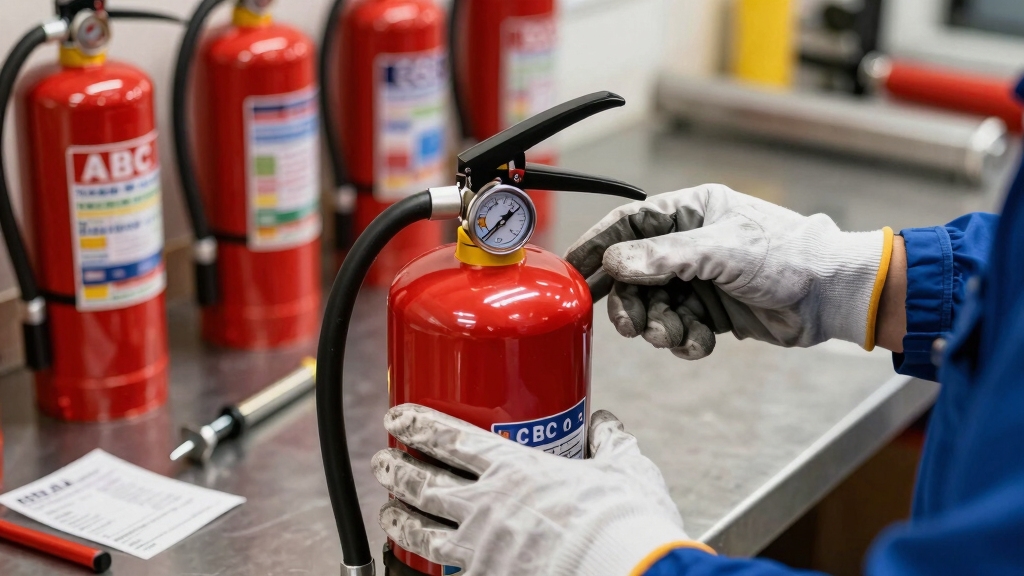
Understanding the typical recharge costs for different fire extinguisher types helps you budget accurately for maintenance.
Standard dry chemical extinguishers usually cost between $20 and $50 to recharge, depending on the unit size and provider. ABC and BC type units average around $60, with prices ranging from $30 to $120 based on cylinder specifics.
CO₂ extinguisher refills fall between $20.75 and $36.75, while Class K kitchen units require $92.50 to $150 due to their specialized agent.
Clean agent models like Halotron or FE-36 are considerably more expensive, often costing $150 to over $300 per recharge.
Additionally, professional refill services generally charge $25 to $50, but emergency or after-hours services can escalate fees to $80 to $150 or more.
These variations reflect agent type, service urgency, and provider rates.
It is important to have refills performed by licensed fire protection services to ensure compliance with safety standards and proper maintenance.
How Extinguisher Size Affects Recharge Prices?
Recharge costs vary significantly with extinguisher size. The amount of agent needed and the complexity of servicing increase with weight and volume.
Recharge costs rise with extinguisher size due to increased agent volume and servicing complexity.
For example, recharging a 2.5-pound ABC dry chemical extinguisher costs around $9. A 10-pound unit typically runs $14.50 to $15. Larger 20-pound units command $19.50 to $20.
The price scales with the agent volume required and additional labor for handling heavier cylinders. Industrial-sized extinguishers (50 to 150 pounds) usually require custom quotes due to variable agent costs and servicing complexity.
As you select or maintain extinguishers, recognize that increasing size directly impacts recharge expenses. This reflects both material costs and regulatory inspection demands.
This scaling guarantees proper refill and safety compliance for each extinguisher size category. Always ensure recharge is performed by a certified technician to maintain safety and compliance standards.
Specialty Extinguisher Recharge Costs
Although specialty extinguishers serve unique fire risks, their recharge costs are markedly higher than standard dry chemical units due to specialized agents and handling requirements.
For instance, CO₂ extinguisher recharges cost between $20.75 for 5 pounds and $36.75 for 20 pounds. Class K kitchen extinguishers typically require $92.50 to $150, reflecting the complexity of the wet chemical agent.
Clean agent types such as Halotron or FE-36 have even steeper prices, ranging from $150 to over $300, with FE-36 specifically around $60. Antifreeze or loaded stream units recharge at about $115.50.
These costs reflect the need for precise refilling protocols, specialized materials, and compliance with safety regulations, impacting both labor and agent expenses. You should budget accordingly when handling these specialized extinguisher types.
It is important to have these units serviced by a certified professional to ensure safety and effectiveness.
Extra Fees That Add to Your Recharge Cost
When you’re planning for a recharge, it’s good to keep in mind that there might be some extra charges involved.
You’ll often see travel and service fees popping up, and these can vary quite a bit—usually between $25 and $75, depending on how far away you are.
Also, if you need a recharge done after hours or on short notice, be prepared for those costs to jump significantly.
In some cases, they can go over $100.
And don’t forget about any extra maintenance tasks!
Things like hydrostatic testing or 6-year inspections might add anywhere from $20 to $80 or more to your final bill.
It’s also important to ensure your extinguisher is properly maintained and inspected to preserve its reliable performance.
Travel And Service Fees
When scheduling a fire extinguisher recharge, keep in mind that travel and service fees can substantially increase your total cost. These fees cover the technician’s time and transportation, especially if your location is remote or requires special access.
Travel fees typically range from $25 to $75, depending on distance. Service call fees may be charged separately or combined with labor costs. Understanding these fees helps you budget accurately for maintenance.
| Fee Type | Typical Cost Range |
|---|---|
| Travel Fee | $25 – $75 |
| Service Call | $30 – $60 |
| Annual Inspection | $4.95 – $5.00 |
| 6-Year Maintenance | $40 – $80 |
Always confirm fee structures upfront to avoid surprises and ensure compliance with safety standards. It is important to adhere to manufacturer guidance during servicing to maintain extinguisher reliability and safety.
After-Hours And Urgent Charges
Since after-hours and urgent recharge requests require technicians to work outside normal business hours, service providers charge significant premiums for these conveniences.
You can expect after-hours and urgent service fees to range from $100 to $150 or more, which substantially increases your overall recharge cost.
These premiums compensate for technician availability during nights, weekends, or holidays and prioritize your request over regular scheduling.
Emergency same-day recharge services typically carry fees of $80 to $120, reflecting the expedited turnaround.
When you need fast recharge to meet safety compliance or operational demands, these extra charges are unavoidable.
Planning routine maintenance within standard hours helps you avoid these fees, but urgent needs justify the higher cost to guarantee your extinguisher is promptly serviced and ready for use.
Regular professional servicing and hydrostatic testing are essential to maintain extinguisher safety and compliance, which can help prevent unexpected urgent recharge costs.
Additional Maintenance And Testing
Although recharging your fire extinguisher covers the basic restoration of its extinguishing agent, additional maintenance and testing services often incur extra fees that can increase the total cost.
These services guarantee compliance, safety, and operational readiness, but they do add to your expense.
You should expect potential charges for:
- Annual inspections, typically $4.95 to $5.00 per unit, verifying the extinguisher’s condition and functionality.
- Hydrostatic testing, costing between $20 and $180 depending on cylinder size, required every 5 to 12 years to check for structural integrity.
- 6-year maintenance inspections, ranging from $40 to $80, involving internal examination and component replacements as needed.
Understanding these fees helps you budget accurately and maintain your extinguisher’s compliance and reliability. Regular hydrostatic testing is essential to ensure the structural integrity and safe operation of your fire extinguisher over time.
Impact of Location and Timing on Recharge Costs
Because service providers factor in travel time and local market conditions, your fire extinguisher recharge costs can vary considerably based on location.
Providers often charge travel or service call fees ranging from $25 to $75 depending on distance, which directly impacts your total cost.
Urban areas with higher operational expenses may also drive prices above average.
Timing influences costs markedly; routine daytime recharges typically cost less, while urgent or after-hours services command premiums between $80 and $150 or more.
Scheduling your recharge during regular hours and consolidating multiple units can reduce per-unit expenses.
Understanding these variables helps you anticipate charges accurately and plan maintenance economically, especially if you’re managing multiple extinguishers across different sites or need expedited services.
It is also important to consider the hydrostatic testing requirements, which are necessary every 5 to 12 years to ensure the structural integrity of your fire extinguisher and may affect overall maintenance costs.
How Extinguisher Condition Affects Recharge Costs?
After considering location and timing factors, the condition of your fire extinguisher plays a significant role in determining recharge costs.
If your extinguisher shows visible wear, corrosion, or damage, technicians must perform additional tests or recommend replacement, raising costs. Conversely, well-maintained units require standard recharging procedures, keeping expenses lower.
Here’s how condition impacts pricing:
Damage and corrosion: May require hydrostatic testing ($20–$180) or tank replacement.
Compliance and labeling: Missing or damaged service tags can add fees for replacements.
Maintenance history: Units lacking regular inspections risk higher labor costs due to extended diagnostics.
Regular inspections and hydrostatic testing ensure the extinguisher’s structural integrity and help avoid unexpected recharge costs.
When Is It Cheaper to Recharge vs. Replace Your Extinguisher?
Knowing when to opt for recharging your fire extinguisher instead of replacing it can save you significant costs.
Choosing to recharge your fire extinguisher instead of replacing it can lead to substantial savings.
If your extinguisher is in good condition without visible wear or damage, recharging is generally more economical.
This is especially true for larger units like 10-pound ABC models.
Recharging costs typically range from $15 to $50, while replacement can cost $60 to $115 or more.
Small extinguishers under $50 new may be cheaper to replace if damaged.
Consider the extinguisher’s size, agent type, and condition; specialized agents and large cylinders increase recharge expenses.
Also, factor in service fees and hydrostatic testing costs.
Ultimately, recharge when the unit meets safety standards and damage is absent.
Replace when structural integrity or compliance is compromised to avoid higher long-term costs.
Proper preparation and adherence to local disposal regulations ensure safe and environmentally responsible handling of recharge-related waste.
Money-Saving Tips for Recharging Multiple Units
When you’re recharging multiple fire extinguishers, there are some smart ways to save money. One of the best strategies is to negotiate bulk service discounts with your providers. It’s definitely worth asking about!
Also, consider scheduling group appointments. This can really help cut down on travel fees and labor charges for each unit. Plus, it makes things a lot more efficient for everyone involved.
And hey, don’t forget to discuss service fees upfront. This way, you can make sure you’re getting the best pricing tailored to your specific needs. It’s all about being proactive!
Bulk Service Discounts
Many fire safety service providers offer bulk service discounts that can substantially lower the per-unit cost when you recharge multiple extinguishers at once.
This approach optimizes labor and material expenses, reducing your overall recharge budget.
When planning your recharge service, consider these benefits:
- Reduced per-unit pricing: Servicing multiple units simultaneously often cuts the cost by 20–40%, depending on extinguisher type and quantity.
- Consolidated service fees: Travel and inspection fees are spread across all units, minimizing individual charges.
- Streamlined compliance management: Managing multiple units in one service visit simplifies record-keeping and regulatory adherence.
Scheduling Group Appointments
Taking advantage of bulk service discounts is just the start. Scheduling group appointments can further maximize your savings on fire extinguisher recharges.
By coordinating multiple units for service on the same day, you reduce travel and labor fees that providers often charge per visit. This consolidation lowers the overall cost per extinguisher, especially when servicing several small to medium units simultaneously.
Providers typically allocate resources more efficiently during group appointments, enabling quicker turnaround times and reduced service call expenses. To optimize scheduling, gather all units needing recharge and liaise with your service provider to set a single appointment.
This approach minimizes downtime and leverages volume for discounted rates, leading to cost-effective maintenance without compromising compliance or safety standards.
Negotiating Service Fees
Although service fees can materially impact the total cost of fire extinguisher recharges, you can often negotiate better rates by leveraging the volume of units needing service.
When you schedule multiple extinguishers for recharge, providers are more willing to reduce travel fees, labor charges, or offer bulk discounts.
To optimize savings, consider these tactics:
Request a volume-based discount for servicing several units in one visit.
Negotiate to waive or reduce travel/service call fees, especially if units are co-located.
Ask for bundled pricing that includes inspections, hydrostatic testing, and recharge fees.
Frequently Asked Questions
How Often Should I Have My Fire Extinguisher Recharged?
You should have your fire extinguisher recharged immediately after any use, even partial discharge, to make certain it’s fully operational.
Additionally, perform annual inspections to check for damage or pressure loss.
Most manufacturers recommend a thorough maintenance check every six years, which may include recharging.
If the extinguisher shows any visible damage, corrosion, or pressure gauge issues, recharge or replace it promptly to maintain safety and compliance.
Can I Recharge a Fire Extinguisher Myself at Home?
You shouldn’t recharge a fire extinguisher yourself at home because it requires specialized equipment, knowledge, and certification to handle pressurized cylinders safely.
Improper recharging risks malfunction or injury, and local regulations often mandate professional servicing.
Instead, take your extinguisher to a certified technician who can perform inspections, refill the extinguishing agent correctly, and conduct necessary tests to verify the unit functions reliably during emergencies.
What Are the Signs My Extinguisher Needs Recharging?
You’ll know your extinguisher needs recharging if the pressure gauge needle falls into the red or below the recommended pressure range.
Visible signs include corrosion, physical damage, or leakage around the cylinder or valve.
If the extinguisher has been used, even partially, it requires recharging.
Additionally, if the inspection tag shows that it’s due for annual maintenance or hydrostatic testing, you should recharge it to guarantee proper function.
Does Recharging Affect My Fire Extinguisher’s Warranty?
It’s ironic, but recharging your fire extinguisher won’t void your warranty; in fact, it often preserves it.
Manufacturers expect routine maintenance, including recharging, to keep your unit reliable and compliant. Ignoring this can actually jeopardize your warranty.
Just make certain you use certified professionals following proper procedures. Proper recharge maintains the extinguisher’s integrity, so you stay covered while keeping safety standards intact. No warranty pitfalls when you do it right.
Are There Any Safety Risks During the Recharge Process?
Yes, you face safety risks during recharging if not handled properly. The process involves pressurized cylinders and potentially hazardous agents. Improper handling can cause leaks, accidental discharge, or cylinder rupture.
Only trained professionals should perform recharges using calibrated equipment and following strict safety protocols. Additionally, damaged or corroded cylinders must be inspected thoroughly. Recharging compromised units increases the risk of failure and injury during use or servicing.
Recharge Your Fire Extinguisher for Safer Protection
Recharging your fire extinguisher is like tuning a precision instrument. It guarantees peak performance when seconds count.
Understanding costs—from size and type to location—helps you avoid surprises and make informed decisions. Sometimes, recharging saves you more than replacing, but only if your extinguisher’s condition is sound.
By staying proactive and considering volume discounts, you’ll keep your safety gear ready without burning a hole in your wallet. Keep it sharp, keep it ready.