
Your smoke detector may be overly sensitive due to dust, insects, or cobwebs inside the sensor chamber. It could also be placed too close to kitchens, bathrooms, vents, or drafty windows that introduce steam, cooking fumes, and airborne particles.
Aging components and weak batteries can also cause false alarms. Regular cleaning, proper placement, and choosing the right detector type help reduce sensitivity.
If you want to understand more about maintenance and adjustment options, keep exploring these key factors.
Key Takeaways
- Dust, insects, or cobwebs inside the sensor chamber can cause the smoke detector to trigger false alarms due to interference.
- Placement near kitchens, bathrooms, or drafty areas exposes detectors to steam, cooking fumes, and pollutants, increasing sensitivity.
- Ionization detectors are more prone to false alarms from steam and cooking fumes compared to photoelectric detectors.
- Aging units over 10 years or weak batteries can cause unstable, overly sensitive smoke detector behavior and false alerts.
- Regular cleaning, proper placement, and sensitivity adjustments on smart alarms help reduce excessive sensitivity and false alarms.
Common Causes of Excessive Smoke Detector Sensitivity
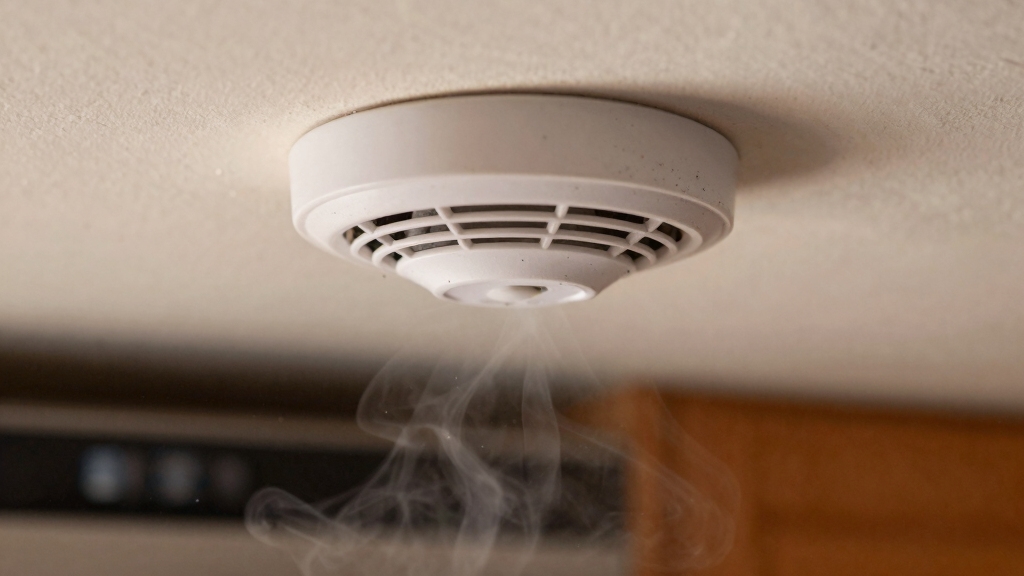
While smoke detectors play a crucial role in home safety, you might notice they sometimes become overly sensitive, causing frequent false alarms. This often happens because dust, insects, or cobwebs accumulate inside the sensor chamber, interfering with its operation.
High humidity or steam, especially near bathrooms and kitchens, can also trick ionization-type detectors into sounding an alarm. If your detector is placed close to cooking appliances, fireplaces, or drafty windows, non-fire pollutants may trigger it prematurely.
Over time, older units, those over 10 years, can degrade, becoming unstable and prone to false alerts. Additionally, aerosols, heavy dust, and other air pollutants act as triggers alongside smoke particles.
Maintaining humidity below 85% near your smoke detector can significantly reduce the risk of false alarms caused by moisture interference.
Understanding these common causes helps you maintain your smoke detector’s reliability and reduce unnecessary alarms.
Environmental and Location Impacts on Smoke Detector Sensitivity
Hey there! So, when you’re thinking about where to put your smoke detectors, it’s a good idea to steer clear of placing them too close to the kitchen. You know how steam and cooking fumes can set off those annoying false alarms? Yeah, that’s something you definitely want to avoid.
Also, keep in mind that drafts from open windows or vents can blow in particles that might trigger the sensor a bit too early. It’s all about understanding how your environment can impact your smoke detector’s performance. By considering these factors, you can pick the best spot for your detectors to work reliably.
Placement Near Kitchens
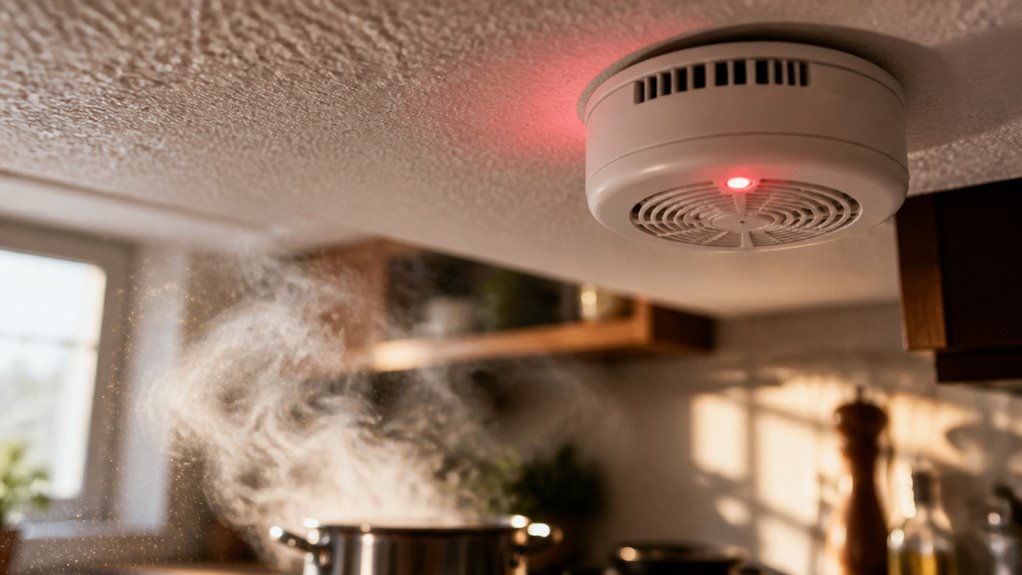
Near kitchens, smoke detectors often face challenges due to frequent exposure to steam, cooking fumes, and airborne grease particles. These elements can mimic smoke, causing your alarm to trigger unnecessarily. To reduce false alarms, avoid placing detectors within five feet of stoves or sinks.
Instead, position them in adjacent hallways or dining areas for effective coverage without oversensitivity.
| Source of Interference | Effect on Detector | Recommended Action |
|---|---|---|
| Steam from boiling | Triggers nuisance | Install away from stove |
| Cooking fumes | Causes false alarms | Use photoelectric detectors |
| Airborne grease | Coats sensor | Clean sensor regularly |
| High humidity | Increases sensitivity | Use humidity-tolerant units |
| Smoke from frying | Activates alarm | Vent kitchen properly |
Proper placement helps maintain detector reliability and reduces annoying false alerts. Dense steam near detectors, especially within 2–3 feet, significantly increases the likelihood of false alarms, so maintaining proper ventilation is essential.
Effects Of Drafts
Kitchens aren’t the only areas where environmental factors can impact smoke detector sensitivity. Drafts from open windows, vents, or air conditioners carry tiny particles like dust and pollen directly into the sensor chamber.
These airborne irritants can cause premature or false alarms, making your detector seem overly sensitive. You’ll want to avoid installing detectors near drafty spots to minimize this issue.
Additionally, fluctuating air currents can disrupt smoke flow patterns, preventing accurate detection or triggering false alerts. If you notice frequent false alarms, check for nearby drafts and consider relocating the detector to a more stable environment.
Ensuring proper placement away from airflow sources helps maintain consistent sensitivity and reliable operation, reducing unnecessary disturbances and keeping your home safer. For enhanced monitoring, consider that First Alert smoke detectors provide alerts and voice warnings without a camera, requiring separate security cameras for video surveillance.
How Different Smoke Detector Types Affect Sensitivity and False Alarms?
Although both ionization and photoelectric smoke detectors serve the same purpose, they react differently to various fire types and environmental factors. This directly impacts their sensitivity and likelihood of false alarms.
Ionization detectors detect fast-flaming fires with small smoke particles but often react to steam or cooking fumes. This makes them more prone to false alarms in kitchens or bathrooms.
Ionization detectors respond quickly to fast flames but may trigger false alarms from steam or cooking fumes.
Photoelectric detectors excel at sensing slow-smoldering fires and typically reduce nuisance alarms from cooking. However, dense dust or heavy steam can still trigger them.
Some smart detectors let you adjust sensitivity to better fit your environment. Understanding these differences helps you choose the right type and placement. This minimizes false alarms while ensuring timely fire detection.
Photoelectric alarms use a light scattering principle to detect smoke particles, making them especially sensitive to larger particles from smoldering fires.
How Poor Maintenance Causes Smoke Detector False Alarms?
If you don’t clean your smoke detector regularly, dust and debris can really pile up inside the sensor chamber. This buildup can lead to annoying false alarms. To keep your smoke detector working properly, it’s a good idea to gently vacuum it or blow some air through the vents.
Also, don’t forget about regular testing and inspection! These simple checks can help you catch any maintenance issues early on, ensuring that your smoke detector remains sensitive and reliable. It’s all about staying proactive to keep your home safe!
Improving ventilation around alarms can further reduce the risk of spider webs and insect debris causing false alarms.
Dust Accumulation Impact
When dust, insects, and cobwebs build up inside your smoke detector’s sensor chamber, they interfere with its ability to accurately detect smoke. This buildup can block or scatter the sensor’s optical or ionization components, causing the detector to misinterpret harmless particles as smoke.
As a result, you’ll experience frequent false alarms, which can be frustrating and cause alarm fatigue. Over time, dust accumulation degrades sensor performance, making your detector overly sensitive or even unreliable.
Neglecting regular maintenance allows this problem to worsen, increasing the risk of unnecessary alerts. While cleaning is essential, understanding how dust impacts sensor function helps you appreciate why sticking to maintenance schedules keeps your smoke detector functioning properly and prevents disruptions caused by false alarms. Regular monthly testing and routine cleaning reduce false chirps caused by dust, pollen, or moisture-related contamination, helping maintain reliable operation and avoiding unnecessary alerts related to sensor faults.
Cleaning Techniques Importance
Maintaining your smoke detector through proper cleaning techniques plays a critical role in preventing false alarms caused by sensor contamination. When dust, insects, or cobwebs accumulate inside the sensor chamber, they disrupt its function and trigger unnecessary alerts.
To keep your detector reliable, follow these key steps:
- Vacuum the sensor chamber monthly using a brush attachment to remove dust and debris.
- Blow compressed air gently through sensor vents to clear dirt without damage.
- Wipe the interior surfaces with a soft, dry cloth to prevent particle buildup on sensors.
- Avoid using water or cleaning agents that could harm internal components.
Regular cleaning helps prevent dust buildup, which is a common cause of false alarms.
Testing And Inspection
Regular cleaning keeps your smoke detector free from dust and debris, but testing and inspection confirm its reliable operation. Neglecting these tasks can cause false alarms due to unnoticed sensor damage or low battery power.
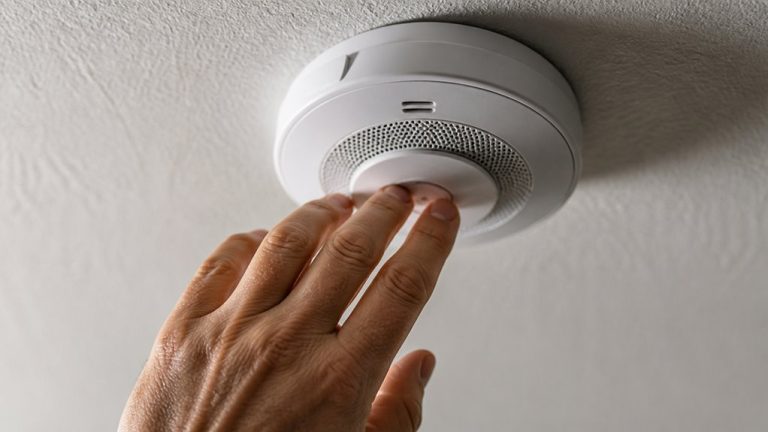
You should test your alarm monthly by pressing the test button to make certain it sounds correctly. Professional inspections help identify internal issues you might miss. Remember that routine cleaning and inspection help maintain detector sensitivity and reduce false alerts.
| Task | Frequency |
|---|---|
| Test Alarm | Monthly |
| Replace Batteries | Annually or as needed |
| Vacuum Sensor | Every 6 months |
| Clean Sensor Cover | Quarterly |
| Professional Check | Every 1-2 years |
Staying consistent with these checks prevents sensitivity problems and keeps your detector working when you need it most.
Effective Ways to Reduce Smoke Detector Sensitivity at Home
To reduce smoke detector sensitivity effectively at home, start by relocating your alarm at least five feet away from kitchens and bathrooms.
These areas often produce steam and cooking fumes that can cause false alarms.
Next, keep your detector clean to prevent dust, insects, and cobwebs from triggering false alerts.
Follow these steps to improve performance:
- Vacuum the sensor chamber monthly using a brush attachment to remove dust and debris.
- Blow air gently through the sensor vent to clear out dirt without causing damage.
- Avoid placing detectors near drafty windows, vents, or fireplaces that introduce pollutants.
- Replace units older than 10 years, as aging components lose stability and become overly sensitive.
Additionally, be sure to replace batteries every 6 to 12 months to maintain proper detector function and reduce false alarms.
Adjusting Sensitivity on Smart or Programmable Smoke Alarms
When you want to fine-tune your smoke detector’s response, smart or programmable alarms give you that flexibility. You can adjust sensitivity settings through manufacturer apps or onboard controls. Lowering sensitivity helps reduce false alarms from cooking or steam, while increasing it boosts early fire detection. Always test changes with smoke simulation sprays to assure proper function. Many First Alert models include photoelectric smoke sensors that are designed specifically to reduce false alarms from cooking smoke and steam.
| Adjustment Method | How It Helps |
|---|---|
| App or Software Control | Easy sensitivity level changes |
| Sensor Dial | Manual fine-tuning on device |
| Smoke Test Spray | Verifies accurate sensitivity |
When to Call a Professional for Persistent Sensitivity Issues?
If adjusting sensitivity settings on your smart or programmable smoke alarm doesn’t stop frequent false alarms, it might be time to get expert help.
Persistent issues could indicate internal sensor damage, wiring problems, or improper installation. A professional can diagnose these complex factors more accurately.
You should call a professional when:
- False alarms continue despite thorough cleaning and relocation.
- Your smoke detector is more than 10 years old and shows erratic behavior.
- Interconnected alarms trigger simultaneously without visible smoke or fire.
- You suspect humidity or environmental factors cause repeated nuisance alarms.
Professionals ensure your smoke detector meets safety standards and functions reliably, giving you peace of mind.
Don’t delay; persistent false alarms can compromise your safety and cause unnecessary stress.
Frequently Asked Questions
Can Extreme Weather Affect My Smoke Detector’s Sensitivity?
Yes, extreme weather can affect your smoke detector’s sensitivity. High humidity or rapid temperature changes may cause false alarms by introducing moisture or dust particles into the sensor.
Cold drafts or hot air can also disturb sensor readings. To minimize this, avoid placing detectors near drafty windows or vents and guarantee proper ventilation.
Regular cleaning and maintenance help keep your alarm reliable despite weather fluctuations.
Do Pet Hairs or Dander Trigger Smoke Alarms?
Ever wonder if pet hairs or dander can set off your smoke alarm? Yes, they can.
Pet dander and hairs contribute to airborne particles that may enter the smoke detector’s sensor chamber, especially if it’s dusty or poorly maintained.
These particles can mimic smoke, causing false alarms. To prevent this, clean your detector regularly and keep pets away from its immediate vicinity.
Proper upkeep helps make certain your alarm reacts only to real smoke.
How Do Battery Types Impact Smoke Detector Performance?
Battery types impact your smoke detector’s performance primarily through voltage stability and lifespan.
Alkaline batteries provide consistent power for most units, while lithium batteries last longer and perform better in extreme temperatures.
Using rechargeable batteries can sometimes cause inconsistent voltage, triggering false alarms.
Always use the manufacturer-recommended battery type to guarantee reliable operation, avoid frequent low-battery chirps, and maintain peak sensitivity for accurate smoke detection.
Are There Legal Limits on Smoke Detector Sensitivity in Rental Properties?
Wondering if legal rules cap smoke detector sensitivity in rentals?
Yes, you do have to follow local fire safety codes and regulations, which often specify detector types and placement but rarely set exact sensitivity limits.
Instead, manufacturers calibrate detectors to meet standards like NFPA 72.
As a landlord or tenant, you must make certain detectors comply with these codes to guarantee safety, but you won’t find strict legal sensitivity thresholds to adjust.
Can Using Air Purifiers Near Detectors Cause False Alarms?
Yes, using air purifiers near smoke detectors can cause false alarms.
Air purifiers circulate air and may stir up dust, aerosols, or small particulates that smoke sensors mistake for smoke.
To avoid this, keep your detector at least five feet away from air purifiers and regularly clean the sensor chamber.
This prevents interference and reduces nuisance alarms, ensuring your smoke detector functions accurately without unnecessary disruptions.
Keep Your Smoke Detector Working the Right Way
If your smoke detector keeps going off when it shouldn’t, don’t ignore it. It could be more than just sensitivity; it might signal an underlying issue with placement, maintenance, or device type.
Adjusting settings or cleaning can help, but if false alarms persist, something deeper might be wrong. Before you decide to replace it, consider consulting a professional.
The answer to your problem might be simpler or more urgent than you think.