
You can’t fully trust the Aegislink Smoke Detector to alert you reliably during smoke or carbon monoxide exposure. Tests and customer feedback reveal its sensors often fail in real-world fire and gas scenarios, with replacements showing the same flaws.
Design limits and poor support add to the risk. These ongoing issues seriously compromise your home’s safety. If you want to understand the technical shortcomings and safety impacts, there’s more important information ahead.
Key Takeaways
- Aegislink smoke detectors frequently fail to respond during real smoke and gas exposure tests, indicating significant reliability issues.
- Replacement units often replicate original failures, revealing systemic design and sensor performance flaws.
- Dual-sensor technology aims to detect smoke and carbon monoxide, but compact design limits sensor effectiveness and airflow.
- Customer reviews report inadequate support and slow, ineffective resolution of device malfunctions.
- Regular maintenance and testing are advised, but users report test buttons do not guarantee real-world detection reliability.
Is the Aegislink Smoke Detector Reliable? Key Facts You Should Know
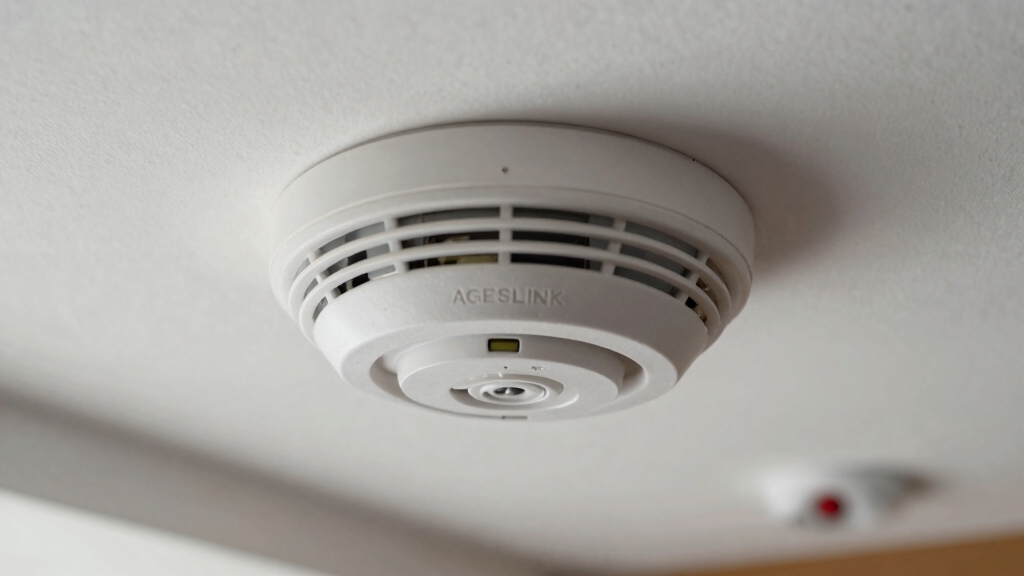
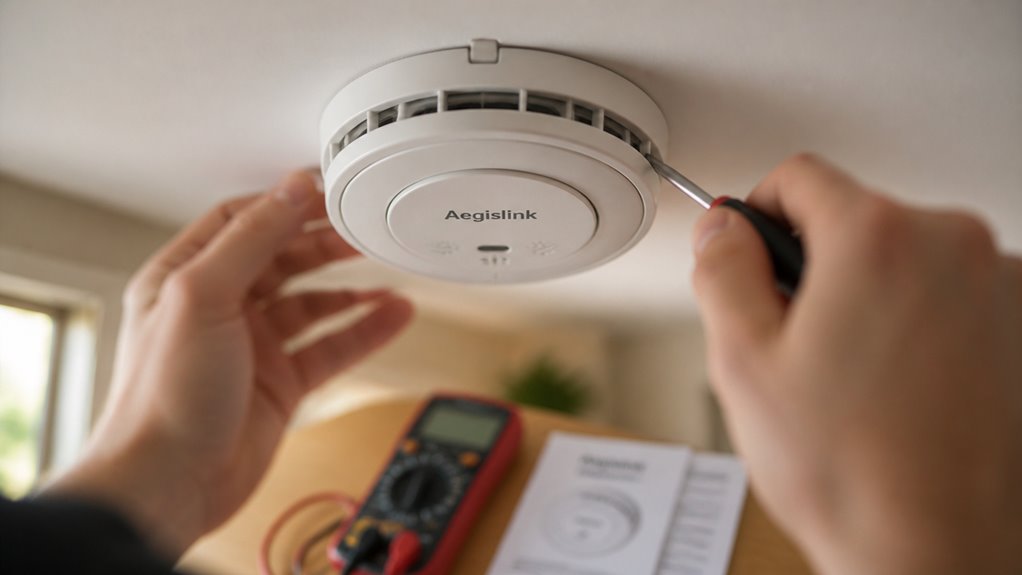
Although the Aegislink Smoke Detector S240 boasts a 10-year battery life and photoelectric sensor technology, you should approach its reliability with caution.
Despite its compact design and integrated alarm system, multiple users report that the device fails to respond during critical smoke exposure tests.
The photoelectric sensor, intended to detect smoldering fires, has shown inconsistent activation, raising serious concerns about its effectiveness in real-world scenarios.
While the 10-year battery life reduces maintenance demands, this advantage is overshadowed by frequent non-responsiveness.
You need to bear in mind that reliability in a smoke detector is paramount, and documented failures undermine the safety assurances Aegislink promotes.
Before trusting your safety to the S240, weigh these practical reliability issues carefully to make an informed decision.
Additionally, persistent issues like non-responsiveness may indicate end-of-life problems that battery replacement alone cannot fix.
Why the S240 Model’s Design Impacts Fire Detection?
Because the S240 model prioritizes a compact design, it directly influences its fire detection capabilities in ways you need to take into account.
Its small size limits the internal space for sensor components, potentially restricting the sensitivity and range needed to detect smoke effectively.
While the compact form suits residential spaces, the reduced sensor volume can impair early detection, especially in larger or more complex environments.
Additionally, integrating a 10-year battery into this tight design may compromise component placement, affecting performance consistency.
You should also consider that the compact housing may limit airflow to the sensor, which is critical for timely smoke detection.
Understanding these design constraints helps you evaluate whether the S240 meets your safety needs or if a larger, more robust unit is necessary.
Proper placement near bedrooms and key living areas is essential to maximize any detector’s early warning capabilities.
How Photoelectric Sensors Enhance Fire Safety?
You know, when it comes to fire safety, photoelectric sensor technology really stands out. It’s designed to detect smoke particles quickly and accurately, particularly those from smoldering fires. This is super important because it helps minimize false alarms, which can be a real nuisance.
Plus, with these sensors in place, you get reliable early warnings. That means you have those crucial extra moments to react when it matters most. So, if you’re looking to understand how effective the Aegislink S240 model is, getting a grip on how these sensors work is definitely a good place to start!
Photoelectric smoke alarms use light scattering inside a dark chamber to detect smoke particles effectively.
Photoelectric Sensor Technology
When you rely on a smoke detector, the technology behind it must quickly and accurately identify fire hazards to keep you safe.
Photoelectric sensor technology excels by detecting smoldering fires early, sensing larger smoke particles through a light beam scattered by smoke.
This method reduces false alarms caused by cooking fumes or steam, enhancing reliability.
With this technology, the sensor continuously monitors air quality changes, triggering alarms promptly when actual fire smoke is present.
For practical safety, you get faster detection of slow, smoldering fires, which are common in residential settings.
However, the sensor’s efficiency depends on proper design and calibration, ensuring it responds to real threats without delay.
This precision is critical for effective fire safety in your home.
Regular cleaning helps maintain detector precision by preventing optical interference that can cause false alarms.
Fire Detection Advantages
Photoelectric sensors enhance fire safety by detecting smoke particles earlier and more accurately than traditional ionization detectors.
When you rely on photoelectric technology, you gain quicker alerts for smoldering fires, which often produce larger smoke particles. This early detection gives you critical extra minutes to respond.
You also experience fewer false alarms, since these sensors are less sensitive to non-fire particulates like cooking smoke or steam.
Key advantages include:
- Rapid identification of smoldering fire smoke
- Reduced false alarms, improving reliability
- Enhanced performance in residential environments
- Longer sensor lifespan with stable detection consistency
- Better sensitivity to a wide range of smoke particle sizes
Additionally, integrating these detectors with real-time alert functions via WiFi can provide immediate notifications to your smartphone for faster emergency response.
What Real-World Smoke and Gas Tests Reveal About Performance?
Although Aegislink’s S240 smoke detector promises reliable fire detection, real-world testing reveals significant performance shortcomings.
When exposed to burning newspaper or car exhaust, the unit failed to trigger alarms, raising serious safety concerns. Even replacement devices showed identical failures, indicating systemic flaws in sensor performance.
This unreliability can jeopardize occupant safety during actual fire or gas exposure events. Timely replacement is critical because sensor effectiveness decreases over time, and test-button success does not guarantee reliable detection.
| Test Condition | Outcome |
|---|---|
| Burning Newspaper | No Alarm Triggered |
| Car Exhaust Exposure | No Response |
| Replacement Unit | Same Failure |
| Standard Smoke Test | Ineffective Detection |
| Gasoline Exhaust | Alarm Did Not Activate |
You shouldn’t rely on this detector for critical fire safety given these documented failures.
What Customer Reviews Say About Aegislink Detector Reliability?
Despite Aegislink’s claims of advanced smoke detection technology, Customer reviews reveal widespread concerns about the reliability of their detectors. Numerous reports highlight failure to trigger alarms during actual smoke exposure, which seriously undermines trust. Many users express frustration over repeated malfunctions, even after receiving replacement units. This consistent feedback points to systemic reliability issues, making it difficult for you to confidently rely on these devices for safety.
Customer reviews reveal Aegislink detectors often fail during smoke exposure, raising serious reliability concerns.
Key customer insights include:
Detectors often fail to activate during smoke or gas exposure tests.
Replacements show identical reliability problems, indicating manufacturing flaws.
Customer support rarely resolves underlying performance concerns.
Multiple users describe the detectors as unsafe or unreliable.
Brand reputation suffers markedly due to persistent negative reviews.
You should weigh these concerns carefully when considering Aegislink detectors. It is important to note that effective smoke alarms typically use dual-sensor technology combining photoelectric and electrochemical sensors to provide balanced detection for both fast-flaming and smoldering fires.
Why Replacement Device Failures Raise Serious Safety Concerns?
When a replacement smoke detector fails just like the original, it signals a deeper, systemic problem that directly compromises your safety.
You can’t rely on a device that doesn’t activate during critical fire conditions, as demonstrated by repeated test failures with burning paper and car exhaust.
This repeated malfunction means the product’s smoke detection mechanism is fundamentally flawed, not just a one-off defect.
You face heightened risk because these failures suggest the entire model line lacks dependable fire alert functionality.
Replacing a failed unit with an equally ineffective one leaves your home unprotected and your peace of mind shattered.
In safety-critical devices like smoke detectors, consistent performance is non-negotiable. Otherwise, they fail their primary purpose: alerting you in time to prevent harm.
Regular testing using the built-in test button is essential to identify such malfunctions early and ensure reliable operation of your smoke detector monthly testing.
Why Support Issues Make Buying Risky?
If you encounter issues with the Aegislink smoke detector, you’ll quickly realize that the customer support offers little reassurance.
Facing problems with the Aegislink smoke detector reveals disappointing customer support.
Customers report replacements suffer the same defects, indicating systemic quality problems. The replacement process is slow and ineffective, leaving you stuck with a faulty unit.
Support channels often fail to provide timely, practical solutions, increasing your risk. This lack of reliable after-sales service means you can’t depend on the company if your device malfunctions.
Replacement requests rarely resolve the core product failures.
Replacement units mirror original device defects.
Customer service response times are unacceptably long.
No documented evidence shows that product exchanges successfully resolved the issue.
Support infrastructure lacks technical knowledge and accountability.
Buying Aegislink means risking inadequate protection without dependable backup.
Premature lithium battery failure is a common issue that can render smoke alarms inoperative well before their expected lifespan, further compromising safety.
What Safety Risks Stem From Undetected Fires by Aegislink?
Because the Aegislink smoke detector fails to consistently detect smoke or gas emissions, it poses significant safety risks that directly threaten your well-being.
If a fire starts and the alarm doesn’t activate, you won’t receive critical early warnings to evacuate or call for help.
This delay increases your risk of injury or death from smoke inhalation and burns.
Furthermore, the detector’s failure to sense hazardous gases like carbon monoxide means you remain vulnerable to invisible, life-threatening threats.
You can’t rely on the device to alert you during emergencies, which undermines the fundamental purpose of owning a smoke detector.
In short, undetected fires or gas leaks leave you exposed to potentially fatal consequences without any timely notification or intervention.
Regular professional inspection of fire alarm systems is essential to ensure they function properly and provide reliable alerts in emergencies.
How Aegislink’s Market Reputation Affects Your Buying Decision?
When you’re thinking about buying from Aegislink, it’s really important to consider their market reputation.
They’ve had some issues, like product failures and customer complaints that haven’t been addressed. This kind of situation naturally raises trust concerns.
With consumer confidence taking a hit, you might want to take a step back and think about how these factors play into your decision.
Investing in their smoke detectors mightn’t feel like the safest choice right now. It’s definitely worth weighing the pros and cons before making that final call!
Trust Issues Impact Purchase
Although Aegislink promotes its smoke detectors as reliable safety devices, the company’s market reputation markedly undermines consumer confidence and purchasing decisions.
When you’re choosing a smoke detector, trust is critical. You need assurance that it will function when it matters most.
Negative reviews and documented performance failures raise serious doubts about Aegislink’s reliability. These trust issues impact your decision by signaling potential safety risks and poor customer support.
Consider these key points before buying:
- Consistent performance failures reported by multiple users
- Poor response to smoke and harmful gas detection tests
- Replacement units showing identical defects
- Lack of effective issue resolution
- Widespread consumer dissatisfaction affecting brand trust
This context should make you think twice before investing in Aegislink’s products.
Brand Credibility Challenges
When a brand’s credibility falters, it directly influences your confidence in their products. Aegislink is no exception.
With an average 3.2 Trustpilot rating and numerous consumer complaints, you’ll notice skepticism around this brand. Reviews frequently highlight product failures, particularly the smoke detector’s inability to trigger during tested fire and gas exposure scenarios.
Such consistent performance issues suggest systemic flaws rather than isolated incidents. When you consider buying, these credibility challenges signal a potential risk to your safety, as reliability is non-negotiable for fire detection.
Aegislink’s market reputation, weakened by repeated negative feedback, should make you pause and reconsider. In practical terms, choosing a smoke detector from a brand plagued by documented failures means compromising on essential protection, which you simply can’t afford.
Consumer Confidence Decline
Since consumer confidence hinges on product reliability, Aegislink’s tarnished reputation directly impacts your buying decision.
When you consider a smoke detector, you expect unwavering performance to protect your home. Unfortunately, numerous consumer complaints and documented test failures reveal critical flaws in Aegislink’s detectors.
These issues raise serious doubts about the product’s safety and reliability.
Before purchasing, weigh these key concerns:
- Repeated failure to trigger during smoke and gas exposure tests
- Replacement units exhibiting identical malfunctions
- Negative Trustpilot ratings reflecting widespread dissatisfaction
- Lack of successful customer support resolutions or positive user feedback.
- Potential risk of undetected fires compromising occupant safety
Given these factors, you should approach Aegislink products with caution and explore more dependable alternatives.
Frequently Asked Questions
How Easy Is the Aegislink Smoke Detector to Install?
You’ll find the Aegislink smoke detector pretty straightforward to install thanks to its compact design and simple mounting process.
It typically requires just a few screws to secure it to the ceiling or wall.
Its 10-year battery is pre-installed, saving you extra steps.
However, given its performance issues, make sure you test it thoroughly after installation.
Don’t rely solely on ease of setup for your safety.
What Is the Battery Replacement Process for the S240 Model?
You’ll open the compact S240 unit by twisting or sliding its cover, revealing the long-lasting 10-year battery inside.
Since the battery is sealed, you won’t replace it during the device’s lifespan. Instead, you’ll swap out the entire smoke detector once the battery dies.
This design means no hassle with battery removal, but it also means you must stay alert for the end of its decade-long power life to guarantee continuous safety.
Does the Aegislink Detector Have a Test Button for Functionality Checks?
No, the Aegislink S240 smoke detector doesn’t have a dedicated test button for you to manually check its functionality.
This absence makes it harder to verify if the alarm is working properly before an emergency.
You’ll have to rely on actual smoke exposure to confirm its operation, which is risky.
Given reported reliability issues, you shouldn’t depend solely on this model for your safety without exhaustive testing.
Are There Any Smart Home Integrations Available With Aegislink Detectors?
Think of the Aegislink detector as a standalone lighthouse. It’s strong in its place but not connected to a broader network.
You won’t find any smart home integrations with these detectors; they operate independently without syncing to apps or home automation systems.
If you want real-time alerts on your phone or integration with smart hubs, you’ll need to look elsewhere. These units focus solely on basic fire detection without smart connectivity features.
What Is the Price Range of the Aegislink Smoke Detector Compared to Competitors?
You’ll find the Aegislink smoke detector priced competitively, generally in the $20-$40 range, similar to basic models from other brands.
However, despite the affordable cost, its performance issues might make it a poor value compared to slightly pricier, more reliable alternatives.
When choosing, weigh cost against proven safety and reliability since spending a bit more on a trusted brand could better protect your home and family.
Should You Buy the Aegislink Smoke Detector?
So, if you’re keen to play a thrilling game of “Will My Smoke Detector Actually Work?” the Aegislink S240 is your ticket.
With questionable reliability, spotty warranty support, and replacement devices that might just ghost you, it’s practically a fire safety lottery.
But hey, who needs peace of mind when you can enjoy the suspense?
If you want serious protection, maybe look elsewhere because your safety shouldn’t be a gamble.