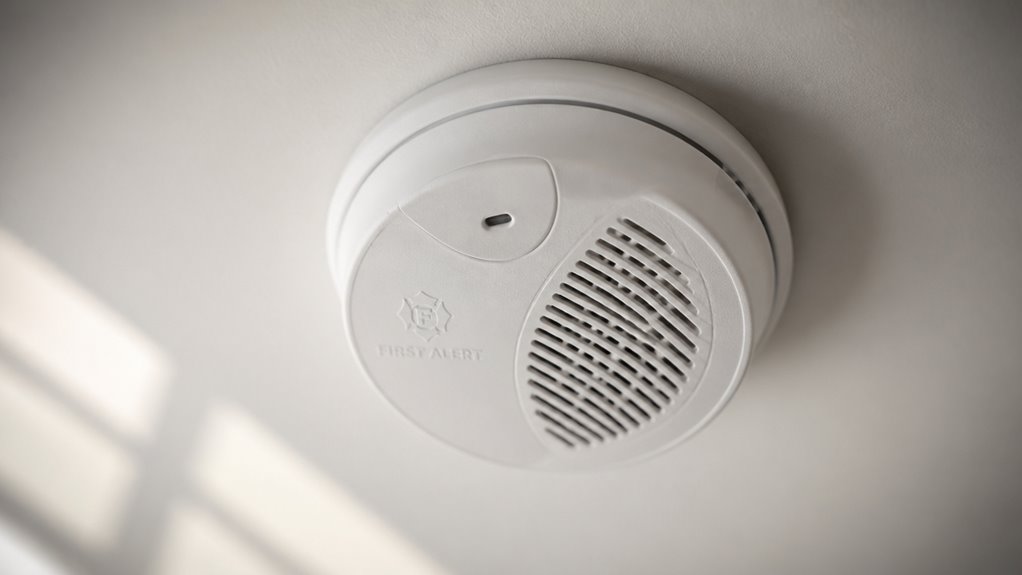

You’ll find First Alert smoke alarms offer reliable detection with versatile options. They include battery-powered units with 10-year sealed batteries and hardwired interconnected models for seamless home coverage.
Their dual smoke and carbon monoxide sensors balance fast fire detection and precise CO monitoring. Installation is straightforward, especially for quick hardwired replacements.
Smart models provide handy app control and integration with home security systems. They suit varied needs and maintenance preferences, making them a solid upgrade choice.
Explore further to see which model fits your home best.
Key Takeaways
- First Alert offers battery-powered, hardwired, interconnected, and smart smoke alarms to suit various home safety needs and installation preferences.
- Dual-sensor models combine photoelectric and electrochemical sensors for faster, precise detection of smoldering fires and carbon monoxide.
- Hardwired interconnected alarms provide reliable power with battery backup and enable all units to sound simultaneously during emergencies.
- Many models feature 10-year sealed lithium batteries, reducing maintenance and ensuring long-term reliability in hard-to-reach locations.
- Installation is user-friendly, with low-profile designs and quick-swap options enabling upgrades in under five minutes per unit.
Types of First Alert Smoke Alarms
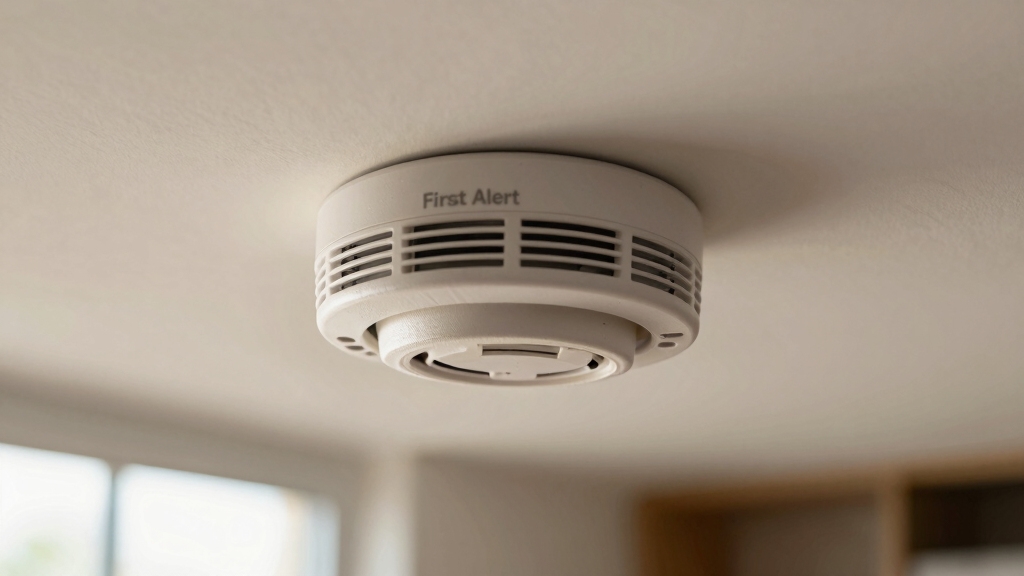
First Alert offers a variety of smoke alarms designed to meet different needs, including battery-powered, hardwired, interconnected, and smart smoke-and-CO combination models.
First Alert provides diverse smoke alarms tailored to various needs, including battery, hardwired, interconnected, and smart combo models.
You’ll find battery-powered units ideal for straightforward replacements or areas without wiring. Hardwired alarms with battery backup suit new installations or upgrades requiring consistent power.
Interconnected alarms enhance safety by triggering all units simultaneously, which is helpful in larger homes. Smart models stand out with app control and compatibility with home ecosystems, letting you monitor alarms remotely.
Some models feature 10-year sealed batteries, cutting down on maintenance. Overall, First Alert’s range balances ease of installation, maintenance, and functionality.
Still, you should consider specific model features, as performance and smart capabilities vary. This ensures you choose an alarm tailored to your household’s safety priorities.
Many First Alert combination alarms use dual-sensor technology combining photoelectric smoke detection and electrochemical CO sensing for comprehensive hazard alerts.
How First Alert Alarms Detect Smoke and Carbon Monoxide?
Although smoke and carbon monoxide (CO) are different hazards, many First Alert alarms use specialized sensors to detect each effectively. For smoke, they typically employ ionization or photoelectric sensors, targeting fast-flaming or smoldering fires. For CO, electrochemical sensors measure gas concentration, alerting you before levels become dangerous. This combination enhances your home’s safety by covering multiple threats in one device.
| Detection Type | Sensor Technology | What It Means to You |
|---|---|---|
| Smoke (fast-flaming) | Ionization | Quick alert for sudden fires |
| Smoke (smoldering) | Photoelectric | Early warning for slow fires |
| Carbon Monoxide | Electrochemical | Reliable detection of CO buildup |
First Alert’s integration of these technologies provides balanced, effective detection for home safety. Photoelectric sensors, in particular, provide faster hazard detection and better precision in identifying smoldering fires, reducing false alarms and improving early warnings.
Fire Detection Performance of First Alert Smoke Alarms
When you take a look at First Alert smoke alarms, you’ll notice that the detection speed can really vary depending on the model.
Some of them are pretty impressive, triggering alarms in under 23 seconds during lab tests!
However, it’s important to keep in mind that not all units perform the same way.
There’s a noticeable difference, especially between the basic models and the smart ones.
So, understanding these differences is key.
It can really help you choose the right alarm that fits your needs for reliable fire detection.
Be sure to verify model compatibility when selecting an interconnected alarm to ensure proper communication among units.
Detection Speed Comparison
You’ll find that the fire detection speed of First Alert smoke alarms varies significantly between models, influencing their effectiveness in different fire scenarios.
In lab tests, some First Alert sensors detected fires in less than 23 seconds, demonstrating quick response for early warning.
However, detection speed isn’t uniform across all models. For example, a particular Onelink smart alarm showed slower response times, ranking low in both fast-flaming and slow-smoldering fire detection tests.
This variation means you need to take into account specific model capabilities rather than assuming uniform speed.
Overall, while many First Alert alarms provide rapid detection suitable for typical residential fires, performance can differ notably.
Evaluating individual model test results will help ensure you choose an alarm that meets your fire safety needs efficiently.
For comparison, Eufy’s E10 smoke alarm uses photoelectric technology that excels at early detection of smoldering fires while reducing false alarms from cooking smoke.
Model Performance Variability
The detection speed differences among First Alert smoke alarms reflect broader variability in their overall fire detection performance.
You’ll find that some models detect fires quickly, responding in under 23 seconds in lab tests.
Others, especially certain smart models, show slower detection times for fast-flaming and smoldering fires.
This variability means you can’t assume uniform performance across the brand; instead, you need to make allowances for individual model capabilities.
Basic and hardwired alarms generally perform reliably, whereas smart alarms may trade some detection speed for added connectivity features.
Evaluating your specific needs, such as quick detection versus smart integration, helps you choose the right First Alert alarm.
Understanding this variability guarantees you balance fire safety with convenience effectively.
It is also important to test alarms monthly to ensure they function properly and maintain safety.
Smart Features of First Alert Smoke Alarms
Although smart smoke alarms have become increasingly common, First Alert’s models stand out by combining reliable fire detection with convenient app control and integration into connected home systems.
You can monitor alerts remotely, silence false alarms with a one-touch button, and link alarms to other smart devices, enhancing your home’s safety network.
However, performance varies by model, so choosing one that fits your needs is vital.
| Feature | Benefit |
|---|---|
| App Control | Receive alerts anywhere |
| One-Touch Silence | Easily quiet false alarms |
| Smart Home Integration | Connect to security systems |
| Sealed Battery | Long-lasting, low maintenance |
| Dual Smoke & CO | Thorough protection |
This blend of features balances convenience with safety effectively. To ensure optimal protection, it is important to follow key placement guidelines during installation.
Installation and Replacement of First Alert Smoke Alarms
Smart features add convenience and connectivity, but how you install or replace your First Alert smoke alarms impacts both performance and ease of use.
First Alert’s hardwired models are widely praised for straightforward installation, often fitting easily into existing wiring setups. Reviews note that replacing wired alarms can take under five minutes per unit, making upgrades efficient.
First Alert’s hardwired alarms offer quick, easy installation, often fitting existing wiring for fast, efficient upgrades.
The brand’s low-profile designs help guarantee smooth visual integration without bulky fixtures. If you’re upgrading older alarms, First Alert offers practical options designed for quick swaps that maintain reliable operation.
Interconnected models also simplify multi-alarm setups, enhancing safety with minimal installation hassle. Overall, whether you’re installing new units or replacing aged alarms, First Alert’s design choices support a relatively smooth and effective process, contributing to dependable fire detection in your home.
Many First Alert models also feature battery backup to ensure continuous operation during power outages.
Power and Battery Options for First Alert Smoke Alarms
You’ll find that First Alert smoke alarms come in both battery-powered and hardwired models, each with their own perks. This gives you the flexibility to choose what works best for your installation needs.
A lot of these alarms boast 10-year sealed batteries. This is a real game-changer because it cuts down on maintenance—no more frequent battery changes to worry about!
When it comes to deciding between hardwired and battery options, it really boils down to what you value more: the ease of installation or the reliability of continuous power. What do you think fits your situation better?
Remember to replace the alarm after 10 years of service to ensure reliable protection and compliance with safety guidelines.
Battery Types Available
First Alert frequently offers a versatile range of power and battery options to suit different installation needs and preferences.
When choosing your smoke alarm, you’ll find models with traditional replaceable batteries and others equipped with sealed 10-year lithium batteries. These reduce maintenance by eliminating frequent battery changes.
Some alarms come with a battery backup, ensuring continued operation during power outages. This variety lets you pick a model that fits your home’s wiring setup and your willingness to manage battery upkeep.
Key battery types include:
- Standard replaceable AA or 9V batteries
- Sealed 10-year lithium batteries for long-term reliability
- Battery backup paired with hardwired units for uninterrupted power
These options provide flexibility, balancing convenience, longevity, and reliability in your smoke detection system. It is important to replace batteries at least once a year and address any chirping sounds immediately to ensure proper alarm function.
Hardwired Versus Battery
Choosing between hardwired and battery-powered smoke alarms involves weighing installation complexity, maintenance needs, and reliability during power outages.
Hardwired First Alert models typically come with battery backups, ensuring continuous operation even if your power fails. These alarms often require professional installation but offer seamless integration and interconnectivity. This is ideal if you want all alarms to sound simultaneously.
Battery-powered models, including those with 10-year sealed batteries, provide easy installation and low maintenance since you won’t need frequent replacements. However, they depend solely on battery life, which can be a concern if not monitored.
First Alert’s variety lets you select based on your home’s wiring and your preference for convenience or reliability. Both options are practical but suited for different needs.
To ensure uninterrupted protection during power outages, hardwired alarms rely on battery backup systems that automatically supply power when mains electricity fails.
Battery Life of First Alert Smoke Alarms
Typically, First Alert smoke alarms offer reliable battery life options that cater to different user needs. You’ll find models with standard replaceable batteries alongside those featuring 10-year sealed lithium batteries, which minimize maintenance. This variety lets you choose based on convenience and installation type, whether battery-powered or hardwired with backup.
When evaluating battery life, consider these points:
10-year sealed batteries provide long-term reliability without frequent changes, ideal for hard-to-reach locations.
Standard replaceable batteries require regular checks but are easily swapped for continued operation.
Battery backup in hardwired models provides protection during power outages, adding peace of mind.
Best First Alert Models for Upgrading Old Smoke Alms
When upgrading old smoke alarms, you’ll want models that combine ease of installation with reliable detection and modern features.
First Alert’s hardwired interconnected alarms are excellent for quick replacements, often installed in under five minutes per unit. Their low-profile designs fit seamlessly into existing mounts, reducing hassle.
For a battery-powered option, consider models with 10-year sealed batteries, minimizing maintenance. If you prefer smart functionality, the First Alert SC5 integrates with home security systems and offers app control, though detection performance varies by model.
Basic hardwired or battery-powered alarms deliver consistent, fast fire detection and are practical for straightforward upgrades.
What Users Say About First Alert Smoke Alarms
Many users rave about how easy it’s to install First Alert smoke alarms. Seriously, they often mention how quick the setup is, even for those hardwired models. It’s great to hear that folks appreciate the quality and durability too. They consistently highlight how reliable these alarms are over time.
And let’s not forget about the smart models! Users really love the convenient app controls and how well they integrate with home security systems. It definitely enhances the overall experience, making them feel even safer at home.
Ease Of Installation
Installing First Alert smoke alarms often proves straightforward and efficient, especially for hardwired models designed as replacements. Many users report that upgrading older alarms with First Alert’s low-profile, hardwired units takes minimal time and effort.
Battery-powered models also offer hassle-free setup, as they typically require only mounting and activation. Whether you’re replacing existing alarms or installing new ones, the brand’s design focuses on user-friendly installation.
You’ll appreciate clear instructions and compatibility with common household wiring and fixtures. Key ease-of-installation features include:
- Hardwired models that fit standard mounts, enabling quick swaps.
- Battery-powered alarms needing no wiring, ideal for DIY installs.
- Interconnected models designed for seamless linking without complex setups.
This broad variety supports both new installations and straightforward replacements.
Quality And Durability
Although experiences vary by model, users generally report that First Alert smoke alarms deliver solid quality and durability for residential use. Many note the robust construction and reliable materials that stand up well over time, especially in hardwired and battery-powered options.
The inclusion of 10-year sealed batteries in some models reduces maintenance hassles, contributing to long-term satisfaction. Users appreciate that the alarms maintain consistent performance without frequent malfunctions or false alarms, reflecting dependable sensor quality.
However, durability perceptions can differ with smart models, where occasional connectivity issues slightly affect overall impressions. Still, the brand’s reputation for lasting build quality makes it a trustworthy choice if you want a smoke alarm that balances dependable protection with minimal upkeep, enhancing safety without demanding constant attention.
Smart Feature Benefits
Frequently praised by users, First Alert’s smart smoke alarms offer a range of features that enhance convenience and safety in everyday home use.
You’ll appreciate the app-controlled functionality that lets you monitor and manage alarms remotely, ensuring peace of mind even when you’re away.
The one-touch silence button simplifies handling false alarms, especially in busy households. Plus, smart models integrate smoothly with other connected home security devices, creating an all-encompassing safety network.
Key smart feature benefits include:
- Remote monitoring and alerts via mobile app
- Easy false alarm silencing with one-touch control
- Integration with broader smart home security ecosystems
These features combine to provide practical, user-friendly safety enhancements that suit modern living environments.
How to Choose the Right First Alert Smoke Alarm for Your Home?
When selecting the right First Alert smoke alarm for your home, it’s important to take into account your specific needs regarding power source, detection capabilities, and smart features.
Decide if you prefer battery-powered models with 10-year sealed batteries for low maintenance or hardwired alarms with battery backup for reliable power.
Evaluate detection performance based on your environment; some models excel in fast flaming or slow smoldering fire detection, so choose accordingly.
If you want app control and integration with your smart home, consider First Alert’s smart alarms, which also offer practical features like one-touch silence.
Installation ease matters too—hardwired models often replace older units quickly.
Balancing these factors helps you pick a model that fits your home’s safety requirements and lifestyle without compromising on reliability or convenience.
Frequently Asked Questions
Are First Alert Smoke Alarms Compatible With Voice Assistant Systems?
Yes, some First Alert smoke alarms are compatible with voice assistant systems. Their smart models support app control and can integrate with connected home ecosystems, including popular voice assistants like Amazon Alexa and Google Assistant.
This lets you get voice alerts and control alarms hands-free. However, compatibility depends on the specific model you choose, so you’ll want to verify that the alarm explicitly supports your preferred voice assistant before purchasing.
Can First Alert Alarms Be Interconnected With Other Brands’ Alarms?
Think of trying to join puzzle pieces from different sets. They rarely fit perfectly.
Similarly, you can’t reliably interconnect First Alert alarms with other brands’ devices.
First Alert’s interconnected models are designed to communicate within their own ecosystem, ensuring seamless alerts.
Mixing brands often leads to compatibility issues, risking delayed or missed warnings.
For peak safety and performance, stick to First Alert units when setting up interconnected alarms in your home.
What Is the Warranty Period for First Alert Smoke Alarms?
You typically get a 10-year limited warranty with First Alert smoke alarms, covering defects in material and workmanship.
This warranty period matches the expected lifespan of many models, especially those with sealed 10-year batteries.
You won’t need to worry about replacement parts or battery issues during that time.
Just keep your purchase receipt and register your product to guarantee smooth warranty service if any problems arise within those 10 years.
Do First Alert Smoke Alarms Have a Child Lock or Tamper-Resistant Feature?
Like a safety net catching small mishaps, many First Alert smoke alarms come with tamper-resistant features to prevent children from accidentally disabling them.
These features usually involve a locking mechanism or a secure battery compartment to keep curious hands out. While not all models have a dedicated child lock, most include tamper resistance as a standard safety measure.
This helps you maintain reliable protection without frequent false alarms or battery removal.
Are First Alert Smoke Alarms Suitable for Commercial or Industrial Use?
First Alert smoke alarms are primarily designed for residential use, so they mightn’t meet the rigorous demands of commercial or industrial environments.
You’ll find them ideal for homes, offering reliable detection and smart features.
For commercial applications, you should verify compliance with local fire codes and industry standards.
If you need alarms for workplaces or industrial sites, consider specialized models built specifically for those settings to guarantee safety and regulatory adherence.
The Best First Alert Smoke Detectors for Reliable Home Protection
When choosing a First Alert smoke alarm, you’ll appreciate their reliable fire detection and smart features that enhance safety.
Importantly, studies show that homes with working smoke alarms cut the risk of fatal fire injuries by 50%.
First Alert offers a range of models with long-lasting batteries and easy installation, making upgrades straightforward.
Evaluating your specific needs guarantees you pick the best alarm to protect your home effectively and stay ahead of potential fire hazards.
[…] it is important to note that some smart alarms like the SC5 may show slower detection times compared to basic […]