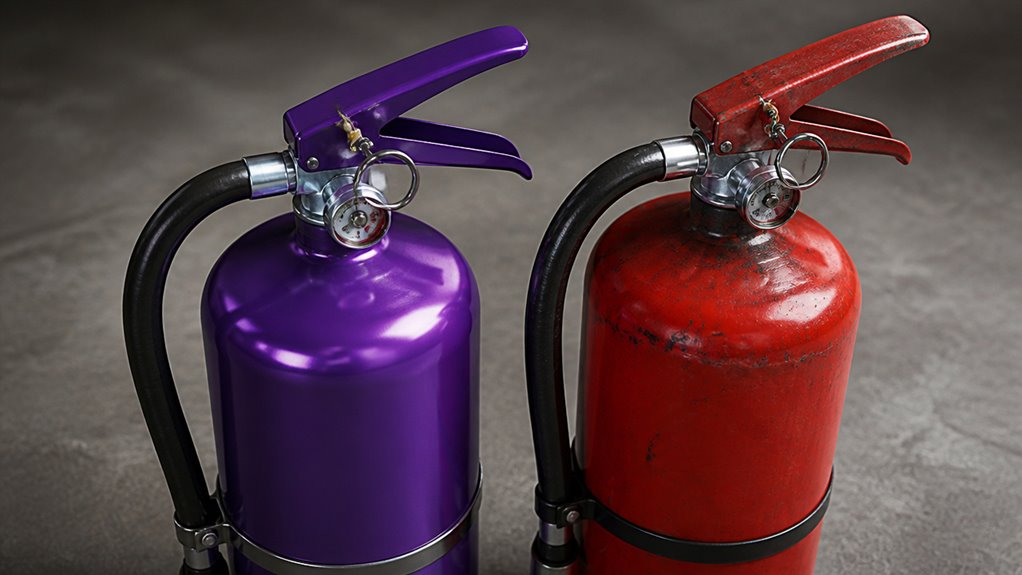

You’ll want a Purple K extinguisher if rapid, powerful suppression of flammable liquid fires is your priority, especially in industrial or fuel-handling settings.
It targets Class B and energized electrical fires effectively with non-corrosive potassium bicarbonate, leaving easier-to-clean residue.
An ABC extinguisher covers a broader range: ordinary combustibles, flammable liquids, and electrical fires.
This makes it ideal for homes and offices, though its residue is more corrosive.
Understanding these differences helps you pick the best fit for your fire risks and environment.
Key Takeaways
- Purple K excels in rapid suppression and re-ignition prevention of Class B flammable liquid fires, outperforming ABC extinguishers.
- ABC extinguishers provide broad multi-class protection (A, B, and C), ideal for homes, offices, and mixed-risk environments.
- Purple K residue is non-corrosive and easier to clean, whereas ABC powder is corrosive and can damage sensitive equipment.
- Purple K is preferred in industrial and fuel-handling settings due to its specialized effectiveness on liquid and electrical fires.
- ABC extinguishers cost less and suit general-purpose needs but are less effective on flammable liquid fires than Purple K.
Purple K Fire Extinguisher vs ABC Comparison: Fire Class, Cleanup, and Best Use
| Comparison Point | Purple K Fire Extinguisher | ABC Fire Extinguisher | Best Choice |
|---|---|---|---|
| Fire Classes Covered | Best for Class B flammable liquids and Class C electrical fires | Covers Class A, B, and C fires | ABC for broader coverage |
| Chemical Agent | Uses potassium bicarbonate dry chemical | Uses monoammonium phosphate dry chemical | Depends on fire type |
| Flammable Liquid Fires | Delivers faster knockdown and stronger Class B performance | Works on Class B, but less specialized | Purple K for fuel fires |
| Ordinary Combustibles | Not designed for wood, paper, fabric, or general Class A fires | Effective on wood, paper, fabric, and trash | ABC for Class A hazards |
| Electrical Fires | Effective on energized electrical fires | Also effective on energized electrical fires | Both for Class C fires |
| Residue Cleanup | Leaves less corrosive, easier-to-clean residue | Leaves more corrosive and sticky residue | Purple K for cleaner recovery |
| Equipment Sensitivity | Better where residue damage must be minimized | May harm sensitive electronics if not cleaned quickly | Purple K for sensitive areas |
| Best Environment | Industrial sites, fuel storage, garages, motorsports, liquid-fuel risks | Homes, offices, schools, and mixed-risk spaces | Match to environment risk |
| Cost | Usually costs more due to specialized performance | Usually more affordable and widely available | ABC for budget value |
| Overall Use | Best for specialized high-risk fire control | Best for general-purpose fire protection | Choose by fire hazard type |
Fire Classes Covered by Purple K and ABC Extinguishers
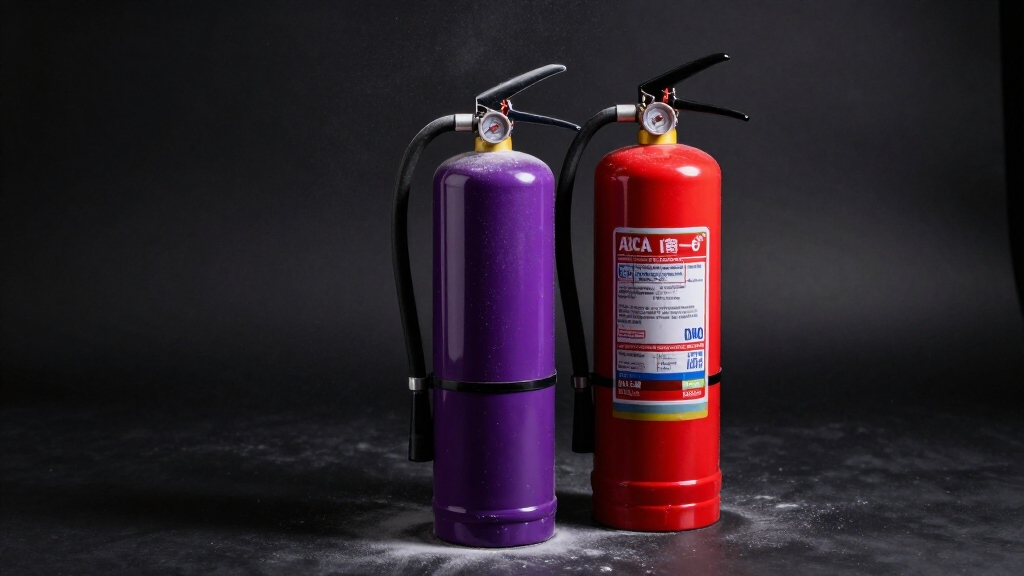
Although both Purple K and ABC extinguishers are designed to tackle flammable hazards, they cover different fire classes that affect their suitability for specific environments.
Purple K targets Class B fires, which involve flammable liquids like gasoline and oils. It’s also effective on energized electrical fires classified as Class C.
Purple K effectively combats Class B flammable liquid fires and energized electrical Class C fires.
In contrast, ABC extinguishers cover Class A (ordinary combustibles such as wood and paper), Class B (flammable liquids), and Class C fires, offering broader coverage.
You’ll find Purple K preferred where rapid suppression of liquid fires is critical, while ABC suits general-purpose needs where mixed fire risks exist.
Selecting the right extinguisher depends on your environment’s dominant fire hazards: Purple K for specialized flammable liquid risks and ABC for versatile, multi-class fire protection.
Purple K is more than twice as effective as ABC on Class B hydrocarbon fires, delivering superior flame penetration and quicker knockdown due to its chemical chain reaction interruption.
What’s Inside Purple K and ABC Fire Extinguishers?
Understanding what’s inside Purple K and ABC fire extinguishers is key to grasping their effectiveness and best use.
Purple K contains potassium bicarbonate, a dry chemical optimized for Class B flammable-liquid and energized electrical fires.
ABC extinguishers use monoammonium phosphate, targeting Class A, B, and C fires with a broader application.
Here’s the breakdown:
- Purple K: Potassium bicarbonate powder, designed for rapid suppression of flammable liquids and electrical hazards.
- ABC: Monoammonium phosphate powder, effective on ordinary combustibles, flammable liquids, and electrical fires.
- Purple K: Non-corrosive and easier to clean according to product materials.
- ABC: Corrosive with residue that can melt and stick under heat, requiring thorough cleanup.
Knowing these contents helps you select the right extinguisher for your specific fire risks. Both use dry chemical powders to interrupt the combustion process quickly and effectively.
Purple K’s Superior Performance on Flammable Liquids
Knowing what’s inside Purple K and ABC extinguishers sets the stage for appreciating why Purple K excels on flammable-liquid fires.
Purple K’s potassium bicarbonate formula delivers superior suppression on Class B hazards like gasoline and solvents by rapidly interrupting the chemical reaction that sustains combustion.
You’ll find Purple K offers faster knockdown than ABC’s monoammonium phosphate powder, especially critical in high-risk, liquid-fuel environments.
Its dry chemical also forms a barrier that minimizes re-ignition potential, enhancing safety post-extinguishment.
While ABC extinguishers provide multi-class coverage, their effectiveness on flammable liquids doesn’t match Purple K’s specialized performance.
Consequently, when flammable liquids dominate your fire risk, choosing Purple K guarantees more efficient control and quicker fire suppression.
This makes it the preferred agent for industrial, motorsport, and fuel-handling applications.
Additionally, Purple K’s powder disrupts exothermic reactions at the molecular level, further enhancing its ability to control flammable liquid fires effectively.
ABC Fire Extinguishers for Mixed Fire Hazards
You’ll find that ABC fire extinguishers are designed to tackle Class A, B, and C fires. This makes them perfect for situations where mixed fire hazards are present—think ordinary combustibles, flammable liquids, and even electrical equipment.
Their versatility really shines in everyday environments like homes, offices, and schools, where fire risks can vary quite a bit. By choosing ABC units, you’re ensuring broad protection without the hassle of needing multiple specialized extinguishers. It’s a smart and practical choice! ABC extinguishers use monoammonium phosphate, a multipurpose dry chemical agent effective across these fire classes.
Versatile Fire Class Coverage
When you face environments with varied fire risks, ABC fire extinguishers offer the versatility you need to address multiple fire classes effectively. Their monoammonium phosphate-based formula suppresses ordinary combustibles, flammable liquids, and energized electrical fires, making them a reliable choice for mixed hazards.
You can depend on ABC extinguishers to handle:
- Class A fires involving wood, paper, and fabric.
- Class B fires from gasoline, oils, and solvents.
- Class C fires with energized electrical equipment.
- Unknown or combined fire hazards in general-purpose settings.
This broad coverage guarantees you won’t need multiple specialized extinguishers. While not as specialized as Purple K for flammable liquids, ABC units provide all-encompassing protection where mixed fire risks exist.
They are a practical choice for homes, offices, and commercial environments. Regular maintenance and inspection requirements are essential to ensure ABC extinguishers remain effective and compliant with safety standards.
Everyday Environment Suitability
Typically, ABC fire extinguishers serve as the most practical solution for everyday settings where fire hazards vary and overlap.
You’ll find them effective on Class A combustibles like wood and paper, Class B flammable liquids, and Class C energized electrical fires.
This multi-purpose capability makes ABC units ideal for homes, offices, schools, and general commercial environments where fire risks are mixed or uncertain.
While Purple K excels in flammable-liquid fires, it lacks Class A coverage, limiting its everyday applicability.
You’ll also need to take into account cleanup; ABC powder can be corrosive and sticky, requiring more effort post-use.
Given its broader fire class coverage and availability, the ABC extinguisher offers you all-encompassing fire protection for typical environments without sacrificing versatility or accessibility.
To maximize safety, it is essential to place ABC extinguishers along normal travel paths and near exits for quick and easy access during emergencies.
Cleanup and Residue: Purple K vs ABC Fire Extinguishers
When you use Purple K extinguishers, you’ll find that the residue is generally easier to clean up. Plus, it’s less corrosive compared to ABC powder. The ABC powder, which contains monoammonium phosphate, can actually melt and stick when exposed to heat. This makes cleanup a bit more of a hassle.
Also, the cleanup from ABC extinguishers often requires more intensive effort. It can pose a higher risk of damaging sensitive equipment, which is definitely something to keep in mind. So, understanding these differences really helps you assess the impact of the materials and the cleanup effort needed for your specific environment. Additionally, the typical discharge time of dry chemical extinguishers like Purple K and ABC powders ranges from 14 to 25 seconds, which influences how much residue is left after use.
Residue Characteristics Comparison
Residue from fire extinguishers plays a pivotal role in cleanup and post-fire recovery. When comparing Purple K and ABC extinguishers, their residue characteristics differ markedly, impacting cleanup procedures and equipment safety.
- Purple K leaves a potassium bicarbonate-based powder that’s generally non-corrosive and easier to remove.
- ABC extinguishers discharge monoammonium phosphate powder, which can melt under heat and adhere to surfaces.
- The ABC residue tends to be more corrosive, potentially damaging sensitive electronics and metals if not promptly cleaned.
- Purple K residue forms a barrier that helps prevent re-ignition but requires dry cleanup to avoid clumping.
Understanding these differences helps you select the extinguisher that balances fire suppression efficiency with manageable residue impact. Proper maintenance and timely cleaning are essential to ensure safety and equipment longevity, similar to how regular battery replacement timing is critical for smoke detector reliability.
Cleanup Difficulty Levels
Evaluating the cleanup difficulty levels of Purple K and ABC fire extinguishers reveals distinct practical challenges that influence post-fire recovery efforts.
When you use Purple K, you typically face less cleanup hassle because its potassium bicarbonate-based powder tends to be non-corrosive and easier to remove from surfaces.
Conversely, ABC extinguishers, containing monoammonium phosphate, often leave a sticky residue that can melt under high heat. This complicates cleanup and potentially damages sensitive equipment.
You’ll find that ABC powder clings more stubbornly, requiring thorough wiping and sometimes special cleaning agents to prevent corrosion.
Choosing between these extinguishers means weighing your tolerance for residue cleanup, especially in vehicles or equipment-heavy environments where rapid restoration is critical.
Purple K generally minimizes downtime by simplifying post-fire cleanup tasks.
It is also important to consider that dry chemical extinguishers like ABC can disrupt combustion quickly but may leave residues that affect electronics.
Corrosiveness And Material Impact
Although both Purple K and ABC fire extinguishers leave powder residues after discharge, you’ll find significant differences in their corrosiveness and effects on materials.
Purple K’s potassium bicarbonate base tends to be non-corrosive and easier to clean, minimizing damage to sensitive equipment. In contrast, ABC’s monoammonium phosphate powder is more corrosive, potentially causing chemical damage and requiring thorough cleanup to prevent long-term harm.
Consider these factors:
- Purple K residue is less likely to cause metal corrosion.
- ABC powder can melt under heat, adhering firmly to surfaces.
- Equipment exposed to ABC powder often needs decontamination to avoid malfunction.
- Purple K’s non-corrosive nature suits industrial and vehicle environments with delicate electronics.
Additionally, damaged extinguishers like these often require certified professional inspection or replacement to ensure safety and functionality.
Choose based on material sensitivity and cleanup capacity.
Typical Use Cases for Purple K and ABC Fire Extinguishers
Consider where you’ll be using the extinguisher to choose between Purple K and ABC models effectively.
Purple K suits high-risk environments dominated by flammable liquids and energized electrical equipment. This includes racetracks, fuel facilities, and industrial sites.
ABC extinguishers work well in homes, offices, and schools, covering ordinary combustibles, flammable liquids, and electrical fires.
| Use Case | Recommended Extinguisher |
|---|---|
| Residential fires | ABC |
| Industrial flammable liquids | Purple K |
| Electrical equipment | Both |
| Vehicle garages | Purple K |
| Mixed hazard areas | ABC |
Select Purple K for rapid suppression of liquid fires. Choose ABC for versatile protection where multiple fire classes coexist.
Your choice directly impacts safety and cleanup efficiency.
When to Choose Purple K for Specialized Fire Risks?
When dealing with fire hazards dominated by flammable liquids, you’ll want to reach for a Purple K extinguisher due to its superior effectiveness in rapidly knocking down Class B fires.
Purple K’s potassium bicarbonate formula excels in creating a barrier that prevents re-ignition and performs better than ABC powder on liquid fuels. You should consider Purple K in these scenarios:
- Industrial sites with frequent exposure to gasoline, oils, or solvents.
- Airport crash rescue where rapid suppression of jet fuel fires is critical.
- Motorsports environments with high-risk flammable liquid hazards.
- Facilities handling energized electrical equipment where Class B and C fires coexist.
Choosing Purple K guarantees specialized, efficient suppression tailored to high-hazard liquid fire risks, where ABC’s broader but less focused coverage falls short.
Why ABC Is the Go-To Extinguisher for Homes and Offices?
Typically, you’ll find ABC fire extinguishers as the standard choice in homes and offices due to their versatile capability to tackle Class A, B, and C fires.
You need a reliable, multi-purpose extinguisher when fire types are unpredictable. ABC extinguishers use monoammonium phosphate, effective on ordinary combustibles, flammable liquids, and electrical fires. This makes them ideal for everyday environments.
| Feature | ABC Extinguisher |
|---|---|
| Fire Classes Covered | A, B, C |
| Chemical Agent | Monoammonium phosphate |
| Common Use | Homes, offices, schools |
| Cleanup Consideration | Corrosive residue, requires cleanup |
Cost and Practical Factors for Purple K vs ABC Fire Extinguishers
In environments dominated by flammable liquids or gas-rich hazards, you’ll find Purple K extinguishers deliver specialized performance but come at a higher cost compared to ABC units.
When deciding between the two, consider these practical factors:
- Cost: Purple K units typically cost more due to their specialized dry chemical formulation geared for Class B fires.
- Cleanup: Purple K powder is generally easier to clean and less corrosive than ABC’s monoammonium phosphate residue.
- Versatility: ABC extinguishers cover Classes A, B, and C, making them suitable for mixed hazards in homes and offices.
- Application environment: Purple K is preferred in industrial or high-risk flammable liquid settings, while ABC suits general-use scenarios.
Your choice should align with the specific fire risks and budget constraints of your environment.
Frequently Asked Questions
How Long Does the Discharge Last for Purple K and ABC Extinguishers?
You can expect a typical discharge time of about 10 to 15 seconds for both Purple K and ABC extinguishers, depending on their size and pressure.
Purple K units often deliver rapid knockdown in shorter bursts, focusing on quick suppression of flammable liquids.
ABC extinguishers provide a steady discharge suitable for mixed fire types.
Always check the manufacturer’s specs for exact duration since factors like nozzle design and canister volume influence performance.
Are Purple K Extinguishers Safe to Use on Food-Related Fires?
You shouldn’t use Purple K extinguishers on food-related fires. They contain potassium bicarbonate powder, which isn’t food-safe and can contaminate cooking oils or surfaces.
Instead, you’d want a Class K extinguisher specifically designed for kitchen grease fires. These use wet chemicals to safely suppress flames without harmful residues.
Purple K’s effectiveness on flammable liquids doesn’t extend to safe food environments, so avoid it in kitchens or food prep areas.
Can Purple K and ABC Extinguishers Be Refilled or Recharged?
You know what they say: “A stitch in time saves nine.”
Both Purple K and ABC extinguishers can be refilled or recharged after use.
It’s essential to have this done by certified professionals to guarantee safety and functionality.
Regular maintenance includes pressure checks, replacing discharged powder, and inspecting seals.
Neglecting this can compromise performance.
Always follow manufacturer guidelines and local fire codes when servicing your extinguisher to keep it ready for action.
What Is the Shelf Life of Purple K Versus ABC Fire Extinguishers?
You’ll find that both Purple K and ABC fire extinguishers typically have a shelf life of about 5 to 15 years, depending on manufacturer guidelines and maintenance.
Regular inspections and proper storage help maintain their effectiveness.
Purple K’s dry chemical can settle but remains stable if stored correctly.
ABC extinguishers may experience caking over time.
To guarantee reliability, you should follow the manufacturer’s specific recommendations and perform routine servicing.
Do Purple K Extinguishers Require Special Training to Operate?
You don’t need special training to operate Purple K extinguishers beyond standard fire extinguisher use.
However, because Purple K targets flammable liquid fires and can produce a dense, powdery discharge, you should familiarize yourself with its application techniques to maximize effectiveness and safety.
Proper training guarantees you use the extinguisher swiftly and avoid re-ignition, especially in high-risk environments where Purple K is deployed.
Choose the Extinguisher That Matches Your Fire Risk
When choosing between Purple K and ABC extinguishers, consider that Purple K excels in fighting flammable liquid fires (Class B) with up to 30% faster suppression than ABC agents.
However, ABC extinguishers cover multiple fire classes (A, B, and C), making them more versatile for general use.
You’ll want Purple K for specialized industrial risks, but ABC is your reliable choice for homes and offices.
Balancing performance, cost, and cleanup will guide your best decision.