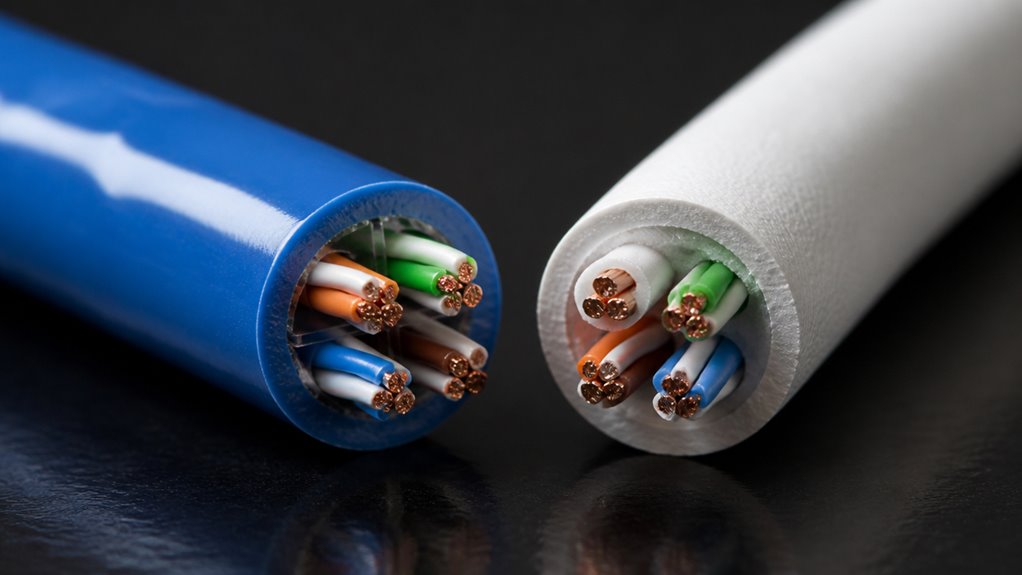

You should choose Cat6 plenum cable for air-handling spaces like drop ceilings. It uses low-smoke, fire-retardant materials meeting strict UL 910 standards, minimizing flame spread and toxic fumes.
Cat6 riser cable suits vertical runs between floors where air circulation is absent. It complies with UL 1666 but allows more smoke and longer flame spread.
Your decision hinges on fire safety ratings and local codes, not speed or cost. Explore further to understand installation, costs, and compliance details.
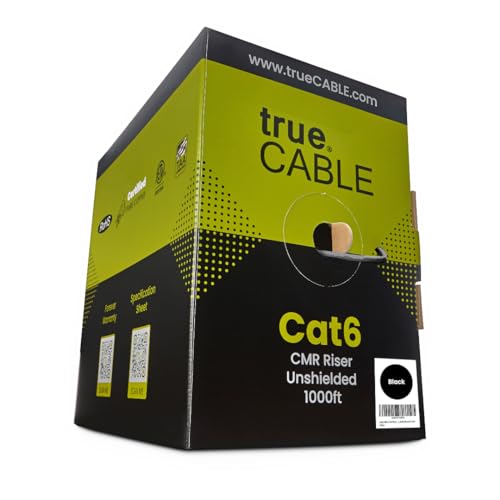
- [High Performance Network Cable] This riser rated cat 6 lan cable is 23 AWG with 4 pairs…
- [Hassle Free Packaging] 1000 feet (305 meters) comes conveniently pre-spooled in a tangle free, easy…
- [Solid Bare Copper Conductors] Pure bare copper conductors offer superior signal strength…

- 🔌 DSX-8000 Tested – Cat6 Performance: Each batch is tested with a DSX-8000 Cable Certifier at…
- 🔥 Genuine CM-Rated Jacket – Safe & Compliant: Featuring an authentic CM (Riser) flame-retardant…
- ⚡Standard 23AWG Conductors for Stable Transmission: Built with standard 23AWG gauge conductors…

Key Takeaways
- Cat6 plenum (CMP) cables use low-smoke, fire-retardant jackets for air-handling spaces, while riser (CMR) cables have standard PVC jackets for vertical runs.
- Plenum cables comply with UL 910 for limited flame spread and low smoke; riser cables meet UL 1666 with higher flame and smoke tolerance.
- Use plenum cables in drop ceilings, ducts, or raised floors where air circulates; use riser cables in walls or vertical shafts without air handling.
- Plenum cables cost 20–40% more due to specialized materials but provide enhanced fire safety and reduced toxic smoke emissions.
- Local building codes dictate whether plenum or riser cables are required based on the installation environment and fire safety regulations.
Cat6 Riser vs Plenum: Key Differences at a Glance
| Comparison Factor | Cat6 Riser Cable (CMR) | Cat6 Plenum Cable (CMP) |
|---|---|---|
| Primary Use | Vertical runs between floors and inside walls | Air-handling spaces such as drop ceilings and ducts |
| Fire Rating | Meets UL 1666 requirements | Meets stricter UL 910 requirements |
| Jacket Material | Typically uses standard PVC | Uses low-smoke, fire-retardant materials |
| Smoke Emission | Produces more smoke during combustion | Designed for lower smoke emissions |
| Flame Resistance | Suitable for non-plenum indoor pathways | Provides greater flame resistance |
| Typical Cost | Generally more affordable | Usually 20–40% more expensive |
| Network Performance | Same Cat6 speed and bandwidth capability | Same Cat6 speed and bandwidth capability |
| Best Choice When | Running cable through walls or riser shafts | Running cable through HVAC or return-air spaces |
What’s the Difference Between Cat6 Riser and Plenum Cable?
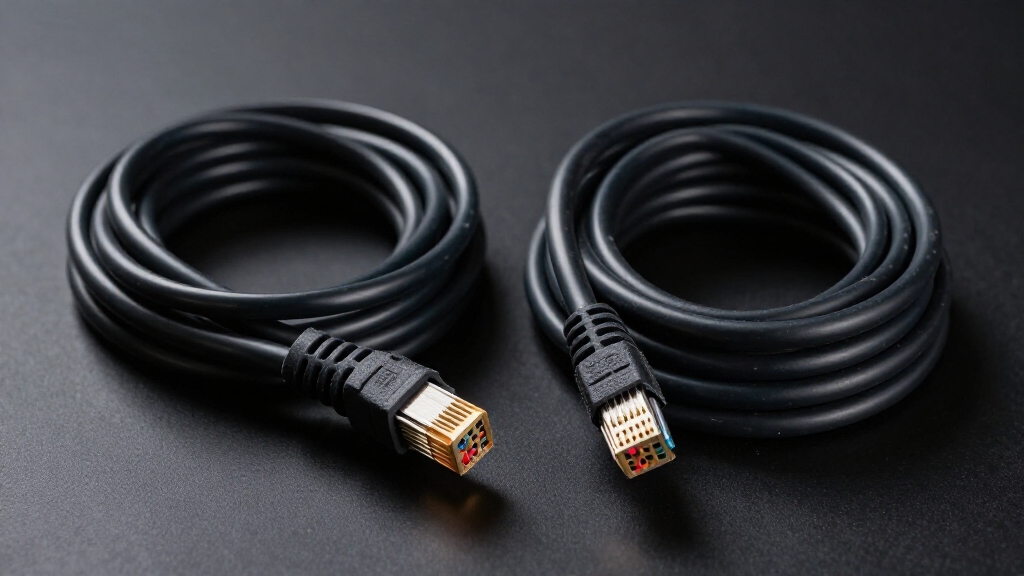
How do Cat6 riser and plenum cables differ, and why does it matter?
The key difference lies in their fire and smoke ratings, dictated by their jacket materials.
Cat6 plenum cable (CMP) uses low-smoke, fire-retardant materials like FEP or special PVC.
Cat6 plenum cable (CMP) features fire-retardant, low-smoke materials such as FEP or specialized PVC.
It is designed for air-handling spaces such as drop ceilings or ducts.
It meets stringent standards like UL 910, limiting flame spread and smoke emission.
In contrast, Cat6 riser cable (CMR) employs standard PVC jackets suitable for vertical runs between floors and non-plenum areas.
It complies with UL 1666.
This distinction guarantees safety compliance with building codes based on cable placement, not performance.
You must select cable types by evaluating the installation environment’s fire safety requirements.
This is essential to meet regulatory and safety standards precisely, not network speed.
Additionally, selecting cables with the correct UL certification ensures they meet established safety and performance testing requirements.
When and Why to Use Cat6 Plenum vs Riser Cable?
Selecting between Cat6 plenum and riser cable depends primarily on the physical environment of your installation and the associated fire safety requirements.
Use Cat6 plenum cable (CMP) when your cable runs through air-handling spaces such as plenums, drop ceilings, or ducts, where fire resistance and low smoke emission are critical.
This cable meets UL 910 standards, limiting flame spread and smoke output.
Conversely, choose Cat6 riser cable (CMR) for vertical runs between floors or typical interior pathways that aren’t part of an air-handling system, complying with UL 1666 standards.
Avoid substituting riser cable in plenum spaces, as it lacks adequate fire safety ratings.
Your decision hinges on code compliance and pathway type, not on network performance, ensuring safety and regulatory adherence.
For optimal installation, it is important to plan cable routes carefully to avoid high-traffic areas and ensure proper protection of the wiring.
Where to Install Cat6 Riser and Plenum Cables Safely?
Because fire safety codes and building design dictate cable placement, you must install Cat6 riser and plenum cables only in their designated environments.
Use Cat6 plenum cable in air-handling spaces such as drop ceilings, ducts, raised floors, or any verified plenum where HVAC air circulates. This guarantees compliance with fire resistance and smoke emission requirements.
Conversely, install Cat6 riser cable in vertical runs between floors, within walls, riser shafts, or stacked closets where no air-handling occurs. Avoid substituting riser cable in plenum spaces, as it lacks the necessary fire-retardant jacket.
Always verify the cable route’s classification—plenum or non-plenum—and adhere strictly to local building codes. Selecting the correct cable type safeguards building safety and regulatory compliance during installation.
Additionally, ensuring proper installation with weatherproof enclosures and routine inspections helps preserve cable longevity and system reliability in harsh conditions.
What Fire Safety Ratings Mean for Cat6 Riser and Plenum?
It’s really important to know that Cat6 plenum and riser cables are designed to meet different flame resistance standards. Plenum cables follow the UL 910 standard, while riser cables adhere to UL 1666. This distinction is crucial for ensuring safety in their specific environments.
Now, let’s talk about plenum cables. They’re built to limit flame spread to just five feet, which is pretty impressive. Plus, they’re made from specialized low-smoke materials, which means they emit significantly less smoke during a fire. This feature is vital in plenum spaces where air circulates. Additionally, selecting cables with appropriate fireproof ratings helps maintain the integrity and safety of security systems in various environmental conditions.
Flame Resistance Standards
When evaluating Cat6 riser and plenum cables, understanding their flame resistance standards is essential for guaranteeing compliance with fire safety regulations.
Plenum cables (CMP) meet the UL 910 standard, which tests flame spread and limits flame propagation to five feet in air-handling spaces. These cables use low-smoke, fire-retardant materials such as fluorinated ethylene polymer (FEP) or specialized PVC to reduce fire risk.
Riser cables (CMR) comply with UL 1666, designed for vertical shafts, restricting flame spread but allowing longer propagation distances than plenum-rated cables.
This distinction guarantees plenum cables provide superior flame resistance in HVAC and return-air environments, while riser cables suit vertical, non-plenum pathways.
Always select cable ratings based on these standards to maintain code compliance and maximize fire safety within the cable routing environment. Proper installation and adherence to regional safety standards further ensure effective fire protection.
Smoke Emission Differences
Understanding smoke emission differences is essential for selecting the right Cat6 cable for safety-critical environments.
Plenum-rated Cat6 cables (CMP) use low-smoke, fire-retardant materials like FEP or specialized PVC. These materials markedly limit smoke density and toxic gas release during combustion.
This low-smoke characteristic complies with UL 910 standards, making CMP cables suitable for air-handling spaces where smoke can spread rapidly.
Conversely, riser-rated cables (CMR) employ standard PVC jackets that emit higher smoke volumes and more toxic fumes when burned. They meet the less stringent UL 1666 standard.
Because smoke can impair visibility and pose health risks during fires, you must choose CMP cables in plenums to reduce smoke hazards effectively.
In non-plenum areas, CMR cables suffice, but always verify local codes to confirm compliance with fire safety and smoke emission requirements.
Ensuring compliance with building codes is critical to maintaining safety and uninterrupted fire detection in environments where these cables are installed.
Cost and Material Differences in Cat6 Riser vs Plenum Cables
Although Cat6 riser and plenum cables serve similar networking functions, their cost and material composition differ markedly due to safety requirements.
Plenum cables use specialized low-smoke, fire-retardant materials like fluorinated ethylene polymer (FEP) or low-smoke PVC. This enables compliance with UL 910 standards for air-handling spaces.
This advanced jacket construction drives plenum cable prices 20–40% higher than riser cables, which typically employ standard PVC jackets. These jackets meet UL 1666 for vertical shafts but lack low-smoke properties.
When you select cable, understand that plenum’s enhanced fire resistance and reduced smoke emission justify its premium cost. Riser cable offers a budget-friendly option for non-plenum vertical runs.
Your choice hinges on the cable’s required fire rating, not network performance, ensuring safety and regulatory compliance in your installation environment.
Proper compliance with local building codes is essential when choosing cable types for installation environments.
How Building Codes Affect Your Cat6 Cable Choice?
Because building codes dictate fire safety standards for cable installation, they play a vital role in determining whether you need Cat6 plenum (CMP) or riser (CMR) cable.
You must select CMP cable for any route passing through verified plenum spaces, including air-handling areas like drop ceilings or raised floors, to comply with stricter fire-resistance and low-smoke requirements.
Conversely, CMR cable suits vertical runs between floors or typical in-wall installations where air circulation is absent.
Always verify your local building codes and confirm the cable pathway classification before installation.
Remember, the most restrictive section in mixed routes governs the cable rating.
Adhering to these code-driven requirements guarantees compliance, enhances fire safety, and avoids costly rework or legal issues during inspections.
For enhanced fire safety and system efficiency, consider integrating your cable choices with an addressable fire alarm system that supports advanced monitoring and diagnostics.
Choosing the Right Cat6 Cable for Your Project Needs
When selecting Cat6 cable for your project, you must prioritize the cable’s fire rating based on the installation environment rather than assuming all Cat6 cables perform the same.
Choose CMP (plenum) cable for air-handling spaces like plenums or drop ceilings to meet stringent fire and smoke standards (UL 910).
Select CMP (plenum) cable for air-handling spaces to comply with strict fire and smoke standards (UL 910).
For vertical runs between floors or typical in-wall installations without air circulation, use CMR (riser) cable, which meets UL 1666 but has lower fire resistance.
Verify local building codes and identify the cable pathway classification before purchase.
If your route includes mixed environments, select the cable rating required by the most restrictive section.
Balancing cost and compliance, CMP cables are pricier but necessary for safety in plenum areas.
CMR cables suffice for standard non-plenum indoor runs.
Additionally, always verify local regulations to ensure compliance with specific fire and safety requirements for your installation environment.
Frequently Asked Questions
Can Cat6 Plenum Cable Be Used Outdoors or in Wet Locations?
No, you shouldn’t use Cat6 plenum cable outdoors or in wet locations.
It’s designed for air-handling spaces indoors, focusing on fire resistance and low smoke emissions, not moisture protection.
For outdoor or wet environments, you need cables rated for those conditions, like outdoor-rated or direct burial Cat6 cables with UV-resistant and waterproof jackets.
Using plenum cable outside risks damage and code violations.
Always match cable type to the installation environment.
How Do Installation Techniques Differ Between Plenum and Riser Cables?
You’ll route plenum cable through air-handling spaces, securing it to avoid sagging and maintaining clearances from heat sources.
For riser cable, you’ll run it vertically between floors inside walls or shafts, fastening it securely to prevent movement.
You’ll follow fire code guidelines strictly, using plenum cable where smoke and flame resistance matter.
Use riser cable where vertical pathways don’t require special fire ratings, ensuring compliance with building codes throughout installation.
Are There Performance Differences in Data Transmission Between Plenum and Riser Cables?
You won’t notice any performance differences in data transmission between plenum and riser Cat6 cables. Both meet the same electrical and mechanical standards for speed and bandwidth.
The distinction lies in their jacket materials and fire ratings, not signal quality.
What Tools Are Needed to Terminate Cat6 Plenum Cable Properly?
To gracefully tame Cat6 plenum cable ends, you’ll need a few precise tools.
Start with a quality cable stripper to reveal the inner strands without harm.
Next, use a punch-down tool or crimping tool designed for RJ45 connectors to secure terminations firmly.
A cable tester follows to guarantee your connections hum perfectly.
These tools help you maintain the cable’s integrity while meeting strict safety and performance standards.
How Long Is the Typical Lifespan of Cat6 Plenum Versus Riser Cable?
You can expect both Cat6 plenum and riser cables to last around 15 to 25 years under normal conditions. Their lifespan depends more on installation quality, environmental factors, and mechanical stress than cable type.
Plenum cable’s specialized jacket enhances fire resistance but doesn’t materially extend lifespan compared to riser cable. Regular inspections and avoiding physical damage help maintain performance throughout their typical service life.
Match Your Cat6 Cable to the Installation Environment
Choosing between Cat6 riser and plenum cables isn’t just a minor detail; it can make or break your network’s safety and performance.
You’ve got to match the cable type to your building’s fire codes and installation environment precisely.
Plenum cables resist fire and smoke like a superhero, while riser cables work great between floors.
Don’t let this decision become your network’s Achilles’ heel; pick wisely for reliable, code-compliant wiring every time.
- [High Performance Network Cable] This riser rated cat 6 lan cable is 23 AWG with 4 pairs…
- [Hassle Free Packaging] 1000 feet (305 meters) comes conveniently pre-spooled in a tangle free, easy…
- [Solid Bare Copper Conductors] Pure bare copper conductors offer superior signal strength…
- 🔌 DSX-8000 Tested – Cat6 Performance: Each batch is tested with a DSX-8000 Cable Certifier at…
- 🔥 Genuine CM-Rated Jacket – Safe & Compliant: Featuring an authentic CM (Riser) flame-retardant…
- ⚡Standard 23AWG Conductors for Stable Transmission: Built with standard 23AWG gauge conductors…
Last update on 2026-10-24 / Affiliate links / Images from Amazon Product Advertising API