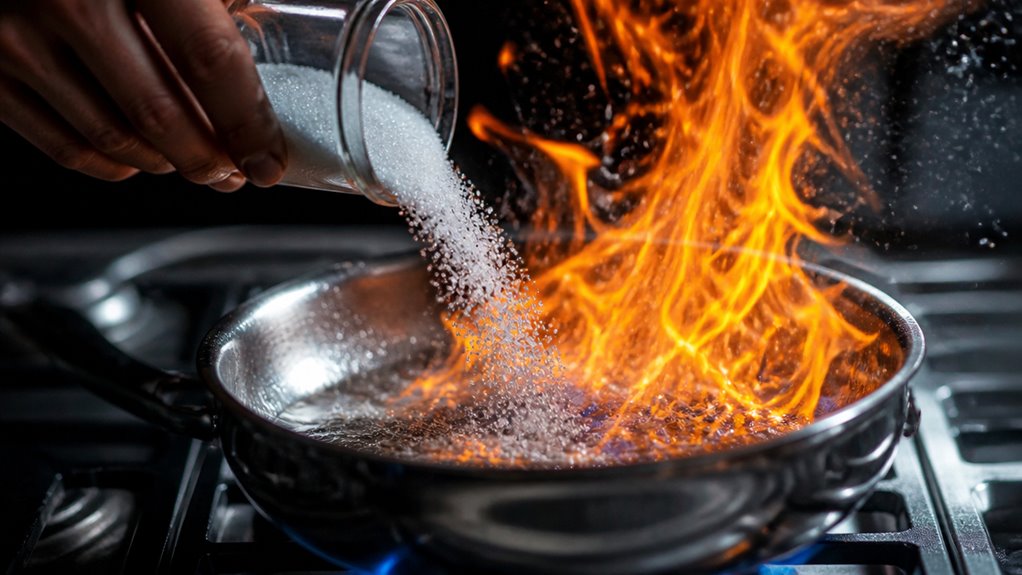

You should never use sugar to put out a grease fire because it actually makes the flames worse.
Sugar melts into a hot, sticky liquid that spreads burning oil.
Powdered sugar can ignite suddenly, causing flash fires.
Instead, you should smother the fire with a metal lid or baking sheet and turn off the heat if possible.
Using sugar only fuels the fire, increasing danger.
Keep going to discover safer ways to handle grease fires effectively.
Key Takeaways
- Sugar should never be used to extinguish grease fires as it can worsen the fire and increase its spread.
- Granulated sugar melts and spreads burning oil, while powdered sugar can cause flash fires or explosions.
- Sugar adds more fuel to the fire instead of removing heat or oxygen, intensifying the blaze.
- Fire safety experts explicitly advise against using sugar on grease fires due to increased severity.
- Use a metal lid, baking sheet, or appropriate fire extinguisher instead of sugar to safely smother grease fires.
Immediate Steps to Take During a Grease Fire
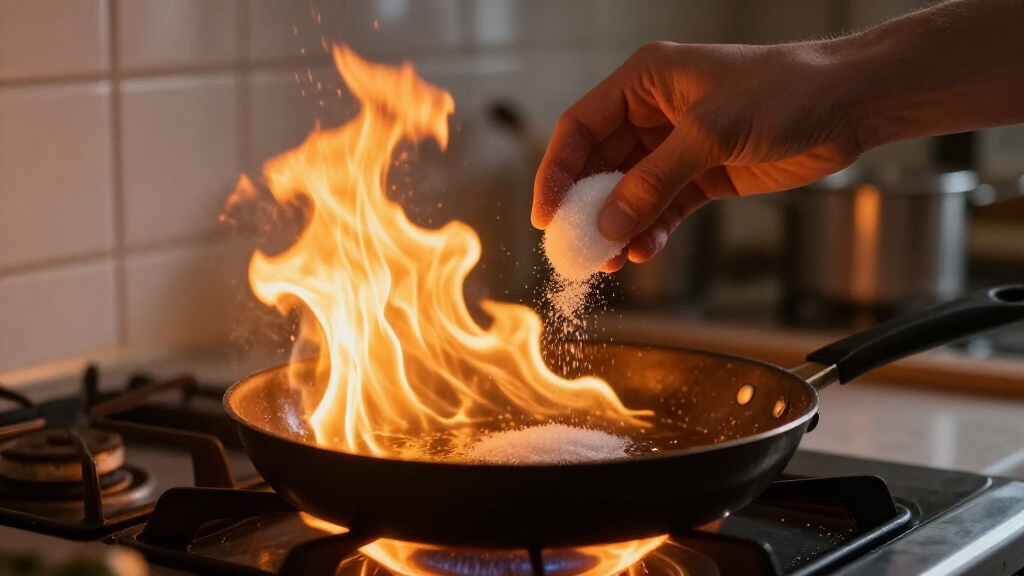
When a grease fire starts, your immediate priority should be to turn off the heat source if it’s safe to do so. This action stops additional fuel from feeding the flames.
Immediately turn off the heat source if safe to prevent the fire from getting fueled further.
Keep the pan where it is; don’t move it, as shifting hot oil can spread the fire. Next, smother the fire by carefully placing a metal lid or baking sheet over the pan. Cutting off oxygen is essential for extinguishing the flames.
Leave the lid on until the pan cools completely to prevent re-ignition. Avoid using water, sugar, or other substances that can worsen the fire. If the fire remains small, a large amount of baking soda might help, but only with caution.
Always prioritize safety and evacuate if the fire grows beyond control. It is important to remember that using water on grease fires can cause explosive spreading and should never be attempted.
Safe Ways to Extinguish Grease Fires (Avoid Sugar)
Knowing the immediate steps to take during a grease fire sets the foundation for effectively putting it out, but understanding what to use and what to avoid is just as important.
You should never use sugar, as it can worsen the fire. Instead, follow these safe methods:
- Turn off the heat source carefully to stop fueling the fire.
- Smother the flames by covering the pan with a metal lid or baking sheet to cut off oxygen.
- For very small fires, sprinkle a large amount of baking soda cautiously; never use water, flour, or sugar.
If the fire grows or spreads beyond the pan, evacuate immediately and call emergency services.
Keeping baking soda nearby is proven to reduce fire damage and helps you act quickly.
Following these steps keeps you safe and prevents the fire from escalating.
Why Sugar Is Dangerous for Grease Fires?
Although it might seem like sugar could help control a grease fire, using it actually makes the situation far more dangerous. When exposed to high heat, granulated sugar melts and caramelizes. This can spread burning oil across your stove or countertop.
Powdered sugar is even riskier; it can ignite rapidly and cause flash fires or explosions. Adding sugar doesn’t remove heat or oxygen; instead, it introduces more fuel, intensifying the flames.
Fire safety experts explicitly advise against using sugar because it increases fire spread and severity. To manage a grease fire safely, avoid sugar entirely. Instead, focus on smothering the flames with a metal lid or baking sheet and turning off the heat. For small grease fires, it is recommended to smother flames with baking soda or salt rather than any combustible materials.
How Sugar Makes Grease Fires Worse?
Adding sugar to a grease fire only fans the flames and makes the situation far worse.
When you add sugar, it melts and caramelizes, turning into a hot, sticky liquid that spreads burning oil beyond the pan.
Powdered sugar is even more dangerous; it can ignite suddenly, causing flash fires or small explosions.
Instead of putting out the fire, sugar feeds it, increasing the fuel available and intensifying the blaze.
Here’s how sugar worsens a grease fire:
- Melted sugar carries flaming oil farther across surfaces.
- Powdered sugar ignites rapidly, creating flash-like bursts.
- Additional flammable material accelerates fire growth and spread.
Never use water on grease fires, as it can cause dangerous flare-ups and spread the flames further.
When to Use a Fire Extinguisher or Evacuate During a Grease Fire?
If you can’t quickly control a grease fire, it’s crucial to act promptly by using the correct fire extinguisher or evacuating the area.
Use a Class B or Class K fire extinguisher, specifically designed for grease fires. Only attempt this if the fire is small and manageable.
If the flames spread beyond the stovetop or you feel unsure, evacuate immediately. Don’t waste time trying to fight a large fire; your safety comes first.
Close the kitchen door behind you and call emergency services once you’re safe. Remember, fire extinguishers can contaminate your kitchen, so they’re a last resort.
Knowing when to stop and leave can prevent injuries and save lives. Always prioritize evacuation over risking control attempts when the fire grows.
For grease fires, a Class K extinguisher is preferred due to its wet chemical action that cools and saponifies burning oils for effective suppression.
Frequently Asked Questions
Can Sugar Prevent Grease Fires if Added Before Cooking?
You can’t put sugar in the engine before the race and expect the car to run smoother. The same goes for grease fires.
Adding sugar before cooking won’t prevent a grease fire; it can actually backfire by increasing flammability.
Instead, focus on safe cooking practices like controlling heat and keeping a lid nearby.
Sugar only fuels the fire, so don’t rely on it as a preventative measure in your kitchen.
Is Brown Sugar Safer Than Granulated Sugar for Fire Risks?
No, brown sugar isn’t safer than granulated sugar when it comes to fire risks.
Both types can melt and caramelize under heat, potentially spreading flames.
Brown sugar contains molasses, which is still flammable and can worsen a grease fire.
You shouldn’t use any sugar type to fight fires.
Instead, smother the flames with a metal lid or baking sheet and turn off the heat.
Always prioritize safety and avoid adding combustible materials.
Does Sugar Residue Increase Fire Hazards in Cookware?
Yes, sugar residue does increase fire hazards in cookware.
When you leave sugar deposits behind, they can caramelize and burn under high heat, creating flare-ups or smoke.
This residue adds extra fuel, making fires harder to control.
To keep your kitchen safe, always thoroughly clean cookware after use, removing any sugary buildup.
This simple step helps prevent unexpected flames and keeps your cooking environment safer.
Are Sugary Sauces More Flammable on Stovetops?
You should know sugary sauces can be more flammable on stovetops because sugar caramelizes and burns at high heat, increasing fire risk.
In fact, kitchen fires involving cooking oils and sugary residues account for over 30% of residential stovetop fires.
When sugary sauces heat up, they can ignite more easily than plain oils.
Always monitor your cooking and avoid overheating sugary mixtures to keep your kitchen safe.
Can Sugar Help Cool Down Hot Grease After a Fire?
No, sugar won’t help cool down hot grease after a fire. Instead of cooling, sugar melts and caramelizes, which can spread burning oil and worsen the situation.
To safely cool hot grease, simply turn off the heat and let it cool naturally without disturbing the pan. Using sugar or any other kitchen ingredient risks reigniting flames or causing injury, so avoid it completely for grease fire aftermath.
Final Answer: Can You Use Sugar to Extinguish a Grease Fire?
You might think sugar could smother a grease fire, but it actually makes things worse by feeding the flames.
Instead, never use water or sugar. Grab a fire extinguisher rated for grease fires or cover the pan with a metal lid to cut off oxygen.
If it’s out of control, get out and call for help. Staying calm and knowing the right steps keeps you safe and prevents disaster.