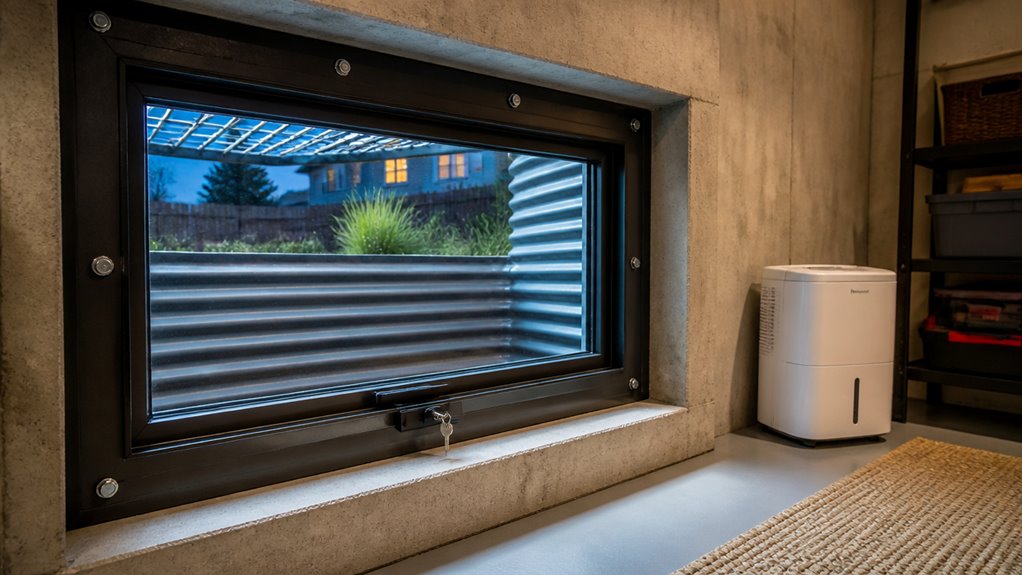

You should secure your basement windows by installing reinforced or laminated glass combined with security film to prevent easy break-ins.
Upgrade to Grade 2 or higher locks, like sash or clamp locks, to stop forced entry.
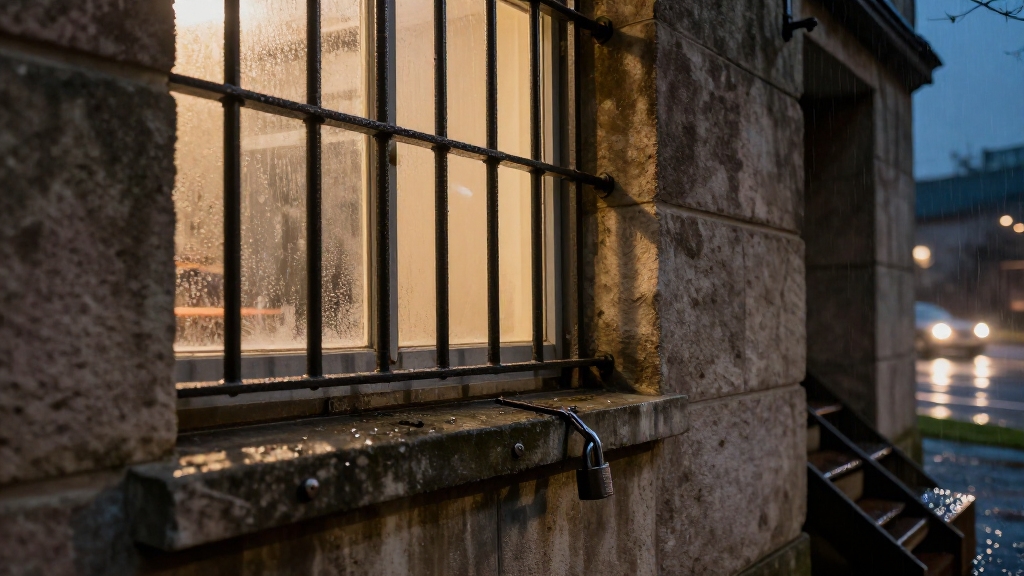
Adding sturdy bars or grilles with tamper-proof mounts strengthens your defense while allowing emergency exit options.
Don’t forget locking window well covers and motion-activated lights to deter intruders and improve visibility.
These key steps form a solid foundation for protecting your home’s vulnerable points.
Explore how to enhance your basement window security even further.
Key Takeaways
- Install security window film or laminated glass to prevent easy glass breakage and delay forced entry attempts.
- Upgrade to high-quality locks like key sash or clamp locks to secure window sashes against forced opening.
- Use tamper-resistant security bars or grilles anchored to walls for a strong physical barrier without blocking emergency exits.
- Fit sturdy, locking window well covers and reinforce mounting points to prevent prying and unauthorized access.
- Enhance lighting with motion-activated floodlights and clear surrounding vegetation to improve visibility and deter intruders.
Why Basement Window Security Matters?
Because basement windows are often overlooked, they become vulnerable entry points for intruders.
You might think these small windows aren’t a threat, but burglars target them precisely because they’re less visible and easier to breach than front doors or upstairs windows.
Ignoring basement window security leaves your home exposed, especially since these windows are typically at ground level and less illuminated.
You need to recognize that securing these access points is critical to your overall home safety strategy.
By addressing basement window security, you reduce the risk of forced entry, protect valuables stored below, and enhance your family’s safety.
Taking this threat seriously helps you implement effective measures and avoid costly consequences from overlooked vulnerabilities.
Installing cameras to monitor basement windows with motion-activated cameras can help detect suspicious activity and deter intruders effectively.
Strengthen Basement Windows Using Security Film and Reinforced Glass
Enhance the security of your basement windows by applying security window film and installing reinforced glass. Both markedly increase resistance to breakage.
Boost basement window security with window film and reinforced glass to significantly resist breakage and intrusion.
Security film holds shattered glass together, preventing quick punch-through entries and buying you vital time during forced attempts. Laminated or reinforced glass offers a tougher barrier than standard panes, resisting shattering and deterring intruders.
Consider glass blocks as an alternative; they’re non-transparent and challenging to breach. Remember, these methods work best when combined with other security layers rather than standing alone.
Properly applied security film and upgraded glass not only strengthen your windows but also enhance your overall basement security. This makes unauthorized entry substantially more difficult and protects your home against potential break-ins.
For optimal protection, regularly inspect and maintain your security measures, similar to how smoke detectors require monthly testing to ensure effectiveness.
Upgrade Locks for Basement Window Security
Strengthening your basement windows with security film and reinforced glass markedly boosts break-in resistance. Locking hardware plays a pivotal role in keeping those windows secure.
You should upgrade to Grade 2 or higher window locks, which are proven to reduce forced entry attempts. Consider key sash locks, hinge wedge locks, or latch locks to fit your window’s design.
For horizontally sliding windows, clamp locks prevent the sash from moving along its track. Crank-style casement windows benefit from locks that disable handle rotation.
Installing sturdy, well-fitted locks creates a strong physical barrier that complements reinforced glass. Don’t overlook the importance of regularly maintaining and testing your locks to guarantee they function properly and provide consistent security over time. Regular maintenance helps ensure consistent security performance and prevents lock failures.
Install Bars and Grilles to Secure Basement Windows Safely
Install security bars or grilles to create a formidable physical barrier that markedly reduces the risk of basement window break-ins.
Choose tamper-resistant mounting hardware to prevent easy removal or prying. Anchor bars firmly into the wall or a load-bearing frame for maximum strength.
For emergency egress windows, opt for quick-release bars that allow fast escape without sacrificing security.
Exterior grilles add an additional layer of protection, but interior-mounted bars often provide easier installation and maintenance.
Make sure the bars are spaced tightly enough to prevent entry but still allow for ventilation and light.
Position cameras 8–10 feet high and angle slightly downward near basement stairs to effectively track movement and enhance security with overlapping fields of view.
Secure Window Wells and Improve Lighting for Better Protection
While securing basement windows is essential, you shouldn’t overlook the window wells and surrounding lighting, as these areas are common points of vulnerability.
Window wells provide potential climbing access, and poor lighting creates hiding spots for intruders. To enhance protection, focus on these key measures:
Install sturdy, locking window well covers that still allow emergency egress. Reinforce mounting points with metal plates to prevent prying.
Improve drainage and keep window wells dry to avoid water damage that can weaken window frames.
Use motion-activated lights and floodlights around basement windows to eliminate dark areas and deter unwanted visitors. Clear shrubs and bushes for better visibility.
For added security, consider integrating motion-activated lights with audible alarms to alert you to any unusual activity near basement windows.
Frequently Asked Questions
Can Basement Window Security Measures Affect Emergency Escape Routes?
Yes, basement window security measures can impact emergency escape routes. You need to make sure bars or grilles have quick-release mechanisms for fast exit during emergencies.
Well covers should allow easy removal or be designed not to block egress windows. While securing windows is essential, you must balance safety with accessibility.
Your security upgrades shouldn’t trap you inside or hinder rescue efforts during fires or other urgent situations.
How Often Should Basement Window Locks Be Inspected or Replaced?
Think of your basement window locks as the hinges of a fortress gate. They need regular care.
You should inspect locks every six months to make certain they operate smoothly and show no signs of wear or rust.
Replace them immediately if they’re damaged or fail to secure properly. Regular maintenance prevents weak points that intruders exploit, keeping your basement safe.
Don’t wait for a problem; proactive checks keep your security system reliable.
Are There Specific Security Films Recommended for Cold Climates?
Yes, you should choose security films rated for cold climates, like those with UV and frost resistance to prevent cracking or peeling.
Look for films labeled “all-season” or “low-E” that handle temperature fluctuations without losing adhesion.
Brands like 3M and Llumar offer options designed for harsh winters.
Applying these films correctly guarantees durability and protection, so follow manufacturer instructions carefully to maintain window strength through freezing conditions.
Can Smart Sensors Integrate With Existing Home Security Systems?
Yes, smart sensors can integrate seamlessly with most existing home security systems.
You’ll want to check compatibility with your current hub or control panel, often via Wi-Fi, Z-Wave, or Zigbee protocols.
This allows you to monitor basement windows in real-time, receive alerts, and automate responses like lighting or alarms.
Integration enhances layered security without replacing your entire setup, making your system more responsive and efficient in detecting and deterring intrusions.
What Maintenance Is Needed for Window Well Covers and Bars?
About 30% of break-ins exploit basement windows, so maintaining window well covers and bars is essential.
You should regularly check covers for cracks, rust, or warping and verify locking mechanisms work smoothly.
Clean debris and clear drainage to prevent water buildup.
Inspect bars for rust or loose mounting screws, tightening or replacing hardware as needed.
This upkeep keeps your security intact and emergency exits accessible, balancing safety with functionality.
Secure Your Basement Windows with These Essential Safety Measures
You might think basement windows are a low-risk entry point. After all, who’s looking down there?
But ironically, that’s exactly why they’re a favorite for intruders. By strengthening glass, upgrading locks, installing bars, and securing wells, you’re not just adding layers of protection.
You’re making your home a fortress where safety isn’t an afterthought. Don’t wait for a break-in to realize basement security matters.
Take action now with these practical steps.