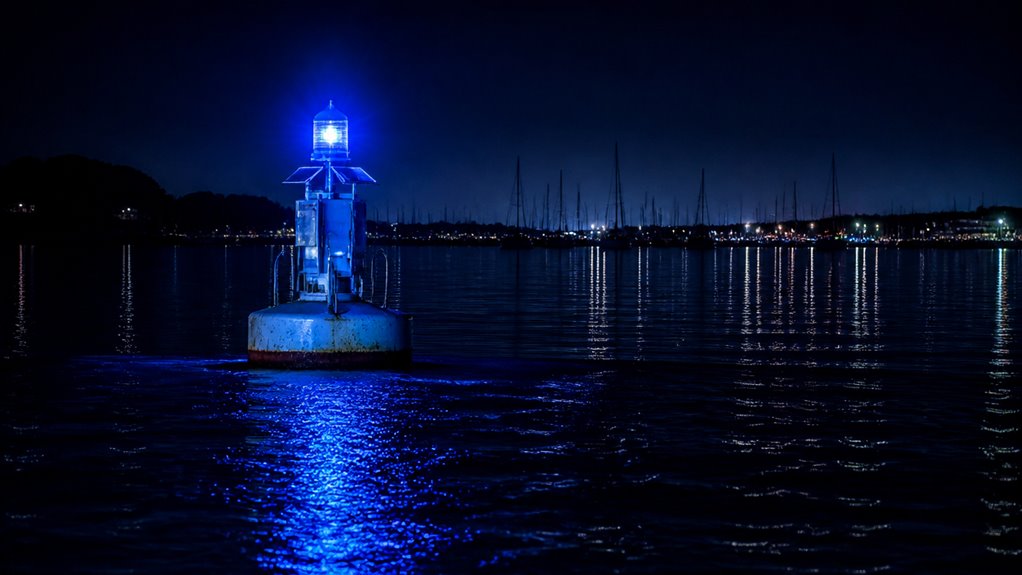

A flashing blue light on the water signals a law enforcement or public safety vessel actively engaged in enforcement, emergency response, or hazard mitigation.
You should recognize this as a clear directive to slow down, maintain distance, and yield right-of-way to avoid interference.
These lights complement, but never replace, standard navigation signals and are strictly authorized for official use.
Understanding the operational significance and legal rules behind flashing blue lights helps guarantee your safety and compliance in maritime environments.
Key Takeaways
- A flashing blue light on water indicates an active law enforcement or public safety vessel engaged in enforcement, patrol, or emergency operations.
- It serves as a distinct visual signal that requires nearby vessels to slow down, maintain distance, and avoid interference.
- The flashing blue light complements, but does not replace, standard red, green, and white navigation lights.
- Only authorized law enforcement vessels may display flashing blue lights during official duties to prevent confusion and ensure compliance.
- Observers must yield right-of-way and follow any instructions from vessels displaying flashing blue lights to support safety and legal compliance.
What a Flashing Blue Light Means on the Water?
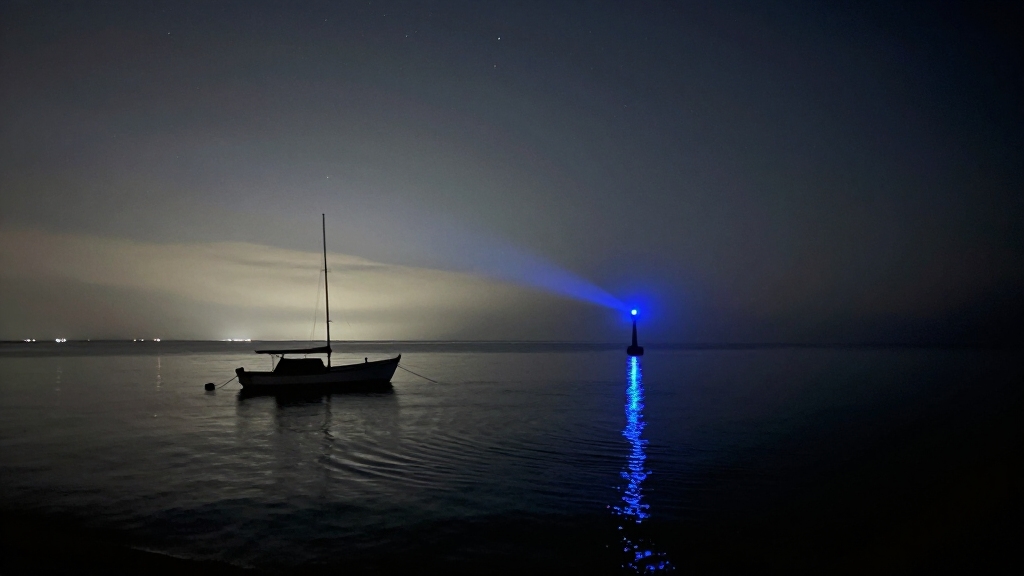
When you spot a flashing blue light on the water, it signals the presence of a law enforcement vessel engaged in official duties such as patrol, enforcement, or public safety operations.
Unlike standard navigation lights, which are steady and use red, green, and white colors, the flashing blue light is non-standard and reserved for authorized authority vessels.
U.S. Coast Guard regulations permit these lights exclusively during direct law enforcement or safety activities. This ensures clear identification without obstructing required navigation signals.
This distinct visual cue demands that you slow down, maintain distance, and avoid interfering with the vessel’s operation.
Recognizing this light as an active enforcement or safety signal helps you respond appropriately and maintain maritime safety and compliance with navigation rules.
For added safety, it is important to maintain clear visibility of the vessel and avoid creating blind spots that could hinder its operations.
How Law Enforcement Uses Flashing Blue Lights?
When you spot a flashing blue light on the water, it means there’s a law enforcement vessel out there doing its thing—whether that’s enforcing the law or ensuring safety.
These lights really help make the vessel visible without messing with regular navigation signals. It’s all about clear communication of authority.
Just a heads-up: only authorized personnel can use those flashing blue lights for official duties.
If someone tries to use them without permission, it could land them in some legal trouble. So, always keep that in mind!
Identification During Enforcement
Although flashing blue lights aren’t standard navigation signals, law enforcement vessels rely on them to clearly identify their presence during active enforcement or public safety operations.
When you see a flashing blue light on the water, it signals that the vessel is engaged in official duties such as patrol, inspection, or emergency response.
This light complements but doesn’t replace the vessel’s required steady red, green, and white navigation lights.
You must recognize the flashing blue as an authoritative marker, prompting you to slow down, keep clear, and follow any instructions.
Law enforcement uses this distinct light to assert their operational status, ensuring you can distinguish their craft from civilian vessels and respond appropriately to maintain safety and compliance during enforcement activities.
Proper identification and reliable operation of safety signals are critical, similar to ensuring a hardwired smoke detector is correctly connected and maintained to prevent hazards.
Safety and Visibility Purpose
Because flashing blue lights stand out distinctly against standard navigation colors, law enforcement vessels use them to enhance safety and visibility during operations on the water.
You’ll notice these lights signal official activity, ensuring other boaters recognize and respond appropriately.
When you see a flashing blue light, you should:
- Slow down and maintain a safe distance to avoid interference.
- Stay alert for additional signals or instructions from the law enforcement vessel.
- Yield right-of-way, acknowledging the vessel’s authority and operational priority.
These lights aid in quick identification during patrols, emergencies, or enforcement actions.
They don’t replace required navigation lights but supplement them by providing an unmistakable visual cue.
For enhanced safety, law enforcement may also use camouflage techniques to conceal equipment during specific operations.
Authorized Use Restrictions
Since flashing blue lights signal official law enforcement activity on the water, their use is strictly regulated to prevent confusion and maintain safety.
Only authorized vessels such as police boats, harbor patrol, and certain Coast Guard units are permitted to display these lights during direct enforcement or public safety operations.
The blue light must never obscure the vessel’s standard navigation lights and can’t replace them.
If you see a flashing blue light, understand it marks an active law enforcement presence, not routine transit.
Unauthorized use is illegal and risks public confusion.
When law enforcement uses these lights, they assert authority, signal for compliance, and safeguard operational safety.
You should always yield, reduce speed, and keep clear to support their mission and maintain safe waterways.
Law enforcement vessels often use strict authorization protocols to ensure that only properly vetted units display these lights during operations.
How Flashing Blue Lights Differ From Standard Navigation Lights?
You’ll notice that flashing blue lights are quite different from standard navigation lights, both in color and pattern.
Standard lights, for instance, are steady and come in red, green, and white.
On the other hand, those blue flashes really stand out because they signal specific law enforcement activity.
So, why is this important? Well, those blue lights serve an official purpose and aren’t part of the usual navigation protocols.
Understanding this distinction helps you recognize authority vessels out on the water and respond appropriately.
It’s all about keeping everyone safe and informed!
Color And Light Patterns
Although standard navigation lights use steady colors like red, green, and white to convey vessel position and movement, flashing blue lights serve a distinct and specialized role.
You’ll notice that flashing blue signals identify law enforcement or public safety vessels engaged in active operations, rather than indicating navigation status.
Key differences you should note include:
- Color and Pattern: Standard lights are steady; flashing blue lights are intermittent and signal authority.
- Purpose: Red, green, and white lights guide vessel positioning; blue lights communicate enforcement or emergency status.
- Visibility: Blue flashes mustn’t obscure navigation lights, ensuring compliance with maritime regulations.
Understanding these distinctions helps you respond appropriately when encountering flashing blue lights on the water.
Official Versus Standard Use
When you see a flashing blue light on a vessel, it signals an official law enforcement or public safety function. This is unlike the steady red, green, and white lights used for standard navigation.
Standard navigation lights maintain a constant display to indicate a vessel’s position and direction. Flashing blue lights identify authority vessels engaged in enforcement or emergency operations.
These blue lights don’t replace or interfere with required navigation lights. They serve as an additional visual cue of official activity.
You should recognize that flashing blue indicates an active law enforcement role, prompting you to yield and proceed with caution.
Unauthorized use of flashing blue lights can cause confusion and violate regulations. This emphasizes their strict operational and legal distinction from standard navigation lighting.
For emergency systems, automatic notification ensures that authorities are promptly alerted to critical situations without delay.
How to Recognize Official Vessels With Blue Lights?
Spotting a flashing blue light on the water signals the presence of an official law enforcement or public safety vessel engaged in active operations.
You’ll recognize these vessels by specific characteristics that distinguish them from recreational or commercial boats:
- Light Configuration: The flashing blue light supplements standard navigation lights (red, green, white). It never replaces them, indicating an authorized enforcement or safety role.
- Markings and Equipment: Official vessels typically display government insignia. They’ve robust communication gear and are built for rapid response or patrol duties.
- Behavior and Location: These vessels operate in controlled or restricted areas. They maintain patterns consistent with enforcement activities, such as following or signaling other boats.
These vessels often rely on automatic emergency dispatch systems to ensure rapid response during critical situations on the water.
When Flashing Blue Lights Signal Active Safety Operations?
During active safety operations, flashing blue lights serve as a critical signal that law enforcement or public safety vessels are engaged in enforcement, rescue, or hazard response activities on the water.
When you see these lights, it means the vessel is performing official duties requiring heightened awareness and caution.
The flashing blue light distinguishes these vessels from standard navigation lights, indicating an urgent operational status.
It’s essential you recognize that these lights complement, not replace, the vessel’s required steady navigation lights.
The presence of a flashing blue light demands your immediate attention, as the operation may involve patrol, emergency response, or hazard mitigation.
Understanding this signal guarantees you maintain safe distances and avoid interference with ongoing safety efforts.
Flashing blue lights are a form of visual signaling that effectively captures attention during critical marine operations.
Why Boaters Should Yield to Flashing Blue Lights
Recognize that flashing blue lights signal an official law enforcement or safety operation requiring your immediate cooperation on the water. When you see these lights, you must yield promptly to guarantee safety and compliance with maritime regulations.
Here’s why yielding is critical:
- Maintain Safety: Yielding prevents collisions and interference with active enforcement or rescue efforts.
- Legal Obligation: U.S. Coast Guard rules mandate giving way to vessels displaying flashing blue lights engaged in official duties.
- Operational Effectiveness: Allowing clear passage enables law enforcement to perform inspections, pursue violations, or respond to emergencies without obstruction.
Failing to yield risks endangering lives, violating navigation laws, and obstructing public safety operations. Your prompt and precise response supports maritime order and safety on the water. The continuous monitoring and verification protocols used in emergency operations ensure that responses are timely and accurate.
Non-Official Uses of Blue Lights on Boats
You might come across blue lights on boats that don’t signal law enforcement or safety operations.
Some vessels use blue LEDs underwater or on decks purely for aesthetic or utility purposes.
These lights serve no navigational or enforcement function and mustn’t be confused with official signals.
Recreational boats sometimes install blue accent lighting, especially for night visibility or ambiance, but these are non-standard and don’t comply with navigation light requirements.
Additionally, certain commercial or private vessels may use blue lights for identification within specific groups or events, but these usages lack legal authority.
It’s essential to distinguish these non-official blue lights from the flashing blue found on enforcement vessels.
Only the latter carry operational and legal significance under maritime rules.
For vessels using any lighting, it is important to ensure unobstructed lens placement to maintain visibility and compliance with safety standards.
What to Do if You See a Flashing Blue Light at Night?
While some blue lights on boats are decorative or non-official, a flashing blue light at night carries a distinct and authoritative meaning. It signals an active law enforcement or public safety operation.
When you see this light, you must promptly adjust your actions to guarantee safety and compliance.
Here’s what you should do:
- Reduce your speed immediately and maintain a safe distance to avoid interfering with the vessel’s operation.
- Avoid crossing the path or wake of the vessel displaying the flashing blue light.
- Stay alert for additional signals or instructions, such as audible warnings or hand signals, and respond accordingly.
Always treat a flashing blue light as a command to yield and proceed cautiously until the situation is clearly resolved. This approach parallels the importance of continuous supervision in critical safety systems to ensure reliable operation under all conditions.
Legal Rules for Flashing Blue Lights on Watercraft
Because flashing blue lights on watercraft carry significant authority, strict legal regulations govern their use. You must understand that only law enforcement vessels engaged in direct enforcement or public safety activities are authorized to display flashing blue lights.
These lights must never interfere with the visibility of standard navigation lights—red, green, and white—which remain mandatory. Unauthorized use of flashing blue lights can cause confusion, violate maritime law, and lead to penalties.
When you see a flashing blue light, recognize it as an official signal indicating an active operation. Remember, the flashing blue light supplements but doesn’t replace required navigation lights.
Always yield, maintain a safe distance, and comply with instructions from vessels displaying this light to safeguard safety and legal adherence on the water.
Frequently Asked Questions
Can Private Boats Legally Install Flashing Blue Lights?
No, you can’t legally install flashing blue lights on private boats.
U.S. Coast Guard regulations strictly reserve flashing blue lights for law enforcement and authorized public safety vessels engaged in official duties.
Using these lights without authorization can cause confusion, violate navigation rules, and lead to legal penalties.
If you want to enhance your vessel’s lighting, stick to standard steady red, green, and white navigation lights required by law.
Do Flashing Blue Lights Affect a Vessel’s Insurance Coverage?
Imagine driving with unauthorized police lights. Your insurer would question your risk.
Similarly, flashing blue lights on your boat, if not legally permitted, can jeopardize your insurance coverage.
Insurers often view unauthorized blue lights as a liability risk, potentially voiding claims.
You must make certain any blue flashing light complies with regulations, or you risk losing protection.
Always check with your insurer before installing such lights to avoid coverage issues.
How Do Flashing Blue Lights Impact Nighttime Boating Visibility?
Flashing blue lights impact nighttime boating visibility by drawing immediate attention to law enforcement vessels, enhancing their identification in low-light conditions.
You’ll notice they don’t interfere with standard navigation lights, preserving your ability to see critical red, green, and white signals.
However, the flashing can create momentary glare or distraction. You should reduce speed and stay alert to avoid confusion or collision, maintaining safe distances for clear, precise navigation.
Are Flashing Blue Lights Used Differently in International Waters?
Imagine sailing near a foreign port where flashing blue lights signal police boats, much like your local law enforcement.
In international waters, these lights aren’t universally standardized; some regions use them for official vessels, others don’t.
You’ll find varying protocols. Some countries restrict flashing blues to law enforcement, while others avoid them entirely.
What Training Do Operators Need to Use Flashing Blue Lights?
You need specialized training in maritime law enforcement and vessel operation to use flashing blue lights. This includes understanding U.S. Coast Guard navigation rules and proper light display protocols.
You must also have situational awareness during enforcement activities. You’re trained to avoid interference with navigation lights and ensure safe communication with other vessels.
Without this certification, using flashing blue lights is unauthorized and can lead to legal consequences.
Final Tips for Understanding Blue Lights on the Water
When you spot a flashing blue light cutting through the water’s darkness, think of it as a lighthouse guiding you to safety.
It’s a clear signal from law enforcement or emergency vessels, your cue to yield and stay alert.
Understanding these lights isn’t just helpful; it’s vital for safe navigation.
By respecting flashing blue signals, you’re steering clear of danger and ensuring smooth, lawful passage on the water’s ever-changing stage.