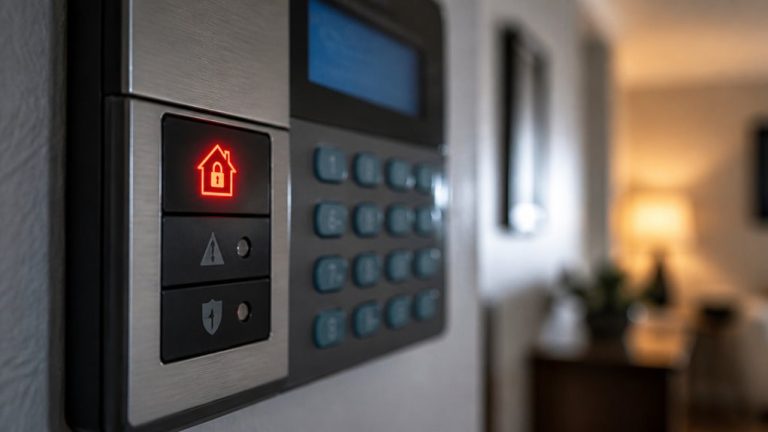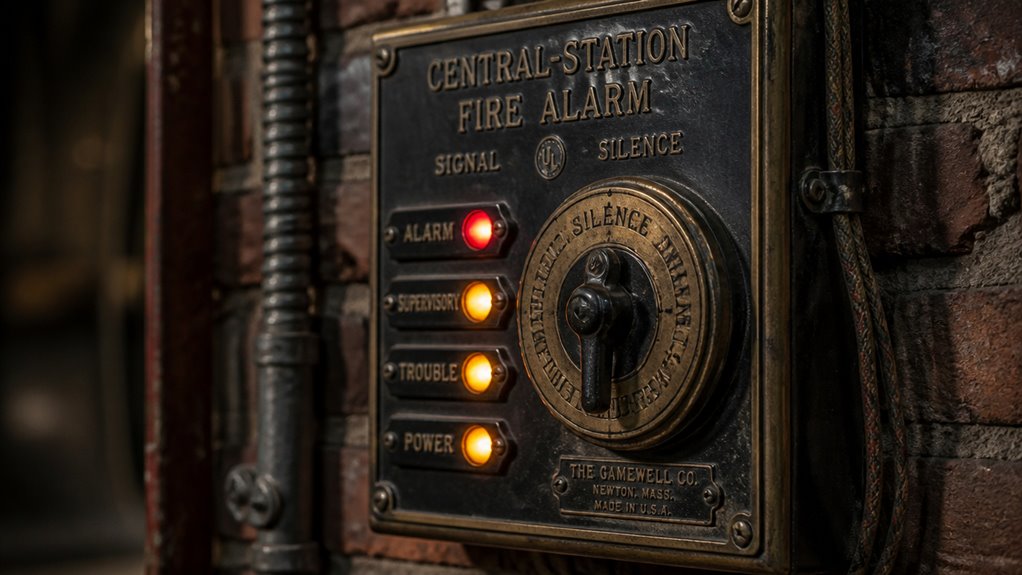

A central station fire alarm system continuously monitors your premises using smoke and heat sensors, alerting emergency responders within about 30 seconds of detection.
It relies on a secure facility staffed by trained operators who verify signals in real time to reduce false alarms and guarantee rapid response.
The system includes backup power, control panels, and communication networks that maintain compliance with standards like NFPA 72.
Understanding its components and protocols reveals why such systems are essential for safety and compliance.
Key Takeaways
- A central station fire alarm continuously monitors fire indicators like smoke and heat using a secure remote facility staffed by trained operators.
- It automatically alerts emergency responders within about 30 seconds when a threat is detected, enabling rapid response.
- The system includes fire detectors, control panels, alarm devices, backup power, and dedicated communication networks for reliable alerts.
- Operators verify alarm signals in real-time, initiate emergency protocols, and maintain detailed event logs to ensure accurate response.
- Central station fire alarms comply with NFPA 72 and other standards, requiring certified equipment, regular inspections, and ongoing maintenance.
What Is a Central Station Fire Alarm?
A central station fire alarm system continuously monitors your premises for signs of fire, such as smoke or heat. It automatically alerts emergency responders when a threat is detected.
You rely on a secure, remote facility staffed by trained operators who receive and verify these alerts in real time. This guarantees prompt notification of fire response teams.
This system integrates fire detection devices with a dedicated communication network that transmits alarm signals directly to the central station. This provides continuous, professional oversight.
By outsourcing monitoring to specialists available 24/7, you markedly reduce response time and enhance safety. This centralized approach ensures that alarm signals are managed independently from the protected premises.
This maintains operational integrity even during emergencies or power failures. Monitored systems typically notify professionals within about 30 seconds, significantly reducing firefighter response times compared with local alarms, thanks to automatic notification.
Key Components Inside a Central Station Fire Alarm System
Understanding how a central station fire alarm system operates requires examining its key components.
You’ll find essential elements including fire detectors, smoke and heat sensors, strategically placed to detect early signs of fire.
These detectors connect to a control panel that processes signals and manages system status. The system includes an alarm notification device that alerts occupants onsite.
A reliable backup power supply guarantees continuous operation during outages. Vitally, a signal transmission device securely relays alarm signals to the remote central station facility.
This communication channel must be robust and tamper-resistant to maintain integrity. The central station itself houses receiving and recording equipment, physically separated from the protected premises.
Together, these components form a cohesive, monitored network designed for rapid fire detection and reliable alert transmission. Central station systems often employ supervised circuits to continuously monitor device integrity and ensure prompt fault detection.
How Central Station Fire Alarm Operators Monitor and Respond to Alerts?
Central station fire alarm operators continuously monitor incoming signals from fire detection systems, intrusion alarms, and environmental sensors to identify potential emergencies promptly.
When an alert arrives, you must verify the signal’s validity by analyzing system data and cross-referencing with recent activity logs.
If confirmed, you immediately initiate the response protocol, which includes notifying emergency responders and on-site personnel.
Your key responsibilities include:
- Validating alarm conditions to avoid false dispatches
- Dispatching investigators and emergency services without delay
- Tracking signal restoration and escalating unresolved issues
- Maintaining detailed logs for every event and action taken
Operators also rely on real-time status monitoring from detectors and pull stations to ensure accurate and timely responses.
How Central Station Fire Alarms Ensure Code Compliance and Safety?
Because strict adherence to regulatory standards directly impacts the effectiveness and legality of fire alarm systems, you must make certain that all central station fire alarm operations comply with applicable codes such as NFPA, UL, and local Authority Having Jurisdiction (AHJ) requirements.
Central stations implement rigorous protocols to verify alarm signals before dispatching emergency responders, ensuring accuracy and reducing false alarms.
They maintain continuous supervision of system integrity, including monitoring power supplies, communication channels, and opening/closing signals per code mandates.
Additionally, central stations utilize certified equipment and follow standardized procedures for signal transmission and event documentation.
This systematic compliance guarantees that fire alarm systems operate reliably, meet legal obligations, and provide effective life-safety protection.
It minimizes risks to occupants and property while satisfying regulatory inspectors and authorities.
Effective central station operations also depend on compliance with NFPA 72 standards to ensure proper system performance and regulatory adherence.
Why Service Contracts and Certification Are Critical for Central Station Protection?
Ensuring compliance with regulatory standards only forms part of maintaining an effective fire alarm system. Securing a valid service contract and proper certification completes the protective framework.
You must understand that service contracts guarantee ongoing inspection, testing, and maintenance, essential for uninterrupted operation. Certification by recognized bodies like UL or FM verifies that the central station meets stringent operational criteria and can reliably monitor and respond to alarms.
Key reasons why contracts and certification matter include:
- Ensuring rapid technician response to trouble signals
- Verifying system integrity through regular inspections
- Maintaining compliance with NFPA and local codes
- Confirming the central station’s capability to provide 24/7 monitoring
Proper procedures also require you to contact authorities before testing or troubleshooting to coordinate response and compliance.
Without these, your system risks failure, regulatory violations, and compromised occupant safety.
Frequently Asked Questions
How Are False Alarms Minimized in Central Station Fire Alarm Systems?
You minimize false alarms in central station fire alarm systems by relying on trained operators who verify each alarm signal before dispatching responders.
The system uses secure communication channels to transmit signals, reducing errors.
You also guarantee routine inspection, testing, and maintenance under service contracts, keeping detectors calibrated and functional.
Additionally, supervising arming and disarming activities prevents accidental triggers.
Compliance with regulatory standards enforces strict protocols to enhance accuracy and reduce false alarms.
What Training Do Central Station Operators Receive for Emergency Response?
Think of central station operators as skilled conductors orchestrating a symphony of safety.
You receive rigorous training in system protocols, alarm verification, and emergency dispatch procedures.
You’ll master interpreting signals accurately, minimizing false alarms, and coordinating rapid responses with fire services.
This training sharpens your analytical skills, ensuring you act decisively under pressure, follow regulatory compliance, and maintain constant vigilance.
You are the critical link between detection and lifesaving action.
Can Central Station Fire Alarms Integrate With Other Building Security Systems?
Yes, central station fire alarms can integrate seamlessly with other building security systems like intrusion detection, video surveillance, and environmental monitoring.
This integration allows you to monitor multiple threats from a unified platform, enhancing situational awareness and response efficiency.
The system transmits all signals securely to the monitoring center, where operators verify events and initiate coordinated responses.
This ensures all-encompassing protection tailored to your building’s security needs.
How Is Data Privacy Maintained for Monitored Premises?
Back in the days of telegrams, privacy was essential, and it’s no different now. You maintain data privacy by ensuring encrypted communication channels link your premises to the central station, preventing interception.
Access controls restrict who views your data, while operators follow strict confidentiality protocols. Regular audits and compliance with standards like UL and NFPA further safeguard your information.
This ensures that only authorized personnel handle sensitive monitoring data securely.
What Happens if the Central Station Loses Power or Communication?
If the central station loses power or communication, your system switches to backup power and alternative communication channels to maintain monitoring continuity.
Operators rely on redundant systems and satellite stations to guarantee signals are still received. If these fail, protocols require immediate on-site verification and notification of emergency services.
You’re protected by strict response times, assuring a technician arrives quickly to restore full service and compliance with regulatory standards.
Is Your Fire Alarm Ready for Real Emergencies?
At heart, a central station fire alarm acts as your building’s vigilant guardian, constantly scanning for threats and ensuring swift response.
By integrating advanced components and professional monitoring, it transforms raw alerts into actionable safety measures.
You can’t afford to overlook regular service contracts and certifications; they’re the gears keeping this system running smoothly and compliant.
Trusting this network is like placing your safety on a well-oiled machine, precise and ready when it counts most.