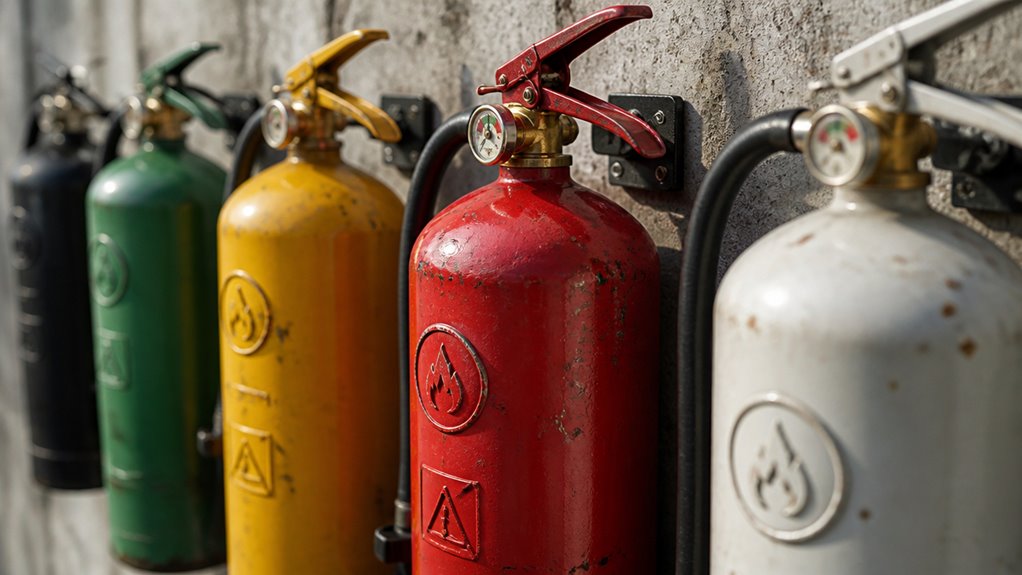

You’ll find fire extinguisher labels clearly state the extinguishing agent (like water, foam, or dry chemical) along with fire class symbols (A, B, C, D, K) showing compatible hazards.
Numeric ratings quantify effectiveness, while stepwise operating instructions and safety warnings guarantee proper use.
Inspection tags track maintenance without obscuring essential details.
Regional standards influence label content and design.
Understanding these labeling elements helps you quickly identify the right extinguisher and use it safely.
More specifics on each label aspect follow.
Key Takeaways
- Fire extinguisher labels prominently specify the extinguishing agent type and compatible fire classes (A, B, C, D, K) for quick identification.
- Labels include numeric ratings that quantify extinguishing effectiveness, such as gallons of water equivalent or square footage coverage.
- Operating instructions and safety warnings are clearly displayed on labels for safe and effective use during emergencies.
- Inspection and maintenance records, including dates and technician details, are tracked via tags or labels without obscuring essential information.
- Regional labeling standards dictate label content, language, symbols, and traceability features to ensure compliance and usability worldwide.
Essential Information on Fire Extinguisher Labels
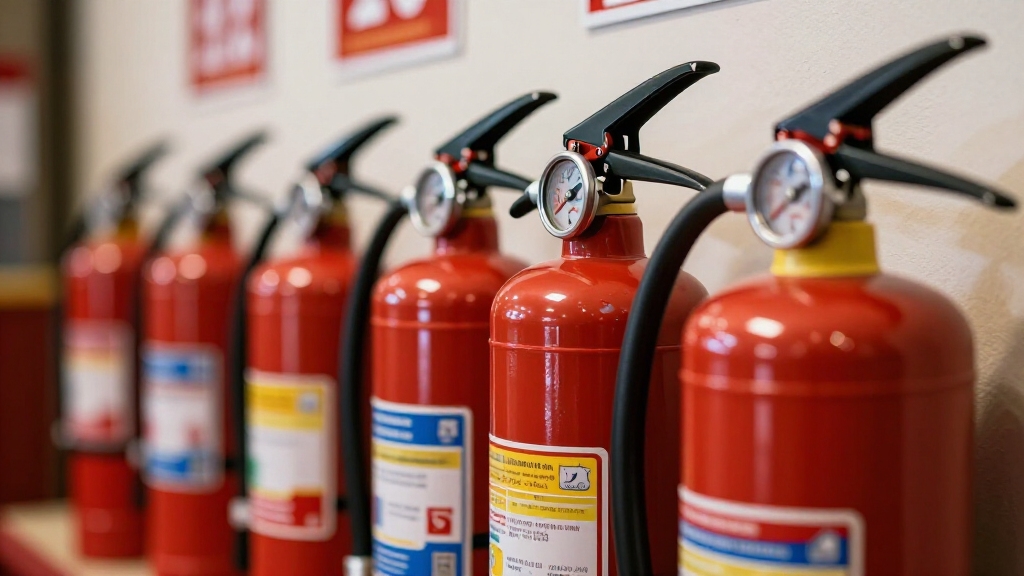
Although fire extinguishers come in various types and sizes, their labels consistently provide essential information you need to identify their capabilities quickly.
Fire extinguisher labels offer clear, essential details to quickly identify their specific capabilities.
You’ll find the extinguishing agent clearly specified, such as water, foam, dry chemical, CO2, or wet chemical.
The label also displays fire class symbols and numeric ratings, indicating which fire types the extinguisher is effective against and its relative extinguishing power.
These class ratings use letters like A, B, C, D, or K. You’ll rely on the label rather than the body color for accurate identification, especially in the U.S.
The numeric rating helps you assess the extinguisher’s capacity, with higher numbers signifying greater fire suppression potential.
This labeling system guarantees you can promptly select the right extinguisher for each situation.
Proper understanding of the fire classes and extinguisher compatibility is crucial to ensure effective and safe fire suppression.
Fire Extinguisher Class Symbols and Fire Types
When you look at a fire extinguisher label, you’ll notice class symbols that indicate the types of fires it can combat. These symbols correspond to specific fire categories, helping you quickly identify suitability.
The classes include A for ordinary combustibles, B for flammable liquids and gases, C for energized electrical equipment, D for combustible metals, and K for cooking oils and fats.
| Class Symbol | Fire Type |
|---|---|
| A | Wood, paper, cloth |
| B | Flammable liquids and gases |
| C | Energized electrical equipment |
| D | Combustible metals |
| K | Cooking oils and fats |
Understanding these symbols guarantees you select the correct extinguisher for the fire hazard present. It is important to match extinguisher types to specific hazards to ensure effective fire suppression and safety.
Understanding Numeric Ratings on Fire Extinguisher Labels
The class symbols on fire extinguisher labels quickly tell you which fire types the extinguisher can handle, but they don’t convey the extinguisher’s extinguishing power.
That’s where numeric ratings come in.
These numbers quantify the extinguisher’s effectiveness for each class, with higher numbers indicating greater capacity.
For Class A fires, the number reflects the equivalent extinguishing ability in gallons of water.
For Class B fires, the numeric rating measures the approximate square footage of flammable liquid the extinguisher can control.
Class C fires don’t have a numeric rating since they involve electrical equipment, not a material quantity.
Understanding these numeric values helps you select the right extinguisher for the hazard size, ensuring sufficient extinguishing power in an emergency. Proper agent selection based on fire class is critical to optimize suppression and prevent failures.
Operating and Safety Instructions on Fire Extinguisher Labels
Because quick and correct operation is critical during a fire emergency, fire extinguisher labels include clear, concise instructions on how to use the device safely and effectively.
You’ll find step-by-step guidance on operating the extinguisher, warnings about hazards such as electrical risks or toxicity, and restrictions on use. These instructions guarantee you act promptly and safely.
| Instruction Step | Description |
|---|---|
| 1. Pull Pin | Release the extinguisher trigger |
| 2. Aim Nozzle | Target base of the fire |
| 3. Squeeze Lever | Release extinguishing agent |
| 4. Sweep Side to Side | Cover fire area evenly |
| 5. Read Warnings | Note safety and hazard alerts |
Labels remain legible when mounted, allowing you to consult them easily during emergencies. It is important to understand the typical spray duration of your extinguisher to use it effectively within its operational timeframe.
How Inspection Labels Help Track Fire Extinguisher Maintenance?
Although fire extinguishers require regular maintenance to remain effective, inspection labels play a crucial role in documenting this process.
These labels record essential data such as the date of the last inspection or service and the identity of the technician performing it.
Inspection labels document key details like the last service date and the technician responsible for maintenance.
By using monthly or yearly checkboxes, you can quickly verify whether the extinguisher is up-to-date with its maintenance schedule.
Inspection labels help you track the extinguisher’s condition, ensuring it remains operational and compliant with safety regulations.
They also provide a clear service history to auditors or emergency personnel.
It’s important that these labels don’t cover critical information, like operating instructions or classification, so you can easily access both maintenance records and use details when needed.
Additionally, attaching a durable, weather-resistant service tag to the extinguisher helps maintain accurate and visible maintenance records over time.
Proper Placement of Inspection Tags on Fire Extinguishers
Maintaining clear and accessible inspection tags is key to keeping fire extinguisher information organized and effective. You must position inspection tags so they don’t obscure critical labels, such as the extinguisher classification, operating instructions, or manufacturer details.
Place tags on the extinguisher body areas that allow full visibility of safety and use information, often on the side or back. Avoid placing tags on the front, where essential fire class symbols and ratings appear. Make sure tags are firmly attached yet easy to update during inspections.
Use standardized tags with clear date and inspector identification fields to maintain accurate maintenance records. Proper tag placement guarantees that both operational guidance and inspection history remain readable, supporting compliance and safety during emergencies. Inspection tags should be placed in a way that maintains the extinguisher’s visibility and accessibility according to mounting standards.
How Regional Standards Influence Fire Extinguisher Labels?
You’ll notice that fire extinguisher labels can look pretty different depending on where you are. That’s because regional standards dictate what information needs to be included to keep things safe and compliant.
For example, these standards specify details like the type of extinguishing agent, fire class ratings, and even inspection dates. Proper labeling also helps users identify if the extinguisher is safe to use by indicating hydrostatic test intervals and maintenance status.
Label Requirements By Region
Because fire safety regulations vary across regions, fire extinguisher labels must comply with local standards that dictate specific content and format requirements.
For example, in the United States, labels emphasize fire class symbols, numeric ratings, and detailed operating instructions, aligning with NFPA guidelines.
In Europe, labels often follow EN standards, requiring pictograms and multilingual instructions.
Some Asian regions mandate inclusion of manufacturing dates and serial numbers on labels for traceability.
You’ll find that inspection tags and maintenance records also differ, with some areas requiring monthly checkboxes and others annual documentation.
Regardless of region, labels must clearly display extinguishing agent type, fire class ratings, and safety warnings without obstruction.
This precision guarantees you can quickly identify an extinguisher’s suitability and operate it safely in any jurisdiction.
Regular maintenance and timely replacement of components like batteries in related safety devices, such as smoke detectors, are essential to ensure overall fire safety effectiveness, as detailed in battery replacement timing.
Regional Safety Compliance
Although fire extinguishers serve the same fundamental purpose worldwide, regional safety standards shape how their labels convey critical information.
You’ll find that label content, format, and required details differ based on local regulations. This affects how you interpret fire class ratings, inspection tags, and safety instructions.
| Region | Label Requirements | Key Differences |
|---|---|---|
| United States | Fire class, numeric rating, use instructions | Red body common; label is primary ID |
| Europe | Extinguishing medium, nominal charge | ISO symbols emphasize pictograms |
| Asia | Manufacture year, serial number | Additional safety warnings mandated |
| Australia | Fire rating, refilling instructions | Inspection dates highlighted |
Understanding these distinctions guarantees you comply with local codes and correctly identify extinguisher capabilities. Professional servicing, including hydrostatic testing, is essential to maintain label accuracy and safety compliance.
Why Fire Extinguisher Labels Matter More Than Color Coding?
You can’t just look at the body color to figure out what a fire extinguisher is for. Seriously, it’s not enough! The label is where the real info is at. It tells you what kind of extinguishing agent is inside, the fire class symbols, and even the capacity ratings. All of this helps you use it correctly when it really matters.
Plus, having clear fire class identification on the label is a game-changer. It ensures you grab the right extinguisher for the specific fire hazard you’re facing. So, next time you see a fire extinguisher, take a moment to check out that label—it could make all the difference!
Regular maintenance and inspection, including checking for expiration dates, are essential to ensure your extinguisher will work when you need it most.
Label Information Over Color
When selecting a fire extinguisher, you should rely on the detailed label information rather than the body color alone. The label precisely identifies the extinguishing agent, whether water, foam, dry chemical, CO2, or wet chemical.
It also specifies the fire classes it effectively combats, such as A, B, C, D, or K. Numeric ratings on the label indicate the extinguisher’s relative extinguishing capacity, providing critical performance data you can’t infer from color.
Additionally, labels include clear operating instructions and safety warnings essential for proper use and risk mitigation. Inspection tags also appear on the extinguisher but mustn’t obscure this crucial information.
Since body color schemes vary by region and can be inconsistent, the label remains your most reliable source for selecting the right extinguisher for specific fire hazards.
Clear Fire Class Identification
Because fire hazards vary widely, clear fire class identification on labels guarantees you select the correct extinguisher for each specific type of fire.
Labels display fire class symbols: A, B, C, D, and K, indicating compatibility with combustibles, flammable liquids, electrical equipment, metals, or kitchen oils.
You’ll also see numeric ratings reflecting extinguishing capacity, helping you assess effectiveness.
This labeling surpasses reliance on body color, which can mislead. Accurate information on the label secures safe, efficient use by specifying the extinguishing agent and operational instructions.
You must read these details carefully to avoid misuse, which could worsen a fire or cause injury.
Clear fire class identification on the label is essential for compliance with safety standards and for maintaining readiness in emergency situations.
Frequently Asked Questions
How Often Should Fire Extinguisher Labels Be Replaced or Updated?
You should update fire extinguisher labels whenever maintenance or inspections occur, typically monthly or annually, to ensure accuracy.
Replace labels if they become unreadable, damaged, or obscured by inspection tags.
It’s vital that operating instructions, classification, and safety warnings remain clear at all times.
Keeping labels current guarantees proper use, compliance with regulations, and safety.
Don’t delay updating labels after servicing or if wear compromises legibility.
Can Fire Extinguisher Labels Be Customized for Specific Industries?
You can customize fire extinguisher labels like tailoring a suit for specific industries, ensuring they fit precise needs.
Industry-specific labels often include relevant fire class symbols, safety warnings, and operating instructions unique to hazards you face.
However, customization must comply with regional standards and maintain critical information visibility.
This way, your extinguisher stays effective and compliant while addressing your environment’s unique risks and regulations precisely.
What Materials Are Fire Extinguisher Labels Typically Made From?
Fire extinguisher labels are typically made from durable, weather-resistant materials like vinyl or polyester film. These materials withstand harsh conditions, including moisture, chemicals, and UV exposure.
They also maintain readability over time and resist tearing or fading.
The labels often feature strong adhesive backing to guarantee secure attachment to the extinguisher’s surface.
You can rely on these materials to keep critical information visible and intact during routine use and emergencies.
Are There Digital or Electronic Fire Extinguisher Labels Available?
You might be surprised to learn digital or electronic fire extinguisher labels do exist. They provide real-time status updates, inspection records, and usage alerts via RFID or QR codes.
These smart labels help you track maintenance and guarantee compliance effortlessly. While traditional labels remain standard, adopting electronic labels enhances safety monitoring, reduces manual errors, and streamlines inspections.
This makes your fire extinguisher management more efficient and reliable.
How Do Labels Indicate if an Extinguisher Is Rechargeable or Disposable?
You’ll find whether an extinguisher is rechargeable or disposable clearly indicated on its label or inspection tag.
Rechargeable extinguishers usually have instructions for refilling, manufacturer contact, or servicing details.
Disposable types often lack refilling info and may be marked “non-rechargeable” or “disposable.”
Check for maintenance records on tags; their presence often signals a rechargeable unit.
Always read the label carefully to confirm the extinguisher’s serviceability.
Final Tips for Understanding Fire Extinguisher Ratings and Symbols
When you face a fire emergency, fire extinguisher labels are your roadmap through chaos.
They decode complex information: class symbols, numeric ratings, and safety instructions, guiding you to act swiftly and correctly.
Think of these labels as a well-calibrated compass, ensuring you choose the right tool for the blaze.
By understanding and trusting these labels, you equip yourself to extinguish danger efficiently, turning potential disaster into controlled safety with precision and confidence.