
You can conceal security cameras by positioning them within dense outdoor foliage or using artificial camouflage to blend naturally.
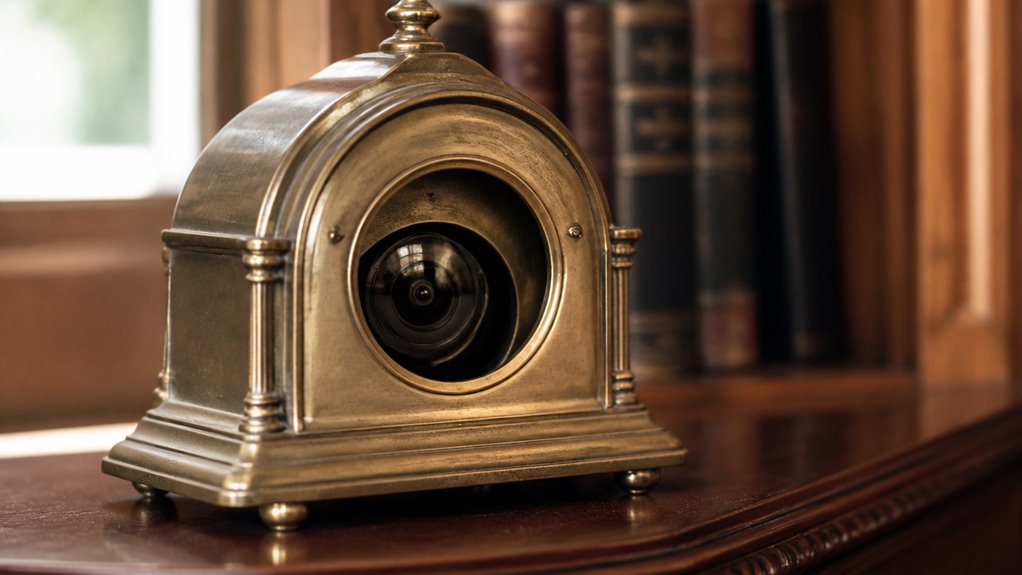
Indoors, integrate cameras into everyday objects like clocks, books, or lampshades, ensuring lenses remain unobstructed.
Mount cameras under eaves or near structural features, matching colors to surroundings for stealth.
Opt for wireless or battery-powered models to avoid visible wiring and enable discreet placement.
Testing placement for clear views and minimal glare is essential. Continue for detailed strategies on optimizing your hidden surveillance setup.
Key Takeaways
- Position cameras within dense foliage or use camouflage skins to blend with outdoor plants while keeping the lens unobstructed.
- Integrate cameras into everyday indoor objects like bookshelves, clocks, or lampshades for discreet indoor surveillance.
- Mount cameras under eaves, near gutters, or high corners, matching housings to surroundings for structural concealment.
- Opt for wireless or battery-powered cameras to avoid visible wiring and enhance concealment in hard-to-reach locations.
- Test camera placement for clear field of view, minimal glare, and correct motion detection before final installation.
How to Hide Security Cameras in Outdoor Foliage?
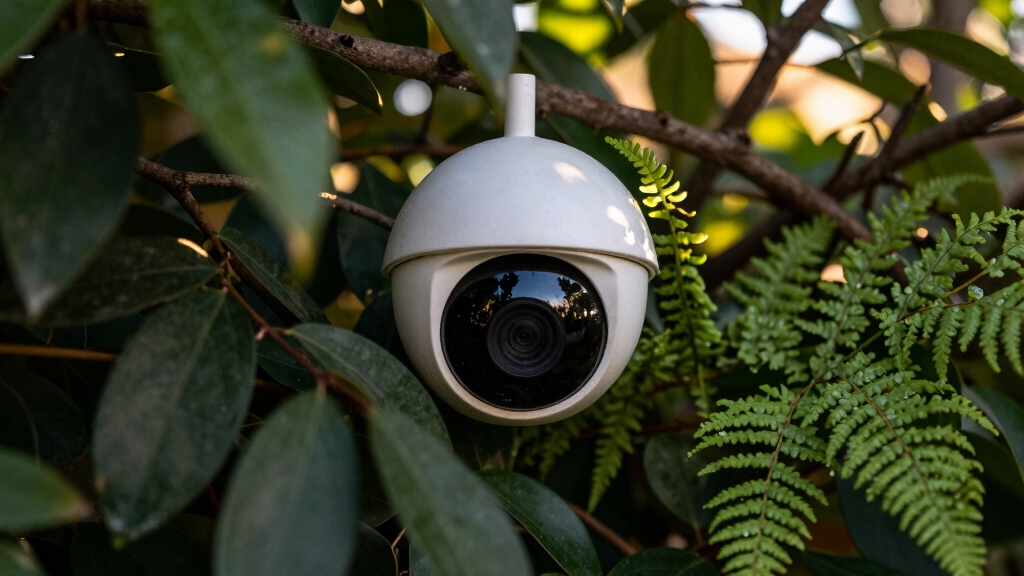
When hiding security cameras in outdoor foliage, position them within dense hedges or bushes that cover entry points with high foot traffic to maximize both concealment and surveillance effectiveness.
Nestle small cameras carefully between branches and leaves, making sure the lens is unobstructed to maintain a clear field of view.
If natural foliage is insufficient, apply artificial foliage wraps or camouflage skins that mimic leaves, blending the device seamlessly into its surroundings.
Place cameras near trees, flowers, or plant pots to utilize natural visual barriers, enhancing concealment.
To further disguise the device, manually drangle loose leaves around it without blocking the lens.
Prioritize locations that balance concealment with optimal coverage to guarantee effective monitoring while minimizing detection risks.
Avoid mounting cameras near dense vegetation or ledges that provide spider pathways and attract insects, which can lead to spider web buildup and obstruct camera performance.
Concealing Security Cameras With Indoor Decor
Indoor decor offers numerous strategic opportunities to conceal security cameras without compromising their functionality.
Indoor decor provides clever ways to hide security cameras while ensuring effective surveillance.
You can integrate cameras inside hollowed-out books or behind bookshelves to maintain coverage while remaining discreet. Placing cameras within wall clocks, tissue boxes, or desk clocks allows unobstructed lens views while blending with everyday objects.
Mounting cameras behind picture frames or within small knick-knacks on shelves provides effective concealment in plain sight.
Mini cameras inside stuffed animals or lampshades can also serve as covert surveillance points, given proper lens positioning.
When choosing indoor decor disguises, make sure the camera’s field of view remains clear and that the device is easily accessible for maintenance. Prioritize objects that naturally face the monitored area, avoiding items that may obstruct or reflect light, which can degrade image quality.
Ensure adequate ventilation and avoid infrared glare when using IR LEDs for discreet low-light operation to maintain image clarity and device longevity, which is essential for discreet low-light operation.
Hiding Security Cameras in Structural Features and Eaves
Strategic placement of security cameras within structural features and eaves offers a highly effective method for discreet surveillance. You can leverage architectural elements to conceal cameras while maintaining optimal coverage.
Consider mounting devices under roof eaves, near soffits, or in high wall corners, reducing visibility to passersby. Match camera housings to surrounding surfaces by painting them to blend with siding or eaves.
Additionally, integrating cameras beside exterior fixtures like downpipes or gutters allows seamless concealment without compromising functionality.
Utilize existing structures such as birdhouses by creating a small lens opening, preserving both concealment and access.
Position cameras near lighting fixtures to blend them with common outdoor elements.
Avoid placing cameras where direct sunlight or streetlights cause glare on the lens to maintain image clarity.
Mount cameras at a height of at least 10 feet to prevent tampering and improve coverage, ensuring a broad field of view and reducing the risk of damage from passersby and vandals with optimal camera height.
Powering and Hiding Wireless Security Cameras
To maximize discretion and simplify installation, choose wireless security cameras that operate on Wi-Fi or battery power, eliminating the need for visible wiring.
Battery-operated models let you position cameras in hard-to-reach spots without running cables, reducing exposure risk.
When wiring is necessary, route cables through walls or conduits, and match conduit colors to surroundings to maintain concealment.
Securely mount cameras to prevent movement that could reveal wiring or battery compartments.
Opt for compact battery packs or integrate solar charging if applicable to extend autonomy.
Regularly inspect battery status remotely to avoid sudden power loss.
Using the app to monitor solar charging status helps ensure continuous power supply and prevents interruptions.
Testing and Optimizing Security Camera Placement
Verifying camera placement before final installation guarantees peak coverage and image quality.
You need to conduct thorough field tests to confirm the camera’s field of view covers all critical areas without blind spots.
Adjust positioning to prevent glare from streetlights or sunlight, which can degrade footage clarity.
Use temporary mounts to evaluate day and night performance, assuring motion detection triggers accurately.
Follow these steps for optimization:
- Walk through the surveillance area to identify and correct any blind spots or obstructions.
- Test the camera during various lighting conditions to verify consistent image quality and detection sensitivity.
- Secure wiring discreetly and double-check that concealment elements don’t interfere with the lens or signal.
This systematic approach guarantees your concealed camera operates effectively and remains undetected.
Additionally, consider the camera’s environmental factors such as weather and physical obstructions to maintain reliable performance over time.
Frequently Asked Questions
Can Concealed Cameras Record Audio Legally?
You need to check your jurisdiction’s laws before recording audio with concealed cameras. Many places require all parties’ consent for audio recording to be legal.
Ignoring this can result in criminal charges or civil penalties. You should consult local statutes or a legal expert to make certain compliance.
When in doubt, disable audio features or use visual-only surveillance to avoid violating privacy laws and protect yourself legally.
How to Prevent Concealed Cameras From Overheating?
Picture your camera nestled in a shaded nook, cool air gently brushing its casing.
To prevent overheating, position it away from direct sunlight and guarantee proper ventilation around the housing.
Use heat-resistant materials or install small, silent fans if necessary.
Avoid enclosed spots that trap heat and choose models with built-in thermal protection.
Regularly check for dust buildup, which can insulate heat, and maintain clear airflow for peak device performance.
What Are the Best Apps for Monitoring Hidden Cameras?
You should use apps like Alfred, tinyCam Monitor, or iSpyConnect for effective hidden camera monitoring. They offer real-time streaming, motion detection alerts, and cloud storage.
Wyze and Reolink apps also provide intuitive interfaces and remote control options. Choose an app compatible with your camera brand, ensuring encrypted connections for security.
Regularly update the app to maintain performance and patch vulnerabilities. This keeps your surveillance reliable and discreet.
How to Maintain Concealed Cameras Without Revealing Them?
Think of your concealed camera as a secret garden that needs careful tending.
You’ll want to regularly dust lenses and trim foliage or decor around it to keep views clear without revealing its spot.
Avoid flashy maintenance.
Use soft tools and subtle movements.
Check batteries and wireless signals quietly, ensuring cables remain hidden and intact.
Routine field tests help you catch blind spots early, keeping your hidden watcher sharp and undetected.
Are There Privacy Laws Specific to Hidden Camera Use?
Yes, you must comply with privacy laws when using hidden cameras. Generally, you can’t record individuals in private areas like bathrooms or bedrooms without consent.
Inform guests or employees if surveillance is active, depending on jurisdiction. Laws vary by country and state, so check local regulations before installation.
Violating privacy laws can lead to legal penalties. You should always prioritize transparency and lawful use when deploying concealed cameras.
The Secret to Hiding Security Cameras Effectively
By blending your security camera with leafy branches or tucked corners, you’ll catch every moment unnoticed, like a watchful bird perched in the canopy.
Indoors, cleverly disguised within decor or structural nooks, your camera stays out of sight yet fully alert.
Don’t forget to power wireless units discreetly and test placements thoroughly.
This precise balance guarantees your security system works silently and effectively, guarding your space without drawing attention, just like shadows merging into the evening light.