
First, check your smoke detector’s manual or battery compartment to identify the exact battery type, typically 9-volt or AA.
Turn off power if hardwired and use a ladder safely to remove the detector by twisting it counterclockwise.
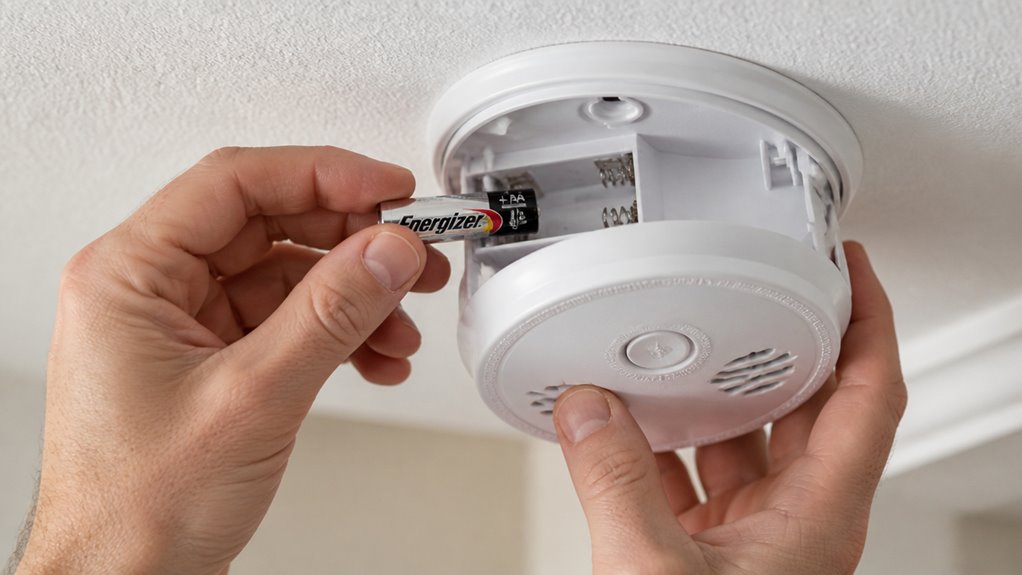
Open the battery compartment gently, remove old batteries, and install new ones with correct polarity.
Secure the compartment and twist the detector back until it clicks.
Finally, test the alarm to confirm proper function.
For detailed steps on maintenance and troubleshooting, keep exploring further guidance.
Key Takeaways
- Identify and select the correct battery type specified by the smoke detector manufacturer, such as 9-volt or AA batteries.
- Turn off power for hardwired units and use a ladder with dry hands to safely remove the detector from its mounting bracket.
- Open the battery compartment gently by pressing the latch or removing screws, avoiding excessive force to prevent damage.
- Insert new batteries with correct polarity, matching positive and negative terminals to compartment markings for reliable operation.
- Secure the battery compartment cover, reattach the detector firmly, and test the alarm by pressing the test button to confirm proper installation.
Identify the Right Battery for Your Smoke Detector
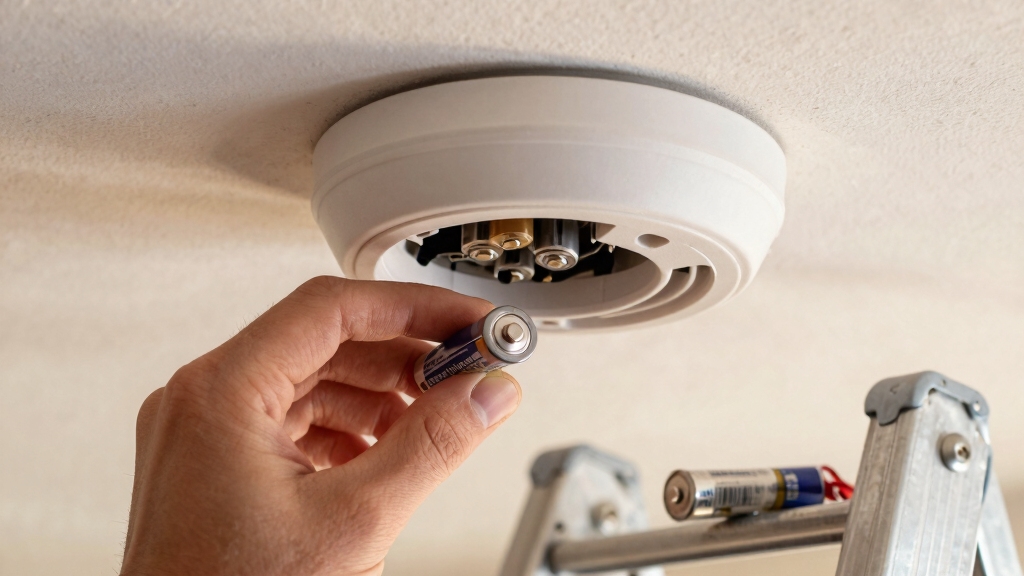
Start by checking your smoke detector’s manual or the battery compartment to identify the correct battery type. Most detectors use either a 9-volt or AA battery. Using the wrong type can cause malfunction or damage.
Confirm the exact battery specifications listed by the manufacturer before proceeding. If your unit requires multiple batteries, replace them all simultaneously to maintain a consistent power supply.
Look for markings inside the battery compartment that indicate polarity. The positive (+) terminal usually aligns with a smaller or hexagonal mark, while the negative (-) aligns with a larger mark.
Ensuring you select and install the correct battery type and orientation is critical for reliable operation and safety. Avoid guessing or substituting batteries to prevent false alarms or failure to detect smoke.
Kidde recommends replacing the 9V battery every six months or immediately after a low-battery chirp to maintain optimal detector performance.
Prepare Safely Before Removing Your Detector
Before you remove your smoke detector, make sure to turn off power at the electrical panel if it’s a hardwired unit to prevent electrical shocks.
Always switch off the power at the panel before removing a hardwired smoke detector to avoid shocks.
Confirm the detector isn’t live by checking its power indicator. Use a sturdy ladder to safely reach ceiling-mounted detectors to avoid falls.
Dry your hands thoroughly to prevent electrical shorts or damage to battery contacts.
Inspect the area around the detector for stability and clear any obstacles.
Gather necessary tools and ensure good lighting to avoid mishandling. Inform others in the household about your maintenance work to prevent accidental interference.
Taking these steps guarantees your safety and protects the device during battery replacement.
Additionally, installing devices with reinforced frames can improve overall home safety while performing maintenance tasks.
Proceed only when you’ve fully prepared to minimize risks.
Remove the Smoke Detector Without Damage
Before you take down the smoke detector, it’s super important to turn off the power. Oh, and make sure your hands are dry to avoid any damage. You don’t want to accidentally mess it up!
When you’re ready, grab a sturdy ladder. Carefully twist the unit counterclockwise to detach it from the mounting bracket. It should come off easily if you’re gentle with it.
Once you’ve removed it, look for the battery compartment. Open it up carefully so you can access the batteries without harming the device. Just take your time, and you’ll be fine!
Remember to turn off the breaker to prevent electrical shocks before starting the removal.
Safe Detector Removal
When you take down a smoke detector, twist it counterclockwise gently to avoid damaging the mounting bracket or internal components.
First, make sure the power is off for hardwired units to prevent electrical hazards. Use a sturdy ladder to reach ceiling-mounted detectors safely.
Keep your hands dry to avoid short circuits or contact damage. Avoid forcing the unit if it resists twisting.
Follow these guidelines for safe removal:
Confirm the detector isn’t connected to live power by checking the indicator light.
Apply steady, gentle pressure while twisting to release the unit from its base.
Support the detector’s weight as it detaches to prevent dropping or internal damage.
Remember to press the locking arms on the wire harness connector and gently pull the connector away from the alarm base to fully disconnect power in hardwired models, or seek professional help if unsure about the process wire harness disconnection.
These steps help you remove the detector without harm, preparing it for safe battery replacement.
Battery Compartment Access
After safely removing the smoke detector by twisting it counterclockwise, focus on accessing the battery compartment without causing damage.
Locate the compartment on the back or side of the unit. Carefully press the latch or release mechanism to open the cover; don’t force it.
If screws secure the cover, use a suitable screwdriver to remove them gently. Avoid excessive pressure to prevent cracking or warping the plastic housing.
Keep your hands dry to protect the battery contacts and internal components from moisture damage. Once opened, identify and remove the old batteries without bending or damaging the terminals.
Handle the compartment cover and any screws with care, setting them aside safely for reassembly. This careful approach preserves the smoke detector’s integrity and guarantees reliable operation after battery replacement.
For best practice, always replace batteries at least once a year to maintain optimal smoke detector performance.
Open the Battery Compartment Properly
To get started, find the battery compartment on either the back or side of your smoke detector.
Once you’ve located it, go ahead and press the latch or release mechanism. Just be careful—no need to use excessive force here!
When you open the battery cover, make sure to handle it gently.
You want to avoid damaging the unit or its components. Taking your time will help ensure everything stays in good shape!
For this model, it is important to use the specified CR17335 lithium battery designed for a 10-year service life.
Locate Battery Compartment
Finding the battery compartment on your smoke detector is essential for replacing its power source safely and efficiently.
Typically, the compartment is located on the back or side of the unit. Before proceeding, make sure you have clear access to the detector, especially if it’s ceiling-mounted.
To accurately locate the battery compartment, inspect the smoke detector’s rear and sides for a marked panel or slot.
Look for a small latch, tab, or screw securing the cover in place. Refer to the manufacturer’s manual or labels on the detector itself for specific battery compartment location details.
Always ensure you follow proper battery replacement guidelines to maintain detector functionality and safety.
Release Battery Cover
To open the battery compartment, start by pressing the latch or release mechanism firmly but gently. This will allow the cover to pop open without forcing it.
If the cover doesn’t release immediately, double-check for any locking tabs or small screws securing it in place. For screw-secured covers, use a suitable screwdriver to remove them carefully before attempting to lift the cover.
Avoid using excessive force to prevent damage to the compartment or the detector itself. Once the latch is disengaged or screws removed, gently lift or slide the cover away to expose the battery compartment.
This step is essential for safe and effective battery replacement, ensuring you don’t compromise the smoke detector’s integrity or functionality during the process.
Many smoke detectors use sealed 10-year batteries that eliminate the need for frequent replacements while maintaining reliable power.
Handle Cover Gently
When you open the battery compartment cover, handle it with care to avoid damaging the latch or hinges.
Applying too much force can break these delicate parts, making it difficult to secure the cover later.
Use gentle pressure when pressing the release mechanism or twisting the cover.
If screws secure the cover, loosen them slowly without stripping the threads.
Keep these points in mind:
Make sure your hands are dry to prevent slipping and protect electronic contacts.
Use a small flathead screwdriver if needed to gently pry open stubborn covers.
Avoid bending or twisting the cover excessively to maintain its shape and function.
Following these steps preserves the compartment’s integrity, guaranteeing a secure fit and reliable smoke detector operation.
Additionally, always use the battery type recommended by Kidde to guarantee proper function and avoid potential damage.
Install 9V or AA Batteries Correctly
Make sure you select the correct battery type, either 9-volt or AA, as specified by your smoke detector’s manufacturer.
Always use the battery type recommended by your smoke detector’s manufacturer for optimal performance.
Check the battery compartment for guidance or consult the user manual to avoid errors.
Remove any old batteries completely before installing new ones.
Align the positive (+) terminal of each battery with the corresponding smaller or hexagonal mark inside the compartment.
Connect the negative (-) terminal to the larger mark.
Insert batteries firmly, ensuring secure contact without forcing them in.
For detectors requiring multiple batteries, replace all simultaneously to maintain consistent power.
Proper orientation and full contact prevent malfunctions or false alarms.
Take care not to touch battery terminals with wet hands.
Avoid mixing old and new batteries to assure reliable operation and extend the life of your smoke detector.
Consider using manufacturer-recommended battery types such as 9-volt alkaline or sealed lithium to ensure optimal performance and reduce maintenance needs.
Secure the Battery and Reattach Your Detector
After installing the batteries with the correct orientation and secure contact, make sure the battery compartment is properly closed to prevent any power interruptions.
Close the latch firmly or screw the cover back in place if applicable. Next, carefully align the smoke detector with its mounting bracket to avoid pinching wires on hardwired units.
Twist the detector clockwise until you hear a click, indicating it’s securely fastened.
To secure your smoke detector correctly:
- Verify the battery compartment latch is fully engaged or screws tightened.
- Make certain no gaps remain between the detector and mounting base.
- Confirm the detector is stable and doesn’t wobble when gently moved.
Following these steps guarantees uninterrupted power and proper detector function.
Test Your Smoke Detector and Fix Common Issues
Start by pressing and holding the test button on your smoke detector for a few seconds to trigger the alarm. If the alarm sounds loudly, your battery installation is successful. If it chirps or remains silent, check the battery orientation or replace the batteries.
Reset the unit by holding the reset button for 15–20 seconds if necessary. Inspect battery contacts and connections if issues persist. Replace the detector if it fails the test with fresh batteries.
| Issue | Cause | Emotion Felt |
|---|---|---|
| No alarm sound | Dead battery | Frustration |
| Weak alarm | Loose battery contact | Concern |
| Frequent chirping | Low battery | Annoyance |
| False alarms | Dust on sensor | Anxiety |
| Detector fails test | Faulty unit | Urgency |
Maintain Your Smoke Detector for Long-Term Safety
Testing your smoke detector regularly helps identify immediate issues, but maintaining it over time guarantees ongoing reliability. To make sure your smoke detector functions properly for years, you need to perform routine upkeep beyond battery replacement.
Focus on these key maintenance tasks:
Clean the detector’s exterior housing monthly to remove dust and debris that can interfere with sensors.
Replace batteries annually or immediately when you hear a low-battery chirp to avoid unexpected power loss.
Test the alarm monthly by pressing the test button to confirm the alarm sounds loudly and consistently.
Frequently Asked Questions
How Often Should I Replace Smoke Detector Batteries?
You should replace your smoke detector batteries at least once a year to guarantee reliable performance.
Additionally, change them immediately if you hear a low-battery chirp or if the test alarm sounds weak or fails.
Don’t wait for failure; proactive replacement keeps your home safe.
Mark your calendar or set reminders so you don’t forget.
Regular maintenance and timely battery replacement are vital to keeping your smoke detector functioning properly.
Can I Use Rechargeable Batteries in Smoke Detectors?
Imagine you install rechargeable AA batteries in your smoke detector, but it starts chirping frequently.
You shouldn’t use rechargeable batteries in smoke detectors because they often have lower voltage and discharge differently, causing unreliable performance.
Stick to the manufacturer’s recommended battery type, usually 9-volt alkaline or lithium.
This guarantees consistent power and accurate alerts, keeping your home safe without annoying false low-battery warnings.
What Should I Do if My Smoke Detector Keeps Chirping?
If your smoke detector keeps chirping, first replace the batteries with fresh, manufacturer-recommended ones.
Make sure you install them correctly, matching positive and negative terminals.
If it still chirps, clean the detector to remove dust or debris.
Test the alarm by pressing the test button.
Persistent chirping may indicate a faulty unit, so consider replacing the entire smoke detector to guarantee your safety.
Are There Specific Brands of Batteries Recommended for Smoke Detectors?
You should use batteries from reputable brands like Energizer, Duracell, or Panasonic for your smoke detector.
These brands offer reliable, long-lasting power that guarantees consistent performance. Always match the battery type specified by your smoke detector’s manufacturer—usually 9V or AA alkaline batteries.
Avoid cheap or generic batteries, as they may fail prematurely and cause false chirping or device failure.
Stick to trusted brands to keep your smoke detector functioning at its best.
How Do I Dispose of Old Smoke Detector Batteries Safely?
Think of disposing of old smoke detector batteries like returning a borrowed book. It’s important to put them back where they belong to avoid harm.
You should never toss them in the trash. Instead, take them to a local battery recycling center or hazardous waste facility.
Many stores also offer battery drop-off bins. This keeps toxic materials out of landfills and protects the environment for everyone’s safety.
Know How to Install Smoke Detector Battery Properly
Now that your smoke detector’s fresh battery hums quietly inside, imagine the quiet peace it brings. It guards your home like a vigilant sentinel.
You’ve taken a vital step in protecting your loved ones from unseen dangers. Keep this safety habit alive by checking and maintaining your detector regularly.
A well-powered smoke detector isn’t just a device; it’s your silent guardian, ready to alert you when every second counts. Stay safe, stay prepared.