
You’ll see fire alarm supervisory signals when off-normal conditions affect fire protection equipment like valves or pumps. These signals indicate readiness issues but not active fires.
Trouble signals point to faults within the alarm system itself. This includes wiring problems, battery failures, or communication breaks that can impair detection and notification functions.
Your panel uses distinct tones and indicators to differentiate them. This helps you pinpoint issues quickly.
Understanding these differences is key to maintaining system reliability and safety before addressing deeper diagnostics and responses.
Key Takeaways
- Supervisory signals indicate off-normal conditions in fire protection equipment, preserving system readiness without signaling active fire hazards.
- Trouble signals indicate faults within fire alarm system components that can impair detection and notification functions.
- Supervisory alerts use a unique tone and “SUPV” indicator, while trouble alerts use a distinct tone and “TROUBLE” indicator for quick identification.
- Troubles involve wiring faults, power issues, or battery failures, whereas supervisory issues often involve sprinkler valves, air pressure, or pump abnormalities.
- Promptly addressing supervisory and trouble signals ensures system reliability, occupant safety, regulatory compliance, and prevents escalation of failures.
Fire Alarm Supervisory vs Trouble Comparison: Signal Meaning, Causes, and Response
| Comparison Point | Fire Alarm Supervisory Signal | Fire Alarm Trouble Signal | Best Response |
|---|---|---|---|
| Main Meaning | Shows an off-normal condition in fire protection equipment | Shows a fault inside the fire alarm system | Identify the signal type first |
| Common Source | Sprinkler valves, fire pumps, dry-pipe air pressure, external monitoring points | Wiring, batteries, power supplies, modules, communication circuits | Check the correct system area |
| Fire Emergency Status | Usually not an active fire alarm | Usually not an active fire alarm | Do not ignore either signal |
| System Impact | May reduce suppression readiness | May reduce detection or notification reliability | Trouble signals often need faster technical repair |
| Panel Indicator | Often shown as SUPV or supervisory alert | Often shown as TROUBLE alert | Read the panel display carefully |
| Typical Causes | Closed valve, low air pressure, abnormal pump status | Open circuit, short circuit, low battery, power failure | Investigate the listed cause |
| Safety Risk | Fire protection equipment may not work as intended | Alarm system may fail to detect or notify properly | Both affect life safety readiness |
| Troubleshooting Focus | Inspect valves, pumps, pressure gauges, and monitored equipment | Inspect wiring, batteries, circuits, devices, and communication paths | Use targeted diagnostics |
| Correction Goal | Restore equipment to normal operating condition | Restore full alarm system functionality | Clear the panel after correction |
| Best Practice | Treat as a serious readiness issue | Treat as a serious system reliability issue | Document and resolve promptl |
Fire Alarm Supervisory Signals: What They Are and Why They Matter
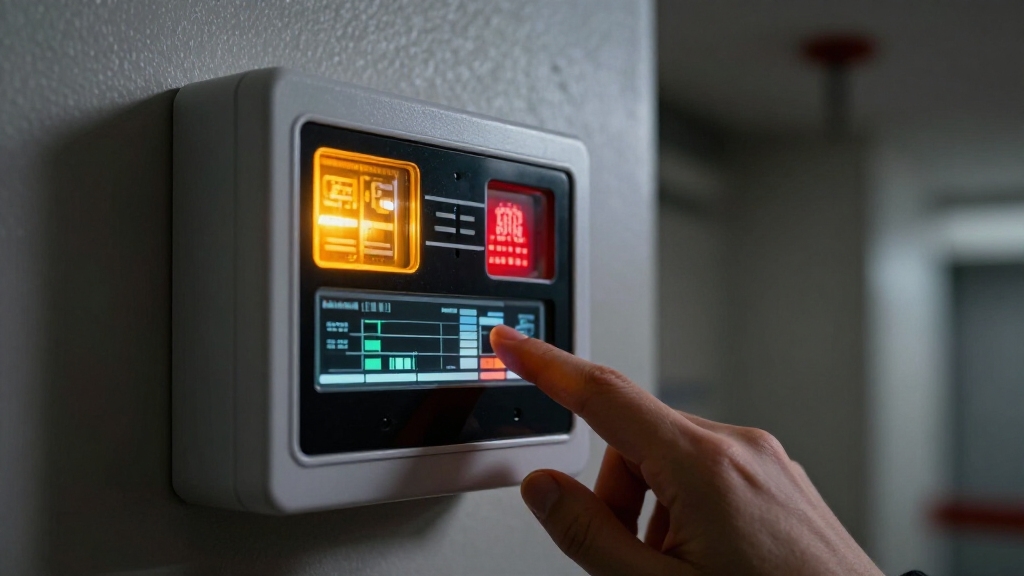
Although supervisory signals don’t indicate an immediate fire hazard, they play a crucial role in maintaining your fire protection system’s readiness.
These signals identify off-normal conditions in monitored equipment, such as closed sprinkler valves, low air pressure in dry-pipe systems, or abnormal fire pump status.
Unlike trouble signals, supervisory alerts focus on the status of fire protection components rather than the alarm system itself.
When a supervisory signal activates, your fire alarm control unit will notify you with a specific tone and indicator, prompting prompt investigation.
Addressing these conditions quickly guarantees that protective equipment functions correctly when needed, preserving system integrity.
Ignoring supervisory signals may lead to compromised fire suppression readiness, increasing risk during an emergency.
Hence, you must treat these signals seriously and resolve them without delay.
Fire alarm systems often use a Signaling Line Circuit to provide real-time status updates that include supervisory signals, enhancing overall system monitoring.
Fire Alarm Trouble Signals: How They Affect System Reliability
When your fire alarm system signals trouble, it means a fault has occurred within its components. This can compromise your system’s ability to detect and respond to fire events.
Trouble signals often stem from wiring faults, battery failures, or communication issues. These faults reduce system reliability by impairing detection and notification functions, risking delayed fire response.
| Trouble Cause | Impact on System | Required Action |
|---|---|---|
| Wiring Fault | Signal loss, false alerts | Inspect and repair wiring |
| Battery Failure | Power loss during outage | Replace battery promptly |
| Communication Break | Panel-device disconnect | Restore communication path |
| Device Malfunction | Detection failure | Service or replace device |
To maintain reliability, you must address trouble signals promptly. This ensures continuous, dependable operation. Regular monitoring of supervisory trouble signals helps detect power or system issues early, preventing potential failures.
Key Differences Between Fire Alarm Supervisory and Trouble Signals
You know, one of the key things to remember is that supervisory signals come from monitored fire protection equipment. On the other hand, trouble signals are all about faults within the fire alarm system itself. These differences really matter because they influence how reliable the system is and also shape our response priorities. Before troubleshooting, it’s essential to contact authorities to place the system in test mode and ensure proper coordination.
Signal Origin Differences
Because supervisory and trouble signals originate from different parts of the fire protection setup, understanding their source is essential for accurate diagnosis.
Supervisory signals come from monitored fire protection equipment, like sprinkler valves or fire pumps, indicating off-normal conditions. Trouble signals arise within the fire alarm system itself, signaling faults such as wiring issues or power loss.
Knowing their origins helps you pinpoint whether the problem lies in protection devices or the alarm system’s components.
Proper monitoring of these signals is crucial for maintaining system reliability and ensuring timely emergency response.
| Signal Type | Origin Location |
|---|---|
| Supervisory | Fire protection equipment |
| Trouble | Fire alarm system circuits |
| Supervisory | Sprinkler valves, pumps |
| Trouble | Wiring, batteries, modules |
| Supervisory | External monitoring points |
System Impact Variations
Although supervisory and trouble signals both indicate issues within a fire alarm system, their impacts on system functionality differ markedly.
Supervisory signals reflect abnormal conditions in connected fire protection equipment, like a closed sprinkler valve or low air pressure. However, they don’t compromise the fire alarm panel’s ability to detect fires.
You can consider the system’s core detection and notification functions fully operational during supervisory events. Conversely, trouble signals directly affect the fire alarm system’s integrity.
Wiring faults, power losses, or communication failures can impair detection, delaying or preventing alarm activation. When a trouble signal occurs, you face a potential reduction in system reliability, which could compromise occupant safety.
Understanding these distinctions helps you prioritize monitoring efforts. This ensures you quickly identify whether the fault lies in peripheral equipment or within the alarm system itself.
Regular inspection and testing of wiring and devices are essential to detect and resolve trouble signals promptly, maintaining overall system reliability and compliance with NFPA 72 standards.
Response and Resolution
When you encounter supervisory signals, investigate the associated fire protection equipment promptly to ensure it returns to normal operating status. This often involves examining sprinkler valves, air pressure in dry systems, or fire pump conditions.
Your goal is to restore proper function to these monitored devices to maintain protection integrity. In contrast, trouble signals indicate faults within the fire alarm system itself, such as wiring issues or power failures.
You must address these immediately because they compromise the system’s ability to detect fire events reliably. Troubleshooting requires inspecting batteries, circuits, and communication paths.
Both supervisory and trouble signals demand timely attention, but your operational focus differs. Supervisory signals require equipment verification and correction, while trouble signals require system repairs to guarantee continuous fire detection and alarm capability.
Regular inspection frequencies and maintenance help prevent supervisory and trouble conditions by ensuring system components remain functional and compliant with safety standards.
Common Causes of Supervisory Signals in Fire Protection Systems
In fire protection systems, supervisory signals commonly arise from specific changes or abnormalities in monitored equipment that indicate an off-normal condition.
You’ll often encounter supervisory signals triggered by a closed sprinkler control valve, which interrupts water flow readiness.
Low air pressure in dry-pipe sprinkler systems is another frequent cause, signaling that the pressurized air meant to prevent water from entering prematurely has fallen below acceptable levels.
Additionally, abnormal fire pump status, such as loss of power, failure to start, or improper running, will generate supervisory notifications.
These conditions don’t indicate an emergency fire event but do signify that protective components aren’t in their normal operational state.
Monitoring these indicators helps you maintain system integrity by ensuring all fire protection equipment remains ready to function correctly when needed.
Proper system commissioning and regular inspections are essential to detect and address supervisory signals promptly to maintain compliance and safety.
Typical Trouble Signal Issues in Fire Alarm Systems
You know, trouble signals in fire alarm systems can really throw a wrench in the works.
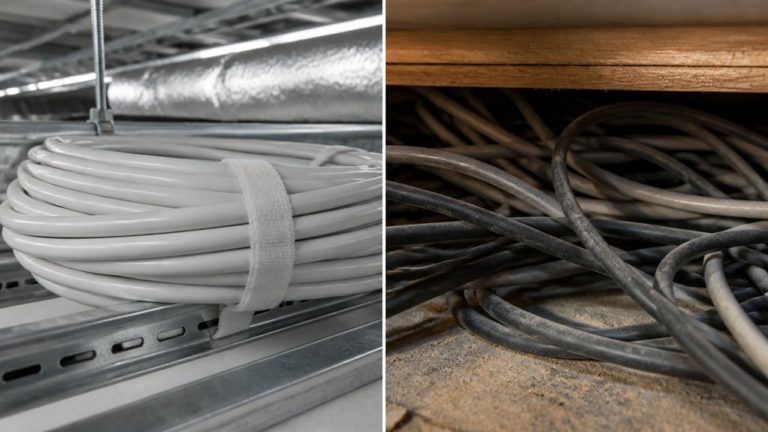
One common culprit is wiring faults, like open or short circuits. These can mess up communication between devices, which is definitely not what you want when it comes to safety.
And let’s not forget about power issues. Power failures, whether it’s from battery depletion or losing your primary power source, often set off those pesky trouble conditions.
So, keeping an eye on these things is super important.
The sooner you spot these problems, the better your system can perform and ensure that fire detection stays reliable.
Regular inspection and maintenance can help prevent many trouble signals before they occur.
Common Wiring Faults
Although fire alarm systems rely heavily on proper wiring integrity, common wiring faults frequently trigger trouble signals that compromise system reliability.
You’ll often encounter open circuits caused by broken conductors or loose connections, which interrupt communication between devices and the control panel.
Short circuits occur when conductors inadvertently contact each other or ground, producing false trouble indications.
Corrosion or damaged insulation deteriorates signal quality, leading to intermittent faults that complicate troubleshooting.
Improper wiring practices, such as reversed polarity or incorrect circuit splicing, also generate trouble signals by violating system design parameters.
When you detect these faults, systematically inspect wiring continuity, insulation resistance, and terminal tightness using appropriate test equipment.
Addressing these issues promptly guarantees the fire alarm system maintains full operational readiness and prevents impaired detection or failure to alert.
Ensuring all wire connections are secure with wire nuts or push-connects and properly insulated is critical to preventing shorts and faults that cause trouble signals.
Power and Battery Failures
Wiring faults often lead to trouble signals. However, power and battery failures represent another common source of system issues that directly impact fire alarm reliability. When the primary power supply fails or batteries degrade, the system’s ability to detect and respond to fires diminishes. This triggers trouble alerts.
You must monitor battery voltage levels and guarantee power sources remain stable to avoid interruptions. Many systems use backup batteries that automatically activate during power outages to ensure continuous operation.
| Issue Type | Common Cause |
|---|---|
| Power Failure | Utility outage, breaker trip |
| Battery Failure | Aging, improper charging |
| System Impact | Reduced detection, false trouble |
Addressing power and battery failures promptly restores system integrity. This maintains reliable fire protection.
How Fire Alarm Panels Show Supervisory and Trouble Alerts?
When a fire alarm panel detects an abnormal condition, it differentiates supervisory and trouble alerts through distinct indicators and tones to help you quickly identify the nature of the issue.
Fire alarm panels use unique indicators and tones to distinguish supervisory from trouble alerts efficiently.
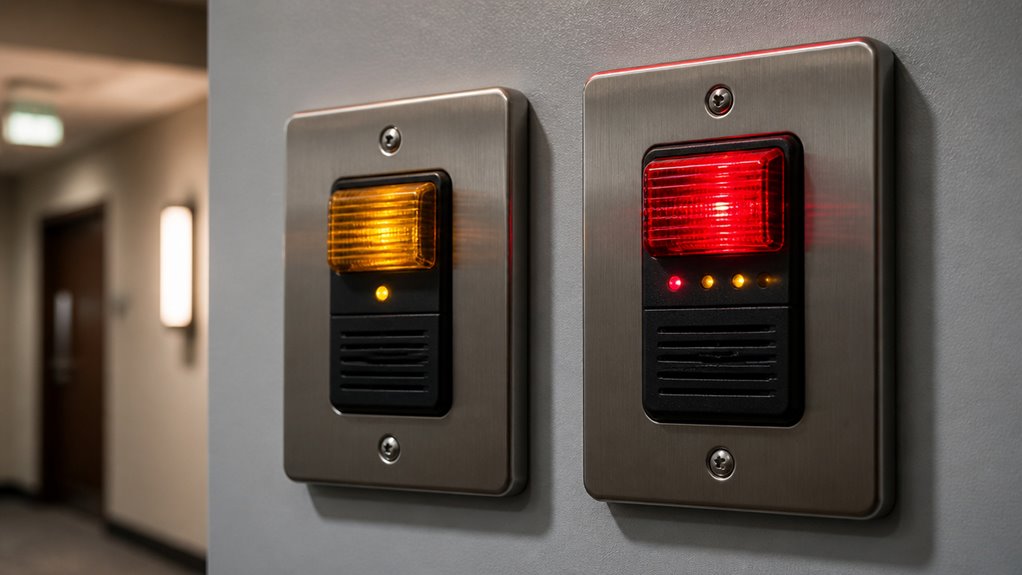
Supervisory alerts activate a specific supervisory tone and illuminate a SUPV indicator, signaling an off-normal status in connected fire protection equipment such as sprinkler valves or pumps.
Trouble alerts trigger a separate trouble tone and a TROUBLE indicator, highlighting faults within the fire alarm system itself like wiring failures or power loss.
Upon acknowledgment, the panel typically displays a summary screen, followed by detailed lists of supervisory or trouble events.
These clear, separate annunciations enable you to precisely determine whether the problem lies in external suppression components or internal system malfunctions, facilitating targeted investigation and corrective action.
How to Identify and Respond to Supervisory Signals?
Since supervisory signals indicate off-normal conditions in connected fire protection equipment rather than system faults, you should first verify the specific device or system component triggering the alert.
Begin by pinpointing the supervisory indicator on the fire alarm panel, then correlate it with the corresponding equipment.
Next, assess the condition without delay, as these signals reflect potential impairments in protection systems.
Follow these steps to respond effectively:
- Identify the exact supervisory device or system component causing the alert.
- Inspect valves, pressure gauges, or pumps related to the indicated device.
- Confirm whether the condition is a planned maintenance state or an unexpected abnormality.
- Restore the equipment to normal operation promptly and reset the panel.
Acting swiftly secures continued fire protection system reliability and compliance.
Diagnosing and Fixing Trouble Signals in Your Fire Alarm System
Although trouble signals often indicate faults within your fire alarm system’s components or circuitry, you need to methodically diagnose the underlying issue to restore full functionality.
Trouble signals highlight faults, requiring careful diagnosis to fully restore your fire alarm system’s functionality.
Start by isolating the trouble zone using the panel’s annunciation to pinpoint affected circuits or devices. Inspect wiring for breaks, shorts, or loose connections, focusing on initiating device circuits and power supplies.
Check battery integrity and voltage levels, as low or failing batteries commonly cause trouble conditions. Verify communication pathways between modules and the control panel for continuity and signal strength.
Replace malfunctioning devices or modules identified during testing. After repairs, reset the panel and confirm the trouble signal clears.
Document all findings and corrective actions to maintain system reliability and compliance with fire safety standards. Your precise, systematic approach guarantees the fire alarm system remains fully operational.
Why Prompt Action on Supervisory and Trouble Signals Is Critical?
Effective troubleshooting restores your fire alarm system’s functionality. Timely attention to supervisory and trouble signals is equally important. Ignoring these signals can compromise system integrity and safety. You must act promptly to maintain reliable fire protection and prevent undetected hazards.
Here’s why prompt action matters:
- System Reliability: Quickly resolving trouble signals guarantees all fire alarm components operate correctly. This preserves detection capability.
- Equipment Integrity: Addressing supervisory signals confirms fire protection devices like valves and pumps function as intended.
- Regulatory Compliance: Prompt response meets safety codes and inspection requirements. This avoids legal and operational penalties.
- Risk Mitigation: Early intervention reduces potential downtime. It prevents escalation into critical fire safety failures.
Frequently Asked Questions
Can Supervisory Signals Trigger Building-Wide Alerts or Only Local Notifications?
Supervisory signals typically trigger only local notifications rather than building-wide alerts.
You’ll see a supervisory tone and indicator on the fire alarm control panel, alerting you to off-normal conditions like closed sprinkler valves or low air pressure.
These signals don’t initiate evacuation or alarms throughout the building but require prompt investigation to restore proper fire protection system status and guarantee safety readiness.
Are Supervisory and Trouble Signals Tested During Routine Fire Alarm Inspections?
Think of your fire alarm system as a finely tuned orchestra.
During routine inspections, you test both supervisory and trouble signals to make certain every instrument plays its part flawlessly.
You verify supervisory signals by simulating off-normal conditions in protection equipment.
You check trouble signals by inducing faults in system circuits.
This meticulous testing confirms that your system promptly detects and communicates all irregularities, maintaining operational integrity and safety.
How Long Can a Supervisory or Trouble Condition Remain Before It Becomes Critical?
You shouldn’t let a supervisory or trouble condition linger beyond 24 to 48 hours.
Delays increase risk, as supervisory signals point to abnormal fire protection states needing correction.
Trouble signals indicate system faults that compromise detection.
Promptly addressing these conditions preserves system reliability and safety compliance.
Extending the condition beyond this timeframe can escalate to critical failure, reducing fire system effectiveness and potentially violating code requirements.
Do Supervisory Signals Affect Insurance Requirements or Compliance Standards?
You might say supervisory signals gently nudge you to stay vigilant. Yes, they do influence insurance and compliance, since they highlight off-normal conditions in fire protection systems.
Ignoring these signals can lead to non-compliance with NFPA codes and jeopardize insurance coverage. Promptly addressing supervisory alerts guarantees your system meets standards, helping avoid penalties or claim denials.
Staying proactive keeps your protection reliable and your insurance intact.
Can a Single Device Generate Both Supervisory and Trouble Signals Simultaneously?
Yes, a single device can generate both supervisory and trouble signals simultaneously if it monitors multiple parameters.
For example, a sprinkler valve might send a supervisory signal if partially closed, while a wiring fault in the same device triggers a trouble signal.
You need to analyze each signal independently, as supervisory relates to equipment status, and trouble relates to system faults.
Proper diagnosis guarantees prompt corrective actions without confusion.
Know Which Fire Alarm Signal Needs Action First
Understanding the differences between supervisory and trouble signals is vital for maintaining your fire alarm system’s reliability.
Both alert you to issues needing prompt attention, but they indicate different problems. Supervisory signals highlight monitoring lapses, while trouble signals reveal equipment faults.
Can you afford to ignore these warnings? By quickly identifying and addressing these alerts, you guarantee your system functions at its best.
This protects lives and property effectively. Don’t wait; act decisively.