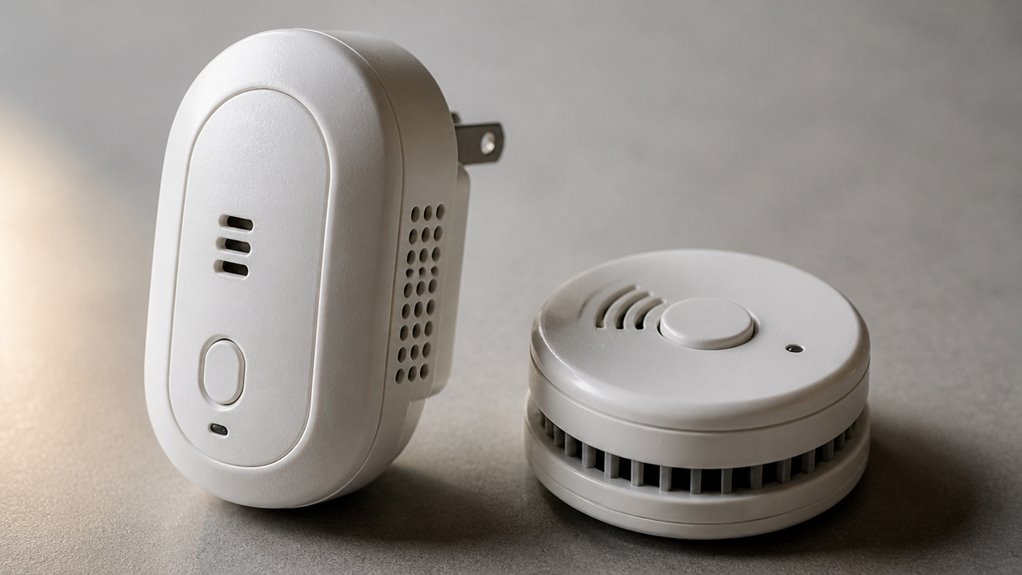

You’ll want to pick a carbon monoxide detector that fits your home’s power setup and keeps you protected continuously.
Plug-in detectors use household electricity but need battery backups to work during outages.
Battery-only units offer flexible placement without outlet limits.
Both types use electrochemical sensors but require regular testing and battery replacement to stay reliable.
Proper installation and maintenance are key to safety, and understanding these details will help you make the best choice.

- CARBON MONOXIDE REFERENCE MONITORING Provides real-time carbon monoxide reference readings through a…
- CLEAR DIGITAL PPM DISPLAY The front screen presents PPM reference readings in an easy-to-view…
- SIMPLE PLUG-IN OPERATION Connect the unit directly to a compatible wall outlet for continuous indoor…
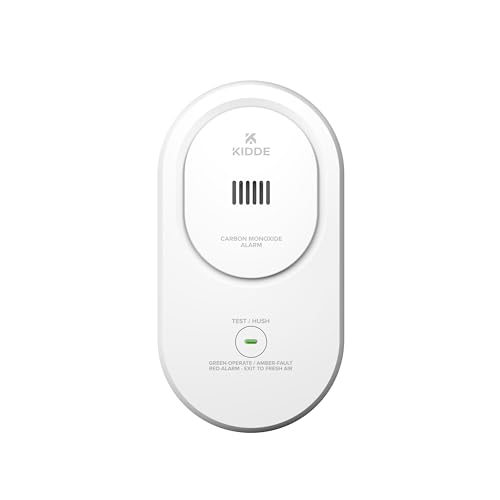
- DETECTS CARBON MONOXIDE: Model COP monitors CO levels & sounds a loud 85 dB alarm to signal…
- PLUG-IN POWER WITH BATTERY BACKUP: CO detector plug-in operates on 120V AC with 2 AA backup…
- TRAVEL-READY DESIGN*: Compact carbon monoxide detector is suitable for use at home or for travel…

Key Takeaways
- Plug-in detectors require AC outlets and usually include backup batteries to maintain operation during power outages.
- Battery-only detectors offer flexible installation anywhere without needing an outlet, ideal for hard-to-reach or outlet-scarce areas.
- Plug-in models may have limited placement due to outlet locations, which can affect optimal detector height and sensitivity.
- Both types use electrochemical sensors to detect CO but require regular maintenance and monthly testing for reliability.
- Battery replacement frequency varies; battery-only units often use sealed lithium batteries for longer life compared to plug-in backup batteries.
Carbon Monoxide Detector Plug in vs Battery: Key Differences in Safety, Power, and Installation
| Comparison Factors | Plug-In CO Detector | Battery-Powered CO Detector |
|---|---|---|
| Primary Power Source | Household AC electricity | Replaceable or sealed batteries |
| Installation Method | Plugs into a compatible electrical outlet | Installed using approved mounting hardware |
| Placement Flexibility | Limited by outlet availability | More flexible placement |
| Power Outage Operation | Continues working only with functioning backup power | Operates independently of household electricity |
| Battery Backup | Available on certain models | Battery is the primary power source |
| Detection Technology | Commonly uses electrochemical CO sensors | Commonly uses electrochemical CO sensors |
| Detection Reliability | Depends on sensor quality, placement, and maintenance | Depends on sensor quality, placement, and maintenance |
| Battery Maintenance | Backup batteries require attention when fitted and replaceable | Replaceable batteries require monitoring; sealed batteries do not need routine replacement |
| Testing Requirements | Regular testing according to manufacturer instructions | Regular testing according to manufacturer instructions |
| Installation Restrictions | Requires a suitable, continuously powered outlet | Requires a suitable approved mounting location |
| Long-Term Maintenance | Check power connection, backup system, and detector condition | Check battery status, detector condition, and end-of-life alerts |
| Alarm Replacement | Replace at the manufacturer’s stated end of service life | Replace at the manufacturer’s stated end of service life |
| Best Applications | Homes with appropriately located outlets | Bedrooms, hallways, and areas without suitable outlets |
| Main Limitation | Outlet location and possible loss of power | Dependence on battery condition |
| Overall Recommendation | Suitable when outlet placement and backup requirements are met | Suitable when flexible positioning and independent power are priorities |
How Plug-In and Battery CO Detectors Work?
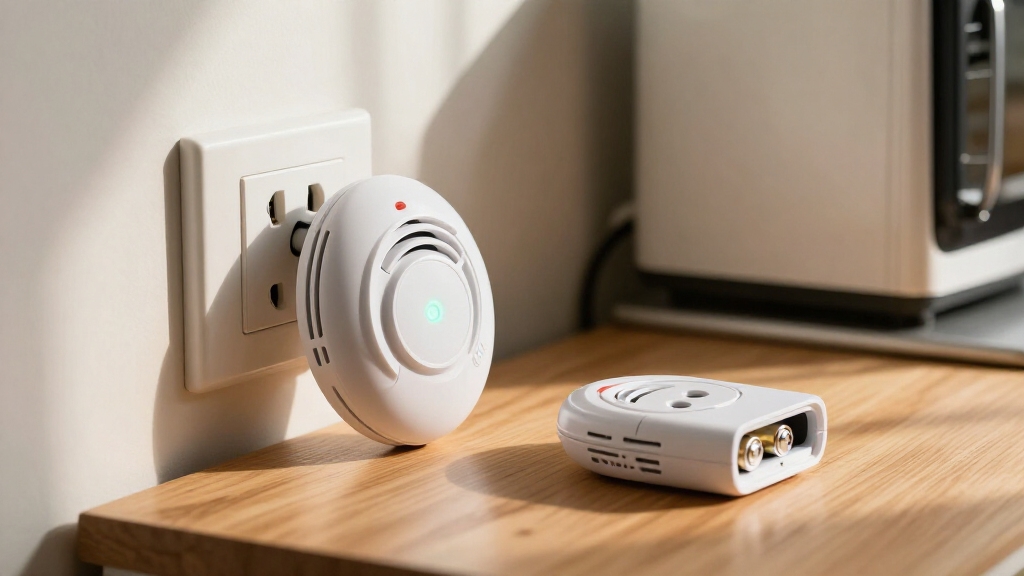
Understanding how plug-in and battery carbon monoxide detectors work is key to choosing the right device for your home.
Plug-in detectors rely on your home’s electrical system, often including a battery backup to maintain operation during power outages. This backup guarantees continuous monitoring, but you must verify the battery’s condition regularly.
Battery-powered detectors function independently, running solely on batteries that you need to replace or recharge periodically. These detectors offer flexible placement since you don’t need to be near an outlet.
Both types use electrochemical sensors to detect dangerous CO levels and alert you promptly. To keep your home safe, you should test your detector frequently and replace batteries as recommended.
Regular monthly testing and battery replacement are essential to maintain detector reliability throughout its lifespan.
Choosing the Right CO Detector for Your Home
Where should you start when choosing a carbon monoxide detector for your home?
Begin by evaluating your living space and power options. Consider these four key factors:
- Power Source: Decide between plug-in models with battery backup or battery-only units for outage protection.
- Placement Flexibility: Battery-powered detectors let you install them anywhere, while plug-ins depend on outlet locations.
- Maintenance: Battery-only detectors require regular battery changes. Plug-in models need backup battery checks and outlet power.
- Reliability: Choose detectors with proven sensors and verify frequent testing to maintain safety.
Additionally, ensure detectors are installed within 10 feet of bedroom doors to guarantee alarm audibility and early warning for occupants, a critical placement guideline for home safety.
Installation and Placement Tips for CO Detectors
When you’re setting up a carbon monoxide detector, think about where your outlets are. If you’re going for a plug-in model, you’ll want to make sure you can easily reach it, but that might limit where you can place it. On the other hand, battery-powered detectors give you a lot more freedom.
You can put them in bedrooms, hallways, or other important spots without worrying about finding an outlet.
Just remember to follow the recommended heights and locations when you install these detectors. That way, you can ensure they work effectively and provide early warnings when it matters most.
It is also important to install a detector outside each sleeping area to provide early warning during sleep.
Outlet Location Considerations
Although plug-in carbon monoxide detectors offer easy installation, outlet location can limit where you place them, affecting their effectiveness.
Outlets are typically lower on walls, but CO detectors should be installed near breathing height, often on walls or ceilings. This mismatch can reduce detector sensitivity.
When choosing where to plug in your detector, consider:
- Is the outlet near the recommended installation height?
- Are outlets available in key rooms like bedrooms and hallways?
- Will furniture or appliances block airflow to the detector?
- Is the outlet continuously powered and accessible for testing and maintenance?
Keep in mind that proper placement near sleeping areas is essential since CO alarms alert occupants to toxic gas exposure during sleep.
Flexible Placement Options
Outlet placement challenges highlight why flexible installation options matter for carbon monoxide detectors. If you rely on plug-in models, you’re limited to where outlets exist, which are often low on walls—less than ideal for detection.
Battery-powered detectors free you from this constraint, allowing you to position units in bedrooms, hallways, or other critical areas without nearby outlets. Some plug-in detectors feature rotating plugs to better fit various outlet orientations, but they still depend on outlet availability.
When choosing your detector, consider how placement flexibility affects your ability to install units where they’ll provide effective monitoring. Remember, proper placement is essential for safety, so pick a detector type that fits your home’s layout without forcing compromises on location due to power source restrictions. Battery-powered detectors also offer backup power advantages that maintain functionality during power outages, enhancing overall safety.
Ideal Detector Positioning
Since carbon monoxide is a colorless, odorless gas, positioning your detector correctly is essential to assure early warning of dangerous levels.
You want to place your detector where it can quickly sense CO before it reaches dangerous concentrations. Follow these guidelines:
- Install detectors on every level of your home, especially near sleeping areas.
- Mount detectors 5 feet above the floor or at the height recommended by the manufacturer.
- Avoid placing detectors near fuel-burning appliances, vents, or windows to prevent false alarms.
- Don’t install detectors in humid areas like bathrooms or too close to kitchens where cooking fumes may interfere.
Proper placement maximizes safety, whether you choose plug-in or battery-powered units.
Test regularly and maintain batteries to assure reliable operation.
For optimal protection, keep in mind that CO alarms should not be relied upon to detect other gases like natural gas or smoke.
CO Detector Power Reliability and Backup Options
When choosing a carbon monoxide detector, you’ll want to prioritize power reliability to guarantee continuous monitoring, especially during outages.
Prioritize power reliability in carbon monoxide detectors to ensure continuous monitoring, even during power outages.
Plug-in detectors typically run on household electricity but often include battery backup to maintain function if the power fails.
Battery-powered detectors operate independently, ensuring uninterrupted protection without relying on outlets.
If you opt for a plug-in model, confirm the backup battery is functional and replaced as needed.
Battery-only detectors require regular battery changes unless they use sealed long-life batteries.
Remember, a detector’s effectiveness depends on continuous power, so avoid models lacking backup options.
Choosing a detector with reliable power and a backup plan helps you stay protected in all situations, including blackouts, and prevents dangerous lapses in carbon monoxide detection.
Also, be aware that carbon monoxide detectors only sense CO and will not detect natural gas leaks, so consider additional detectors for comprehensive safety.
CO Detector Maintenance Needs and Best Practices
To keep your CO detector reliable, remember to replace the batteries regularly—especially if you have a battery-only model.
It’s a good idea to test your detector every month, just to make sure everything’s working as it should.
Also, take a moment to check for any visible damage or malfunctions.
If you’re using a plug-in model that has backup power, don’t overlook the outlet connection.
And, of course, keep an eye on that backup battery too!
It’s all about ensuring you have continuous protection in your home.
Be aware that low battery chirps typically sound as a single beep every 60 seconds and require prompt battery replacement to maintain safety.
Battery Replacement Frequency
Regularly replacing the batteries in your carbon monoxide detector is essential to assure continuous protection.
Whether you use a plug-in model with backup batteries or a battery-only unit, neglecting battery replacement risks losing critical alert capability.
Follow these guidelines to stay safe:
- Replace batteries at least once a year or when the low-battery warning sounds.
- Use manufacturer-recommended batteries to assure compatibility and longevity.
- For plug-in detectors, check both the AC power and backup battery regularly.
- Consider sealed lithium batteries in battery-only detectors for longer replacement intervals.
- Remember that a single chirp or intermittent beep usually indicates maintenance issues such as low battery or malfunction, not an active carbon monoxide alert.
Testing And Inspection
Frequently testing and inspecting your carbon monoxide detector guarantees it functions correctly when you need it most. You should press the test button at least once a month to verify the alarm sounds properly.
Check for any physical damage or dust buildup that could affect sensor performance. For plug-in models with battery backup, inspect both power sources regularly; make certain the outlet works and replace backup batteries as needed.
Battery-powered detectors require timely battery replacements or checks, depending on the battery type. Never ignore low-battery warnings or failure to test.
Keep the detector clean and dust-free to maintain sensor accuracy. Proper testing and inspection prevent false alarms and ensure reliable detection, safeguarding you and your family from harmful carbon monoxide exposure.
Additionally, using the recommended CR123A lithium batteries helps maintain optimal detector reliability and performance over time.
Backup Power Management
Because backup power guarantees your carbon monoxide detector stays operational during outages, managing it properly is critical for safety.
Whether you use a plug-in model with battery backup or a battery-only unit, staying on top of maintenance guarantees continuous protection.
Follow these best practices:
- Test your detector monthly to confirm both AC power and backup battery functionality.
- Replace backup batteries annually or when the low-battery alert sounds.
- Guarantee plug-in units are securely connected to outlets and check for loose plugs.
- Use sealed lithium batteries if possible to reduce replacement frequency and improve reliability.
Safety Tips for Effective CO Detection
Always make certain your carbon monoxide detector is installed in the right locations and tested often to maintain reliable protection.
Place detectors near sleeping areas and on every level of your home. Test them monthly and replace batteries annually or as indicated.
Avoid installing detectors near fuel-burning appliances or in humid areas. Keep them clean and free from dust to guarantee sensor accuracy.
| Safety Tip | Why It Matters | Action Needed |
|---|---|---|
| Proper Placement | Detects CO early in sleeping areas | Install on each floor, near bedrooms |
| Regular Testing | Ensures functionality | Test monthly, follow manufacturer instructions |
| Battery Maintenance | Maintains continuous operation | Replace batteries yearly or when low battery signal sounds |
| Avoid Obstructions | Prevents false alarms or missed alerts | Keep detectors dust-free and clear of furniture |
| Backup Power Checks | Maintains monitoring during outages | Check plug-in backup batteries regularly |
Frequently Asked Questions
Can Plug-In CO Detectors Interfere With Other Electronic Devices?
Plug-in CO detectors generally don’t interfere with other electronic devices because they use low-power circuitry designed to avoid causing electrical noise.
However, if you notice interference, it might be due to a faulty unit or poor wiring.
To prevent issues, make sure your detector is properly installed in a grounded outlet and away from sensitive electronics.
Regularly test your detector to verify it functions correctly without disrupting other devices.
Are Battery-Powered CO Detectors More Expensive Long-Term?
You might think battery-powered CO detectors cost more long-term, but that’s not always true.
While you’ll replace batteries periodically, using sealed lithium batteries can minimize ongoing expenses.
Plug-in models with backup batteries also require maintenance for both power sources.
Ultimately, your costs depend on battery type and replacement frequency.
To stay safe, focus on regular testing and timely battery changes, rather than choosing solely based on initial or maintenance costs.
Do Plug-In CO Detectors Need Professional Installation?
No, you don’t need professional installation for plug-in CO detectors. They simply plug into a standard outlet, making setup quick and straightforward.
However, make sure you place the detector in a prime location for accurate monitoring, typically near sleeping areas but away from appliances.
Always follow the manufacturer’s instructions and test the unit regularly. If you’re unsure about placement or wiring, consulting a professional can help maximize safety and detector effectiveness.
Can CO Detectors Be COmbined With Smoke Alarms?
Yes, you can combine carbon monoxide detectors with smoke alarms in one unit, often called a combo alarm.
These devices monitor both hazards, saving space and simplifying installation. However, you must guarantee the combo alarm is certified and properly maintained.
Test it regularly and replace batteries as needed. Don’t rely solely on a combo device; consider separate alarms in large homes to maximize safety and coverage.
How Do Smart CO Detectors Notify You Remotely?
Like a vigilant guard sending you alerts, smart CO detectors notify you remotely through smartphone apps.
They connect via Wi-Fi or Bluetooth, instantly sending push notifications if they detect dangerous carbon monoxide levels.
This way, you’ll be warned even if you’re away from home.
To stay safe, make sure your detector’s app is set up properly and your phone’s notifications are enabled, so you never miss a critical alert.
Choose Reliable CO Protection for Every Room
When choosing between plug-in and battery CO detectors, remember that neither is foolproof alone.
Plug-ins offer steady power but need battery backups for outages. Battery-only units require regular replacements to stay reliable.
Don’t assume a single detector is enough; install multiple units and test them monthly.
Staying vigilant and maintaining your detectors properly is your best defense against carbon monoxide’s hidden dangers.
Your safety depends on consistent, well-informed action.
- CARBON MONOXIDE REFERENCE MONITORING Provides real-time carbon monoxide reference readings through a…
- CLEAR DIGITAL PPM DISPLAY The front screen presents PPM reference readings in an easy-to-view…
- SIMPLE PLUG-IN OPERATION Connect the unit directly to a compatible wall outlet for continuous indoor…
- DETECTS CARBON MONOXIDE: Model COP monitors CO levels & sounds a loud 85 dB alarm to signal…
- PLUG-IN POWER WITH BATTERY BACKUP: CO detector plug-in operates on 120V AC with 2 AA backup…
- TRAVEL-READY DESIGN*: Compact carbon monoxide detector is suitable for use at home or for travel…
Last update on 2026-11-25 / Affiliate links / Images from Amazon Product Advertising API