
Yes, steam can set off smoke detectors by disrupting their sensing mechanisms.
Photoelectric detectors sense steam particles as scattered light, while ionization detectors detect changes in air ionization caused by steam, mimicking smoke presence.
Steam’s particle size and density closely resemble smoke, leading to false alarms, especially near showers or cooking areas.
Proper placement, ventilation, and detector type can reduce these triggers. You can explore effective strategies to prevent these unwanted alarms and maintain detector reliability.
Key Takeaways
- Steam particles scatter light or alter air ionization, causing photoelectric and ionization smoke detectors to falsely trigger.
- Dense steam near detectors, especially within 2-3 feet, increases the likelihood of false alarms.
- Older ionization detectors are more sensitive to steam interference than modern photoelectric models.
- High humidity and condensation from steam can impair sensor function and cause false activations.
- Proper ventilation and placing detectors at least 10 feet from steam sources help prevent false alarms.
How Steam Triggers Photoelectric and Ionization Smoke Detectors?
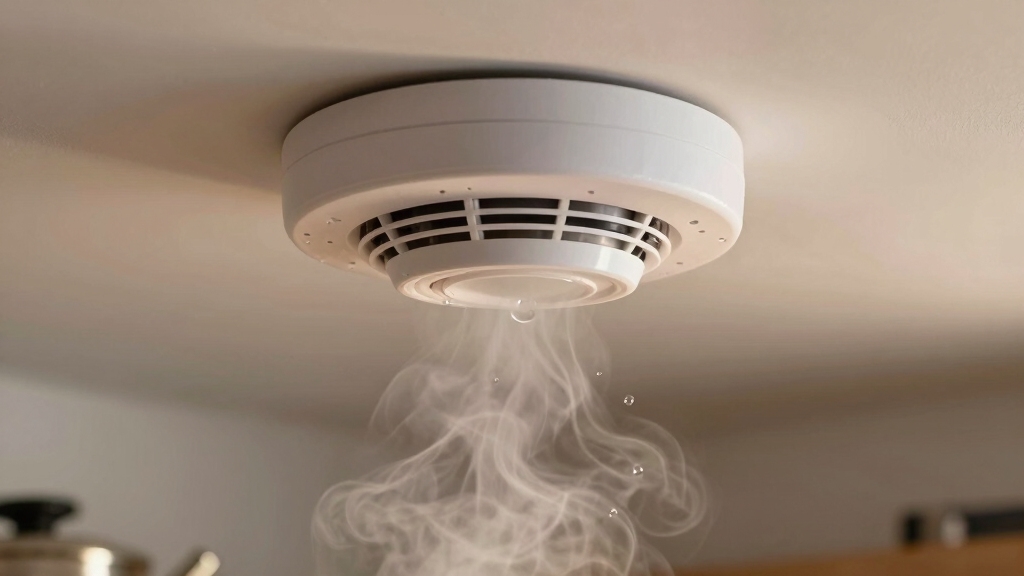
When steam enters a smoke detector’s sensing chamber, it interferes with the device’s detection mechanisms, causing false alarms.
Steam entering a smoke detector’s chamber disrupts its sensors, triggering false alarms.
In photoelectric detectors, steam particles scatter the light beam inside the chamber, mimicking smoke and prompting the sensor to activate.
Ionization detectors, on the other hand, rely on a small electrical current passing through ionized air.
Steam disrupts this current by changing the air’s ionization properties, which the detector interprets as smoke presence.
Since steam particles are similar in size and density to smoke, the sensors can’t distinguish between them.
Additionally, high humidity leads to condensation on sensor components, further impairing function.
This interference tricks both types of detectors into signaling alarms, even though no fire or smoke exists, resulting in frequent false alerts in environments with steam.
Photoelectric detectors are designed with optical chamber design features to reduce false alarms, but steam can still cause scattering similar to smoke particles.
Why Steam Sets Off Some Smoke Detectors More Than Others?
Although steam can trigger both photoelectric and ionization smoke detectors, you’ll notice that some models are more prone to false alarms due to differences in their sensing technology and design sensitivity.
Photoelectric detectors rely on light scattering, so dense steam particles often mimic smoke, causing frequent triggers.
In contrast, ionization detectors detect changes in electrical currents disrupted by steam ions, with older models being especially sensitive.
Modern photoelectric models incorporate improved algorithms to better differentiate steam from smoke, reducing false alarms.
Additionally, sensor placement and proximity to steam sources affect activation likelihood.
Factors like humidity and condensation on sensor chambers also influence sensitivity.
Understanding these technical distinctions helps you select detectors less susceptible to steam interference, enhancing reliability in environments prone to moisture.
Regular cleaning and avoiding installation near bathrooms or kitchens can also reduce false alarms caused by steam and humidity buildup in the sensor chamber, as recommended in placement guidelines.
Common Household Steam Sources That Trigger Smoke Alarms
Boiling water, taking hot showers, and cooking without lids release steam that can easily set off smoke alarms in your home.
When you boil water on the stove or keep pot lids off, steam density increases near ceiling-mounted detectors, especially photoelectric types.
Hot showers in poorly ventilated bathrooms cause steam buildup, raising humidity and causing condensation on sensor chambers, disrupting their function.
Cooking activities producing continuous steam near detectors also elevate false alarm risk.
Confined spaces like bathrooms or small kitchens further concentrate steam, increasing particle density that mimics smoke and scatters light beams inside photoelectric sensors.
Proximity plays a critical role; detectors located within 2 to 3 feet of steam sources are most vulnerable.
Understanding these common household steam sources helps you recognize when alarms might falsely trigger due to steam rather than smoke.
Unlike sprinklers, which activate only from heat, smoke detectors respond to airborne particles such as steam, making photoelectric smoke detectors particularly sensitive to steam interference.
How to Prevent Steam From Causing False Smoke Alarms?
To minimize false alarms triggered by steam, you should prioritize proper detector placement and enhance ventilation in areas prone to steam buildup.
Make sure exhaust fans or open windows efficiently reduce humidity, preventing steam from lingering near detectors.
Upgrading to modern photoelectric smoke detectors helps because they better distinguish between steam and smoke particles.
Regularly clean detectors to remove residue that can amplify steam’s effects on sensors.
When cooking or showering, reduce steam concentration by covering pots or using ventilation promptly.
Avoid placing detectors within 10 feet of steam sources to limit exposure to dense steam clouds that mimic smoke.
These combined measures reduce the likelihood that scattered light or disrupted ion currents from steam will falsely activate alarms, ensuring reliable smoke detection without frequent nuisance triggers.
Additionally, following proper placement guidelines enhances detector reliability and minimizes false alarms caused by environmental factors such as steam.
Detector Placement and Maintenance Tips to Avoid Steam Alarms
When installing smoke detectors, position them at least 10 feet away from steam sources like showers and cooking areas to reduce false alarms.
Steam particles scatter light and disrupt ionization processes, causing photoelectric and ionization detectors to trigger erroneously if placed too close.
To further minimize false alarms, ensure proper ventilation with exhaust fans or open windows near steam-generating areas.
Regular maintenance is essential: clean detectors biannually using a vacuum or compressed air to remove dust and condensation residues that may sensitize sensors to humidity.
Upgrading older ionization models to modern photoelectric detectors can also help, as they better distinguish steam from smoke.
Additionally, maintaining the battery backup in hardwired detectors ensures continuous protection and proper functioning even during power outages, which supports overall detector reliability.
Frequently Asked Questions
Can Steam Damage My Smoke Detector Over Time?
Steam won’t directly damage your smoke detector, but consistent exposure can cause sensor contamination or corrosion over time.
Moisture from steam leads to residue buildup inside the detector’s chamber, reducing sensitivity and causing false alarms or sensor malfunction.
To protect your detector, maintain proper ventilation, clean it regularly, and avoid placing it too close to steam sources like showers or kitchens.
Proper care guarantees reliable operation and extends its lifespan.
Are Smoke Detectors Waterproof Against Steam Exposure?
Smoke detectors aren’t waterproof against steam exposure. While they tolerate some humidity, prolonged or dense steam can cause condensation inside, disrupting sensors and potentially causing false alarms or damage.
You should avoid placing detectors too close to steam sources like showers or boiling pots. To protect your device, maintain proper ventilation, keep detectors dry, and clean them regularly.
Consider models designed with better moisture resistance for steam-prone areas.
How Quickly Do Smoke Alarms Reset After a Steam-Triggered False Alarm?
When steam tricks your smoke alarm, it usually resets as quickly as a candle snuffs out. This happens within about 1 to 3 minutes after the steam disperses.
The detector’s sensors clear the false particles, restoring normal function. However, if steam lingers or the detector’s chamber remains humid, the reset might take longer.
To speed up recovery, improve ventilation and avoid triggering dense steam near the alarm.
Can Using a Humidifier Cause Smoke Detector False Alarms?
Yes, using a humidifier can cause false alarms in smoke detectors, especially photoelectric and ionization types.
The increased moisture disperses tiny water particles that mimic smoke or disrupt sensor functions. If the humidifier is near a detector or ventilation is poor, false triggers become more likely.
To prevent this, maintain good airflow and position detectors away from humidifiers.
Regularly clean sensors to reduce condensation and particle buildup.
Do Smoke Detectors Distinguish Between Steam and Actual Smoke Particles?
Smoke detectors can’t reliably distinguish between steam and actual smoke particles. Both photoelectric and ionization sensors detect airborne particles, but steam mimics smoke by scattering light or disrupting ion flow.
While modern photoelectric detectors better differentiate, dense steam still triggers alarms. You should rely on detector placement, ventilation, and maintenance to minimize false alarms rather than expecting detectors to tell steam from smoke precisely.
Keep Your Smoke Detector Smart, Not Startled
So yes, steam can absolutely set off your smoke detector. Who wouldn’t want your shower to double as a fire drill?
Photoelectric alarms especially get confused by those tiny water particles, mistaking them for smoke. To avoid turning your bathroom into an alarm symphony, place detectors wisely and keep them clean.
Remember, preventing false alarms isn’t just about peace. It’s about making sure your detector screams only when it really matters.