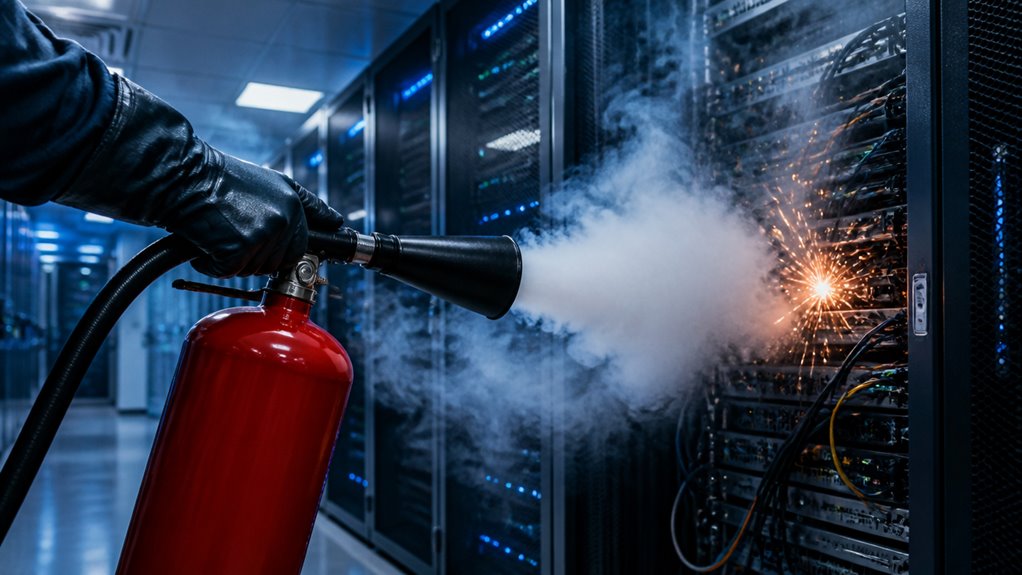

You should use a Class C extinguisher for electrical fires because it contains non-conductive agents like carbon dioxide or dry chemical powders. These agents safely suppress energized fires without causing shock.
Carbon dioxide displaces oxygen and leaves no residue, protecting electronics, while dry chemicals interrupt combustion quickly.
Never use water or foam, as they conduct electricity and create hazards. Always verify the Class C label before confirming safety.
Understanding extinguisher types and proper use can help you respond effectively.
Key Takeaways
- Class C extinguishers with non-conductive agents are designed specifically for energized electrical fires to prevent shock hazards.
- Carbon Dioxide (CO2) extinguishers displace oxygen and cool flames without leaving residue, making them safe for electrical fires.
- Dry chemical extinguishers use non-conductive powders to interrupt combustion, suitable for quick knockdown in electrical fire scenarios.
- Always verify the extinguisher’s label for a Class C rating or BC/ABC designation before use on electrical equipment.
- Avoid water-based or foam extinguishers on electrical fires, as they conduct electricity and can cause shock or spread the fire.
Why Class C Extinguishers Are Essential for Electrical Fires?
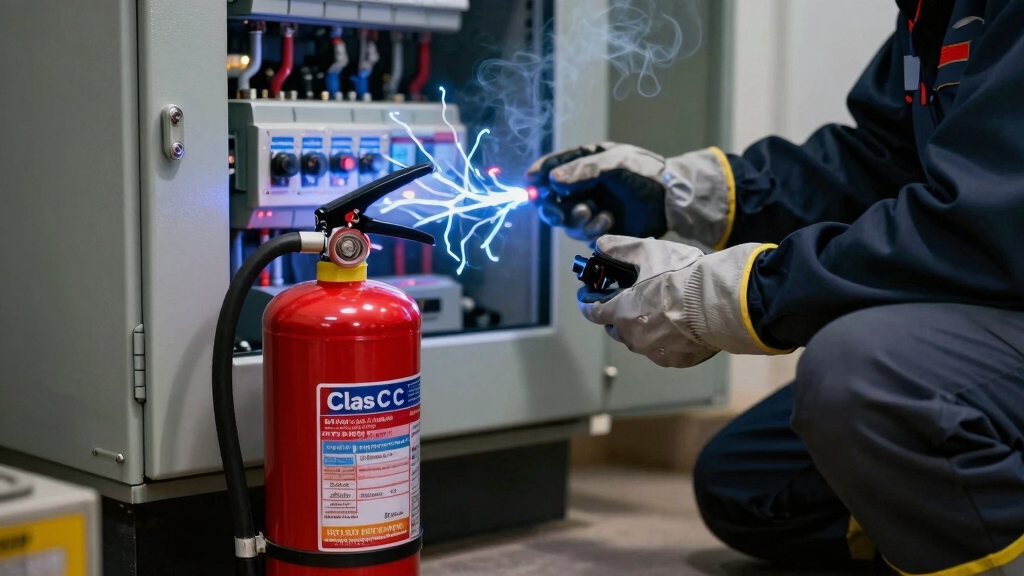
Because electrical fires involve energized equipment, you need a fire extinguisher that won’t conduct electricity and put you at risk of shock.
Electrical fires require extinguishers that do not conduct electricity, preventing shock hazards during use.
Class C extinguishers are specifically designed for this purpose, using non-conductive agents that safely suppress flames without transferring electricity.
Before use, always check that the extinguisher is labeled for Class C. This guarantees the agent won’t create an electrical hazard.
These extinguishers employ agents like carbon dioxide or dry chemical powders, effectively interrupting combustion on live electrical devices.
Using water-based or non-Class C extinguishers can worsen the situation by causing electric shock or spreading the fire.
You must rely on Class C-rated extinguishers to maintain safety and effectively control electrical fires until power is safely disconnected.
The monoammonium phosphate-based powder in ABC extinguishers provides a non-conductive barrier that disrupts the fire without conducting electricity.
How Carbon Dioxide Extinguishers Work on Electrical Fires?
When you grab a carbon dioxide extinguisher for an electrical fire, it actually works by pushing oxygen away. This helps to quickly put out the flames without any risk of conducting electricity. Pretty neat, right?
That non-conductive quality means you can tackle the fire without worrying about getting shocked, which is a huge plus!
To get the best results, make sure to aim the nozzle right at the base of the fire. And don’t forget to keep a safe distance while you’re discharging it. Following these tips will really help you control the situation effectively!
The oxygen displacement caused by the expanding carbon dioxide effectively interrupts the fire triangle and suffocates the flames.
CO2 Fire Suppression Mechanism
Although electrical fires demand careful handling, carbon dioxide (CO2) extinguishers offer an effective suppression mechanism by swiftly displacing oxygen around the fire. This process starves the flames without conducting electricity.
When you deploy a CO2 extinguisher, it releases a dense, cold gas that blankets the fire, reducing oxygen levels essential for combustion. This non-conductive agent guarantees you avoid electrical shock risks while targeting energized equipment.
Additionally, the rapid cooling effect helps prevent re-ignition by lowering the flame’s temperature. You should aim the nozzle at the fire’s base, maintaining a safe distance to maximize coverage.
For electrical fires up to 1000 V, maintaining a minimum 1 m distance during use is critical to ensure safety and effective suppression.
Electrical Safety Advantages
Understanding how carbon dioxide extinguishers work reveals why they offer significant electrical safety advantages during fires involving energized equipment.
You benefit from CO2’s non-conductive nature, which eliminates the risk of electrical shock while suppressing flames.
Unlike water-based agents, CO2 displaces oxygen without leaving residue or damaging sensitive electronics, preserving your equipment’s integrity.
Its rapid cooling effect helps prevent fire re-ignition, giving you a safer environment to manage the hazard.
When you use a CO2 extinguisher, you reduce the chance of current flowing through the extinguishing agent, maintaining your safety.
This makes CO2 extinguishers the preferred choice for Class C fires, where energized electrical equipment requires effective suppression without compromising electrical safety.
Additionally, CO2 extinguishers operate by releasing a pressurized cloud that blankets the fire, effectively cutting off oxygen and interrupting combustion fire chemistry.
Proper Usage Techniques
Mastering the proper usage techniques of carbon dioxide extinguishers guarantees you effectively suppress electrical fires while maintaining safety.
First, make certain the extinguisher is Class C rated for electrical fires to avoid shock risks.
Stand at a safe distance, typically 3 to 8 feet, and pull the pin to release the handle.
Aim the discharge horn at the fire’s base, where the flames meet the fuel source.
Squeeze the handle firmly to release CO2, which displaces oxygen and cools the fire without conducting electricity.
Sweep the horn in a controlled side-to-side motion until the fire is extinguished.
Never touch the discharge horn as it becomes extremely cold.
Finally, maintain readiness by inspecting the extinguisher regularly and confirming it remains fully charged and unobstructed.
For home use, it is recommended to have at least one properly sized unit, such as a 5 lb ABC extinguisher, to ensure adequate fire protection coverage.
When to Use Dry Chemical Extinguishers on Electrical Fires?
When you encounter an electrical fire involving energized equipment, dry chemical extinguishers rated for Class C are an effective option. Their non-conductive powder interrupts the combustion process without risking electrical shock.
Dry chemical extinguishers rated Class C safely interrupt electrical fires without risking shock.
Use these extinguishers when the fire is confined and you can approach safely, guaranteeing you aim at the fire’s base. Confirm the extinguisher’s Class C rating before deployment to avoid hazards.
Dry chemical agents rapidly suppress flames by coating the fuel and breaking the chemical reaction. They’re especially useful in environments where quick knockdown is critical, like electrical panels or machinery rooms.
However, always assess the situation first. If the electrical source can be safely de-energized, do so. Using a properly rated dry chemical extinguisher guarantees effective suppression without compromising your safety.
Proper use stops fires effectively when applied early and minimizes damage by quickly halting fire progression with correct technique.
Why Water and Foam Extinguishers Are Unsafe on Electrical Fires?
While dry chemical extinguishers offer a safe and effective way to tackle electrical fires, water and foam extinguishers pose significant risks in these situations.
You should avoid them because they conduct electricity, increasing the chance of shock and injury. Using water or foam on energized equipment can also spread the fire by causing short circuits.
Additionally, these agents may damage sensitive electronics or worsen the fire’s intensity. Specifically, you need to remember:
- Water and foam conduct electricity, creating shock hazards.
- They can cause electrical short circuits, spreading the fire.
- Foam may leave residues harmful to electronics.
- Their use violates safety protocols for Class C fires.
Always choose extinguishers labeled for electrical fires to guarantee your safety and effective fire suppression. It is crucial to select the correct extinguisher to avoid worsening the situation or causing harm.
Types of Class C Extinguishers and Their Ratings
Because electrical fires require specific extinguishing agents, understanding the types and ratings of Class C extinguishers is essential for effective response.
You’ll mainly encounter three types: carbon dioxide (CO2), dry chemical, and clean-agent extinguishers. Each offers unique benefits suited to different environments and fire severity.
Their Class C rating confirms non-conductivity, imperative for safety around energized equipment.
| Extinguisher Type | Class C Rating Impact |
|---|---|
| CO2 | Non-conductive, displaces oxygen |
| Dry Chemical | Interrupts combustion, multi-class use |
| Clean Agent | Safe for sensitive electronics |
| Rating Symbol | Circular “C” label indicates approval |
| Application | Use on energized electrical fires only |
Choose wisely to avoid shock risk and fire spread. For maintenance and safety, always have Class C extinguishers serviced by licensed fire protection services to ensure compliance with NFPA standards.
Identifying the Right Extinguisher for Electrical Fires by Label and Rating
When you’re dealing with electrical fires, it’s super important to check the extinguisher’s label. You want to make sure it’s rated for Class C fires, which means it’s safe for use on energized electrical equipment. Look for clear markings like the circular Class C symbol or designations like BC or ABC. Those indicate that it’s compatible.
And you know, always take a moment to verify the extinguisher’s rating before you use it. This way, you can be certain it won’t conduct electricity or pose a shock hazard. Better safe than sorry, right?
Additionally, many electrical fire extinguishers use CO2 as the suppressant because it effectively displaces oxygen without leaving conductive residue.
Class C Label Importance
When selecting a fire extinguisher for electrical fires, recognizing the Class C label is crucial to guarantee safety and effectiveness.
The Class C rating confirms the extinguisher uses a non-conductive agent, preventing electrical shock during use on energized equipment.
Using an extinguisher without this label risks electrocution and fire spread. Always verify the label before deployment to ensure compatibility with electrical hazards.
Here’s what you need to know about the Class C label:
- It identifies extinguishers safe for energized electrical fires.
- It guarantees the agent won’t conduct electricity.
- It distinguishes these extinguishers from those for ordinary combustibles.
- It ensures compliance with safety regulations and fire codes.
Always choose a Class C-rated extinguisher for electrical fire risks to protect yourself and property effectively. Proper maintenance and regular inspection are essential to maintain spray duration consistency and ensure reliable performance during emergencies.
Common Electrical Fire Ratings
Although electrical fires require specialized extinguishing agents, recognizing the correct fire rating on extinguisher labels guarantees you select a unit designed to handle energized equipment safely.
Look for Class C ratings, which indicate the extinguisher contains non-conductive agents safe for live electrical fires.
Common labels include “C” for pure electrical hazards and “BC” for carbon dioxide units effective on electrical and chemical fires.
ABC dry chemical extinguishers also cover Class C fires, but make certain the label confirms this compatibility.
Avoid extinguishers labeled only for Class A or water-based types, as they pose shock risks.
Understanding these ratings helps you quickly identify the right extinguisher, assuring effective and safe suppression of electrical fires without risking electrical shock or fire spread.
Verifying Extinguisher Compatibility
Verify extinguisher compatibility by carefully examining labels and ratings before tackling an electrical fire. You must confirm the extinguisher is rated for Class C fires, indicating it’s safe for energized electrical equipment.
Look for clear markings such as a “C” label or “BC” for CO2 extinguishers. Avoid water-based or Class A extinguishers, as they conduct electricity and increase shock risk.
When verifying compatibility, check:
- The extinguisher’s label clearly states Class C or BC rating.
- The agent type is non-conductive (CO2, dry chemical, or clean agent).
- The extinguisher condition is current with no damage or missing parts.
- Instructions are legible and specify electrical fire use.
This assures you use the right extinguisher safely and effectively during an electrical fire.
How to Safely Use an Extinguisher on Electrical Fires?
Before you approach an electrical fire, make sure you have a Class C-rated extinguisher with a non-conductive agent like CO2 or dry chemical powder. Always maintain a safe distance and aim at the fire’s base.
Use the PASS method: Pull the pin, Aim the nozzle, Squeeze the handle, and Sweep side to side. If possible, cut power before extinguishing. Verify the extinguisher’s label for Class C compatibility to avoid shock hazards.
| Step | Action |
|---|---|
| 1 | Pull the pin |
| 2 | Aim at the fire base |
| 3 | Squeeze handle to discharge |
| 4 | Sweep nozzle side to side |
| 5 | Maintain safe distance |
Following these steps guarantees effective, safe fire suppression on energized equipment.
Frequently Asked Questions
Can Class C Extinguishers Damage Sensitive Electronic Equipment?
Class C extinguishers can potentially damage sensitive electronic equipment, especially dry chemical types, which leave a residue that might harm delicate components.
If you’re protecting sensitive electronics, clean-agent extinguishers are a better choice because they suppress fires without leaving harmful residue.
You should always assess the environment and select an extinguisher that balances fire suppression effectiveness with minimizing damage to your valuable equipment.
How Often Should Class C Extinguishers Be Inspected and Serviced?
You should inspect Class C extinguishers monthly to ensure they’re fully charged, accessible, and undamaged.
A thorough professional service is required annually, where technicians check pressure, seals, and mechanical parts.
Don’t skip these inspections; regular maintenance guarantees reliability during electrical fires and prevents malfunctions.
Keep records of all inspections and servicing to comply with safety regulations and ensure your extinguisher remains ready for immediate use when needed.
Are Class C Extinguishers Effective on Large Electrical Fires?
Class C extinguishers are your first line of defense, but they’re not a silver bullet for large electrical fires.
They work well on small, contained fires by cutting off electricity and smothering flames with non-conductive agents.
However, when flames grow beyond control, you’ll need professional firefighters and specialized equipment.
Always prioritize cutting power safely and evacuate if the fire escalates, since these extinguishers have limitations on fire size and duration.
Can You Recharge a Used Class C Extinguisher at Home?
You shouldn’t attempt to recharge a used Class C extinguisher at home. These units require professional servicing to guarantee proper pressure, agent levels, and safety.
Improper refilling risks malfunction or injury during use. Always take your extinguisher to a certified technician who follows manufacturer guidelines and local regulations.
Regular inspections and maintenance keep your extinguisher reliable for electrical fire emergencies. Don’t skip professional recharging and testing.
What Should You Do if No Class C Extinguisher Is Available During an Electrical Fire?
You might think water or any extinguisher will do, but don’t risk it. If no Class C extinguisher is available, immediately cut power if it’s safe.
Without power, the fire may change class and you can use a suitable extinguisher like Class A or B. If you can’t safely disconnect power, evacuate and call emergency services.
Using the wrong extinguisher on live electrical fires can cause shock or worsen the blaze.
Protect Your Home with the Right Class C Extinguisher
When an electrical fire sparks up, you don’t want to be fumbling with the wrong extinguisher like it’s a game of guesswork. Using water could turn your problem into a disaster movie.
Always grab a Class C extinguisher, preferably Carbon Dioxide or Dry Chemical, designed to snuff out electrical flames safely and efficiently. Knowing this could literally save your life and your property.
Don’t take chances—be prepared, be smart, and act fast!