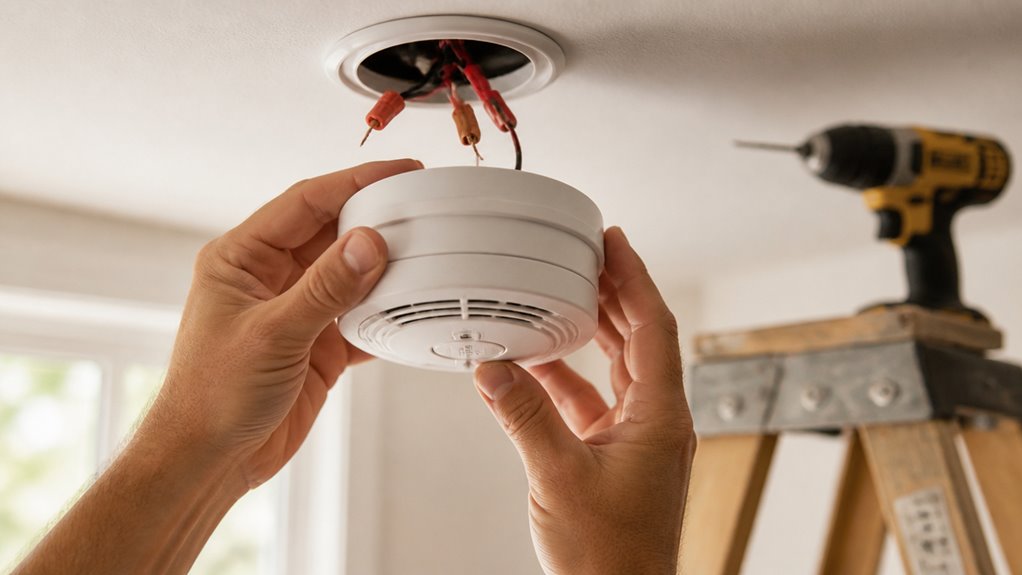

Before wiring smoke detectors, turn off power and verify wires are de-energized. Identify wire colors, typically black (hot), white (neutral), and red (interconnect).
Use 12-2 or 12-3 NM-B cable for single or multiple units, including ground. Strip wires properly, connect matching colors with approved connectors, and secure grounds.
Mount the detectors, restore power, then test for functionality and interconnect operation. Following these steps assures safe, compliant installation. Further guidance will cover detailed procedures and testing methods.
Key Takeaways
- Turn off the circuit breaker and verify wires are de-energized before starting any smoke detector wiring.
- Use 12-3 NM-B cable for interconnected alarms, matching black (hot), white (neutral), and red/yellow (interconnect) wires per manufacturer instructions.
- Connect black to black, white to white, and red to red wires using approved wire connectors, ensuring no exposed copper remains.
- Attach the mounting plate, feed wires through it, secure the detector, then restore power and press the test button to verify operation.
- Confirm all interconnected alarms sound simultaneously and install battery backups to maintain function during power outages.
Turn Off Power and Ensure Electrical Safety
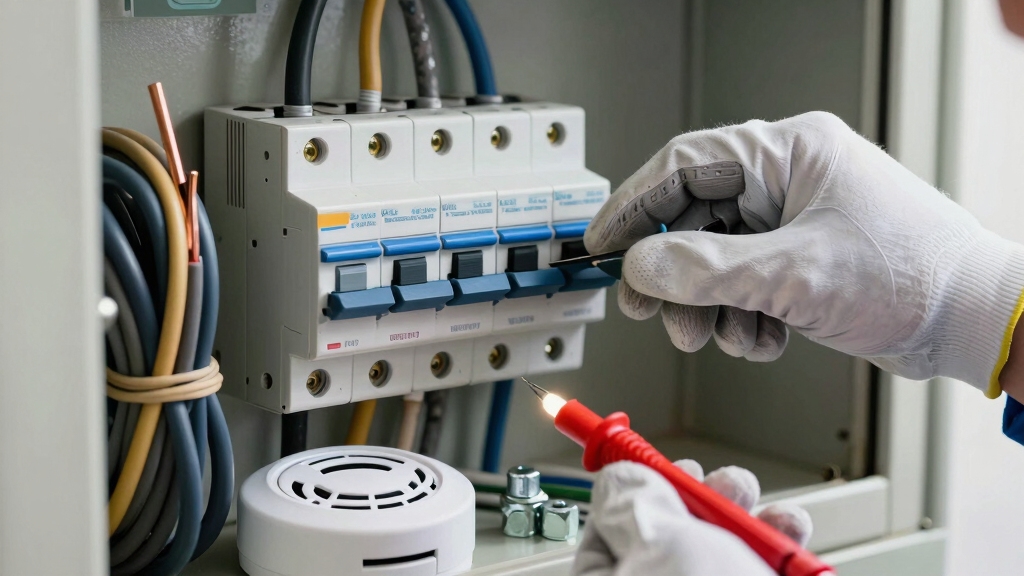
Before you begin any wiring work on your smoke detectors, make sure you turn off the circuit breaker supplying power to the alarm circuit.
Always switch off the circuit breaker powering your smoke detector circuit before starting any wiring work.
Next, verify that the wires are de-energized using a reliable voltage detector before touching any conductors.
Treat all hardwired smoke detectors as line-voltage devices, adhering strictly to electrical safety standards.
Use insulated tools throughout the process and keep any exposed conductors covered until you complete all final connections.
Avoid restoring power until you finish all wiring, mounting, and inspection steps.
Following this methodical approach minimizes the risk of electrical shock and guarantees a safe working environment, protecting both you and the integrity of the smoke detector system.
Safety is your first and most critical step in any electrical installation.
Always confirm the correct breaker by using a circuit breaker finder or toggling breakers while monitoring the detector before starting work.
Know Your Smoke Detector Wire Colors
Once you’ve confirmed power is off and taken all safety precautions, the next step is to identify the wire colors used in your smoke detector system.
Most hardwired smoke detectors utilize three primary conductors, each serving a distinct function. Understanding these colors guarantees proper connections and system reliability.
Black wire: Carries the line voltage (hot) from the power source.
White wire: Acts as the neutral return path.
Red wire: Functions as the interconnect signal between alarms.
Yellow wire: Occasionally used as an interconnect lead on older models.
Always verify wire colors against the manufacturer’s diagram, since variations exist. Correctly identifying these conductors is critical before proceeding to wiring or installation steps. Proper wiring with black, white, and red wires ensures synchronized alarms across all interconnected detectors.
Choose and Run Cable for Hardwired Smoke Detectors
Select the appropriate cable type to guarantee a safe and code-compliant installation for your hardwired smoke detectors. Use 12-2 NM-B cable with ground from the electrical panel to the initial detector.
For multiple interconnected alarms, run 12-3 NM-B cable, which provides hot, neutral, and interconnect conductors. Confirm conductor colors match the manufacturer’s wiring diagram: black for hot, white for neutral, and red or yellow for interconnect.
Always include the ground wire in your cable runs and connect it to the building’s grounding system. Route cables following local electrical codes and the smoke detector manufacturer’s guidelines, avoiding sharp bends or physical damage.
Secure cables properly to framing members, maintaining clearance from heat sources and other wiring to ensure the longevity and safety of your smoke alarm circuit. Before wiring, verify interconnected alarms functionality by testing one detector to ensure all alarms sound simultaneously.
Connect Wires Safely and Correctly
Although wiring smoke detectors involves multiple steps, making secure and correct electrical connections is vital to guarantee reliable operation and safety.
Before connecting wires, turn off the circuit breaker and verify wires are de-energized. Strip about ½ inch of insulation from each wire, matching black to black (hot), white to white (neutral), and red to red (interconnect).
Always turn off power and match wires by color before connecting smoke detector wiring.
Use approved wire connectors, twisting until wires are held firmly with no exposed copper. Connect ground wires to the grounding system for safety.
Key points to remember:
- Confirm wire color codes against manufacturer instructions.
- Use insulated tools and keep conductors covered until secured.
- Make certain no copper is exposed after twisting wire connectors.
- Maintain consistent interconnect wiring across all detectors.
Following these steps guarantees a safe, reliable smoke detector circuit. Additionally, installing a battery backup ensures the detectors remain operational during power outages, providing continuous protection.
Mount and Test Your Smoke Detectors
Begin by securely attaching the mounting plate or electrical box at your chosen detector location, ensuring it aligns precisely with installation requirements.
Feed the circuit wires through the mounting plate and firmly twist the detector onto the base or bracket. Confirm the detector is mechanically secured before restoring power at the breaker.
Press the test button to verify functionality and check that interconnected alarms sound simultaneously.
Reset the detector per manufacturer instructions and confirm battery backup is installed if applicable.
Always turn off the main breaker controlling the circuit first when working with interconnected hardwired systems to ensure safety during installation.
| Step | Action | Verification |
|---|---|---|
| Mounting | Attach plate, feed wires | Plate aligned, wires accessible |
| Installation | Twist detector onto base | Detector firmly seated |
| Testing | Restore power, press test | Alarms sound, reset completed |
Frequently Asked Questions
Can I Install Smoke Detectors on a Vaulted Ceiling?
Yes, you can install smoke detectors on a vaulted ceiling, but you need to position them properly.
Mount the detector on or near the ceiling’s highest point since smoke rises. Avoid installing detectors in ceiling peaks that are too steep or where air circulation is poor, as this can delay smoke detection.
Follow manufacturer guidelines and local codes for placement, ensuring the alarm remains accessible for testing and maintenance.
How Often Should I Replace Smoke Detectors?
You should replace smoke detectors every 10 years from the manufacture date. Over time, sensors degrade and become less reliable.
Check the unit’s back or inside the battery compartment for a date stamp. If your detector uses replaceable batteries, change them at least once a year.
For hardwired units with battery backup, make sure you replace batteries regularly. Test alarms monthly to maintain peak performance and safety.
Are Smoke Detectors Compatible With Smart Home Systems?
Oh, sure, because nothing says “peace of mind” like your smoke detector tweeting you at 3 AM.
Yes, many smoke detectors are compatible with smart home systems, but you’ll need models designed for connectivity.
Look for Wi-Fi or Zigbee-enabled alarms, then integrate them via your hub or app.
Remember to follow manufacturer instructions carefully for setup, ensuring reliable alerts and interoperability without compromising safety or compliance.
What Maintenance Is Required for Hardwired Smoke Detectors?
You’ll need to test hardwired smoke detectors monthly by pressing the test button to ensure functionality.
Replace backup batteries annually or as recommended.
Clean detectors regularly to remove dust and debris that may impair sensors, using a vacuum or soft brush.
Inspect wiring connections and mounting security periodically.
If any unit malfunctions, replace it promptly.
Follow manufacturer guidelines for maintenance intervals and procedures to guarantee reliable operation and safety.
Can I Use Battery-Only Smoke Detectors Instead of Hardwired Ones?
Yes, you can use battery-only smoke detectors instead of hardwired ones, especially in locations where wiring is difficult or costly.
However, battery-only units rely solely on battery life and require regular testing and battery replacement to guarantee reliability.
They typically don’t interconnect with other alarms, limiting whole-house alert capability.
For all-inclusive safety, hardwired detectors with battery backup and interconnect features are often recommended in new or renovated homes.
Keep Your Hardwired Smoke Detectors Working Properly
Now that you’ve wired your smoke detectors correctly, you can rest easy knowing you’ve covered all your bases.
Always double-check connections and test each unit thoroughly to make certain they communicate and function as intended.
Remember, safety isn’t something to cut corners on. Taking the time to do it right could be the difference between a close call and a catastrophe.
Stay methodical, stay safe, and keep your home protected.