
You should replace smoke alarms every 10 years or sooner if they chirp regularly, fail tests, or show damage.
Check the manufacture or replace-by date on the unit; if unclear or expired, replace immediately.
Single chirps every 30–60 seconds often signal end-of-life, not just low battery.
Keep installation dates marked to track replacements and test alarms monthly.
Proper upkeep makes certain your safety and the latest technology.
Learn how timing, warning signs, and maintenance keep you protected.
Key Takeaways
- Replace smoke alarms every 10 years or sooner if the replace-by label indicates end of service life.
- Immediate replacement is required if the alarm chirps every 30–60 seconds or fails monthly testing.
- Replace alarms with visible damage, missing labels, or unclear manufacture/replace-by dates promptly.
- Rely on manufacture or replace-by dates rather than just test results for replacement decisions.
- Mark installation dates on new alarms to track future replacement timing accurately.
When and How to Replace Your Smoke Alarms?
Although your smoke alarm may seem to work fine, you should replace it every 10 years or sooner if it shows signs of failure.
Start by checking the manufacture or replace-by date on the alarm’s back or base to confirm its age. If the alarm chirps every 30–60 seconds, fails a test, or has visible damage, replace it immediately.
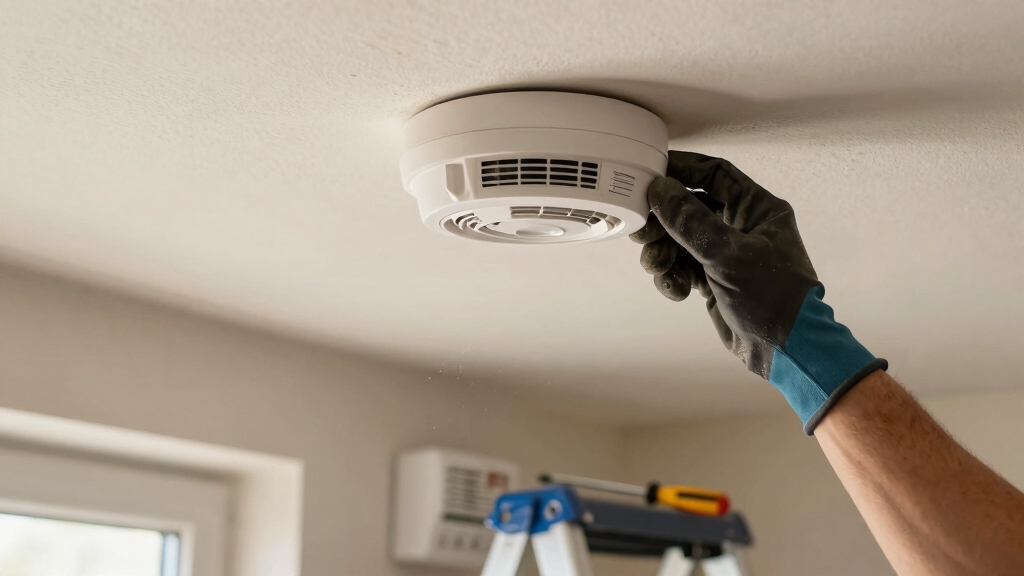
Remove the old unit by disconnecting power and batteries, then install the new alarm according to manufacturer instructions. Mark the installation date on the device to track future replacements.
For best protection, install alarms on every home level, in bedrooms and hallways, positioning ceiling units at least 4 inches from walls.
Regularly test and clean alarms to maintain their functionality until replacement is due.
Keep in mind that First Alert smoke detectors do not include built-in camera functionality, focusing solely on fire safety.
Why Timely Replacement Keeps You Safe?
Regularly replacing your smoke alarms is essential because their sensors wear out over time, reducing their ability to detect smoke effectively.
Even if the test button works, it doesn’t guarantee the sensor’s full functionality. Timely replacement assures your alarms maintain reliable detection, giving you vital early warnings in emergencies.
It also guarantees you benefit from the latest technology upgrades that improve sensitivity and reduce false alarms. Older alarms mightn’t meet current safety standards or perform as expected, putting you at greater risk.
Following the recommended replacement every 10 years ensures your smoke detectors remain dependable and effective.
How to Spot End-of-Life Warning Signs in Smoke Alarms?
Spotting end-of-life smoke alarms is pretty straightforward if you know what to look for. One of the key indicators is the chirp pattern. If you hear a single chirp every 30 to 60 seconds, that’s usually a sign that it’s time to replace the unit.
Also, don’t forget to test your alarm’s functionality. Just hit that test button! If it doesn’t respond, it’s definitely time for a replacement.
And while you’re at it, take a good look at the alarm itself. Check for any physical damage, especially if it’s been exposed to smoke or fire. Damage like that can really compromise its sensor and overall effectiveness. So, keeping an eye on these signs can help ensure your smoke alarms are always in top shape!
Additionally, replacing batteries every 6 to 12 months is crucial to avoid low-battery chirps that indicate insufficient power and potential detector failure.
Recognizing Chirp Patterns
Smoke alarms frequently emit chirps to alert you of important issues. Recognizing these patterns can help you identify when a unit is nearing the end of its life.
A single chirp every 30 to 60 seconds usually signals the alarm is reaching its end-of-life rather than just a low battery. While a low-battery chirp is common, the NFPA advises replacing the entire alarm immediately when this occurs.
The sensor’s effectiveness may be compromised, and ignoring these chirps risks delayed detection in emergencies. If the chirping persists despite battery replacement, it’s a clear sign your smoke alarm needs to be replaced.
Paying close attention to these patterns guarantees your home’s safety and compliance with recommended replacement timelines. Check the manufacture date on the back of the unit to determine if the alarm has reached its end-of-life.
Testing Alarm Functionality
Chirping patterns can alert you to potential issues, but testing alarm functionality confirms whether your smoke detector is still reliable. You should press the test button monthly to make certain the alarm sounds loudly and consistently. If the alarm fails this test, it’s time to replace it immediately.
Remember, a working test button doesn’t always guarantee the sensor’s full effectiveness, so regular testing is essential.
Watch for these signs during testing:
No sound or weak alarm signal indicates malfunction or end-of-life. Frequent chirps every 30–60 seconds often mean the alarm needs replacement, not just a battery change. If the alarm doesn’t respond or behaves erratically during tests, replace it without delay.
Testing keeps your home safe and ensures your alarm is ready when you need it most. Also, be aware that five chirps per minute indicate the alarm has reached its end-of-life and requires full replacement.
Inspecting Physical Damage
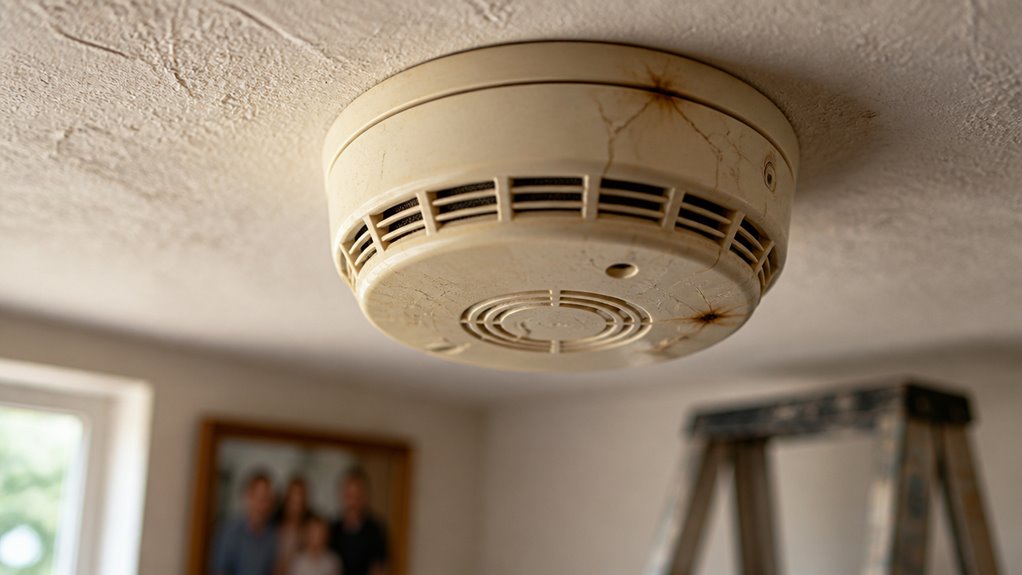
Inspect your smoke alarms regularly for any signs of physical damage that could compromise their function. Look closely for cracks, dents, or discoloration on the casing, which may indicate exposure to heat or smoke.
Heavy smoke or fire damage can impair the sensor, making replacement necessary. Check that the manufacturer’s labels are intact and readable; missing or faded labels often signal an old or compromised unit.
Also, make certain the alarm’s mounting is secure; a loose or damaged base can affect performance. If you notice any physical deterioration, don’t hesitate to replace the alarm immediately.
Additionally, replace the unit if it has reached its 10-year lifespan to ensure reliable smoke detection.
Using Manufacture and Replace-By Dates to Track Alarm Age
You can usually find the manufacture date on the back or base of your smoke alarm. This little detail helps you figure out how old your alarm is.
Now, those replace-by labels are super helpful, too! They clearly tell you when it’s time to swap out your alarm—usually around 10 years after it was made. Keeping an eye on these dates is really important.
It ensures you replace your alarms before their sensors start to lose effectiveness, keeping your home safe! Kidde alarms include an end-of-life chirp after ten years to remind you to replace the unit and maintain continuous safety.
Finding Manufacture Dates
How can you determine when your smoke alarm needs replacing if you’re unsure of its age? The key is to locate the manufacture date or replace-by date, typically found on the back or base of the alarm. This date helps you track the alarm’s age and guarantees you replace it within the recommended 10-year lifespan. If you can’t find a date, treat the alarm as old and replace it promptly.
To find the manufacture date:
Check the back or bottom of the smoke alarm for a printed date or code. Look inside the user manual or packaging for date information. Note any labels that show the “replace by” date as a clear replacement deadline.
This simple step keeps your home safe and your alarms effective. Since sensor degradation reduces detection accuracy over time, regularly checking the alarm’s age is crucial to ensure reliable safety performance.
Understanding Replace-By Labels
Although the manufacture date provides the starting point, the replace-by label clearly indicates when the smoke alarm must be retired to maintain safety.
This label, often found on the back or base, sets a firm deadline, typically 10 years from manufacture, for replacement.
You should rely on this date because sensors degrade over time, reducing alarm effectiveness even if tests still sound.
If the replace-by date has passed or is unclear, it’s safest to replace the unit immediately.
Tracking both manufacture and replace-by dates helps you avoid relying on guesswork for your home’s protection.
Mark the installation date on the alarm when you install it, and check these labels regularly.
This ensures you maintain up-to-date alarms equipped with current safety standards and technology.
Additionally, maintaining a functional battery backup is critical to ensure continuous operation if mains power fails.
How Often to Test, Maintain, and Replace Your Smoke Alarms?
Regularly testing and maintaining your smoke alarms guarantees they function properly when you need them most. You should test each smoke alarm monthly by pressing the test button to verify the alarm sounds loudly. Replace batteries at least once a year in battery-operated alarms and clean your alarms regularly to remove dust or cobwebs that can impair detection.
To keep your alarms reliable, follow these key steps:
Replace the entire smoke alarm every 10 years or sooner if it chirps or fails testing.
Address any chirping immediately; it often signals end-of-life, not just a low battery.
Mark the installation date on the alarm to track its age and schedule timely replacement.
Consistent upkeep guarantees your alarms maintain peak performance and your home stays safe. For hardwired systems, verify interconnected alarms regularly by testing one alarm and listening for all others to sound simultaneously.
Where to Install Smoke Alarms for Best Protection?
To make certain your smoke alarms provide the best protection, you need to install them strategically throughout your home.
Place alarms on every level, including basements and attics, and inside each bedroom and outside sleeping areas in hallways.
Install smoke alarms on every floor, inside bedrooms, and in hallways outside sleeping areas for maximum safety.
Mount ceiling alarms at least 4 inches away from walls; if wall-mounted, position them 4 to 12 inches below the ceiling.
Avoid installing alarms near windows, vents, or drafty areas to prevent false alarms and ensure accurate detection.
Don’t forget to mark the installation date on each unit to track replacement timing.
Proper placement maximizes early fire detection, giving you and your family vital time to respond.
Following these guidelines guarantees your smoke alarms work effectively until it’s time for replacement.
When to Replace Carbon Monoxide and Combination Alarms?
You should replace carbon monoxide and combination alarms according to the manufacturer’s recommended timeframe, which typically ranges between 7 and 10 years.
Checking the label on the back or base of your alarm is essential to confirm the exact replacement date.
Don’t wait for alarms to fail tests or chirp repeatedly. That often signals end-of-life.
Keep these tips in mind for timely replacement:
Replace alarms immediately if they emit a single chirp every 30–60 seconds, indicating sensor failure.
Test alarms monthly. Failure to sound loudly means it’s time to replace.
Swap out alarms sooner if damaged by smoke or fire, or if manufacturer labels are missing or unreadable.
Replacing alarms on schedule guarantees your home benefits from reliable, up-to-date protection.
Frequently Asked Questions
Can I Relocate My Smoke Alarm After Installation?
Yes, you can relocate your smoke alarm after installation, but you need to follow safety guidelines.
Make sure the new location is on every level, inside bedrooms, and in hallways, avoiding windows, vents, or drafty spots.
Mount ceiling alarms at least 4 inches from walls and wall alarms 4 to 12 inches from the ceiling.
Always test the alarm after relocating to confirm it functions properly and meets local fire code requirements.
Are There Specific Smoke Alarms for People With Hearing Impairments?
Imagine relying on a beeping alarm you can’t hear. Frustrating, right?
Yes, there are specific smoke alarms designed for people with hearing impairments. You can find models with flashing strobe lights or bed shakers that alert through vibrations.
These specialized alarms help guarantee you get timely warnings. Don’t settle for standard alarms if you can’t hear them.
Choose ones tailored to your needs for reliable safety.
How Do Environmental Factors Affect Smoke Alarm Sensitivity?
Environmental factors like dust, humidity, and heavy smoke can reduce your smoke alarm’s sensitivity, causing false alarms or sensor damage.
Keep alarms clean and away from vents or drafty areas to maintain accuracy.
Exposure to heavy smoke or fire can compromise sensors, forcing you to replace the unit.
Regular cleaning and proper placement guarantee your alarm detects smoke reliably without unnecessary chirps or failures.
Can Smoke Alarms Connect to Smart Home Systems?
Like a conductor syncing an orchestra, you can connect many smoke alarms to smart home systems for seamless alerts.
Modern alarms often feature Wi-Fi or Bluetooth, letting you receive notifications on your phone and integrate with devices like Alexa or Google Home.
This connectivity enhances safety by providing real-time warnings, even when you’re away.
Just make sure you choose alarms specifically designed for smart home compatibility and follow the manufacturer’s setup instructions precisely.
What Should I Do With Old Smoke Alarms After Replacement?
After replacing your smoke alarms, don’t just toss the old ones in the trash. Many contain batteries or components that require special disposal.
Check local regulations for hazardous waste disposal or recycling programs. Some retailers or fire departments offer collection services.
Removing batteries before disposal is vital to avoid hazards. Properly disposing of old alarms guarantees safety and environmental responsibility.
Handle them carefully and follow your community’s guidelines.
Stay Protected With Timely Smoke Alarm Checks
You’ll want to keep your smoke alarms in tip-top shape to make sure they’re always ready to protect you.
Don’t wait for a silent farewell; replace alarms once they show their age or warning signs.
Regular testing and timely swaps aren’t just chores; they’re your best defense against unseen dangers.
By staying ahead of wear and tear, you’re not just maintaining devices; you’re safeguarding your home and loved ones with quiet confidence.