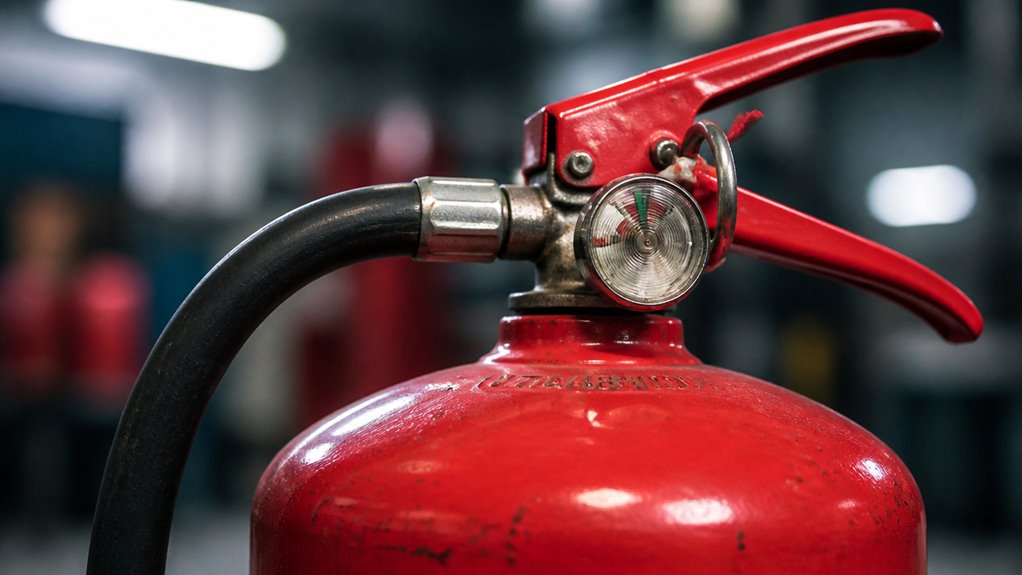

You’ll typically find the expiration date on your fire extinguisher’s UL nameplate or stamped on the metal cylinder, often near the top neck or bottom rim.
Sometimes the date’s hidden under the plastic neck ring or boot, so check closely and gently remove paint if needed.
Most dates appear as month and year or just the year, which helps calculate lifespan.
If the date is missing or unclear, it’s safest to replace the unit promptly.
Understanding these details guarantees you maintain reliable fire protection.
Key Takeaways
- The expiration date is often found on the UL nameplate or label on the extinguisher.
- Look for stamped manufacture or expiration dates near the cylinder’s top neck or bottom rim.
- Date stamps may be hidden under the plastic neck ring or plastic boot, sometimes requiring paint removal.
- Printed dates usually appear in month-year format on labels, indicating manufacture or expiration dates.
- If no expiration date is visible, use the manufacture date plus 10–12 years as the expiry guideline.
Where to Find Expiration Dates on Fire Extinguishers?
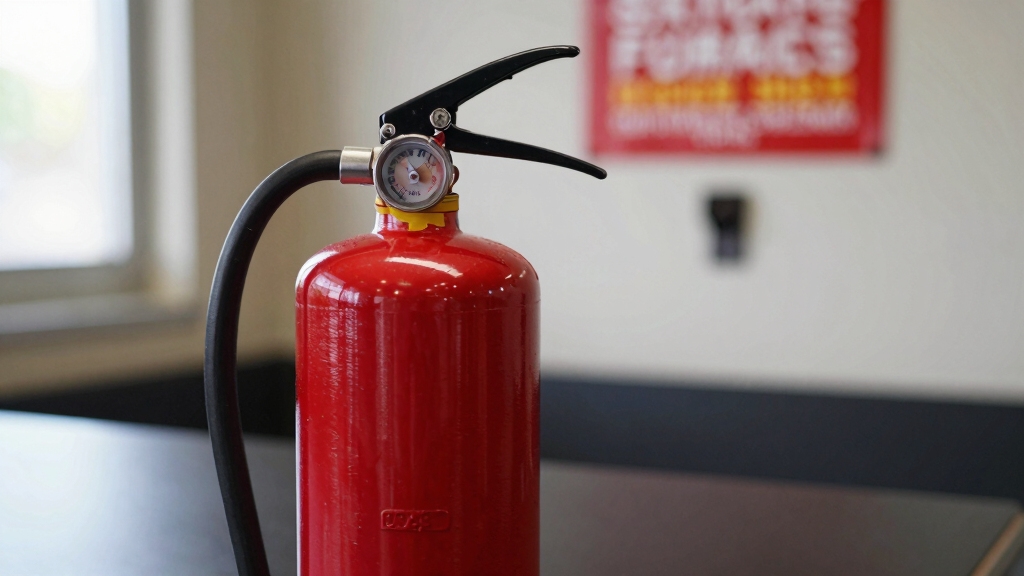
Finding the expiration date on your fire extinguisher starts with closely examining the UL nameplate or label on the canister, where manufacturers often print the manufacture or expiration date.
Focus your inspection on clearly visible markings first, as these provide the most straightforward information. Avoid confusing this with date stamps on the metal body, which you’ll explore separately.
Look for printed dates in month-year format like “05 2020” or single-year stamps indicating manufacture years. If both manufacture and expiration dates appear, prioritize the expiration date for lifespan calculations.
Remember, the label is usually your primary source. Pay attention to any signs of wear or paint covering the label, which might obscure these critical details.
Accurate identification here guarantees you comply with safety standards and replacement schedules. For best safety practices, always perform regular inspections to detect any signs of damage or pressure loss early.
How to Spot Hidden Date Stamps on Cylinder Bodies?
To uncover hidden date stamps on your fire extinguisher’s cylinder body, start by carefully inspecting areas often overlooked, such as near the top neck, the bottom rim, or base of the canister.
Begin by checking overlooked spots like the top neck and base for hidden date stamps on your fire extinguisher.
Check under the plastic ring around the neck and beneath the plastic boot, where manufacturers commonly imprint production years. If paint obscures the metal, gently remove it using emery cloth to reveal the stamped date.
Look closely for small, embossed numbers directly on the metal surface, as these marks can be subtle but vital for determining manufacture or expiration dates.
Thoroughly examining these hidden spots guarantees you don’t miss essential information needed for safe and timely extinguisher replacement or maintenance. For accurate safety compliance, always verify the date with NFPA standards to determine when internal examination and recharge are required.
How to Read Different Fire Extinguisher Date Formats?
When you examine a fire extinguisher, you’ll notice date markings appear in various formats that require careful interpretation.
You must identify whether the date shows a full month and year, a single-year stamp, or a coded indicator to determine the extinguisher’s age accurately.
- Month and Year Format: Look for dates like “05 2020,” indicating May 2020. This direct format is the easiest to read and sets a clear timeline.
- Single-Year Stamp: A single year like “2018” marks the manufacture date. Count forward 12 years to estimate expiration.
- Color-Coded Indicators: Some models use colored plugs in the nozzle holder to denote the manufacture year. Refer to manufacturer guides to decode these.
Understanding these formats helps you track the extinguisher’s service life precisely and maintain safety compliance. Regular hydrostatic testing is essential to ensure the extinguisher’s structural integrity over its lifespan.
Why Manufacture Dates Determine Expiration?
Interpreting the date formats on your fire extinguisher is only part of maintaining its safety and reliability.
The manufacture date serves as the critical baseline for determining your extinguisher’s expiration because it marks when the materials and components began aging.
You can’t rely on purchase or inspection dates since they don’t reflect the actual chemical stability or pressure integrity.
Manufacturers set service lifespans, typically 10 to 12 years for disposable models, starting from this date.
This aligns with NFPA 10 standards.
This timeframe accounts for chemical degradation, pressure loss, and structural wear.
By tracking the manufacture date accurately, you ensure timely replacement before the extinguisher becomes ineffective.
This helps avoid risks associated with expired equipment during emergencies.
Always prioritize the manufacture date over other markings unless a specific expiration date is provided.
Regular inspection and maintenance are essential to verify the extinguisher remains in safe, operable condition throughout its lifespan.
Expiration Rules for Disposable Fire Extinguishers
Although disposable fire extinguishers may seem low-maintenance, you must replace them within 10 to 12 years from the manufacture date to guarantee reliability. These units lack recharge options, so their service life depends strictly on age and condition.
Disposable fire extinguishers require replacement every 10 to 12 years to ensure reliable performance.
To assure safety and compliance, you should:
- Locate the manufacture date stamped on the cylinder body or label to start your lifespan count.
- Adhere to NFPA 10 standards, replacing disposable extinguishers at 12 years regardless of pressure or appearance.
- Inspect monthly for damage, pressure gauge status, and corrosion, discarding any unit showing defects before expiration.
Following these rules assures your disposable extinguisher will function effectively when needed. This maintains readiness without risking failure due to age-related degradation. Regular checks for pressure gauge status are essential to identify potential malfunctions early.
Tracking Expiration for Rechargeable Fire Extinguishers
It’s really important to keep an eye on the lifespan of your rechargeable fire extinguishers. Most of them need hydrostatic testing every six years, and you’ll want to think about replacing them between 12 and 15 years.
Make sure to check the manufacturer’s guidelines and follow NFPA standards. That way, you can ensure that you’re keeping up with inspections and testing.
If you let those schedules slide, you could be putting the extinguisher’s reliability at risk, and that’s definitely something you don’t want when it counts!
Regular inspection of the pressure gauge and physical condition is essential to determine if your extinguisher remains effective and safe.
Rechargeable Unit Lifespan
When tracking the lifespan of rechargeable fire extinguishers, you must monitor both regular service intervals and overall age to guarantee safety. Rechargeable units require consistent attention to maintain effectiveness and compliance with NFPA standards.
- Service rechargeable extinguishers every 6 years to assure proper function and identify wear or damage early.
- Replace units after 12 to 15 years, regardless of appearance or pressure gauge status, as internal components degrade over time.
- Rely on the manufacture date stamped on the cylinder or label to calculate lifespan, not the purchase date, for accurate lifespan tracking.
- Always schedule professional servicing annually and after every discharge to ensure the extinguisher is fully inspected, recharged, and tested for reliability.
Hydrostatic Testing Schedule
Several key intervals dictate the hydrostatic testing schedule for rechargeable fire extinguishers, ensuring their structural integrity and safety.
You must perform the first hydrostatic test at the six-year mark after manufacture, verifying the cylinder’s ability to withstand pressure.
Then, every 12 years, conduct a more thorough hydrostatic test to detect corrosion, leaks, or metal fatigue that could compromise performance.
Keep detailed records of each test date and results to track compliance and anticipate future inspections.
If the extinguisher fails any test, remove it from service immediately.
Adhering strictly to these testing intervals guarantees reliable operation, prevents hazardous failure, and aligns with NFPA 10 standards.
Regular inspections also include verifying that the extinguisher is mounted using approved brackets and remains accessible according to safety codes.
Replacement Timeframes
Hydrostatic testing confirms the ongoing safety and integrity of rechargeable fire extinguishers, but knowing when to replace these units guarantees continued reliability beyond inspections.
You should track replacement timeframes carefully to maintain safety compliance and functionality.
- Rechargeable extinguishers require hydrostatic testing every 6 years and a full test around year 12, per NFPA 10 standards.
- Replace units after 12 to 15 years regardless of condition, as materials degrade and internal components weaken over time.
- Always verify the manufacture date stamped on the cylinder. If uncertain, prioritize replacement to avoid risks associated with aging extinguishers.
- Additionally, adhere to manufacturer and NFPA testing intervals to ensure extinguisher reliability and compliance with safety standards.
How to Check Maintenance Tags and Pressure Gauges?
Although checking a fire extinguisher’s maintenance tags and pressure gauges may seem straightforward, it requires careful attention to detail to guarantee proper functionality.
First, inspect the pressure gauge needle. It must remain within the green zone to assure adequate pressure.
Next, examine the maintenance tag near the handle or gauge. Verify the last inspection date, inspector’s initials, and that any punched-out dates confirm validity for one year.
Check the tag for signs of tampering or missing information.
Also, visually assess the extinguisher for dents, rust, corrosion, or damaged safety pins and tamper seals.
Finally, inspect the hose and nozzle for cracks or blockages that could impair discharge.
Regular inspections help maintain compliance with OSHA regulations and ensure firefighting equipment is ready when needed.
Routine attention to these details assures your extinguisher is reliable in an emergency.
What to Do If Expiration Dates Are Missing or Unclear?
If you find that the expiration date is missing or unclear, don’t worry—there are steps you can take.
First, take a good look at the hidden areas of the extinguisher, like the cylinder neck, base, or even underneath any plastic components. Sometimes, you can find stamped manufacture dates in those spots.
Once you locate that manufacture date, you can estimate the extinguisher’s lifespan, which is generally around 10 to 12 years. Keep track of when you need to replace it based on that information.
But if you’re ever in doubt, it’s always best to prioritize safety. Replacing the unit ensures you have reliable fire protection when you need it most. Better safe than sorry, right?
Locate Hidden Date Marks
When expiration dates are missing or unclear, start by thoroughly inspecting less obvious areas of the fire extinguisher.
Manufacturers often hide date marks in places you might overlook. Here’s where to look carefully:
- Examine the metal cylinder body near the top neck or the bottom rim for stamped year marks.
- Check under the plastic ring around the neck or beneath the plastic boot for concealed dates.
- Remove any paint covering potential stamps with emery cloth to reveal hidden information.
Estimate Lifespan From Manufacture
Since expiration dates can sometimes be missing or unclear on your fire extinguisher, you should rely on the manufacture date to estimate its lifespan.
Locate this date on the UL nameplate, stamped metal body, or hidden areas like under the plastic neck ring.
If the date shows only the year, count forward 10 to 12 years for disposable or dry chemical units, as per NFPA 10 standards.
Rechargeable extinguishers require hydrostatic testing at 12 years and replacement between 12 to 15 years regardless of appearance.
Use the manufacture date as your starting point when no explicit expiration date is present.
Always track the extinguisher type to apply the correct lifespan, ensuring accurate maintenance and timely replacement for peak safety.
Prioritize Safety Replacement
You should always prioritize safety by replacing fire extinguishers that lack clear expiration dates or have ambiguous markings. When you can’t verify an extinguisher’s validity, err on the side of caution to ensure reliable fire protection.
Follow these steps:
- Inspect thoroughly for any hidden date stamps. Check the cylinder neck, base, or under plastic components. Remove obscuring paint if necessary.
- Assume a 12-year service life from the manufacture date if you find one. If not, replace immediately to avoid risk.
- Schedule professional inspection or replacement if you spot physical damage, pressure gauge issues, or missing inspection tags.
Don’t rely on uncertain or missing dates. Your safety depends on using extinguishers with verified usability and compliance.
When and How to Replace an Expired Fire Extinguisher?
Although fire extinguishers can last over a decade, you should replace any unit once it reaches its expiration date or shows signs of damage.
First, locate the manufacture or expiration date stamped on the cylinder, label, or hidden areas. If the extinguisher is disposable or dry chemical, replace it after 10 to 12 years from the manufacture date, following NFPA 10 standards.
Rechargeable units require hydrostatic testing at year 12 and replacement between 12 and 15 years. Always inspect the pressure gauge, physical condition, and inspection tags before replacement.
If the extinguisher is corroded, dented, or has a faulty gauge, replace it immediately. When replacing, choose a unit certified by UL and suitable for your fire risks.
Regularly schedule professional inspections to maintain safety and compliance.
Frequently Asked Questions
Can Expired Fire Extinguishers Still Be Used Safely in Emergencies?
You shouldn’t rely on expired fire extinguishers in emergencies. Over time, pressure can drop, and chemicals may degrade, reducing effectiveness.
Even if it seems intact, an expired extinguisher might fail when you need it most.
Instead, replace it promptly once it reaches its expiration date or shows signs of wear.
Staying proactive guarantees you have a fully functional extinguisher ready to protect you when seconds count.
How Do Environmental Factors Affect a Fire Extinguisher’s Lifespan?
You might think a fire extinguisher could survive a hurricane or desert sun forever, but harsh environments seriously shorten its lifespan.
Extreme heat can deteriorate seals and pressure, while cold temperatures cause internal freezing or corrosion.
Humidity breeds rust, weakening metal parts. Dust and chemicals clog nozzles, reducing effectiveness.
You need to factor in these conditions, inspecting your extinguisher more frequently and replacing it sooner to guarantee it works when you need it most.
Are There Legal Requirements for Fire Extinguisher Expiration in Different States?
Yes, legal requirements for fire extinguisher expiration vary by state, but most follow NFPA 10 standards mandating replacement or hydrostatic testing every 12 years for dry chemical units.
Some states enforce annual inspections and maintenance documentation.
You must check your local fire codes and OSHA regulations to guarantee compliance.
Staying updated helps you avoid penalties and ensures extinguisher reliability during emergencies.
Always replace units promptly once they reach their service life.
Can I Extend a Fire Extinguisher’s Life With Professional Servicing?
Think of your fire extinguisher like a car. You can service it regularly, but you can’t drive forever.
Professional servicing, including hydrostatic testing and pressure checks, can maintain function and safety. However, it won’t extend the extinguisher’s fixed lifespan beyond 12-15 years.
After that, materials degrade. So, while servicing guarantees reliability, you must replace the unit once it hits its expiration. This is essential to comply with NFPA 10 standards and keep safety intact.
What Happens if a Fire Extinguisher Fails a Hydrostatic Test?
If your fire extinguisher fails a hydrostatic test, you must take it out of service immediately.
It’s considered unsafe and can’t be recharged or used. You’ll need to replace it with a new unit to guarantee proper fire protection.
Never attempt to repair or bypass the failure. Adhering to these rules protects you and complies with NFPA safety standards, maintaining reliability when you need the extinguisher most.
Check the Fire Extinguisher Expiration Date for Safer Protection
You might overlook a fire extinguisher’s expiration date, tucked like a secret code on its cylinder or label.
Yet ignoring it is like trusting a lifeboat with a hidden crack: deadly when you need it most.
Always check those stamps, gauges, and tags with the precision of a mechanic inspecting an engine.
Replace expired units promptly; your safety depends not on hope but on exact, timely action.
Don’t wait—inspect, understand, and secure your protection.