
You should have your fire extinguisher professionally serviced at least once every year to make certain it works reliably in an emergency.
A certified technician will inspect internal components, verify pressure levels, and check for corrosion or damage while maintaining compliance with OSHA and NFPA standards.
Monthly visual checks help catch issues early, but yearly servicing is essential to optimize performance and lifespan.
Understanding these maintenance schedules can help you keep your equipment ready and compliant.
Key Takeaways
- Fire extinguishers require professional servicing at least once every year to ensure reliable operation and compliance with safety standards.
- Certified technicians perform annual inspections checking components, pressure levels, corrosion, leaks, and mechanical damage.
- Six-year internal maintenance and recharge are necessary for dry chemical units to inspect and clean internal parts and replace extinguishing agents.
- Hydrostatic testing intervals vary by type, typically every 5 to 12 years, to verify cylinder integrity and safe operation.
- Regular servicing extends equipment lifespan, optimizes performance, reduces malfunction risk, and ensures compliance with OSHA, NFPA 10, and BS 5306-3.
Why Fire Extinguishers Need Professional Servicing Every Year?
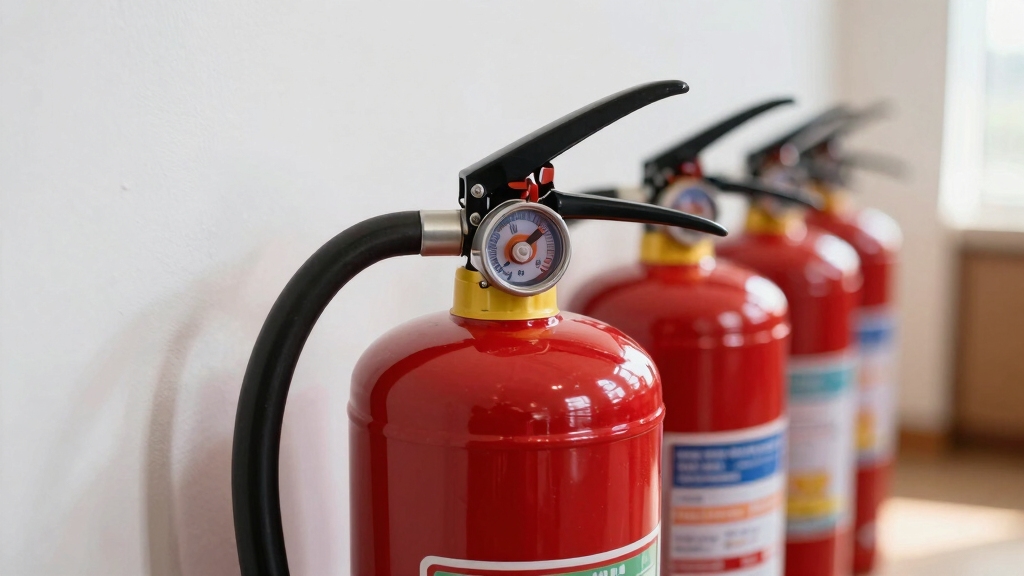
Fire extinguishers must undergo professional servicing at least once every year to guarantee they function reliably during an emergency. You can’t afford to have an extinguisher fail when you need it most.
Professional annual servicing ensures your fire extinguisher works effectively when every second counts.
Annual servicing assures a certified technician inspects all components, verifies pressure levels, and checks for corrosion, leakage, or mechanical damage. This thorough evaluation complies with OSHA, NFPA 10, and UK BS 5306-3 standards, which legally mandate yearly maintenance.
By scheduling professional servicing annually, you maintain compliance, optimize extinguisher performance, and extend equipment lifespan. Skipping this critical step risks malfunction and endangers lives and property.
Trusting qualified experts to conduct these checks means your fire extinguisher will be ready, effective, and safe to use when an emergency strikes. Regular inspection of the pressure gauge is essential to ensure the extinguisher remains within the operable range and ready for immediate use.
What Monthly Visual Checks Can You Do on Your Fire Extinguisher?
While professional servicing guarantees your extinguisher’s reliability annually, monthly visual checks help maintain its readiness between those thorough inspections.
Each month, inspect the extinguisher for physical damage such as dents, corrosion, or leaks.
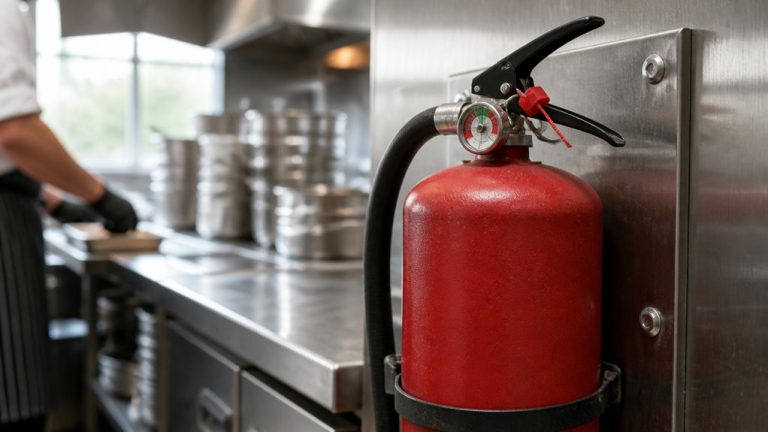
Make certain the pressure gauge needle remains within the green zone, indicating adequate pressure.
Confirm the extinguisher is easily accessible, unobstructed, and properly mounted.
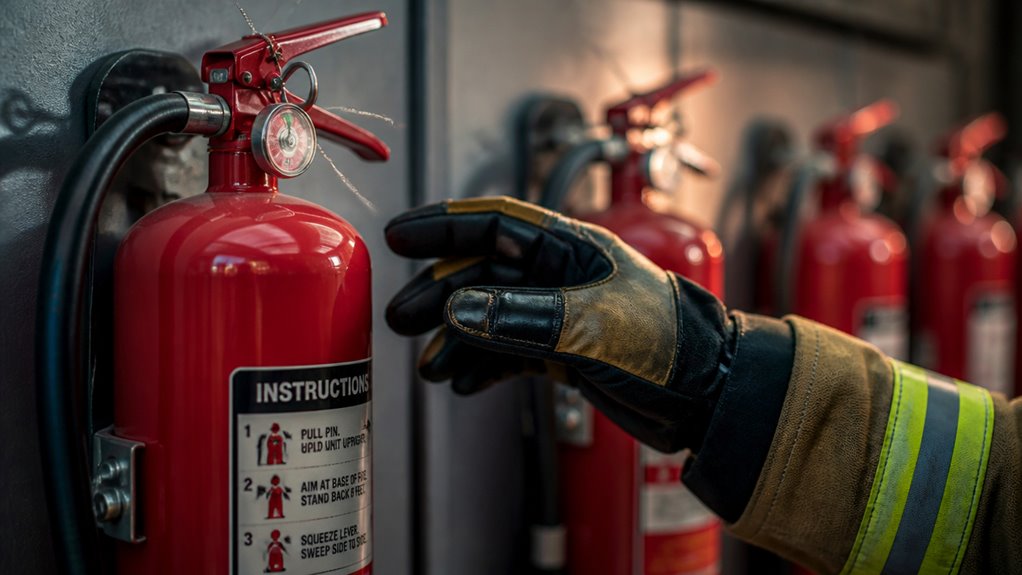
Check that the tamper seal is intact and the pull pin is in place.
Verify the label and instructions are legible and facing outward.
If your extinguisher is in a harsh environment, increase inspection frequency.
Document each check to comply with OSHA and BS 5306-3 standards.
These simple steps help you spot potential issues early and keep your extinguisher operational until the next professional service.
Additionally, just as smoke detectors require regular battery replacement to ensure proper function, maintaining your extinguisher’s components is essential for safety readiness.
Understanding the Six-Year Internal Maintenance and Recharge Process
Because regular visual inspections and annual servicing focus mainly on external condition and basic functionality, the six-year internal maintenance and recharge process is critical to guarantee the extinguisher’s internal components remain reliable and effective.
During this service, a certified technician opens the extinguisher to inspect and clean internal parts, checking for corrosion, contamination, or deterioration that could impair performance.
The technician also replaces or refills the extinguishing agent to ensure peak pressure and discharge capability. This all-inclusive internal examination goes beyond surface checks, addressing hidden issues that might compromise safety during a fire emergency.
This process includes hydrostatic testing to maintain the cylinder’s structural integrity and confirm safe operational status.
When and Why Fire Extinguishers Require Hydrostatic Testing?
You need to know that hydrostatic testing intervals can differ based on the type of fire extinguisher you have. For instance, water-based and CO2 units typically require testing every 5 to 12 years. It’s really important to keep up with these tests because they help ensure the extinguisher is structurally sound and can operate safely under pressure.
Plus, there are regulatory standards, like those from OSHA and DOT, that mandate these tests. Staying compliant not only keeps you within the law but also ensures that your equipment will work effectively when you really need it in an emergency. So, don’t overlook those testing intervals!
Regular hydrostatic testing also helps prevent catastrophic failures by ensuring the integrity of pressure relief systems.
Testing Intervals By Type
Hydrostatic testing is essential for maintaining the safety and reliability of fire extinguishers. The required intervals vary depending on the extinguisher type. You must adhere to these intervals to ensure compliance and functionality.
For example, pressurized water and CO2 extinguishers require testing every 5 years. In contrast, dry chemical types need it every 12 years.
| Extinguisher Type | Testing Interval | Notes |
|---|---|---|
| Pressurized Water | Every 5 years | Includes wet chemical types |
| Dry Chemical | Every 12 years | Longer interval due to design |
| Carbon Dioxide (CO2) | Every 5-10 years | Depends on regulatory specifics |
Following these intervals prevents equipment failure and guarantees readiness in emergencies. Regular inspection and maintenance are crucial to ensure the extinguisher maintains proper pressure levels and spray consistency over time.
Importance Of Hydrostatic Testing
Although fire extinguishers undergo regular visual inspections and annual servicing, they still require periodic hydrostatic testing to guarantee their structural integrity under pressure.
This testing is vital because it detects leaks, corrosion, or weaknesses that could cause extinguisher failure during an emergency.
Hydrostatic testing intervals depend on extinguisher type: pressurized water, carbon dioxide, and wet chemical units need testing every five years, while dry chemical extinguishers require it every twelve years.
During the test, the extinguisher’s cylinder is filled with water and pressurized beyond normal operating levels to verify its strength and safety.
Skipping this test risks catastrophic failure and compromises safety.
You must follow these intervals to make sure your extinguishers remain reliable and compliant with safety standards.
Certified technicians perform hydrostatic testing to ensure structural integrity before reuse or continued service.
Regulatory Requirements Overview
When fire extinguishers undergo pressurization testing, regulations guarantee they maintain structural integrity and safety under operating conditions. Hydrostatic testing intervals depend on extinguisher type and assure cylinders withstand pressure without leaks or failure.
You must follow standards like NFPA 10 and DOT regulations, which specify testing every 5 to 12 years. Here’s a snapshot of common requirements:
| Extinguisher Type | Testing Interval | Regulatory Standard |
|---|---|---|
| Pressurized Water | Every 5 years | NFPA 10, BS 5306-3 |
| Dry Chemical | Every 12 years | NFPA 10, DOT |
| Carbon Dioxide (CO2) | Every 5–10 years | DOT, NFPA 10 |
Hydrostatic testing protects you from equipment failure, assuring compliance and safety.
How Extended Service Intervals Differ by Fire Extinguisher Type?
Hey there! It’s really important to know that the service intervals for fire extinguishers can change based on the type you have. For example, if you own water-based or powder extinguishers, you’ll generally need to get them serviced every five years.
On the other hand, if you’ve got CO2 or clean agent extinguishers, those can go a full decade before they need an overhaul! Keeping track of these specific maintenance requirements is crucial. It not only helps you stay compliant but also ensures your extinguishers are always in top shape when you need them. Regular hydrostatic testing is also required every 5 to 12 years depending on the extinguisher type to ensure structural integrity.
Service Intervals By Type
Typically, extended service intervals vary markedly depending on the type of fire extinguisher you own. Understanding these intervals guarantees you maintain compliance and peak safety.
Water-based and powder extinguishers generally require servicing every 5 years, while CO2 and clean agent types extend to 10 years.
Dry chemical units may follow a 6-year internal maintenance cycle plus a 12-year hydrostatic test. Keeping track of these timelines prevents equipment failure when you need it most.
| Extinguisher Type | Recommended Service Interval |
|---|---|
| Water-based | Every 5 years |
| Powder | Every 5 to 10 years |
| CO2 | Every 10 years |
| Dry Chemical | 6 years internal, 12 years hydrostatic |
| Clean Agent/Halon | Every 10 years |
Additional fees such as hydrostatic testing, which occurs every 5–12 years, can add $20–$180 to the servicing cost depending on the extinguisher’s condition and size.
Equipment-Specific Maintenance Needs
Extended service intervals vary substantially based on the specific type of fire extinguisher, reflecting differences in design, chemical composition, and operational demands.
For instance, water-based and powder extinguishers typically require extended servicing every five years under BS 5306-3. CO2, clean agent, and Halon extinguishers need overhauls every ten years.
Dry chemical extinguishers demand a six-year internal examination and recharge. Hydrostatic testing intervals also differ: water, CO2, and wet chemical units require it every five years.
Dry chemical models undergo testing every twelve years. Understanding these distinctions guarantees you comply with standards, maintain extinguisher reliability, and optimize safety.
Tailoring maintenance schedules to your extinguisher type helps avoid premature replacements and costly downtime while meeting regulatory requirements efficiently.
Regular inspections and maintenance must follow NFPA 10 standards to ensure ongoing compliance and extinguisher effectiveness.
Signs It’s Time to Replace Your Fire Extinguisher
When a fire extinguisher shows signs of damage, corrosion, or fails inspection checks, it’s time to contemplate replacement.
You should replace extinguishers that are over 20 years old, have a compromised pressure gauge, or display visible rust.
If the extinguisher fails hydrostatic testing or shows leakage, it’s no longer reliable. Ignoring these signs risks ineffective fire protection.
| Sign | Indicator | Action Required |
|---|---|---|
| Physical Damage | Dents, cracks, or corrosion | Replace immediately |
| Pressure Gauge Reading | Needle outside the green zone | Service or replace |
| Age | Older than 20 years | Replace regardless of condition |
Stay vigilant to ensure your extinguisher remains a dependable safety asset. Regular professional servicing and adherence to compliance requirements help guarantee operational readiness and safety.
How to Choose a Certified Fire Extinguisher Service Provider?
After identifying the need to replace or service your fire extinguisher, selecting a certified service provider guarantees compliance with safety regulations and maintains your equipment’s reliability.
Look for technicians certified under recognized standards such as NFPA 10 or BS 5306-3 to ensure expert handling.
Verify the provider’s credentials, insurance, and experience with your extinguisher type.
Confirm they perform thorough annual maintenance, six-year internal inspections, and hydrostatic testing in line with legal requirements.
Ask about their record-keeping practices for maintenance history, which supports regulatory audits.
Avoid providers lacking clear certification or those offering only superficial checks.
Choosing a reputable, certified service provider ensures your extinguishers function properly when needed and keeps your premises compliant with OSHA and local safety laws.
Summary of Fire Extinguisher Maintenance Schedules and Best Practices
Although maintaining fire extinguishers may seem straightforward, adhering to precise schedules is essential to guarantee their reliability and compliance with safety standards.
You must perform monthly visual inspections to check for damage, pressure, and accessibility.
Annually, have a certified technician conduct a full maintenance check to ensure proper functionality.
Every six years, schedule an internal examination and recharge, especially for dry chemical units.
Hydrostatic testing intervals vary by extinguisher type, from five to twelve years. Follow specific regulations closely.
Remember, extended servicing occurs every five to ten years depending on the extinguisher’s design.
Finally, no extinguisher should remain in service beyond 20 years.
Frequently Asked Questions
Can I Perform Fire Extinguisher Servicing Myself Instead of Hiring a Professional?
You shouldn’t perform professional fire extinguisher servicing yourself. Certified technicians must handle annual maintenance and six-year internal examinations to guarantee safety and compliance with regulations.
While you can conduct monthly visual inspections, professional servicing involves detailed checks, recharging, and hydrostatic testing requiring specialized tools and knowledge.
Hiring a professional guarantees your extinguisher functions properly during emergencies and meets legal standards, keeping your property and people safe.
What Certifications Should a Professional Fire Extinguisher Technician Have?
Think of a certified fire extinguisher technician as a key that opens safety.
You’ll want someone with certifications from recognized bodies like NICET or IFEDA, ensuring they understand NFPA 10 standards and local regulations.
They should hold up-to-date training in hydrostatic testing, recharge procedures, and maintenance protocols.
Hiring a properly certified pro guarantees your extinguishers receive expert care, keeping your premises compliant and protected.
Don’t settle for less when safety’s on the line.
How Much Does Professional Fire Extinguisher Servicing Typically Cost?
You can expect to pay between $50 and $150 for professional fire extinguisher servicing, depending on the type and number of extinguishers.
More complex units or those needing internal maintenance might cost more.
Remember, investing in regular servicing guarantees your extinguishers work properly during emergencies, meeting legal and safety standards.
Don’t cut corners; professional inspections protect your property and safety effectively.
Are There Legal Penalties for Skipping Professional Fire Extinguisher Servicing?
Skipping professional fire extinguisher servicing is like leaving a ticking time bomb unchecked. You’re risking serious legal penalties.
Yes, you can face fines or even prosecution for neglecting annual inspections and maintenance required by OSHA, NFPA, and local laws.
These regulations ensure your extinguishers work when it counts. So, don’t cut corners; staying compliant protects you, your property, and lives while keeping you on the right side of the law.
Can Professional Servicing Extend the Lifespan of My Fire Extinguisher?
Yes, professional servicing can extend your fire extinguisher’s lifespan by ensuring it functions reliably and safely.
Certified technicians perform thorough internal examinations, recharges, and hydrostatic tests that detect and fix issues early.
Regular maintenance prevents corrosion, pressure loss, or mechanical failure, helping your extinguisher meet safety standards longer.
Following recommended servicing intervals, like annual checks and six-year internal maintenance, maximizes your fire extinguisher’s durability and effectiveness.
Keep Fire Extinguishers Ready Before Emergencies Happen
Just like a well-tuned engine keeps a car running smoothly, regular professional servicing keeps your fire extinguisher ready when you need it most.
By performing monthly checks, adhering to six-year maintenance, and understanding hydrostatic testing, you guarantee your safety gear won’t fail in an emergency.
Don’t wait for a sign; stay proactive and choose a certified provider.
Remember, your extinguisher’s reliability depends on timely care, just like any essential lifeline.