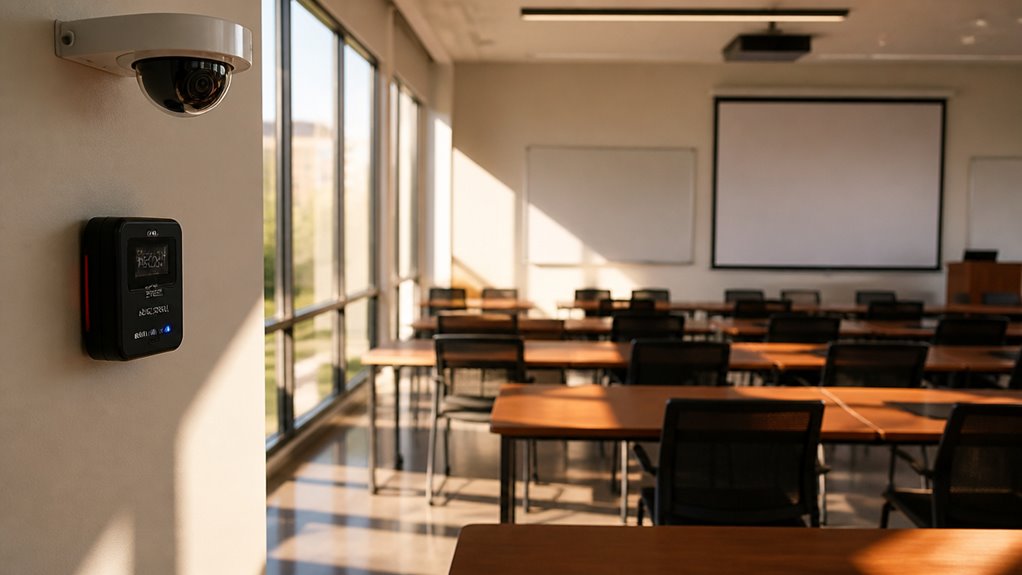

You can legally use cameras in classrooms, but only if you strictly follow state laws, district policies, and consent rules.
Many states require parental or staff consent, especially when audio is involved. Federal laws like FERPA protect student privacy.
Audio recording typically raises greater legal risks. Districts often regulate access, retention, and security of footage to comply with varying rules.
Understanding these layered requirements lets you implement cameras responsibly and lawfully while safeguarding privacy and trust. More detailed insights clarify key considerations.
Key Takeaways
- Classroom camera legality depends on state laws and district policies, with some states requiring parental or staff consent.
- Many states allow cameras for safety or instructional purposes but restrict secret recordings and audio capture due to privacy laws.
- Federal FERPA regulations classify student-related footage as education records, requiring secure handling and parental access rights.
- District policies often require visible notice, clear consent processes, and adherence to labor agreements when implementing classroom cameras.
- Access to footage must be limited, securely stored with encryption, and retained or deleted per state and district guidelines.
General Legal Rules for Classroom Cameras
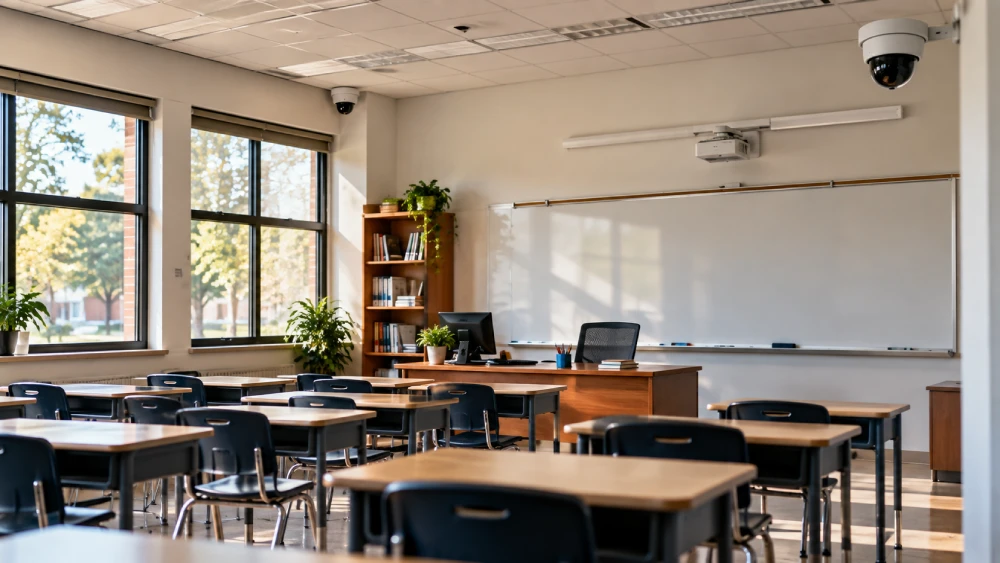
Although classroom cameras aren’t outright illegal across the United States, their use hinges on state laws, district policies, and the intended purpose of recording.
Classroom camera use depends on state laws, district rules, and the reasons for recording.
You must understand that legality varies by jurisdiction, with courts generally permitting surveillance where privacy expectations are low, such as classrooms.
Using cameras for safety, instruction, or accountability strengthens the legal justification.
However, some districts explicitly prohibit classroom cameras unless authorized.
You should also consider notice and consent requirements, especially regarding audio recording, which carries heightened legal risks.
Visible cameras and transparent policies help mitigate liability.
Ultimately, you need to ensure compliance with local rules, clarify recording purposes, and restrict access to footage.
Without these measures, you risk violating privacy rights and inviting legal challenges, so careful, informed implementation is essential.
Additionally, federal laws like FERPA impose strict rules on handling and disclosure of student video footage to protect privacy.
Federal Privacy Laws Impacting Classroom Camera Use
After understanding how state laws and district policies shape the legality of classroom cameras, you must also consider federal privacy regulations that govern the use and handling of recorded footage.
The Family Educational Rights and Privacy Act (FERPA) is central here, as footage related to a student may be classified as an education record, triggering access and consent requirements.
When using cameras, keep these three key points in mind:
- FERPA grants students and parents rights to access and control educational records, including relevant video.
- Schools must obtain consent before sharing footage that qualifies as an education record.
- Audio recordings heighten privacy risks and often face stricter scrutiny under federal law.
It is also important to ensure that any video footage is securely stored and transmitted using encryption protocols to protect student privacy.
Key State Laws Governing Classroom Cameras
Since state laws vary markedly, you must carefully review your state’s specific regulations before installing cameras in classrooms.
Some states, like Texas, require parental consent for recording students. Others, such as Louisiana, restrict access to recordings to protect confidentiality.
Florida imposes strict retention policies on footage tied to investigations. Local districts may enforce even stricter rules.
| State | Key Regulation | Notable Requirement |
|---|---|---|
| Texas | Consent required for recording | Parental consent mandatory |
| Louisiana | Confidentiality of recordings | Limits on viewer access |
| Florida | Retention rules for investigative use | Defined storage durations |
Understanding these variations guarantees your compliance and mitigates legal risks when deploying classroom cameras. Additionally, ensuring cameras are placed only in non-private areas helps avoid violations of reasonable expectations of privacy.
Consent and Notice Requirements for Classroom Cameras
Understanding state-specific rules is only part of the equation when implementing classroom cameras. You must also address consent and notice requirements to comply with legal and ethical standards.
To do this effectively, consider these three critical steps:
- Provide Clear Notice: Make certain visible cameras and explicit disclosures through policies, signage, or handbooks so everyone understands surveillance is active.
- Obtain Necessary Consent: In some states, parental or staff consent is mandatory, especially when recordings relate directly to students or involve sensitive settings.
- Respect Labor Agreements: Employee consent or collective bargaining agreements may impose additional restrictions on camera use.
Failing to meet these requirements risks legal challenges and undermines trust.
Transparent communication and adherence to consent protocols create a defensible framework for classroom monitoring that aligns with privacy laws and district policies. Ensuring compliance with local codes and regulations is essential to maintain both legal standing and community confidence.
Why Audio Recording Raises More Legal Risks?
Although video-only surveillance in classrooms is generally more accepted, adding audio recording markedly heightens legal risks due to stricter privacy protections and wiretapping laws.
Audio captures private conversations, triggering stronger expectations of confidentiality under both federal and state statutes.
Many states require all-party consent before recording sound, and violating these laws can lead to criminal and civil penalties.
Unlike video footage, audio recordings may reveal sensitive information unrelated to classroom activities, increasing the risk of privacy breaches.
Furthermore, schools must navigate complex consent requirements, often needing explicit permission from parents, students, and staff.
You should recognize that audio surveillance demands rigorous legal scrutiny and thorough policies to mitigate liability.
Ignoring these heightened risks can expose your school to litigation, regulatory sanctions, and reputational harm.
To remain compliant, it is essential to verify whether your state mandates one-party or all-party consent for audio recording before implementing such surveillance.
Typical School District Policies for Classroom Cameras
You’ll notice that school district policies on classroom cameras can really differ from one place to another. This often depends on local laws and what the community values.
Most districts have a requirement for clear notification, and many also ask for parental consent before they put cameras in classrooms—especially when audio recording is included.
It’s super important to understand these policies. This way, you can ensure compliance and protect the privacy rights of both students and staff. After all, keeping everyone informed is key!
Additionally, it is crucial to follow privacy and legal compliance guidelines to avoid capturing private areas and ensure lawful use of recordings.
Policy Variations by District
When school districts set policies for classroom cameras, they often tailor rules to local priorities, legal requirements, and community expectations.
You’ll notice significant variation depending on the district’s risk tolerance and the state’s legal framework.
Typically, you can expect these three factors to shape policies:
- Purpose and scope: Districts define whether cameras serve safety, instructional review, or disciplinary accountability. This influences where and how cameras are installed.
- Access and retention: Policies specify who can view recordings and how long footage is stored. This balances transparency with student privacy.
- Prohibitions and exceptions: Some districts ban cameras outright unless special authorization is granted. Others allow them broadly with defined limitations.
Understanding these variations helps you navigate compliance and anticipate district-level differences in camera use. Immediate attention to system faults is essential in safety devices to ensure reliable operation and protect what matters.
Consent and Notification
Since classroom cameras involve sensitive privacy concerns, school districts prioritize clear consent and notification procedures to guarantee transparency and legal compliance. You’ll typically see visible cameras accompanied by posted notices or explicit mentions in handbooks and policies.
Many districts require parental consent before activating classroom recording, especially if audio is involved or footage might be shared externally. You should also expect staff consent processes, often influenced by labor agreements.
Secret recording is generally prohibited due to heightened legal risks. Clear communication about the cameras’ purpose, access rights, and retention schedules is essential. Schools should also establish and respect privacy boundaries to ensure camera coverage does not intrude on private or sensitive areas.
Managing Access and Retention of Classroom Footage
Although installing cameras in classrooms can enhance safety and accountability, managing who can access the footage and how long it’s retained requires strict control to protect student privacy and comply with legal obligations.
You must establish clear protocols that limit access strictly to authorized personnel, such as administrators or designated safety officers.
Additionally, retention periods should align with state laws and district policies to avoid unnecessary storage.
Focus on these key steps:
- Define specific access roles and require documentation whenever footage is viewed.
- Set retention schedules based on legal mandates, typically deleting footage after a predetermined period unless involved in investigations.
- Securely store recordings with encryption and restrict copying or sharing without proper authorization.
These measures help guarantee compliance and safeguard sensitive student information effectively.
Implementing end-to-end encryption ensures that classroom footage remains protected from unauthorized access throughout storage and transmission.
Common Camera Locations Outside Classrooms
You’ll typically spot cameras in places like hallways, stairwells, school buses, entrances, and parking lots. You know, areas where people generally have lower expectations of privacy. It makes sense, right? These spots let schools keep an eye on safety and security without the intense legal scrutiny that comes with putting cameras in classrooms.
Understanding how the law views these areas is pretty important. It helps you strike a balance between effective oversight and respecting individual rights. After all, it’s all about keeping everyone safe while also honoring privacy, isn’t it? Schools must also comply with local recording laws to ensure surveillance is legally sound and privacy is maintained.
Hallways And Stairwells
When monitoring school safety, hallways and stairwells serve as strategic locations for camera placement due to their high traffic and lower expectations of privacy compared to classrooms.
You’ll find that surveillance here faces fewer legal hurdles, making it an effective deterrent and investigative tool.
Keep these points in mind:
- Privacy considerations: Students and staff have diminished privacy expectations in these common areas, reducing legal restrictions.
- Safety impact: Cameras help quickly identify incidents like bullying or unauthorized access, enhancing overall security.
- Policy alignment: Make certain your district’s policies explicitly authorize monitoring in these zones to avoid compliance issues.
School Bus Surveillance
Outside the classroom, school buses represent a critical area for surveillance due to their role in student transportation and safety. You’ll find cameras installed inside buses to monitor student behavior, deter bullying, and provide evidence during incidents.
These cameras typically capture video only, avoiding audio to reduce privacy concerns. You must comply with state laws and district policies on notice and consent when deploying bus surveillance systems.
| Camera Location | Purpose |
|---|---|
| Inside Bus Cabin | Monitor student behavior |
| Front Exterior | Capture traffic incidents |
| Rear Exterior | Record boarding/exiting |
| Side Mirrors | Cover blind spots |
| Driver’s Area | Safeguard driver safety |
Implementing surveillance here enhances safety while balancing privacy rights effectively.
Entrances And Parking Lots
Entrances and parking lots serve as critical control points for school security, making them ideal locations for surveillance cameras. You’ll find these areas less legally sensitive than classrooms because they involve lower expectations of privacy.
When considering cameras here, focus on:
- Deterrence and Monitoring: Cameras discourage unauthorized access and help monitor vehicle flow, enhancing overall safety.
- Incident Documentation: Footage provides clear evidence in disputes or investigations involving trespassing or accidents.
- Compliance and Placement: Make certain cameras are visible and comply with state laws and district policies to avoid privacy violations.
Legal Considerations for Special-Education Classroom Cameras
Because special-education classrooms involve heightened privacy and legal sensitivities, installing cameras there demands extra caution and compliance.
You must navigate strict federal laws like FERPA, which protect student education records and require careful handling of footage. State laws often impose additional restrictions, including parental consent and confidentiality mandates.
You should make certain that camera use has a clear, documented purpose, typically safety or behavioral monitoring. Avoid audio recording, which raises significant legal risks.
Transparent notice to parents, staff, and students is essential, along with written policies detailing access, retention, and disclosure limits.
Before implementing cameras, conduct a thorough legal review and coordinate with district policies. Maintaining strict access controls and safeguarding recorded data will help you stay compliant and respect the privacy rights unique to special-education environments.
Frequently Asked Questions
Can Students Request to Review Classroom Camera Footage?
You can request to review classroom camera footage if the recording qualifies as an education record under FERPA, since students and parents have rights to access such records.
However, access depends on your school’s policies and state laws, which often impose strict limits on who can view footage.
Schools typically require formal requests and may restrict access to protect privacy and comply with retention and disclosure rules.
Are Teachers Allowed to Use Personal Cameras in Classrooms?
Ever wonder if you can just whip out your phone to record a lesson? Generally, you can’t use personal cameras in classrooms without explicit permission.
Schools usually restrict this to protect student privacy and comply with laws. You need to follow district policies, get consent, and avoid audio recording unless allowed.
Unauthorized use risks legal trouble and breaches trust, so always check rules and get approval before recording anything in class.
How Do Cameras Impact Student Behavior and Learning Outcomes?
You’ll find that cameras can encourage better student behavior by increasing accountability and discouraging misconduct. They can also promote a safer learning environment, helping students feel secure.
However, cameras might cause anxiety or discomfort for some students, potentially distracting them. Their impact on learning outcomes varies; when used thoughtfully, they support instructional feedback and teacher reflection.
But over-surveillance risks undermining trust and stifling student engagement.
What Technology Safeguards Protect Recorded Classroom Footage?
You protect recorded classroom footage by using encryption to secure data both in transit and at rest, preventing unauthorized access.
Implement strict access controls and authentication protocols so only authorized personnel can view recordings.
Regularly update software to patch vulnerabilities and maintain audit logs to track who accesses the footage.
Employ secure storage solutions with automatic deletion schedules aligned with policy, ensuring compliance and minimizing privacy risks effectively.
Can Classroom Cameras Be Used for Teacher Performance Evaluations?
You can use classroom cameras for teacher performance evaluations, but you must navigate legal and ethical complexities carefully.
Make certain clear policies define the purpose, consent requirements, and data access.
Transparency with educators and adherence to state laws, district rules, and labor agreements are essential.
Avoid audio recording unless explicitly permitted.
Always limit access to recordings and document usage to protect privacy and maintain trust while leveraging video for constructive feedback and accountability.
Check School Policies Before Installing Classroom Cameras
When considering cameras in the classroom, remember: privacy isn’t just a preference; it’s a legal necessity.
You must navigate federal and state laws, obtain proper consent, and carefully manage footage access to avoid costly pitfalls.
Audio recording, in particular, demands extra caution.
Like a tightrope walker, you balance transparency with respect for privacy.
By understanding these legal frameworks, you protect both students and staff, ensuring cameras serve as tools for safety, not sources of liability.