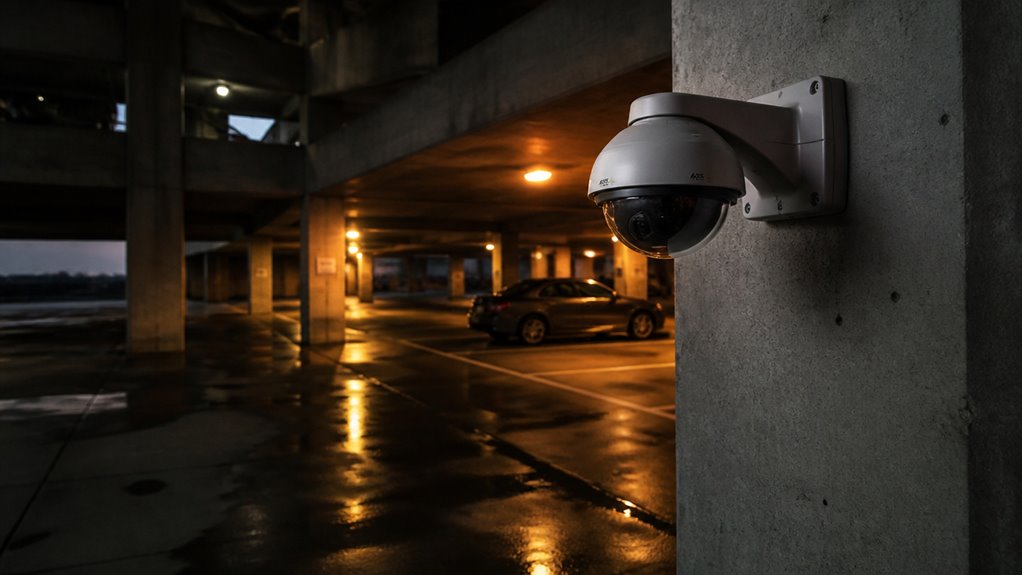

Yes, most parking garages have security cameras to enhance safety and monitor activity.
You’ll find cameras at entrances, exits, stairwells, and payment areas, often using dome, bullet, or PTZ types with infrared for low light.
These systems reduce blind spots, deter crime, and support incident investigations.
While some offer real-time monitoring, footage is usually stored for about 30 days, with privacy managed through signage and restricted access.
Understanding their placement and features reveals how they protect you.
Key Takeaways
- Most parking garages have security cameras, though coverage varies by facility and often focuses on reducing blind spots.
- Cameras are typically installed at entrances, exits, stairwells, and payment areas for security and monitoring.
- Many garages use advanced features like license plate recognition and AI-based detection to enhance surveillance.
- Cameras deter theft, vandalism, and unauthorized access while providing video evidence for investigations.
- Surveillance footage is commonly recorded with retention periods around 30 days, and privacy is managed via signage and restricted access.
Do Most Parking Garages Have Security Cameras?
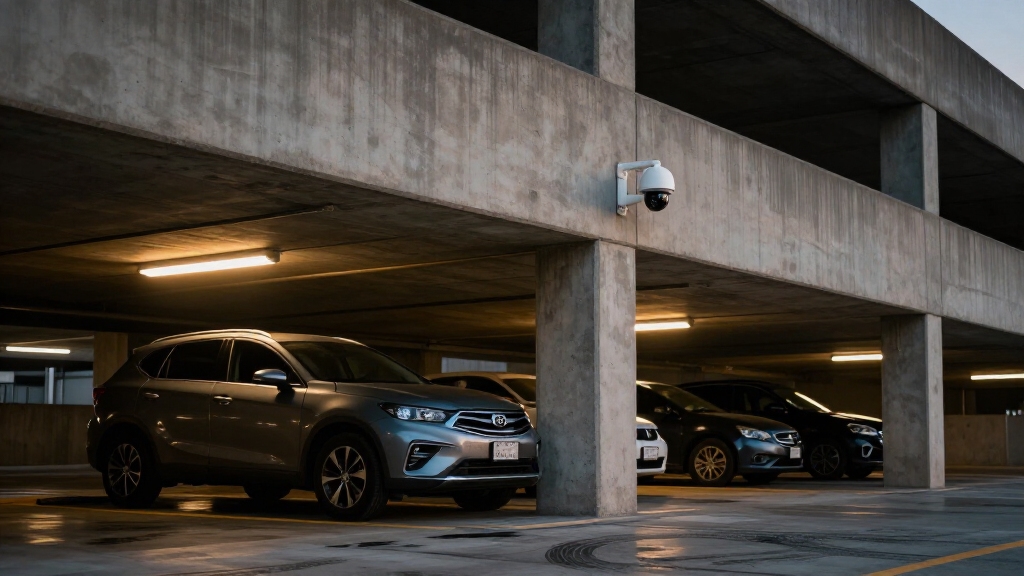
Most parking garages typically have security cameras installed, though coverage isn’t universal across all facilities.
Security cameras are common in parking garages, but coverage varies from one facility to another.
When you enter a garage, you’ll often see dome, bullet, or PTZ cameras mounted strategically on walls, ceilings, or poles.
These cameras focus on high-traffic and high-risk areas such as entrances, exits, stairwells, and elevator lobbies.
Larger or newer garages might integrate cameras with license plate recognition, parking guidance, or access control systems, enhancing monitoring capabilities.
However, not every section is always covered; many systems aim to reduce blind spots rather than provide full surveillance.
Signage indicating video surveillance is common and helps inform you about recording practices.
Many parking garages utilize AI-based detection technology to reduce false alerts and focus on relevant security events.
How Do Parking Garage Cameras Improve Safety?
Because parking garage cameras monitor key areas such as entrances, exits, stairwells, and elevator lobbies, they markedly enhance safety by deterring theft, vandalism, and unauthorized access.
You benefit from continuous video evidence, supporting incident investigations and enabling faster response times. Cameras also reduce blind spots, preventing potential hazards and improving overall security awareness.
Proper camera placement at entrances and vulnerable points ensures comprehensive coverage and minimizes blind spots for maximum safety.
| Safety Function | Impact |
|---|---|
| Deterrence | Reduces criminal activity |
| Evidence Collection | Supports investigations |
| Hazard Detection | Minimizes accidents and risks |
Where Are Cameras Installed in Parking Garages?
Security cameras in parking garages are strategically positioned to cover critical areas that experience high traffic or pose elevated risks.
Cameras are strategically placed in parking garages to monitor high-traffic and high-risk areas effectively.
You’ll often find cameras installed at entrances and exits to monitor vehicle flow and capture license plates.
Stairwells and elevator lobbies receive coverage to enhance pedestrian safety and deter illicit activity.
Cameras also monitor ramps, payment kiosks, and gate areas where transactions or access control occur.
Large open spaces may have cameras placed on ceilings or poles to minimize blind spots.
Facilities prioritize zones prone to vandalism, theft, or accidents, ensuring thorough surveillance where incidents are most likely.
This targeted placement supports effective incident detection and evidence collection while optimizing camera resources across the structure.
Outdoor cameras are typically mounted at 8–10 feet high with a slight downward angle to maximize coverage and deter vandalism, reflecting best practices for camera placement.
Common Camera Types in Parking Garages
When selecting surveillance cameras for parking garages, operators choose from several specialized types designed to meet varied monitoring needs. You’ll commonly find dome cameras for wide coverage, bullet cameras for focused areas, and PTZ cameras for larger spaces needing flexible viewing angles.
Infrared or low-light cameras guarantee visibility in dim conditions. Fixed cameras often monitor entries, exits, and payment points, while smart ceiling-mounted sensors integrate with advanced systems. Choosing cameras with weatherproof housings rated IP65 or higher ensures durability against environmental factors common in parking garages.
| Camera Type | Typical Location | Key Feature |
|---|---|---|
| Dome | Ceilings, stairwells | Wide-angle, discreet design |
| Bullet | Walls, poles | Long-range, weather-resistant |
| PTZ | Large open areas | Pan, tilt, zoom capabilities |
| Infrared | Low-light zones | Night vision |
| Fixed | Entry/exit points | Targeted monitoring |
How Are Monitoring and Privacy Handled in Parking Garages?
Although not all parking garages provide live monitoring, many use surveillance systems that record footage for later review in case of incidents.
Real-time monitoring typically occurs in garages with on-site security or dedicated monitoring services, while others rely on periodic checks of recorded data.
Cameras often cover high-risk zones such as entrances, exits, and stairwells, with footage retention commonly limited to around 30 days before overwriting.
Privacy is managed by posting clear signage about surveillance and restricting access to recordings to authorized personnel like property owners or security providers.
Local regulations may influence camera placement and usage, ensuring compliance with privacy laws.
To maximize coverage and reduce blind spots, parking garage cameras are usually installed at optimal mounting heights with overlapping fields of view to capture clear activity from multiple angles.
Frequently Asked Questions
How Long Is Parking Garage Camera Footage Stored?
You can expect parking garage camera footage to be stored for about 30 days on average, although this varies by facility. Many systems overwrite recordings automatically once the storage limit is reached.
If an incident occurs, footage is usually reviewed and saved before deletion. Some garages with advanced security may retain videos longer, especially when linked to investigations or legal requirements.
Always check with the property owner for specific retention policies.
Can Individuals Request Access to Parking Garage Recordings?
You can request access to parking garage recordings, but approval depends on the property owner or operator’s policies.
These entities control footage access and often require a formal request, valid reason, or legal process such as a subpoena.
Privacy laws and internal rules may limit what you can obtain.
Be prepared for possible fees, restricted viewing, or denial if the footage involves third parties or sensitive information.
Are Parking Garage Cameras Linked to Local Law Enforcement?
Imagine a bridge connecting your parking garage cameras directly to local law enforcement. That link rarely exists.
Typically, your garage’s surveillance system works independently, recording footage for property security and incident review.
Only in specific cases, like urgent crimes or agreements, might footage be shared with police upon request.
Real-time streaming to law enforcement is uncommon, as most systems lack direct integration. This approach preserves privacy and operational control for the facility owner.
Do Cameras Affect Insurance Claims for Parking Lot Incidents?
Yes, cameras can substantially impact insurance claims for parking lot incidents. When footage is available, you can provide clear evidence to support your claim, speeding up investigation and resolution.
Video helps establish fault, verify damages, and corroborate statements. However, coverage gaps or poor video quality may limit usefulness. Always check if the facility’s footage retention aligns with your claim timeline, as recordings are often overwritten after about 30 days.
How Do Parking Garages Maintain Camera Equipment?
Like clockwork, parking garages maintain camera equipment through routine inspections and preventive maintenance.
You’ll find technicians checking lens clarity, adjusting focus, and verifying proper positioning to avoid blind spots.
They routinely update software, test connectivity, and replace faulty components such as bulbs or wiring.
Many facilities use remote diagnostics to monitor camera health in real-time, ensuring continuous operation.
This systematic upkeep guarantees reliable surveillance and supports security protocols effectively.
Understand How Parking Garage Cameras Improve Security
When you enter a parking garage, security cameras act like silent sentinels, constantly monitoring to bolster your safety. Most garages install these cameras strategically, covering entrances, exits, and key areas to deter crime and assist in incident resolution.
You’ll typically find fixed, PTZ, or infrared cameras in use. While monitoring is thorough, privacy measures bolster compliance with regulations, balancing surveillance with your personal rights effectively.