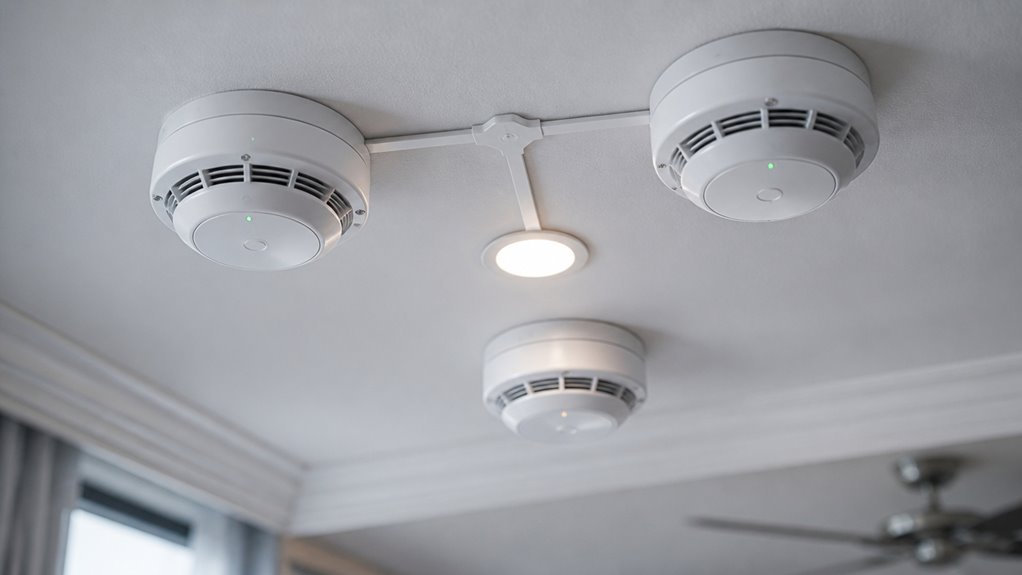

Yes, smoke detectors are connected to each other to make certain all units sound simultaneously when one detects smoke. This interconnection, achieved via hardwired conductors or wireless signals, boosts early warning and helps you evacuate promptly.
Building codes often require interconnected alarms in multi-alarm setups, with limits on device counts and wiring lengths for system reliability. Proper installation and maintenance keep these systems dependable.
Understanding how they work and the regulations involved can help you enhance your home’s fire safety.
Key Takeaways
- Smoke detectors are interconnected so all alarms sound simultaneously when one detects smoke, enhancing early warning and evacuation.
- Interconnection can be hardwired using a dedicated conductor or wireless via radio frequency signals for retrofit installations.
- Hardwired systems use red or orange wires as interconnect conductors alongside power wiring for signaling between alarms.
- Wireless interconnected alarms communicate using encrypted radio signals to prevent interference and meet code requirements.
- Codes and manufacturer guidelines regulate device limits and installation to ensure reliable, synchronized operation of interconnected alarms.
Why Smoke Detectors Interconnect?
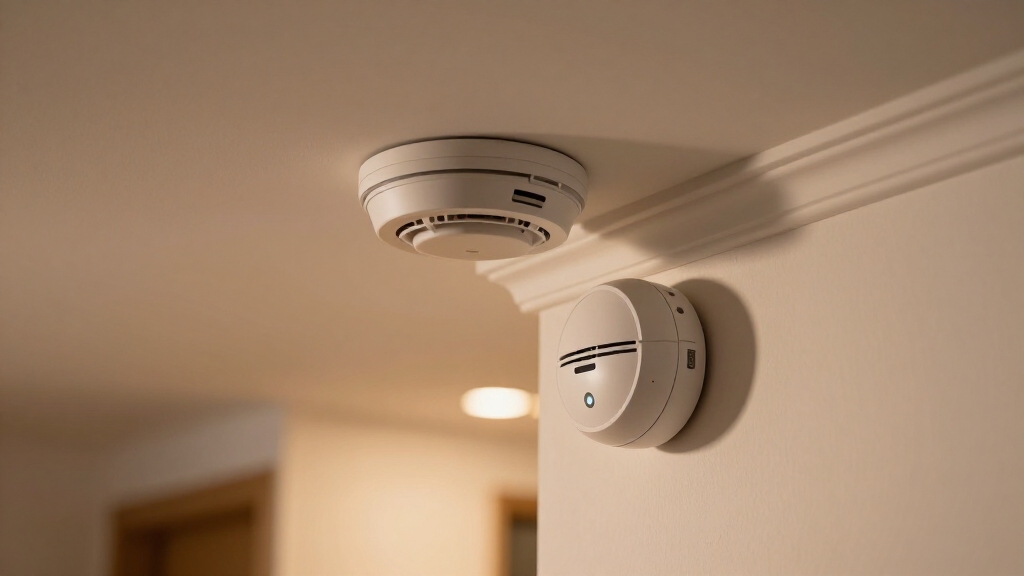
Because smoke can spread quickly through a home, smoke detectors interconnect to make certain you’re alerted no matter where the fire starts.
When one alarm detects smoke, the interconnect signal triggers all linked alarms simultaneously, improving early warning and response.
When one alarm senses smoke, all connected alarms sound instantly, enhancing early detection and response.
Hardwired systems use a dedicated interconnect conductor, often a red or orange wire, running alongside power conductors to transmit the alarm signal.
Wireless interconnection achieves the same outcome via radio frequency signals, useful in retrofit installations where wiring is impractical.
You’ll find interconnected detectors essential in dwellings with multiple alarms, enhancing safety by ensuring alarms sound throughout the unit.
This interconnected approach markedly increases the likelihood that occupants hear the warning promptly, regardless of their location within the home.
This is critical for timely evacuation.
Additionally, studies show that interconnected alarms increase the chance of early detection by 50%, significantly improving occupant safety.
Building Code Requirements for Interconnected Smoke Alarms
When you’re installing smoke alarms, it’s super important to keep local building codes in mind. Many of these codes actually require that smoke alarms be interconnected, especially when you have multiple units. This means that if one alarm goes off, they all do, which can really help alert everyone in the building.
Plus, there are specific limits on how many devices you can install, along with standards for wiring and compatibility. So, when you’re upgrading or renovating, make sure your system checks all those boxes. It’s crucial for keeping things safe and ensuring you’re following the codes!
Using the correct wiring color connections is essential to guarantee the alarms work together reliably and safely.
Code Mandates Overview
When multiple smoke alarms are installed in a dwelling, building codes typically require them to be interconnected to guarantee simultaneous activation during a fire event.
This assures that when one alarm detects smoke, all alarms sound together, providing all-inclusive warning throughout the home.
Codes often mandate interconnection in new construction or significant renovations, especially where multiple alarms are needed for sleeping areas and living spaces.
You’ll find that both hardwired and listed wireless interconnected alarms meet these requirements, provided they activate all devices simultaneously.
Local codes, manufacturer instructions, and the National Fire Protection Association (NFPA) standards govern installation specifics, including wiring methods and device compatibility.
Following these mandates assures compliance and markedly enhances occupant safety by delivering prompt, clear alerts across the entire dwelling.
Additionally, building codes require that hardwired smoke detectors include battery backups to ensure continuous operation during power outages.
Device Quantity Limits
Although interconnected smoke alarms enhance safety by providing widespread alerts, building codes impose limits on the number of devices you can link in a single system.
Typically, codes restrict you to a maximum of 18 initiating devices per interconnected network, with no more than 12 being smoke alarms in unsupervised installations.
These limits guarantee signal reliability and system integrity without overwhelming the interconnect circuit.
When planning your installation, you must follow manufacturer instructions and local electrical codes regarding device counts and wiring methods.
Exceeding these limits can cause malfunctions or code violations.
Understanding and adhering to these quantity limits is essential for maintaining a compliant, functional interconnected smoke alarm system that delivers dependable, simultaneous alerts throughout your home.
For larger or more complex facilities, considering an addressable fire alarm system can provide enhanced scalability and precise device communication beyond conventional interconnect limitations.
Compliance and Upgrades
Since building codes evolve to enhance fire safety, staying current with requirements for interconnected smoke alarms is essential for compliance and effective protection.
You must make certain all new installations meet local codes, which often mandate interconnection where multiple alarms exist.
Upgrading older systems during renovations may be required if wiring or device placement changes.
| Requirement | Description |
|---|---|
| Interconnection mandate | Required when multiple alarms are installed |
| Device limits | Max 18 initiating devices, 12 smoke alarms |
| Wiring standards | Follow manufacturer and electrical codes |
| Wireless acceptance | Allowed if alarms sound simultaneously |
| Upgrade triggers | Renovations exposing wiring require upgrades |
Regular monthly testing ensures prompt detection and identifies sensor faults or power issues early to maintain system reliability, which is a crucial part of interconnected system checks.
Code Limits on the Number of Interconnected Smoke Alarms
It’s really important to stick to code limits when it comes to interconnected smoke alarms. This ensures that the system is both reliable and safe.
Typically, most codes will cap the total number of devices at around 18 initiating units. And if you’re setting up a system without supervision, remember that you shouldn’t have more than 12 smoke alarms.
Regular inspection and testing of these devices, including monthly functional testing, is essential to maintain system reliability and compliance.
Device Quantity Restrictions
When installing interconnected smoke alarms, you must adhere to specific device quantity limits set by code to guarantee reliable system performance and safety.
Typically, codes restrict the total number of initiating devices in a single interconnect system to 18, with no more than 12 being smoke alarms in unsupervised setups.
These limits prevent signal degradation and ensure timely alarm activation across all units.
Manufacturer instructions may impose stricter device counts based on wiring capacity and signal propagation.
Exceeding these limits can cause system malfunctions or delayed responses.
Always consult local electrical codes and product documentation before expanding your interconnected network.
Maintaining compliance with device quantity restrictions secures your smoke alarm system and provides dependable, coordinated alerts throughout the dwelling, maximizing occupant safety during fire events.
Additionally, choosing wiring topologies like Class A looped circuits can enhance system reliability by providing redundancy and fault tolerance in interconnected systems.
Smoke Alarm Limits
Interconnected smoke alarms frequently face strict limits on the number of units allowed to guarantee reliable operation and prompt response.
Typically, codes restrict the total number of initiating devices in a network to 18, with no more than 12 being smoke alarms in an unsupervised system.
These limits prevent signal degradation and ensure the interconnect line can effectively trigger all alarms simultaneously.
When installing, you must adhere to manufacturer guidelines and local electrical codes specifying maximum device counts and wiring configurations.
Exceeding these limits risks unreliable alarm activation or system failure.
Additionally, the total interconnect wire length often can’t exceed approximately 1,000 feet to maintain signal integrity.
Staying within these parameters ensures your interconnected smoke alarm system performs ideally, providing timely warnings throughout your dwelling.
Proper installation also requires following wire color identification standards to maintain consistent and safe interconnections across all detectors.
Code Compliance Requirements
Although interconnected smoke alarms enhance safety by providing widespread alerts, strict code requirements limit the number of devices you can connect in a single system. Typically, codes cap interconnected devices to 18 initiating units, with no more than 12 smoke alarms in an unsupervised network. These limits guarantee system reliability and avoid signal degradation.
| Parameter | Code Limit |
|---|---|
| Total Initiating Devices | 18 |
| Maximum Smoke Alarms | 12 |
| Wiring Method | Follow manufacturer/local code |
| Interconnect Conductor Length | Up to 1000 feet |
| Wireless Compatibility | Listed wireless only |
You must comply with manufacturer instructions and local codes for installation, wiring, and device count to maintain system integrity and code compliance. It is also crucial to use only hardwired, interconnected smoke alarms approved for series interlinking to ensure proper functionality and safety.
How Hardwired Smoke Alarms Share Power and Signals?
Hardwired smoke alarms share both power and alarm signals through a dedicated wiring setup that typically includes hot, neutral, ground, and an interconnect conductor. This interconnect conductor carries the alarm trigger signal, allowing all units to sound simultaneously when one detects smoke. Here’s how it works:
- Power is supplied via the hot and neutral wires, guaranteeing all alarms receive continuous electricity.
- The ground wire provides safety by preventing electrical faults.
- The interconnect conductor, often a red or orange wire, transmits the alarm signal from the initiating unit to others along the circuit.
You’ll usually find the alarms wired in series for power, while the interconnect runs in parallel, maintaining reliable communication throughout the system.
Proper installation and adherence to code guarantee effective and safe operation. Interconnected Kidde alarms can link up to 24 devices to provide simultaneous alerts throughout the home.
How Wireless Smoke Alarms Connect Without Wires?
When you set up wireless smoke alarms, they communicate through radio signals instead of physical wires. Each alarm contains a radio transmitter and receiver that send and listen for activation signals within a specified frequency range.
When one detector senses smoke, it transmits a coded alert to all linked units, triggering simultaneous alarms. This wireless interconnection eliminates the need for additional wiring, making installation easier, especially in retrofit scenarios.
However, you must make certain all alarms are compatible and listed for wireless interconnection to guarantee reliable communication. The system uses encrypted signals to prevent interference from other devices, maintaining signal integrity.
Wireless smoke alarm networks comply with many local codes when they meet the requirement that all alarms sound together upon activation of any single unit.
Essential Wiring Tips for Hardwired Smoke Alarm Interconnection
Since reliable interconnection depends on proper wiring, you’ll need to carefully handle the hot, neutral, ground, and interconnect conductors during installation. Each wire plays a critical role: hot and neutral provide power, ground guarantees safety, and the interconnect conductor transmits the alarm signal.
Reliable interconnection relies on properly handling hot, neutral, ground, and interconnect wires during installation.
To guarantee a compliant and effective system, follow these essential wiring tips:
- Use the correct wire colors: typically black for hot, white for neutral, green or bare for ground, and red or orange for interconnect. This helps avoid confusion and maintain code compliance.
- Connect alarms in series along the interconnect line. Cap the interconnect wire on the last device to prevent signal leakage.
- Secure all connections with wire nuts and verify grounding continuity. This maintains system integrity and helps prevent false alarms.
Fire Safety Benefits of Interconnected Smoke Alarms
Interconnected smoke alarms ramp up your home’s fire safety by ensuring that when one detector senses smoke, all alarms sound simultaneously throughout the dwelling.
This immediate, whole-home alert markedly improves your chances of early detection and evacuation, especially when fires start in distant or closed-off areas.
By linking alarms either through hardwired interconnect conductors or wireless signaling, you guarantee that every occupant hears the warning, even behind closed doors.
This system meets code requirements in multi-alarm installations, reinforcing uniform response times.
Additionally, interconnected alarms reduce the risk of missed alerts and provide layered protection across all living and sleeping spaces, enhancing overall fire safety.
When properly installed and maintained, interconnected smoke alarms offer a reliable, synchronized defense vital to safeguarding lives and property.
Frequently Asked Questions
Can I Mix Smoke Detectors From Different Brands in One Interconnect System?
You generally shouldn’t mix smoke detectors from different brands in one interconnect system because compatibility is essential.
Each manufacturer designs their interconnect signaling to work specifically with their devices.
Mixing brands can lead to unreliable alarm triggering or failure to interconnect properly.
Always follow manufacturer instructions and local code requirements.
If you need multiple detectors, choose a compatible series from the same brand or a system explicitly designed for multi-brand interconnection.
How Do Interconnected Alarms Affect Battery Replacement and Maintenance?
Oh, joy! When one interconnected alarm needs a new battery, you get to replace batteries in all units to keep harmony.
If one’s weak, the system’s reliability tanks.
You’ll have to maintain each device individually, ensuring every battery’s fresh and functional.
This means more frequent checks, but it guarantees the whole network sounds together.
You get all-encompassing fire protection without silent, battery-dead weak links lurking.
What Happens if One Interconnected Smoke Detector Malfunctions?
If one interconnected smoke detector malfunctions, it may cause false alarms or fail to sound during an emergency, compromising safety.
You should promptly test and replace or repair the faulty unit to maintain system integrity.
Some systems may isolate the malfunctioning detector without affecting others, but many rely on all devices functioning properly for full coverage.
Regular maintenance guarantees each detector communicates accurately within the network.
Are Interconnected Smoke Alarms Compatible With Home Automation Systems?
Interconnected smoke alarms can be compatible with home automation systems, but it depends on the specific models and protocols.
Many smart smoke detectors support integration via Wi-Fi, Zigbee, or Z-Wave, allowing you to monitor alerts remotely and trigger other devices.
However, traditional hardwired alarms often lack this capability.
You’ll need to verify compatibility with your automation hub and make certain the alarms are listed for interconnected operation alongside smart features for seamless integration.
Can Interconnected Smoke Detectors Be Silenced Individually?
You can’t just silence one interconnected smoke detector like flipping off a single light switch in a mansion filled with alarms. Doing so usually pauses all alarms linked together.
Most systems let you hush the triggered alarm individually, but that silence often extends to every connected unit to guarantee safety isn’t compromised.
Always check your model’s manual. Some advanced alarms offer localized silencing, but the standard approach means one silence command affects the entire network.
Interconnected Smoke Detectors Improve Early Warning
When you interconnect smoke detectors, you enhance your home’s safety by guaranteeing all alarms sound simultaneously during a fire.
For example, in a multi-story house, if a fire starts in the basement, the upstairs alarm will alert you immediately, giving you more time to react.
Whether hardwired or wireless, following building codes and proper wiring guarantees reliable communication between alarms, ultimately protecting your family more effectively.
Don’t overlook this critical safety upgrade.