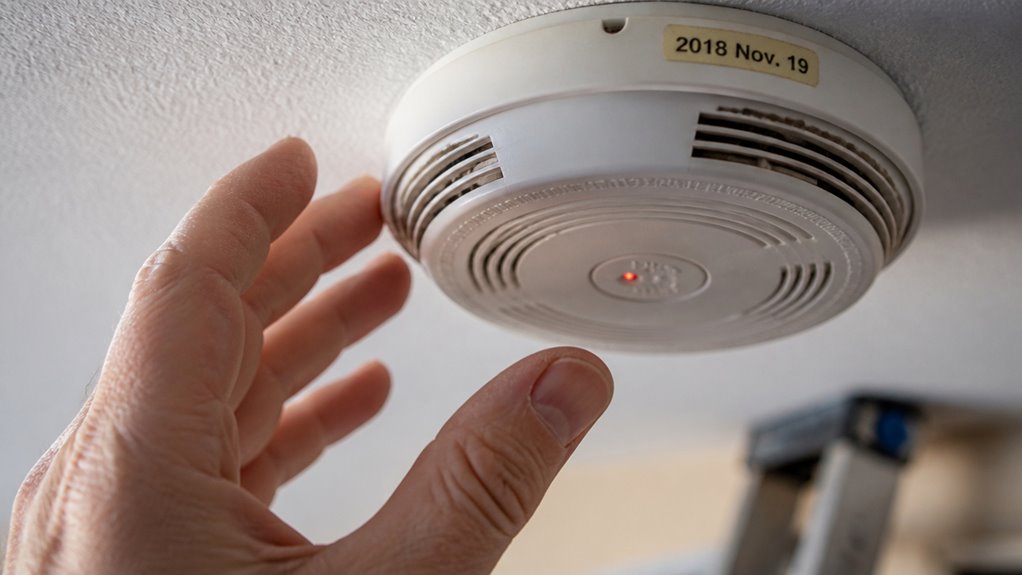

To know if your smoke detector is expired, first locate the manufacture date on the back or inside the unit. Never rely on installation date.
If this date is missing, faded, or over 10 years old, replace the detector immediately. Watch for physical aging signs like yellowing or cracks.
Listen for persistent chirps after battery changes, which signal end-of-life. Test monthly; failure means replace at once.
Combination smoke/CO alarms may need earlier replacement. Discover how to keep your home truly safe with proper maintenance and replacement guidance.
Key Takeaways
- Check the manufacture date on the back or inside the detector to determine its age.
- Replace smoke alarms 10 years after the manufacture date as recommended by NFPA.
- Look for physical signs like yellowing, cracks, or faded labels indicating sensor degradation.
- Test the alarm monthly; replace immediately if it fails or emits persistent chirping after battery change.
- If the manufacture date is missing or illegible, treat the detector as expired and replace it.
How To Find The Manufacture Date On Your Smoke Detector?
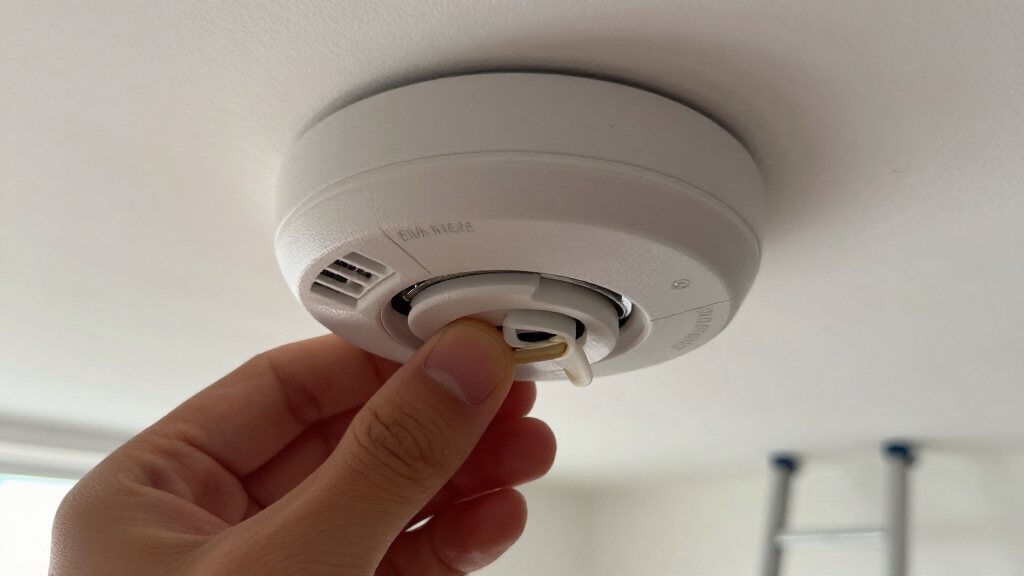
Although it mightn’t be immediately visible, you can find the manufacture date of your smoke detector by inspecting the back or inside the housing of the unit.
The manufacture date of your smoke detector is often found on the back or inside its housing.
Look carefully for a printed label or stamped code, which typically includes the month and year of production.
If the date isn’t clearly marked, check the user manual or manufacturer’s website for decoding instructions.
Hardwired units and combination smoke/CO alarms also display this information.
If you don’t see a date or the label is illegible, treat the alarm cautiously and verify its age via manufacturer resources.
Knowing the exact manufacture date is essential for timely replacement, as smoke alarms generally require replacement 10 years after this date to guarantee peak functionality and safety.
Regular inspection and maintenance of safety devices help ensure their reliability and effectiveness over time.
Why The Manufacture Date, Not Installation Date, Matters?
Because smoke detectors begin to degrade from the moment they leave the factory, the manufacture date provides the most accurate measure of their true age and effectiveness.
You can’t rely on the installation date because the unit may have sat unused for years, already losing sensor sensitivity.
The National Fire Protection Association (NFPA) recommends replacing alarms 10 years after manufacture, regardless of when you installed them.
Even hardwired or combination smoke/CO alarms age out within this timeframe and should be replaced accordingly.
If your alarm lacks a visible manufacture date or its label is illegible, treat it cautiously and consult manufacturer guidance.
Prioritizing the manufacture date guarantees you maintain reliable, functional protection instead of assuming a newly installed but old unit is safe to keep.
For optimal safety, consider using a 10-year sealed battery smoke detector to ensure continuous, maintenance-free operation throughout its lifespan.
Identify Physical Signs Your Smoke Detector Is Aging
It’s a good idea to take a look at your smoke detector every now and then. One thing to watch for is yellowing or discoloration. That can be a sign that it’s aging or has been exposed to heat damage.
Also, don’t forget to check for dust buildup, corrosion, or even insect damage. These issues can really affect how well your smoke detector works.
And hey, if you notice any cracks or damage to the housing, that’s definitely a red flag. When you spot these signs, it’s usually time to think about replacing the unit.
Additionally, checking the manufacture or replacement date printed on the unit can help you determine if it’s past its recommended 8–10 year service life.
Yellowing And Discoloration
Smoke detectors often develop yellowing or discoloration over time, signaling age, heat exposure, or plastic degradation. If you notice these changes, it’s a clear indication your unit may be nearing the end of its reliable service life.
Here’s what to look for:
- Yellowed or darkened plastic that differs from the original white or off-white color.
- Uneven color patches suggesting localized heat damage or UV exposure.
- A brittle or warped casing that can crack easily when handled.
- Faded or obscured labels, which can make it hard to verify manufacture dates or model info.
Don’t ignore these signs. Yellowing compromises plastic integrity and often coincides with sensor decline. Plan to replace the detector promptly to maintain safety. Additionally, check the manufacture date to ensure it does not exceed the typical 8 to 10 years lifespan recommended for smoke alarms.
Dust And Corrosion
Dust and corrosion frequently accumulate on smoke detectors over time, impairing their ability to function correctly. You should regularly inspect your alarm for visible dust buildup or corrosion, especially around vents and battery compartments.
These contaminants can block sensors or cause electrical issues, reducing reliability. If dust or corrosion is apparent, cleaning may be insufficient. Replacement is often the safest choice to maintain peak protection.
Promptly addressing faults ensures your smoke detector remains reliable and ready to protect your home from fire hazards by avoiding compromised fire detection.
| Issue | Effect on Smoke Detector |
|---|---|
| Dust buildup | Blocks smoke entry, delays alarm |
| Corrosion | Damages circuitry, causes failure |
| Battery corrosion | Leads to poor power connection |
| Sensor contamination | Causes false alarms or misses detections |
Regularly check and address these signs to ensure your smoke detector remains fully operational.
Cracked Or Damaged Housing
Cracks or other damage to the housing can seriously compromise your detector’s reliability by allowing dirt, moisture, and insects to enter sensitive internal components.
When you inspect your smoke detector, watch for these critical signs:
- Visible cracks or splits in the plastic casing, which weaken structural integrity.
- Loose or warped mounting that may affect sensor positioning and function.
- Discoloration or yellowing of the housing, indicating material degradation from heat or age.
- Corrosion or residue around seams and battery compartments, signaling moisture intrusion.
If any of these issues appear, replace your smoke detector immediately.
Damaged housing not only reduces detection accuracy but also accelerates sensor failure, putting you at increased risk.
Don’t rely on an aging unit with compromised protection.
Regularly testing your alarm and maintaining your device helps ensure detector functionality and safety are preserved.
How To Test Your Smoke Detector Monthly?
You know, it’s a good idea to press the test button on your smoke detector every month. This simple action helps ensure it’s working properly. Just take a moment to listen for that alarm sound. And keep an eye out for any warning lights or chirps—those could mean there’s a problem.
Also, don’t forget about regular maintenance checks! Replacing the battery and giving your detector a quick clean can go a long way in keeping it reliable. After all, you want it ready to protect you when you need it most!
Remember to replace all smoke alarms every 10 years because the sensors degrade over time.
Test Button Usage
Pressing the test button on your smoke detector monthly guarantees it’s functioning properly and ready to alert you in an emergency. This simple action confirms the alarm’s circuitry, battery, and sound mechanisms are operational.
To test your smoke detector effectively:
- Press and hold the test button until the alarm sounds loudly.
- Listen for a consistent, strong beep or voice alert.
- Release the button and allow the alarm to reset.
- If the alarm fails to sound or sounds weak, replace the battery or the entire unit immediately.
Regular testing helps detect functional decline early, preventing false security. Never ignore a failed test; replace the smoke detector without delay to maintain your home’s safety. For best results, stand about an arm’s length away to verify the 85-decibel alarm during testing.
Listen For Alerts
How often should you listen for alerts from your smoke detector? You should actively listen for signals at least once a month to ensure your unit functions correctly.
These alerts include regular test chirps, low-battery warnings, and distinct end-of-life signals. If your detector chirps persistently even after changing the battery, it likely indicates the unit has expired and needs replacement.
Pay close attention to any voice warnings or indicator lights, as these often communicate critical status updates. Remember, failure to respond to the test button combined with recurring alerts is a clear sign your smoke detector is no longer reliable.
Regularly tuning in to these alerts ensures your safety and confirms your detector is ready to protect you when it matters most. Replacing batteries every 6 to 12 months helps maintain proper function and prevents low-battery chirps that could mask critical warnings.
Regular Maintenance Checks
Regularly testing your smoke detector is essential to guarantee it functions properly when needed. Monthly checks help you catch malfunctions early and ensure the unit’s reliability. Follow these steps for an effective test:
- Press and hold the test button until the alarm sounds. If it doesn’t, replace the unit immediately.
- Confirm the alarm’s sound is loud and consistent, indicating full functionality.
- Replace batteries annually or when the low-battery chirp activates, then retest.
- Clean the detector’s exterior and vents to prevent dust buildup, which can impair sensors.
Don’t ignore failed tests or persistent chirping after battery changes.
Regular maintenance is your best defense against expired or failing smoke detectors. Stay vigilant to protect your home and loved ones. If persistent beeping continues despite battery replacement and cleaning, it may be necessary to replace the unit to ensure safety.
What To Do If Your Smoke Detector Fails The Test?
If your smoke detector fails the test, you should replace it immediately to ensure your home’s safety. A failure indicates the alarm can’t reliably detect smoke, putting you at risk.
First, check the manufacture date. Most alarms must be replaced 10 years from that date, regardless of installation time. If your unit is older or shows physical signs of aging like discoloration or damage, replacement is critical.
Even if it’s newer, a failed test signals sensor degradation or malfunction. Don’t rely on an alarm that won’t respond properly. Remove the faulty unit and install a new, compatible smoke detector following the manufacturer’s instructions.
Regular testing and timely replacement ensure your system functions effectively and protects your household.
Interpret Common Chirping Patterns And End-Of-Life Alerts
You really need to pay attention to those chirping patterns from your smoke detector. They can tell you a lot about what’s going on. For instance, if you hear a certain chirp, it might mean the battery is running low.
On the other hand, a different sound could signal that it’s time to replace the whole unit because it’s reached the end of its life.
Many smoke detectors have specific chirps or even voice alerts to communicate these issues. Getting familiar with these signals is super important. It helps you respond quickly and keep your home safe.
Identifying Chirp Types
Alarms frequently emit various chirping patterns to communicate their status. Understanding these signals is crucial for your safety. Recognizing the type of chirp can help you determine whether your smoke detector needs immediate attention or replacement.
Here’s what to look for:
- Single chirp every minute: Usually indicates a low battery. Replace it promptly.
- Repeated chirps after battery change: Could signal the unit is reaching its end of life.
- Intermittent chirps with no clear pattern: Might mean sensor malfunction or dust interference.
- Continuous chirping or beeping: Often signals a critical error or failure requiring immediate replacement.
Pay close attention to your alarm’s chirp pattern. Consult the manufacturer’s instructions for accurate interpretation.
Understanding End-Of-Life Signals
Pay close attention when your smoke detector starts to chirp or emit unusual sounds. These often serve as crucial end-of-life signals. A single chirp typically indicates a low battery, but repeated chirping after replacing the battery usually means the unit is failing.
Many alarms feature distinct end-of-life alerts, such as specific chirp patterns, indicator lights, or voice warnings. These are designed to prompt replacement. If your detector stops responding to the test button, that’s an immediate sign to replace it.
Always consult the manufacturer’s instructions to interpret these signals correctly, as alert patterns vary by model. Ignoring these warnings risks your safety, so act promptly when you notice persistent chirping or end-of-life indicators. This ensures reliable smoke detection.
When Warning Signs Mean Immediate Replacement?
Although smoke detectors are designed for long-term use, certain warning signs demand immediate replacement to guarantee your safety.
Ignoring these signals can compromise your home’s fire protection.
Act without delay if you observe:
- Persistent chirping after fresh battery installation, indicating sensor failure or end-of-life.
- Failure to respond to monthly test button checks, signaling functional decline.
- Visible physical damage such as cracks, discoloration, or corrosion that impairs performance.
- The unit is 10 years old or older, based on the manufacture date on the back.
When To Replace Combination Smoke Detector And CO Alarms?
Because combination smoke and carbon monoxide (CO) alarms integrate multiple safety functions, you should pay close attention to their specific replacement timelines, which often differ from standard smoke detectors.
Most manufacturers recommend replacing these units within 7 to 10 years from the manufacture date, which you can find on the back or inside the housing.
Some models have a shorter lifespan due to sensor technology limitations.
Watch for end-of-life signals like chirping, indicator lights, or voice alerts. Persistent alerts after battery changes mean it’s time to replace.
Never rely on the installation date, and always follow the manufacturer’s guidance.
If your combination alarm fails a test or shows physical damage, replace it immediately to maintain reliable protection against both smoke and carbon monoxide hazards.
What To Do If Your Smoke Detector Label Is Missing Or Faded?
Knowing the manufacture date on your smoke detector is key to determining when it needs replacement. But what if the label is missing or faded? Don’t ignore the issue; take these steps:
- Test the alarm monthly. Failure or persistent chirping after battery changes signals replacement.
- Look for physical signs like yellowing, cracks, or corrosion, which indicate aging or damage.
- Check the manufacturer’s website or customer support using the model number for lifespan details.
- When in doubt, replace the unit immediately to guarantee safety. Treat unlabeled or faded detectors as expired.
Following these steps helps you maintain reliable fire protection even without a visible manufacture date. Never assume an unlabeled alarm is safe; prioritize replacement to protect your home and family.
Understanding The 10-Year Lifespan Rule For Smoke Detectors
When you rely on a smoke detector to protect your home, understanding its lifespan is vital for safety.
The National Fire Protection Association (NFPA) recommends replacing smoke detectors every 10 years from the manufacture date, not the installation date.
You’ll find this date printed on the back or inside the unit. Even hardwired alarms need replacement after 10 years to maintain reliability.
Some combination smoke and carbon monoxide alarms might require earlier replacement, so check your manufacturer’s guidance.
Don’t ignore the unit’s condition; ongoing sensor degradation reduces detection effectiveness over time.
If your alarm is older than 10 years or shows signs of failure, replace it immediately to guarantee continuous protection.
Following the 10-year rule is essential for dependable, life-saving performance.
Frequently Asked Questions
Can I Extend My Smoke Detector’s Life With Regular Maintenance?
You can’t extend your smoke detector’s life with regular maintenance.
While cleaning and testing help keep it functioning properly, they don’t stop sensor aging or material degradation.
Smoke alarms have a fixed lifespan, usually around 10 years, after which they become unreliable regardless of upkeep.
To stay safe, replace your detector promptly once it reaches its end-of-life or shows warning signs, rather than relying on maintenance to prolong its effectiveness.
Are There Specific Brands With Longer Smoke Detector Lifespans?
Like a well-built watch, some brands such as Kidde, First Alert, and Nest offer smoke detectors with reliable lifespans, generally around 10 years.
While no brand drastically extends life beyond NFPA guidelines, certain models include advanced sensors that maintain sensitivity longer.
You should still check each unit’s manufacture date and follow replacement recommendations.
How Do Environmental Factors Affect Smoke Detector Expiry?
Environmental factors like humidity, dust, heat, and insect exposure can accelerate your smoke detector’s aging and sensor degradation.
High humidity or dust buildup interferes with sensor accuracy.
Heat can warp plastic components, causing discoloration or cracks.
If your detector’s in a harsh environment, it may fail sooner than the typical 10-year lifespan.
You should inspect it more frequently and replace it promptly if you notice physical damage or performance issues.
Can a Smoke Detector Be Recycled After Replacement?
Like a puzzle piece fitting perfectly, you can recycle your smoke detector, but you need to do it right.
Many contain small amounts of radioactive material and electronic components, so tossing them in regular trash isn’t safe.
Check with your local recycling center or hazardous waste facility; they often accept smoke alarms for proper disposal.
Some manufacturers also offer take-back programs.
Always follow local regulations to protect the environment and comply with safety standards.
Do Smart Smoke Detectors Have Different Expiration Guidelines?
Yes, smart smoke detectors often have different expiration guidelines. You’ll want to check the manufacturer’s instructions since some models, especially combination units, may require replacement sooner than the standard 10 years.
Their advanced sensors and connectivity features can degrade over time, affecting reliability. Always follow specific guidance and watch for end-of-life alerts, as these devices often provide clear signals when it’s time to replace them.
Check the Manufacture Date Before It’s Too Late
Think of your smoke detector as a guardian whose strength fades with time. Knowing how to find its manufacture date and recognizing signs of aging guarantees it won’t fail you when it matters most.
Regular testing and timely replacement keep your home safe, just like a well-maintained shield. Don’t wait for warning signs; stay proactive and replace detectors every 10 years to keep that invisible shield strong and reliable.

[…] to regularly verify your safe’s manufacture date and condition to avoid unexpected issues with lock mechanisms over […]