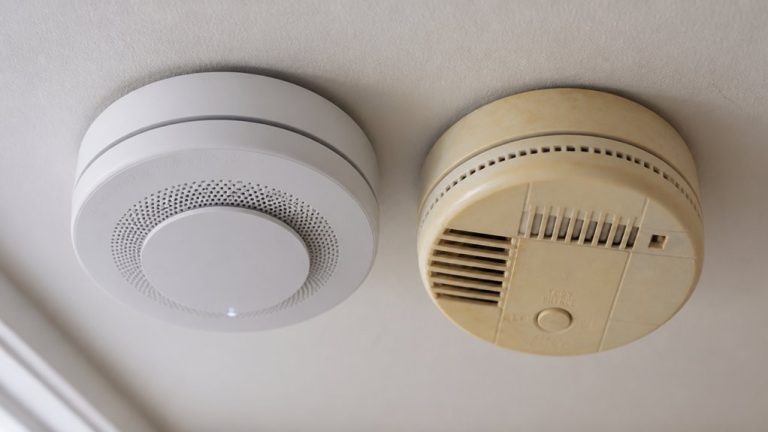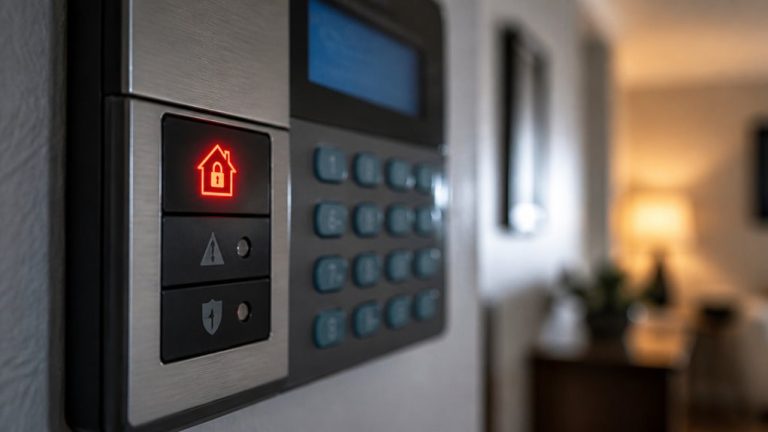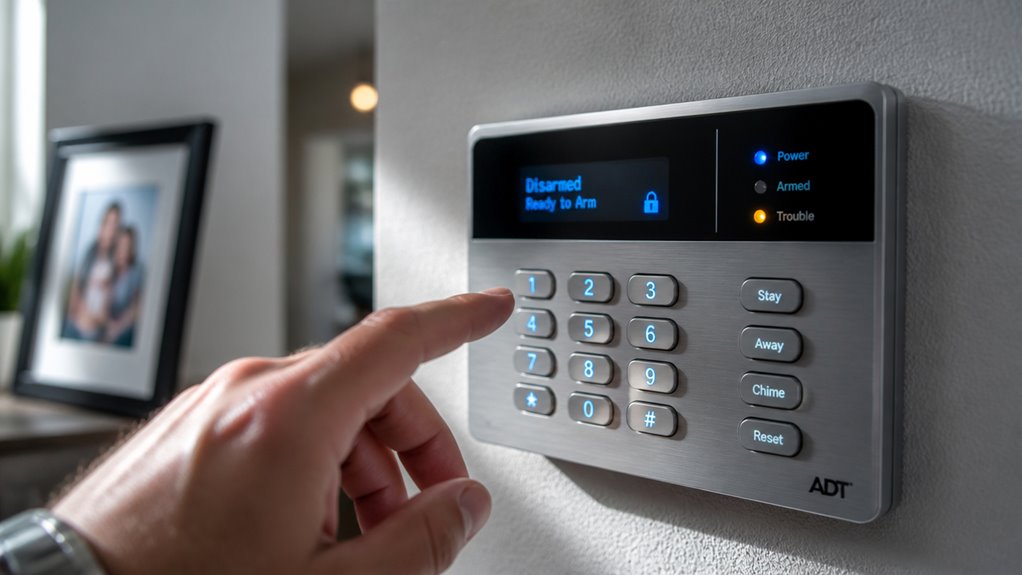

An alarm system is a smart security network that uses sensors to detect threats like intrusions, fire, or water leaks and sends you instant alerts. The control panel processes sensor data and triggers sirens or notifications for immediate response.
Systems offer options like wireless setup, professional or self-monitoring, and dual-path communication for reliability during outages. By quickly notifying you or emergency services, alarm systems enhance your safety and protect your property.
You’ll find guidance on selecting the right system and features ahead.
Key Takeaways
- An alarm system is a smart security network that detects threats and sends instant alerts to occupants or monitoring services.
- It uses sensors like door/window contacts, motion detectors, and smoke or water leak detectors to monitor abnormal conditions.
- The control panel processes sensor data and triggers alarms, notifications, or emergency responses as needed.
- Systems may offer wireless setups, dual-path communication, and video surveillance for enhanced security and reliability.
- Monitoring options include professional 24/7 monitoring with recurring fees or self-monitoring that requires user response.
What Is an Alarm System and How Does It Work?
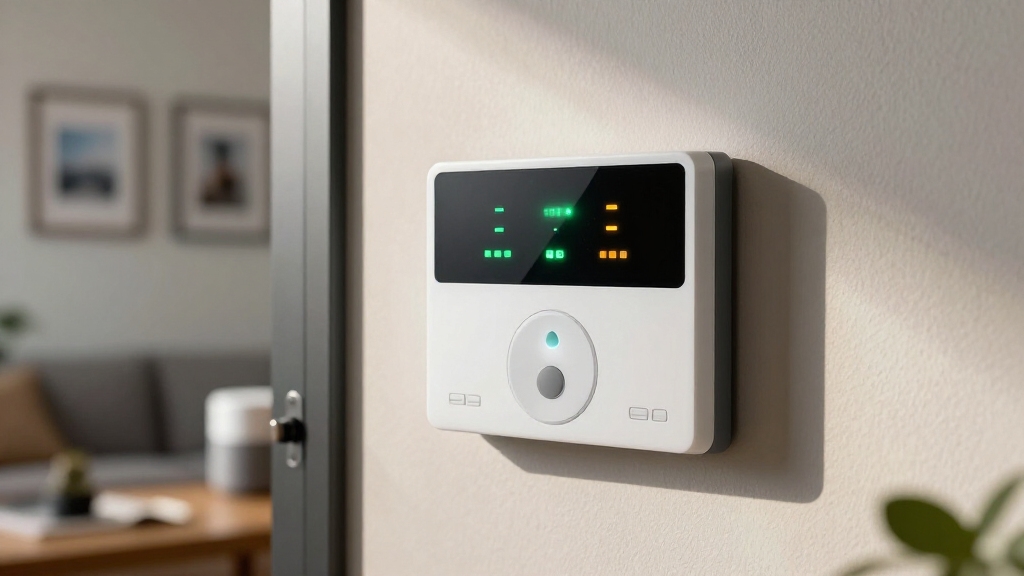
Although you might think of an alarm system simply as a noise maker, it’s actually a sophisticated security setup designed to detect threats like intrusions, fire, or water leaks and immediately send alerts.
An alarm system is a smart security network that detects threats and sends instant alerts.
When a sensor identifies an abnormal condition, it transmits data to the system’s control panel. The panel processes this input to determine if a response is necessary.
Upon confirmation, the system triggers alerts such as sirens or notifications to inform occupants or monitoring services. This rapid detection and notification mechanism enhances safety by enabling timely intervention.
You’ll find alarm systems monitor various hazards simultaneously, ensuring all-encompassing protection. Their effectiveness depends on seamless sensor-to-panel communication and the system’s ability to promptly execute programmed responses once threats are detected.
Fire alarm systems typically include both automatic and manual devices to optimize detection and ensure reliable alerts under different conditions.
Main Components of a Typical Alarm System
When you set up an alarm system, you rely on several key components working together to detect threats and trigger alerts.
The control panel serves as the system’s central processor, receiving signals from various sensors, such as door/window contacts, motion detectors, and environmental sensors like smoke or water leak detectors.
User interfaces, including keypads or touchscreens, let you arm or disarm the system easily.
Output devices like sirens and notification modules provide immediate warnings to occupants or monitoring services.
To guarantee continuous operation, backup batteries maintain power during outages. Cellular connectivity sustains communication if the internet fails.
Each component plays a precise role, assuring the system responds reliably and promptly to any detected security or safety event.
Proper sensor positioning and calibration are essential to avoid false alarms and ensure accurate detection.
Types of Alarm Systems and What They Guard Against
Because threats come in various forms, alarm systems are designed to specialize in detecting specific hazards such as unauthorized entry, fire, or water leaks. You’ll find different types tailored to address these risks efficiently.
| Alarm System Type | What It Guards Against |
|---|---|
| Intrusion Alarm | Unauthorized entry via doors, windows, or motion |
| Fire Alarm | Smoke, heat, and fire detection |
| Flood/Water Leak Alarm | Water intrusion and leak detection |
| Panic Alarm | Emergency assistance requests |
Each system uses dedicated sensors to monitor conditions and activate alerts when necessary. Understanding these types helps you select the right protection for your property’s unique vulnerabilities. Proper sensor placement is essential to ensure reliable detection and reduce false alarms.
Benefits of Alarm Systems for Your Home
Alarm systems frequently provide essential advantages that enhance the safety and security of your home.
By detecting intrusions, fire, or water leaks early, they minimize damage and potential harm.
Early detection of intrusions, fire, or water leaks helps reduce damage and safeguard your home.
They act as a strong deterrent against burglary and vandalism by signaling unauthorized activity visibly and audibly.
You benefit from real-time monitoring and alerts, enabling swift action to prevent loss or injury.
Integrated sensors and control panels offer coordinated protection, covering multiple risks in one system.
Additionally, alarm systems maintain functionality through backup power and cellular connectivity, ensuring continuous operation during outages.
Their technical design increases your home’s resilience against threats and enhances peace of mind.
They also support efficient emergency management without requiring constant manual oversight.
Research shows that homes with visible alarm signs reduce burglary risk by 25%, highlighting their critical role in deterrence.
How Alarm Systems Alert You and Get Help?
Your security system kicks into action the moment a sensor detects a potential threat. It instantly processes the signal through the control panel to determine the appropriate response.
Depending on the system configuration, it can trigger audible alarms and send alerts to your smartphone or a professional monitoring center. Monitored systems enable dispatchers to contact emergency services automatically, ensuring rapid assistance.
Self-monitored systems notify you directly, allowing you to act swiftly.
| Alert Type | Response Method |
|---|---|
| Audible Siren | Deters intruders locally |
| Mobile Notification | Immediate user alert |
| Central Station Alert | Professional monitoring |
| Emergency Dispatch | Police, fire, or medical help |
This multi-tiered alert mechanism maximizes safety by combining local deterrence and external emergency intervention. Many alarm systems also support creating personalized access codes to arm and disarm the system securely and conveniently.
Choosing the Right Alarm System
When you’re picking out an alarm system, there are a few types you should think about—like wired, wireless, or even hybrid setups. Each has its own perks, so it’s worth taking the time to figure out which one suits your needs best.
Next, let’s talk about features. You’ll want to consider the variety of sensors available, the connectivity options, and how easy the user interface is to navigate. These elements are crucial for making sure your system performs reliably when it counts.
And of course, we can’t forget about the budget. Think about your monitoring choices—whether you want professional monitoring or prefer to keep it simple with self-monitoring. Finding that sweet spot between what you need and what you can afford will help you choose a system that gives you peace of mind without breaking the bank.
Also, understanding the importance of entry delay timing can help ensure you have enough time to disarm the system when entering your property.
Types of Alarm Systems
Typically, choosing the right alarm system depends on your specific security needs, property size, and desired level of monitoring.
You’ll encounter several types: wired, wireless, monitored, unmonitored, and hybrid systems. Each offers distinct advantages based on installation complexity, reliability, and control options.
| Alarm System Type | Description |
|---|---|
| Wired | Hardwired sensors, stable signals |
| Wireless | Battery-powered, flexible setup |
| Monitored | Professional 24/7 monitoring |
| Unmonitored | Self-alert via phone/app |
| Hybrid | Combines wired and wireless tech |
Understanding these types helps you select a system that balances protection, convenience, and budget effectively for your property. Modern DIY systems like Ring Alarm offer wireless setup combined with professional monitoring options to enhance home security flexibility.
Key Features To Consider
Although selecting an alarm system can seem complex, focusing on key features simplifies the decision-making process.
You’ll want to prioritize components that guarantee reliable detection, rapid alerting, and ease of use.
Consider these critical elements when choosing a system:
- Sensor variety and placement: Guarantee coverage for doors, windows, motion, and environmental hazards like fire or water leaks.
- Control panel capabilities: Look for intuitive interfaces and robust processing to handle multiple sensor inputs.
- Connectivity options: Choose systems with cellular backup and app integration for continuous monitoring during outages.
- Alert mechanisms: Confirm the system supports audible alarms and remote notifications for immediate response.
Additionally, selecting systems with dual-path communication using LTE cellular and Wi-Fi ensures uninterrupted alerts even during network outages.
Budget and Monitoring Options
You’ll frequently find that budget considerations heavily influence your choice of alarm system and monitoring options.
You need to balance upfront costs, monthly fees, and the level of monitoring: professional or self-monitored.
Professional monitoring offers 24/7 response but at a recurring cost.
Self-monitoring reduces expenses but requires you to respond promptly to alerts.
Your choice affects system features, reliability, and response time.
Alarm systems with video surveillance capabilities are increasingly popular, enhancing neighborhood security and overall system appeal.
| Budget Range | Monitoring Type | Key Features |
|---|---|---|
| Low ($0-$200) | Self-Monitoring | Basic sensors, app alerts, no monthly fee |
| Medium ($200-$500) | Professional | Enhanced sensors, 24/7 monitoring, alerts |
| High ($500+) | Professional + Smart | Advanced sensors, automation, priority response |
| Low | Professional | Basic monitoring, limited features |
| Medium | Self-Monitoring | Flexible alerts, partial automation |
Frequently Asked Questions
How Often Should I Test My Alarm System for Proper Function?
You should test your alarm system at least once a month to make certain all sensors, sirens, and communication components function properly.
Regular testing helps you identify issues like dead batteries, sensor malfunctions, or connectivity problems before an emergency occurs.
Additionally, perform a full system test after any maintenance or firmware updates.
Keeping a consistent testing schedule guarantees your alarm system remains reliable and ready to alert you during critical situations.
Can Alarm Systems Be Integrated With Smart Home Devices?
Yes, you can integrate alarm systems with smart home devices. Many modern alarm systems support connectivity with platforms like Alexa, Google Home, or Apple HomeKit.
This integration lets you control alarms, lights, locks, and cameras through voice commands or mobile apps. It also enables automation, like arming your system when you leave or turning on lights during an alarm.
Make sure your alarm system supports compatible protocols like Z-Wave or Zigbee.
What Are the Typical Costs of Professional Monitoring Services?
Think of professional monitoring costs as a guardian’s toll—usually $15 to $50 monthly.
You’ll pay a setup fee, often $50 to $200, covering equipment activation.
Plans vary by service level and features like emergency dispatch or app integration.
Some providers offer contracts; others let you pay month-to-month.
Budgeting for this recurring cost guarantees your alarm system’s watchful eye never blinks when you need it most.
How Long Do Backup Batteries Usually Last During Power Outages?
Backup batteries in alarm systems usually last between 24 to 72 hours during power outages, depending on battery capacity and system usage.
You can expect around 24-48 hours for standard setups.
High-capacity or professionally monitored systems may extend up to 72 hours.
It’s vital to regularly test and replace batteries to guarantee reliable backup power.
Some advanced systems notify you via app when battery levels are low, helping you maintain continuous protection.
Are There Any Legal Requirements for Installing Alarm Systems?
Yes, you may face legal requirements when installing alarm systems, depending on your location.
Some jurisdictions mandate permits or registration with local authorities, especially for systems linked to police dispatch.
You must comply with building codes, fire safety regulations, and privacy laws regarding audio or video recording.
It’s vital to check local laws and homeowners’ association rules before installation to verify your system meets all legal standards and avoids penalties.
Choose an Alarm System That Matches Your Risks
Now that you understand what an alarm system is and how it works, you can see why it’s essential for protecting your home.
These systems combine sensors, control panels, and alert mechanisms to detect threats quickly.
Whether guarding against intrusions, fire, or carbon monoxide, they provide peace of mind by notifying you and emergency services promptly.
Choosing the right system means balancing your specific security needs with technological features for peak protection.