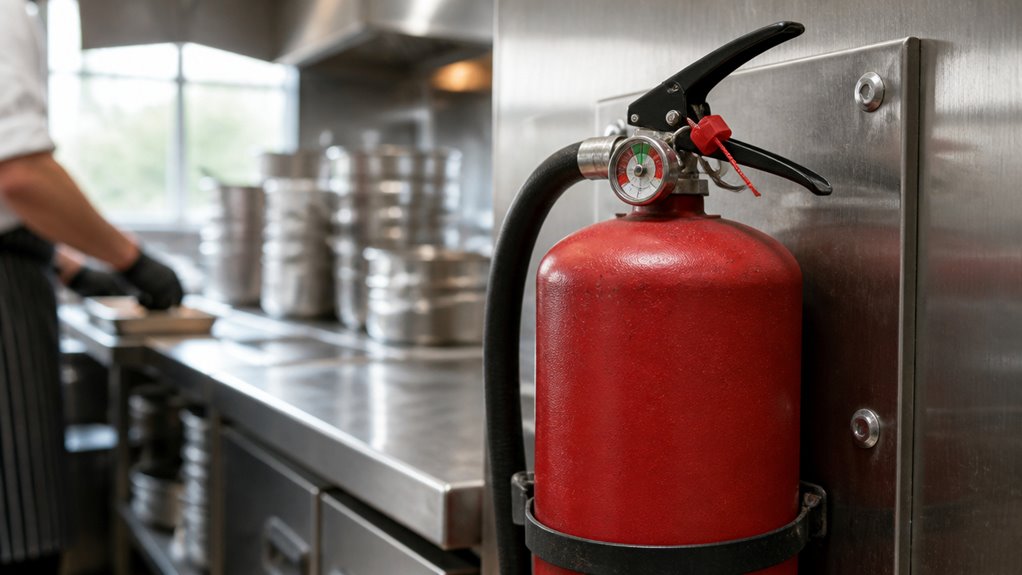

You can use a PW fire extinguisher to tackle Class A fires involving ordinary combustibles like wood, paper, textiles, and some plastics.
It works by cooling materials rapidly, removing heat to stop combustion and penetrate deep into porous fuels like timber or upholstery.
Avoid using it on flammable liquids, electrical, or grease fires, as it risks spreading flames or causing shocks.
Proper training guarantees you select it only for suitable fires.
There’s more to understand about where and why these extinguishers excel.
Key Takeaways
- A Pw fire extinguisher is suitable for Class A fires involving wood, paper, textiles, and many common plastics.
- It cools burning materials by absorbing heat and lowering temperatures below ignition points.
- Ideal for use on fires in homes, offices, schools, libraries, and warehouses with ordinary combustibles.
- Should only be used on confirmed Class A fires and never on electrical, flammable liquid, or grease fires.
- Proper training and extinguisher rating confirmation are essential for safe and effective use.
What Fires Can PW Extinguishers Handle?
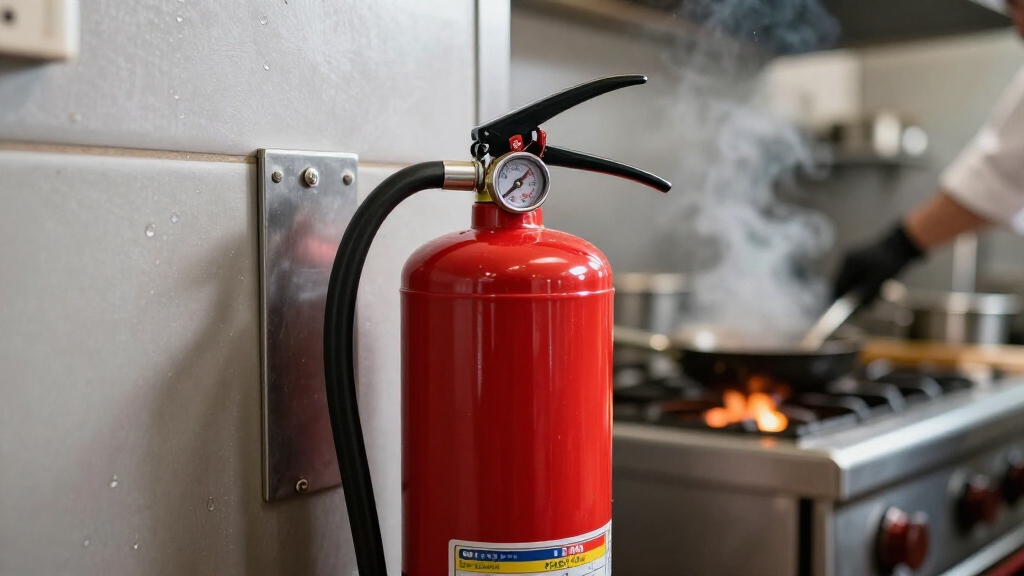
Although you might encounter various fire types, PW (pressurized water) extinguishers are specifically designed to tackle Class A fires involving ordinary combustibles like wood, paper, textiles, rubber, and many plastics.
These extinguishers suppress fires primarily by cooling the burning material, removing heat from the fire triangle to lower temperatures below ignition points.
They’re especially effective on deep-seated fires in common environments such as offices, schools, homes, and warehouses.
You must use PW extinguishers only when the fire’s class is clearly identified as Class A. Using them on flammable liquids, electrical, cooking oil, gas, or metal fires can be hazardous and ineffective.
Always confirm the extinguisher’s rating and ensure proper training to select the correct type swiftly in emergencies.
Water’s ability to cool fires is enhanced by its high specific heat capacity, which allows it to absorb large amounts of heat efficiently.
What Materials Can PW Extinguishers Safely Put Out?
You can safely use PW extinguishers on common combustible materials like wood, paper, and cardboard. They do a great job putting out fires started by these everyday items.
But it doesn’t stop there! They’re also effective on plastics and textiles that can easily catch fire. Knowing which materials these extinguishers can handle is super important. It helps you use them correctly and keeps fire from spreading.
PW extinguishers use monoammonium phosphate-based dry chemical that melts at about 350°F to insulate and smother burning materials effectively.
Common Combustible Materials
Common combustible materials include wood, paper, textiles, rubber, and many plastics. These are the typical fuels that PW fire extinguishers effectively target. You can rely on these extinguishers to cool and suppress fires involving ordinary combustibles by removing heat from the ignition process.
When using a PW extinguisher, focus on:
- Wood and timber, common in furniture and structural elements
- Paper and cardboard, often found in offices and warehouses
- Cloth and textiles, including curtains and upholstery
These materials sustain Class A fires, which PW extinguishers are specifically rated to handle. Remember, these extinguishers work by absorbing heat rather than smothering flames. This makes them ideal for deep-seated fires in these solid materials. Use them only when the fire matches this classification to guarantee safe and effective suppression. For added safety, always follow best practices when handling fire extinguishers to prevent accidents and ensure proper use.
Plastics And Textiles
Plastics and textiles often fuel Class A fires, making PW extinguishers effective tools for controlling these hazards.
These extinguishers work by cooling burning materials, removing heat to halt combustion.
You can safely use a PW extinguisher on common plastics such as rubber and many synthetic polymers, as well as textiles including cloth, curtains, and upholstery.
Avoid using PW extinguishers on fires involving flammable liquids, electrical equipment, or cooking oils, as water can spread flames or cause electrical shock.
When you face a fire fueled by ordinary combustible plastics or textiles, a PW extinguisher offers reliable suppression by penetrating deep-seated flames and lowering temperatures below ignition points.
Always confirm the fire class before deploying to guarantee safety and effectiveness.
They operate by releasing a fine mist that rapidly cools and displaces oxygen, providing precise fire suppression with minimal water damage.
Wood And Paper
Wood and paper materials form the backbone of many Class A fires, making PW extinguishers an essential tool for controlling such incidents.
These extinguishers work by cooling the burning material, removing heat from the fire triangle, and effectively suppressing deep-seated fires.
When dealing with wood and paper, you must make certain the fire source is indeed Class A to avoid hazards.
You can safely use a PW extinguisher on:
- Wooden furniture, timber structures, and pallets.
- Paper products including books, cardboard, and packaging.
- Cloth, textiles, and other carbonaceous solids that accompany wood and paper fires.
Water’s high heat absorption removes thermal energy rapidly, lowering temperatures below ignition and making it the most effective method for extinguishing Class A fires through water cooling.
When Should You Avoid Using PW Extinguishers?
Although PW extinguishers effectively tackle fires involving ordinary combustibles, you should never use them on flammable liquid, electrical, cooking oil, flammable gas, or combustible metal fires.
PW extinguishers are for ordinary combustibles only; never use them on flammable liquid, electrical, or specialized fires.
Using water on flammable liquids like petrol or solvents can spread the fire, increasing danger. Water conducts electricity, so applying a PW extinguisher to electrical fires risks severe electric shock.
Cooking oil and grease fires require specialized wet chemical extinguishers due to their unique combustion properties. Flammable gas and combustible metal fires also need specific extinguisher types designed for those hazards.
Always check the extinguisher label and color coding to confirm its suitability. Avoiding misuse is critical to your safety and effective fire suppression. Proper training guarantees you select the right extinguisher quickly and confidently.
Water extinguishers rely on cooling and penetrating properties to suppress Class A fires effectively.
How Do PW Extinguishers Put Out Fires?
When you use a PW extinguisher, it puts out fires primarily by cooling the burning material. This action removes heat, which is essential to sustain combustion, effectively breaking the fire triangle.
Unlike smothering agents, PW extinguishers focus on lowering the temperature below the ignition point, halting fire progression.
To be precise, PW extinguishers absorb heat rapidly from the combustible material, reducing its temperature. They penetrate deep-seated fires, especially in porous materials like wood or textiles.
PW extinguishers utilize water’s high specific heat capacity for efficient thermal absorption. This cooling effect is especially effective for Class A fires, which involve ordinary combustibles like wood and paper.
Why Are PW Extinguishers Best for Ordinary Combustibles?
You know, when it comes to dealing with Class A fires—like those involving wood, paper, and textiles—PW extinguishers really shine.
They work by effectively removing heat, which is key to putting out those ordinary combustibles.
What’s great about their design is that it specifically targets these types of fires.
Plus, you won’t have to worry about electrical shock or spreading the fuel further.
So, understanding the safety features and material limits of PW extinguishers helps you make the right choice for the hazards you might face.
It’s all about keeping things safe and effective!
Their cooling effect is enhanced by the latent heat of vaporization, which absorbs large amounts of heat during water evaporation to suppress flames.
Effective Heat Removal
Drawing heat away from burning materials, PW extinguishers excel at tackling ordinary combustibles by rapidly cooling the fire below its ignition temperature.
When you use a PW extinguisher, you remove the critical heat element from the fire triangle, effectively halting combustion. This cooling effect is essential for deep-seated fires in materials like wood and textiles.
You’ll find PW extinguishers best because they:
- Absorb and dissipate heat efficiently, lowering temperatures quickly
- Penetrate porous materials to cool internal hot spots
- Provide a continuous cooling effect to prevent re-ignition
For optimal performance and safety, PW extinguishers should be inspected and serviced regularly by licensed fire protection services.
Suitable Material Types
The rapid heat removal achieved by PW extinguishers aligns perfectly with the characteristics of ordinary combustible materials.
You’ll find these extinguishers ideal for fires involving wood, paper, textiles, rubber, and many plastics. These materials are common in offices, schools, homes, and warehouses.
PW extinguishers cool the burning material below its ignition point, effectively tackling deep-seated Class A fires. Their suppression relies on heat absorption rather than smothering, making them unsuitable for flammable liquids, electrical, or grease fires.
When you encounter a fire fueled by carbonaceous solids like timber or cardboard, a PW extinguisher efficiently disrupts the combustion process.
Using them on appropriate materials guarantees rapid control and reduces fire spread.
This reinforces their role as the primary choice for ordinary combustibles in most everyday environments.
To ensure safety and reliability, always check the expiration date on your PW extinguisher and replace it according to manufacturer guidelines and safety standards.
Safety Considerations
Although PW extinguishers excel at cooling ordinary combustibles, their safety hinges on correct application. You must make certain the fire involves only Class A materials like wood or paper.
Using PW extinguishers improperly on flammable liquids, electrical, or grease fires can be dangerous. This may cause fire spread or electric shock. Always check the extinguisher’s rating and label before use.
To maximize safety, remember to:
- Use PW extinguishers exclusively on confirmed Class A fires.
- Avoid application near live electrical equipment to prevent shock hazards.
- Get proper training to identify fire types and select the correct extinguisher swiftly.
Following these precautions ensures PW extinguishers remain the safest and most effective choice for ordinary combustibles.
Where Are PW Extinguishers Commonly Used?
You’ll frequently find PW extinguishers in environments where ordinary combustible materials like paper, wood, and textiles are abundant.
These extinguishers are standard in offices filled with paper products and furniture, schools and libraries housing books and paper materials, as well as warehouses storing cardboard and wooden goods.
Homes also commonly use PW extinguishers due to the presence of furniture, curtains, and other combustibles.
Industrial or commercial settings that handle ordinary combustible stocks rely on them as a primary fire suppression tool.
Remember, PW extinguishers are designed specifically for Class A fires, cooling the burning material to remove heat.
You shouldn’t use them on electrical fires, flammable liquids, or grease fires, as water can spread flames or cause electrical hazards.
Always match extinguisher types to the fire class.
Frequently Asked Questions
How Often Should PW Fire Extinguishers Be Inspected?
You should inspect PW fire extinguishers monthly to ensure they’re fully charged, accessible, and undamaged.
Perform a thorough annual maintenance check by a certified professional to assess mechanical parts, extinguishing agent, and overall condition.
Keep records of inspections and maintenance.
Regular inspections help guarantee the extinguisher operates effectively during emergencies, ensuring safety and compliance with fire safety regulations.
Don’t skip these checks; they’re critical for reliable fire protection.
Can PW Extinguishers Be Used Outdoors in Windy Conditions?
You shouldn’t rely on PW extinguishers outdoors in windy conditions.
Wind can disperse the water spray, reducing cooling effectiveness and allowing the fire to spread.
This decreases your ability to control the fire safely. If you must use one outside, position yourself upwind and close to the fire.
Be aware the wind may compromise suppression. Consider more suitable extinguishers or firefighting methods for outdoor, windy environments.
What Maintenance Is Required for PW Fire Extinguishers?
You should inspect your PW fire extinguisher monthly and have it professionally serviced annually, as 70% of extinguishers fail due to poor upkeep.
Check pressure gauges, seals, and nozzles for damage or blockage. Make certain it’s fully charged and the label is legible.
After use, recharge or replace it immediately. Proper maintenance guarantees reliable performance and safety during emergencies, so don’t skip these critical steps.
Are PW Extinguishers Safe for Use Around Children?
Yes, PW extinguishers are generally safe around children when used properly.
They contain water, which poses minimal chemical risk. However, make sure children are kept at a safe distance during operation to avoid accidental injury or inhalation of mist.
Supervise usage closely, as improper handling can cause slips or electrical hazards if used near live circuits.
Always follow safety guidelines and provide training to ensure correct, safe use around kids.
How Long Does the Extinguishing Agent Last Once Discharged?
You’ll find that the extinguishing agent from a PW fire extinguisher lasts typically 30 to 60 seconds once discharged.
You’ll spray steadily, aiming at the fire’s base, maintaining control throughout.
You’ll expect the water to cool effectively during this window, reducing heat and preventing re-ignition.
You’ll need to act quickly and efficiently because the limited discharge time requires precision and focus to fully suppress the fire.
Remember Which Fires a PW Extinguisher Can Handle
You can rely on PW extinguishers to handle ordinary combustibles, protect wood, paper, and textiles, and quickly cool flames without spreading fire.
You shouldn’t use them on electrical or grease fires, where other agents work better. They operate by interrupting the chemical reaction and removing heat, making them efficient and safe.
Whether in homes, offices, or schools, PW extinguishers provide effective, reliable fire suppression when used correctly and promptly.