
Your smoke alarm likely stopped chirping because you replaced the battery, resolved wiring issues, or corrected environmental factors like dust or humidity interfering with sensors.
Make certain batteries are fresh and installed correctly, wiring is secure for hardwired units, and the sensor chamber stays clean and dry.
If chirping recurs, the alarm might be near its 10-year end-of-life or experiencing power interruptions.
Understanding these causes helps maintain reliable protection and informs when further action is needed.
Key Takeaways
- Smoke alarm stops chirping after fresh battery installation indicates resolved low-battery issue.
- Confirm battery compartment is fully closed and battery polarity is correct to ensure proper function.
- Verify hardwired units have continuous AC power and no loose wiring causing intermittent chirps.
- Clean sensing chamber of dust, debris, or insects to prevent false chirps or sensor obstruction.
- If chirping persists after battery replacement, consider unit end-of-life and replace alarm if over 10 years old.
Why Your Smoke Alarm Chirps and How to Stop It?
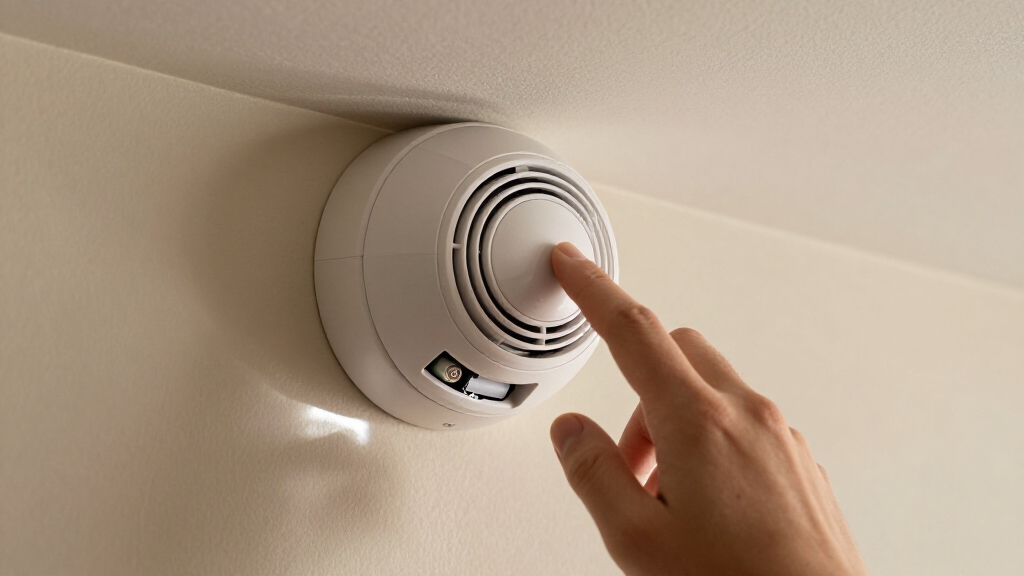
Although a smoke alarm’s chirp can be disruptive, it serves as an essential alert indicating an issue that requires your attention.
Typically, a single chirp every 30 to 60 seconds signals a low battery needing replacement.
Hardwired alarms also rely on backup batteries, which can cause chirping when weak.
Cooler room temperatures may increase chirp frequency due to battery performance decline.
Persistent chirping after battery replacement often indicates the alarm has reached its end of life, usually after 10 years, requiring a full unit replacement.
Environmental factors like dust, humidity, or insect intrusion can also trigger chirps.
Wiring issues in hardwired units, such as loose connections or power interruptions, may cause intermittent chirps.
Identifying these causes helps you take the appropriate steps to stop the chirping effectively.
Ignoring low-battery chirps risks detector failure and leaves occupants vulnerable during fires, so it is crucial to replace batteries promptly to maintain smoke detector reliability.
How to Replace Batteries and Test Your Smoke Alarm?
Start by locating the battery compartment on your smoke alarm, usually accessible via a removable cover or drawer. Open it carefully to remove the old battery, noting its orientation.
Begin by finding and carefully opening your smoke alarm’s battery compartment to remove the old battery, noting its orientation.
Insert a fresh battery of the type specified by the manufacturer, guaranteeing correct polarity. After installing the battery, close the compartment securely to maintain proper contact.
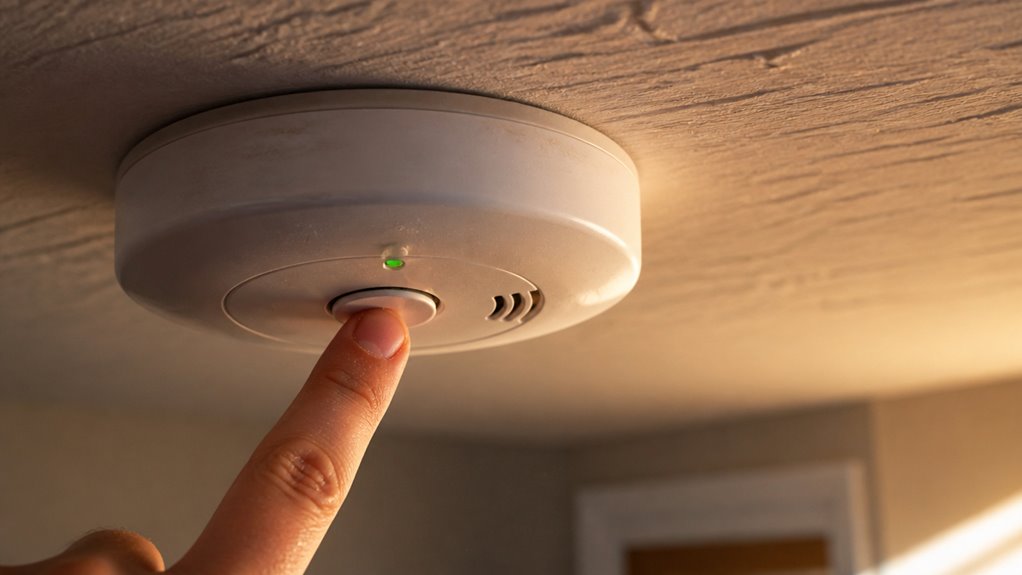
Next, press the test button on the alarm; it should emit a loud, continuous sound indicating functionality. If the alarm fails to sound, double-check the battery placement and compartment closure.
For alarms with replaceable batteries, change them at least annually. Proper battery replacement and testing guarantee your smoke alarm operates reliably, reducing false chirps caused by low power or loose connections.
Always confirm the unit is firmly mounted after maintenance. Replace the entire smoke alarm unit every 10 years from the manufacture date to ensure optimal safety and performance.
What to Do When Chirping Continues After Battery Replacement?
If your smoke alarm keeps chirping even after you replace the battery, it often indicates a deeper issue beyond power supply.
Start by confirming the battery is installed correctly, with proper polarity and a fresh, manufacturer-approved type.
Next, confirm the battery compartment is fully closed and the alarm is securely mounted.
If it’s hardwired, check for power interruptions or loose wiring.
Consider the alarm’s age; units typically require replacement after 10 years due to end-of-life component failure.
Also, perform a reset by pressing and holding the test button for 15–30 seconds to discharge any residual power.
Finally, test the alarm after each adjustment.
- Verify correct battery installation and type
- Confirm battery compartment and mounting are secure
- Inspect wiring and power source for hardwired units
- Check the alarm’s manufacture date for end-of-life signals
- Test the alarm function after any correction
How Dust, Humidity, and Environment Cause Smoke Alarm Chirping?
Dust and debris can really mess with your smoke alarm. When they build up inside the sensing chamber, it can lead to those annoying intermittent chirps. It’s like your smoke alarm is trying to tell you something’s wrong, but in reality, it’s just a little dirty.
Humidity is another culprit. If you’ve ever noticed your smoke alarm going off near a bathroom, it’s probably because of high humidity or steam. These can throw off the sensor’s accuracy and trigger false alerts, which can definitely be frustrating.
And let’s not forget about environmental factors. Airflow from vents might be blowing right at your smoke alarm, or maybe there’s some sunlight creeping in. Even insects can get into the mix and cause those unwanted chirping signals. So, keeping an eye on your smoke alarm’s environment is key to avoiding those pesky alerts!
Dust and Debris Impact
Dust and debris can interfere with your smoke alarm’s sensors, triggering unwanted chirping or false alarms. When particles accumulate inside the sensing chamber, they disrupt the sensor’s ability to detect smoke accurately.
This causes the unit to emit intermittent chirps.
You should regularly inspect and clean your smoke alarm to prevent this issue. Key factors affecting sensor performance include:
- Dust buildup blocking sensor pathways
- Insect intrusion inside the detector
- Accumulated debris in air vents near alarms
- Placement near areas prone to airborne particulates
- Improper sealing allowing contaminants inside
Regular maintenance, including using a vacuum with a soft brush attachment, helps remove dust and debris that cause sensor malfunctions.
Humidity and Steam Effects
Although smoke alarms are designed to detect smoke particles, high humidity and steam can interfere with their sensors. This can cause false chirps or alarms.
Moisture from bathrooms or kitchens can condense inside the sensing chamber, disrupting the photoelectric or ionization components. This condensation alters the sensor’s ability to accurately detect smoke, prompting intermittent chirping.
To prevent this, avoid installing alarms near sources of steam or excessive humidity. Ventilation improvements can reduce moisture accumulation around the unit.
Additionally, prolonged exposure to humid conditions may accelerate internal corrosion, further impacting sensor reliability. Regular inspections can help you identify moisture-related issues early.
If your alarm chirps persist despite battery replacement and cleaning, consider relocating it to a less humid environment to ensure peak performance and reduce false alerts.
Maintaining humidity below 85% relative humidity near alarms significantly lowers the risk of false triggers and unnecessary chirping.
Environmental Triggers Overview
When smoke alarms detect particles or signals that mimic smoke, they often respond with chirping to indicate a potential issue. Environmental factors can trigger these false alerts and cause persistent chirping.
You need to take into account several triggers that interfere with proper sensor operation:
- Dust or debris accumulation inside the sensing chamber
- High humidity or steam near bathrooms or kitchens
- Airflow from HVAC vents or open windows creating signal fluctuations
- Insects entering and obstructing sensor components
- Proximity to cooking smoke or airborne particulates
These factors disturb the sensor’s ability to accurately detect smoke, leading to false chirps. Regular cleaning, proper placement away from moisture and airflow, and sealing gaps help prevent environmental triggers from causing ongoing chirping in your smoke alarm. Additionally, it is important to avoid placing detectors near kitchens or bathrooms because steam from showers can commonly trigger false alarms.
Troubleshooting Wiring and Power Issues in Hardwired Alarms
If your hardwired smoke alarm is chirping, the first thing you should do is check for any recent power interruptions that might’ve affected it. You know how annoying those chirps can be, right?
Next up, take a look at your circuit breaker. Make sure it hasn’t tripped because that can disrupt the power flow and lead to that pesky chirping sound.
Lastly, don’t forget to check all the wiring connections. Sometimes, it’s just a loose wire nut that can cause those intermittent alarms. A quick inspection can save you a lot of headaches!
Also, remember to replace the backup batteries every six months to avoid low power causing chirping sounds.
Power Interruptions Impact
During power interruptions, hardwired smoke alarms often start chirping as a built-in alert to signal loss of main electrical power. This chirping notifies you that the unit is running on its backup battery, which may be weak or nearing depletion.
To troubleshoot, check the wiring connections and make certain the alarm is properly seated on its mounting bracket. Key considerations include:
- Inspect for loose or disconnected wires.
- Confirm battery installation and drawer closure.
- Verify the alarm is fully mounted without gaps.
- Assess for intermittent power from the circuit.
- Check for physical damage or corrosion on wiring terminals.
Addressing these factors helps restore stable power and stops chirping without immediately replacing the alarm or batteries. Regular replacement and monthly testing of backup batteries are recommended to avoid undetected failures.
Circuit Breaker Checks
Power interruptions often reveal wiring issues that can cause your hardwired smoke alarm to chirp. A common culprit is a tripped circuit breaker supplying power to the alarm.
Check your home’s electrical panel and reset any breakers that have tripped. Even if a breaker appears on, toggling it off and back on can restore proper power flow.
Keep in mind that hardwired alarms rely on continuous AC power; interruptions trigger chirping as a warning. After addressing the breaker, test the alarm to make certain the chirping stops.
If it persists, investigate other power-related causes, but avoid premature battery replacement without confirming power status. Proper breaker function is essential to prevent intermittent chirping due to unstable electrical supply in your hardwired smoke alarm system.
Use a circuit breaker finder to accurately identify the breaker controlling your smoke alarm circuit before toggling breakers.
Wiring Connection Issues
When your hardwired smoke alarm chirps despite stable circuit breaker status, wiring connection issues often cause intermittent trouble signals. You should inspect connections carefully because loose wiring or improper installation can disrupt power flow.
Check that wire nuts are secure and wires aren’t frayed. Also, make sure the alarm is fully seated on its mounting bracket to maintain proper contact. An open or improperly installed backup battery can trigger chirping even when main power is fine.
To troubleshoot wiring and power problems effectively, remember these key points:
- Verify all wiring connections are tight and correctly matched.
- Inspect the battery compartment for proper installation.
- Confirm the alarm is firmly attached to its mounting bracket.
- Look for signs of corrosion or wire damage.
- Reset the alarm after adjusting connections to test stability.
Always ensure you follow manufacturer wiring instructions to avoid compatibility and signaling issues that can cause chirping.
How to Confirm Your Smoke Alarm Is Working Properly?
Test your smoke alarm regularly to make certain it functions correctly and provides reliable protection. Press the test button on the alarm; a loud, continuous beep confirms the unit is operational.
If the alarm fails to sound, check the battery installation, ensuring correct polarity and a fresh battery type specified by the manufacturer. Inspect the battery compartment to confirm it’s fully closed and the alarm is securely mounted.
For hardwired alarms, verify power supply integrity, including circuit breakers and wiring connections. Clean the sensing chamber of dust, insects, or debris that could impair detection.
Avoid environmental factors such as humidity or airflow near the unit. Perform these checks at least once a month to maintain reliable smoke detection and prevent unexpected chirping or failure during an emergency.
When and Why to Replace Your Smoke Alarm Unit?
Although smoke alarms are designed to provide long-term protection, you should replace your unit every 10 years or immediately if it exhibits persistent chirping after a battery change.
Replace your smoke alarm every 10 years or immediately if it persistently chirps after a battery change.
This persistent chirp often signals the alarm has reached its end of life, meaning internal components are no longer reliable.
Replacing the entire unit guarantees your safety and compliance with manufacturer guidelines.
Consider replacing your smoke alarm if:
- It continuously chirps after a fresh battery installation.
- The unit is 10 years old or older.
- It shows physical damage or corrosion.
- It fails the test button check repeatedly.
- It was involved in a fire event, regardless of visible damage.
Timely replacement maintains peak detection performance and prevents false alarms.
Frequently Asked Questions
Can Smoke Alarms Chirp Due to Temperature Fluctuations?
Yes, smoke alarms can chirp due to temperature fluctuations, even if you think the battery is fine.
Cooler room temperatures often cause weak batteries to chirp more frequently. This happens because low temperatures reduce battery efficiency, triggering those warning chirps.
How Long Do Non-Replaceable Battery Alarms Last Before Replacement?
Non-replaceable battery smoke alarms typically last about 10 years before you need to replace the entire unit.
These alarms come with sealed 10-year lithium batteries, designed to power the device for its full lifespan.
Once the alarm chirps to signal a low battery, you can’t replace the battery and must install a new alarm.
This guarantees continuous, reliable protection without compromising safety or performance.
Is It Safe to Disable a Chirping Smoke Alarm Temporarily?
You shouldn’t disable a chirping smoke alarm temporarily because it compromises your safety by removing early fire detection.
Instead, address the cause, usually a low battery or dust buildup, immediately.
If you must silence it briefly, follow the manufacturer’s instructions carefully.
Replace the battery or clean the unit as soon as possible.
Disabling alarms without prompt correction increases risk and violates safety guidelines.
Act quickly to restore full functionality.
Can Pets or Small Animals Cause Smoke Alarm Chirping?
Yes, pets or small animals can cause smoke alarm chirping. Their movement may introduce dust, hair, or debris into the sensing chamber, triggering false alarms or chirps.
Insects attracted by warmth or light near the alarm can also interfere with sensors. To prevent this, regularly clean the alarm’s housing and sensing area.
Make certain it’s installed away from pet activity zones. This maintenance helps maintain reliable operation and reduces nuisance chirping.
How Do Interconnected Smoke Alarms Affect Chirping Signals?
Interconnected smoke alarms transmit chirping signals across all units when one detects an issue, like a low battery or fault. You’ll notice simultaneous chirps, making it easier to identify the problem area.
If one alarm’s battery is weak or it has a wiring fault, all alarms might chirp intermittently. Always check each unit individually, replace batteries promptly, and assure proper wiring to stop persistent chirping in interconnected systems.
Final Thoughts When a Smoke Alarm Stops Chirping
Think of your smoke alarm as a vigilant lighthouse, tirelessly signaling potential danger. When it chirps, it’s a call to action, just like a flicker on the shore warns of rocky waters.
Don’t ignore these signals; replace batteries, clean sensors, and check wiring promptly.
By maintaining your alarm with care and precision, you make certain it remains a steadfast guardian, ready to alert you when safety hangs in the balance.
Stay proactive, stay protected.