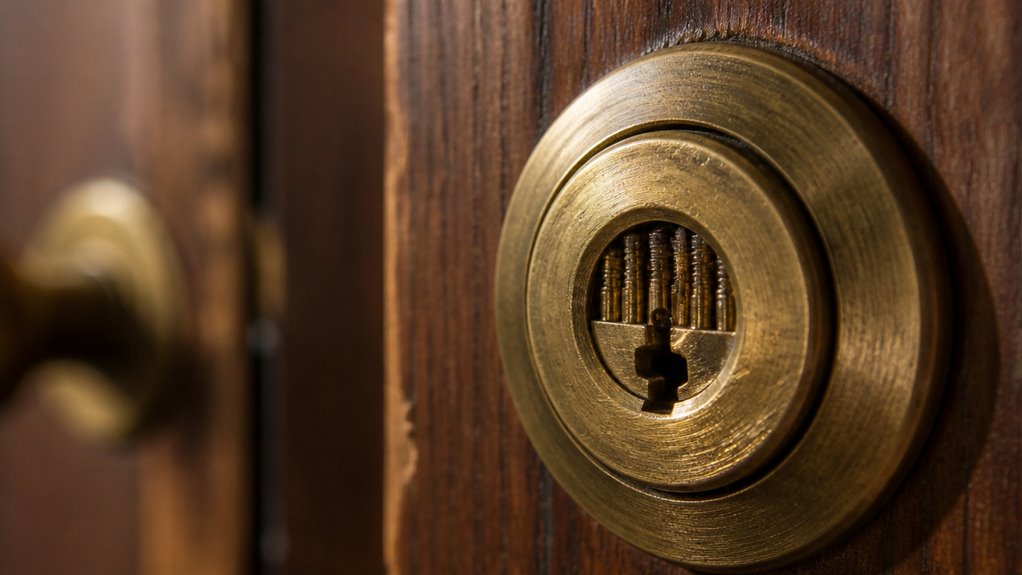

A cylinder lock uses a rotating plug with pins that only align and allow rotation when the correct key lifts them to the shear line.
You’ll find pins arranged in pairs, pressed by springs to block rotation until aligned by your key’s cuts. When aligned, the plug turns a cam or tailpiece to retract the bolt and release your door.
Different cylinder types and security features exist to match your needs and risks. Understanding these details helps you pick and maintain the right lock.
Key Takeaways
- A cylinder lock uses a rotating plug that turns only when the correct key aligns internal pins at the shear line.
- Pins stacked in pairs block plug rotation until lifted to the shear line by the inserted key’s cuts.
- The plug rotation moves a cam to retract or engage the locking bolt, securing or releasing the door.
- The outer housing anchors the cylinder in the door and protects internal components like pins and springs.
- Cylinder locks come in various types, such as double, half, thumbturn, rim, and cam cylinders for different applications.
Cylinder Locks: What They Are and How They Work
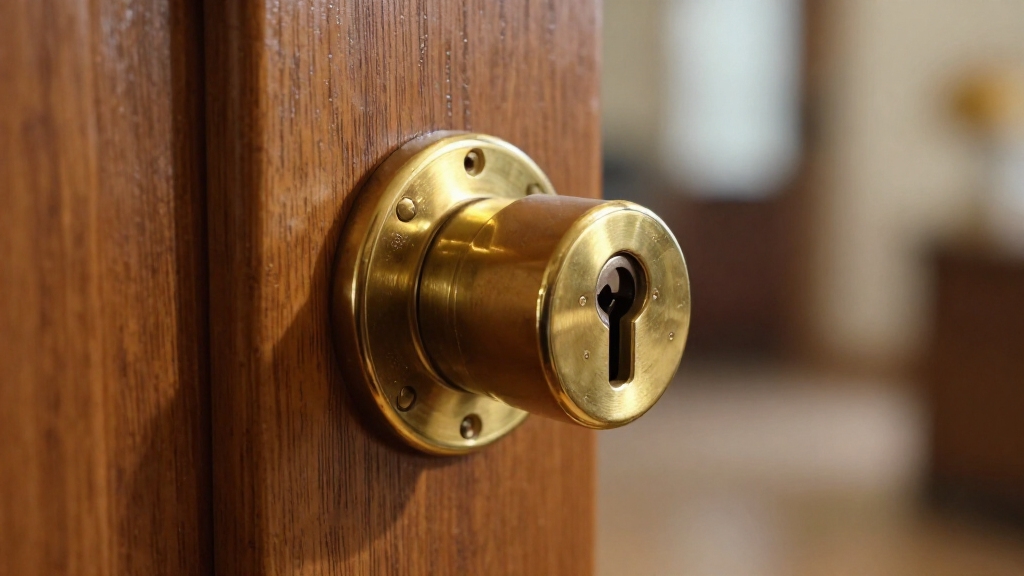
Understanding how a cylinder lock works starts with recognizing its core design: a rotating cylinder or plug that only turns when the correct key aligns the internal components precisely at the shear line.
When you insert the key into the keyway, it lifts a series of pins inside the plug to align their separation points exactly at this shear line, freeing the plug to rotate.
Once rotated, the plug actuates a cam or tailpiece, which retracts or secures the bolt or latch.
Springs press the pins down when the key is removed, preventing rotation.
The outer housing holds the cylinder steady, allowing only the correctly aligned plug to turn. This precise interaction between key, pins, and shear line is the fundamental mechanical principle behind cylinder locks.
Locksmiths use precision tools to manipulate these internal components for non-destructive lock opening and maintenance.
Why Cylinder Locks Are Popular for Doors?
Cylinder locks have taken off as a preferred choice for door security because they combine reliable mechanical function with versatile installation options.
You’ll appreciate how their modular design lets you replace or rekey the cylinder without swapping the entire lockset. This reduces maintenance time and cost.
These locks fit a wide range of door types and hardware configurations, from residential entry doors to commercial applications. They come in various cylinder formats like double, half, and thumbturn cylinders.
Their pin tumbler mechanism offers a high number of unique key combinations, enhancing security. Plus, you can select high-security models with patented keyways for stronger protection.
Additionally, understanding the differences between mortise and rim cylinders helps ensure you select the right type for your specific door hardware needs.
Cylinder Lock Components
You know, when it comes to cylinder locks, the core components really work in harmony to control access. It’s pretty fascinating!
The outer housing is what keeps everything secure, acting like a sturdy shell for the assembly.
Now, the plug is where the magic happens. It has a keyway that only rotates when the pins and springs align just right. If they don’t, the plug stays put.
And at the back, there’s the cam. This little guy takes that rotation and translates it into the lock’s mechanical action. It’s like a well-orchestrated dance, all coming together to keep things safe!
Certified locksmiths use specialized tools to manipulate these components for non-destructive opening of mechanical locks and ensure lock integrity.
Outer Housing Role
Serving as the fixed body of the lock, the outer housing securely holds the cylinder in place within the door or lock assembly.
It provides a stable frame that prevents unwanted movement, ensuring the cylinder aligns perfectly with the locking mechanism.
The housing also protects internal components from tampering and environmental damage.
When you install a cylinder lock, you rely on the housing to:
- Anchor the cylinder firmly to the door or lock case.
- Maintain proper alignment between the plug and locking parts.
- Shield pins, springs, and other internal elements from external interference.
- Facilitate easy replacement or rekeying without removing the entire lock body.
This component is essential for both the lock’s mechanical integrity and its overall security effectiveness.
Its effectiveness can be enhanced by integrating anti-drill technologies and reinforced escutcheons to protect against forced entry attempts.
Plug And Keyway
While the outer housing secures the cylinder firmly within the lock assembly, the plug represents the core rotating component that interacts directly with the key.
You insert the key into the plug’s keyway, a precisely shaped channel guiding the key’s bitting to align internal components. This alignment allows the plug to rotate, transmitting motion to the locking mechanism.
The keyway profile also provides a physical security layer by restricting unauthorized key insertion.
| Component | Function |
|---|---|
| Plug | Rotates to actuate lock when key is correct |
| Keyway | Guides key into plug, guarantees proper alignment |
| Key | Matches keyway and pin positions |
| Shear Line | Interface where plug rotation is permitted |
| Rotation Axis | Central pivot point for plug rotation |
Understanding plug and keyway design is vital for reliable operation and security. However, standard pin-tumbler cylinders without specialized features are vulnerable to lock bumping, a technique that exploits the plug’s pin geometry to momentarily separate pins and allow unauthorized rotation.
Pins, Springs, Cam
Pins, springs, and the cam form the critical internal components that control a cylinder lock’s operation.
When you insert the correct key, these parts work together to enable or prevent the plug’s rotation. Here’s how each functions:
- Pins: Stacked in pairs, they block rotation until the key lifts them to the shear line, aligning driver and key pins precisely.
- Springs: Positioned above pins, they exert downward pressure, ensuring pins return to the default locked position when the key is removed.
- Cam: Attached to the plug’s rear, it translates rotational motion into mechanical action, such as retracting a bolt.
- Interaction: Only the correct key aligns pins at the shear line, allowing the plug and cam to rotate and actuate the lock mechanism.
Understanding these components helps you grasp how cylinder locks secure access effectively. Cylindrical locks use a compact, modular design that enables simpler installation and quicker fitting compared to more complex lock types.
Common Types of Cylinder Locks
Cylinder lock varieties cater to different security needs and access scenarios, offering you a range of options for your specific application.
Double cylinders allow key operation from both sides, ideal for entry doors requiring keyed access on either side.
Double cylinders enable key access on both sides, perfect for entry doors needing secure access from either direction.
Half cylinders operate on one side only, commonly used in garages or cabinets where access control is limited.
Thumbturn cylinders combine keyed access on one side with manual turning on the other, providing convenience without sacrificing security.
Rim cylinders attach to rim locks and use a tail bar for actuation, often found on secondary doors.
Cam locks use a rotating cam at the rear and serve in lockers, mailboxes, and vending machines.
Selecting the right type depends on your door hardware compatibility, access requirements, and security level.
For enhanced protection, integrating cylinder locks with multi-point locking systems can significantly improve overall door security.
How Cylinder Locks Keep Your Door Secure?
When it comes to keeping your door secure, you can count on the pin tumbler mechanism of your cylinder lock. Basically, it works like this: only the right key can align the pins at the shear line. Once that happens, the plug can rotate. This precise interaction is what keeps unauthorized access at bay.
If the pins are misaligned, the lock simply won’t turn.
But there’s more to it! Many cylinder locks come with advanced security features, like patented keyways and complex pin configurations. These add extra layers of protection, making it tougher for anyone to pick the lock or duplicate the key without permission. Proper installation and maintenance are crucial to ensure the lock’s long-term usability and effectiveness.
Pin Tumbler Mechanics
Releasing a pin tumbler lock depends on the precise alignment of internal pins along a shear line inside the plug. When you insert the correct key, its uniquely cut notches lift each pin stack to the exact height where the pin segments separate at the shear line. This alignment frees the plug to rotate within the cylinder housing.
Here’s how the mechanism works:
- You insert the key into the plug’s keyway.
- The key’s cuts raise the bottom pins against spring-loaded top pins.
- Pins align so the gap between segments matches the shear line.
- The plug rotates, moving the cam to retract or engage the locking bolt.
Without this precise pin positioning, the plug remains locked, securing your door effectively. For complex locks like these, professional locksmiths use non-destructive techniques to safely manipulate the mechanism without damage.
Security Features Explained
Although the security of a lock depends on multiple factors, the cylinder’s design plays a critical role in preventing unauthorized access.
The pin tumbler system inside the cylinder creates numerous unique key combinations by precisely aligning pins at the shear line, allowing rotation only when the correct key is inserted.
High-security cylinders may include patented keyways and complex pin configurations, enhancing pick resistance.
Springs maintain pin positions, ensuring the lock defaults to a secured state.
The modular nature of cylinder locks allows for easy replacement or rekeying, preserving security without full hardware changes.
However, the cylinder’s quality directly influences resistance to drilling, bumping, or picking attacks. Selecting a robust, well-designed cylinder is essential for maintaining effective door security.
Additionally, upgrading to bump-resistant locks can further enhance your door’s protection against common forced-entry techniques.
Choosing the Right Cylinder Lock
When selecting a cylinder lock, understanding the specific security requirements and door hardware compatibility is essential to guarantee peak performance.
You need to evaluate the lock’s function in your environment and make certain it matches the door’s mechanical setup. Consider these key factors:
- Security Level: Choose between standard and high-security cylinders based on risk assessment and desired protection.
- Cylinder Type: Select double, half, thumbturn, rim, or cam cylinder according to access needs and door configuration.
- Compatibility: Verify cylinder size, profile, and mounting method align with existing lock hardware and door thickness.
- Key Control: Opt for patent-protected or restricted keys when unauthorized duplication must be minimized.
Careful selection ensures your cylinder lock integrates seamlessly and performs reliably over time.
Cylinder Lock Limitations
Selecting the appropriate cylinder lock involves balancing security needs with practical limitations inherent to the design.
Choosing the right cylinder lock requires weighing security requirements against the design’s practical constraints.
You should recognize that cylinder locks depend on precise alignment of pins and springs. Wear, dirt, or poor key duplication can impair their function.
Basic cylinder models offer limited resistance to lock picking or bumping, so security varies markedly by quality and complexity.
Additionally, cylinder locks are vulnerable to forced entry techniques like drilling or snapping if not reinforced with protective hardware.
Keep in mind that the cylinder’s shape and mounting style must match your door hardware, or installation will be compromised.
Finally, while cylinder locks provide modularity, they represent only one element of door security. You’ll need to take into account the entire lockset, door material, and strike plate to ensure effective protection.
How to Maintain and Rekey a Cylinder Lock?
Regularly maintaining and rekeying your cylinder lock guarantees peak performance and security over time.
To keep your lock functioning optimally, follow these steps:
- Lubricate the cylinder with a graphite-based or silicone lubricant every six months. This prevents pin and spring wear.
- Inspect the key and pins for wear or damage. Replace worn parts promptly to maintain alignment at the shear line.
- Clean the keyway by blowing out debris with compressed air. This helps avoid jamming or misalignment.
- Rekey the cylinder when you lose a key or change security needs. Remove the plug and swap the pin stacks to fit a new key profile.
This process preserves mechanical integrity and allows you to update your security without replacing the entire lock.
Frequently Asked Questions
Can Cylinder Locks Be Used on Sliding Glass Doors?
Yes, you can use cylinder locks on sliding glass doors, but you’ll need a specialized type designed for that application.
These locks often feature a rim or cam cylinder integrated with the door’s latch or auxiliary locking mechanism.
Make sure the cylinder matches your door’s thickness and hardware compatibility.
Proper installation guarantees the plug rotates smoothly without interfering with sliding action, maintaining security while accommodating the door’s unique movement.
Are Cylinder Locks Resistant to Weather and Corrosion?
Like a knight’s armor, cylinder locks can be designed to resist weather and corrosion. Their resilience depends on materials and finishes.
You’ll find many cylinders made from brass, stainless steel, or coated with corrosion-resistant plating. These materials endure moisture and temperature changes well.
However, if you expect harsh outdoor conditions, choose locks specifically rated for weather exposure. This helps prevent rust and guarantees smooth operation over time.
How Do Electronic Cylinder Locks Differ From Mechanical Ones?
Electronic cylinder locks differ from mechanical ones by replacing traditional pin tumbler mechanisms with electronic authentication methods like keycards, biometrics, or codes.
They use batteries and circuit boards to control locking, allowing remote access, audit trails, and easier reprogramming.
Unlike mechanical locks, they don’t rely on physical keys, so you won’t deal with worn pins.
However, you must consider power reliability and electronic vulnerabilities for security.
Can a Cylinder Lock Be Integrated With a Smart Home System?
Think of your cylinder lock as a classic car ready for a modern upgrade.
Yes, you can integrate it with a smart home system using electronic cylinder lock variants or retrofit kits.
These allow remote control, access monitoring, and automation through apps or voice assistants.
You’ll need compatible hardware and sometimes professional installation to guarantee seamless communication with your network while maintaining mechanical reliability and enhanced security.
What Tools Are Needed to Install a Cylinder Lock?
You’ll need a screwdriver set to remove and attach screws, a tape measure to guarantee accurate placement, and a drill with bits for creating or enlarging holes.
A chisel helps adjust the door or frame mortise if necessary. For precise alignment, a pencil or marker is essential.
Additionally, having pliers and a level guarantees correct fitting and operation. These tools collectively let you install a cylinder lock securely and accurately.
What Is a Cylinder Lock? Final Takeaways
Now that you understand how cylinder locks work, you’ll appreciate why they remain a trusted choice even in today’s digital age of keyless entry.
These locks combine mechanical precision with practical security, making them ideal for most doors.
While they have limitations, proper maintenance and rekeying can extend their lifespan considerably.
So, whether you’re upgrading or replacing, choosing the right cylinder lock guarantees your door stays reliably secure, just like a well-oiled typewriter in an office full of computers.