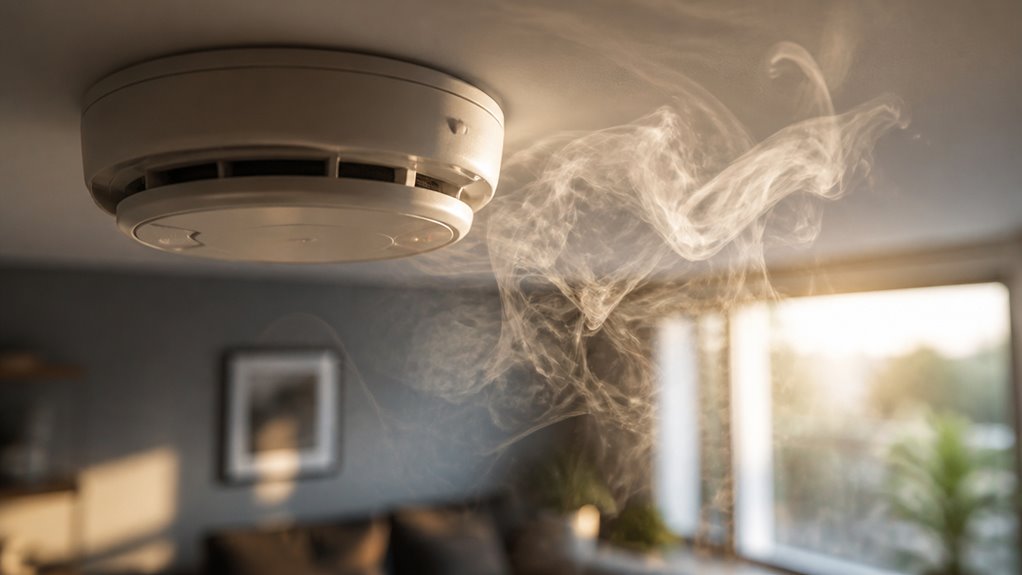

You can’t rely on standard smoke detectors to consistently detect cigarette smoke because they’re calibrated for dense fire smoke, not the lighter, subtler particulates from cigarettes.
Photoelectric sensors are somewhat more responsive than ionization types but still miss low-level or dispersed smoke.
Detection depends heavily on smoke concentration, airflow, and sensor placement near the source.
For reliable cigarette smoke monitoring, specialized detectors with advanced sensors are better suited.
Understanding how these factors affect detection can clarify what to expect from your smoke alarm.
Key Takeaways
- Standard smoke detectors are designed for fire smoke and often cannot reliably detect the lower particulate levels of cigarette smoke.
- Photoelectric detectors are more sensitive to cigarette smoke than ionization detectors but still have limited detection reliability.
- Cigarette smoke disperses quickly and may not reach the detector’s sensitivity threshold, especially in ventilated or large spaces.
- Detector placement near smoking areas and in low-airflow spaces improves cigarette smoke detection chances but does not guarantee alarms.
- Specialized cigarette smoke detectors with laser or chemical sensors detect tobacco smoke more effectively than standard fire smoke alarms.
Can Smoke Detectors Detect Cigarette Smoke?
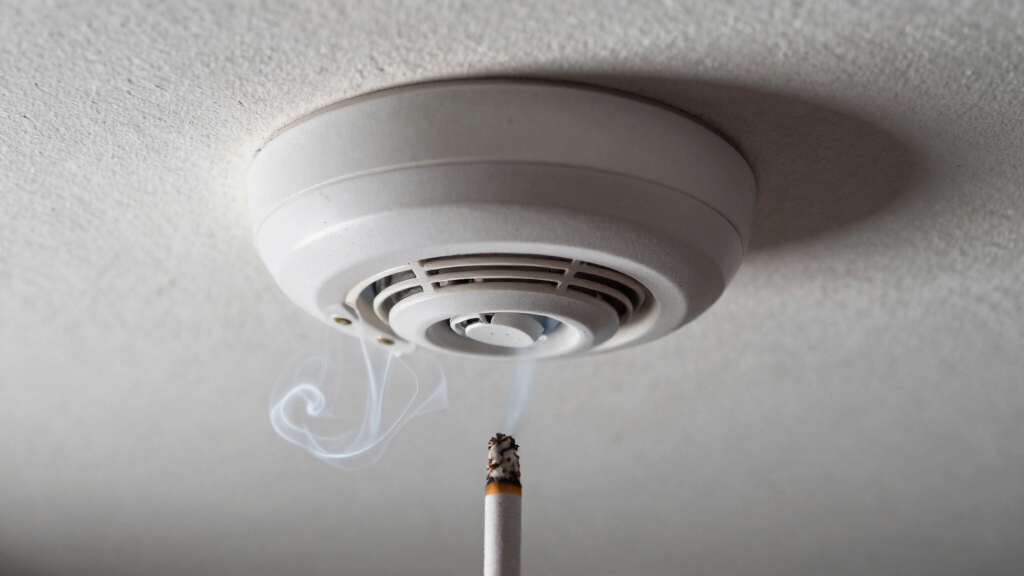
You might wonder if a standard smoke detector can pick up cigarette smoke. The answer is yes, sometimes, but detection isn’t guaranteed.
Standard smoke detectors may detect cigarette smoke occasionally, but they aren’t designed to reliably sense it.
Standard smoke alarms are engineered primarily to identify fire smoke, not the lower particulate levels typical of cigarette smoke. Whether a detector triggers depends on its sensor type, sensitivity, smoke concentration, and placement relative to the smoke source.
Heavy cigarette smoke may occasionally activate an alarm, but light or intermittent smoking often won’t. Additionally, airflow and room size can dilute smoke before it reaches the sensor, reducing detection likelihood.
Keep in mind that standard detectors don’t identify tobacco-specific particles or chemicals, and their sensitivity varies by model. So, while you might get an alert from cigarette smoke, it’s inconsistent and not the detector’s primary function.
It’s important to note that ionization detectors are more sensitive to small particles like smoke but can be prone to false alarms from moisture, making sensor type a key factor in detection reliability.
How Ionization and Photoelectric Detectors Respond to Smoke?
Although both ionization and photoelectric detectors aim to identify smoke, they respond differently based on smoke particle size and density.
Ionization detectors excel at sensing smaller particles from fast-flaming fires but are less sensitive to the larger, smoldering particles typical of cigarette smoke.
Photoelectric detectors detect smoke by light scattering, making them more responsive to larger, smoldering particles, which resemble cigarette smoke more closely.
| Detector Type | Detection Mechanism | Best Smoke Type Detected | Response to Cigarette Smoke |
|---|---|---|---|
| Ionization | Ionization chamber current | Small particles (flaming fire) | Less sensitive, often misses light smoke |
| Photoelectric | Light scattering | Large particles (smoldering) | More sensitive, may detect cigarette smoke |
The design of the photoelectric alarm’s optical chamber enhances its ability to detect scattered light from larger smoke particles, improving sensitivity to smoldering smoke such as cigarette smoke.
Understanding these differences helps you choose the right detector for your needs.
Why Fire and Cigarette Smoke Differ?
The differences in particle size and density that affect ionization and photoelectric detectors also highlight why fire smoke and cigarette smoke behave distinctly in detection scenarios.
Fire smoke typically contains larger, denser particles generated by combustion of diverse materials. Photoelectric sensors detect these particles through light scattering more readily.
Ionization detectors respond to ionized particles common in fast-flaming fires.
In contrast, cigarette smoke consists of smaller, less dense particles at lower concentrations.
These smaller particles often escape detection due to insufficient density to alter ionization currents or scatter light markedly. Additionally, cigarette smoke disperses quickly in ventilated environments, reducing its sensor impact.
Because standard detectors calibrate sensitivity based on fire smoke profiles, their detection thresholds often exclude the subtler particulate characteristics of cigarette smoke.
This makes reliable detection of smoking by standard fire alarms inherently limited.
Furthermore, factors like particle size and density directly influence how detectors interpret airborne substances, affecting detection accuracy across different smoke types.
How Smoke Levels and Placement Impact Detection?
Since smoke detection relies heavily on the concentration of smoke particles reaching the sensor, both the level of smoke and the detector’s placement substantially influence detection accuracy.
When cigarette smoke is sparse or dispersed, it may never reach the sensor in sufficient quantity to trigger an alarm. Similarly, placing detectors in areas with poor air circulation or far from smoking sources reduces sensitivity.
Consider these factors to optimize detection:
- Smoke concentration: Higher particle density increases detection likelihood.
- Detector location: Position near potential smoke sources and airflow paths.
- Airflow dynamics: Ventilation can dilute or direct smoke away from sensors.
- Sensor type sensitivity: Photoelectric sensors respond better to smoldering smoke versus ionization types.
Additionally, proper detector placement and ventilation are essential to prevent false alarms caused by other airborne particles like steam or humidity.
When Does Cigarette Smoke Trigger a Smoke Alarm?
When cigarette smoke reaches a smoke alarm in sufficient concentration, it can sometimes trigger the device. This outcome depends on several factors including the type of detector, smoke density, and environmental conditions.
Photoelectric detectors, which respond to smoldering smoke particles, are more likely to activate from cigarette smoke than ionization detectors. Ionization detectors detect ionization changes from fast-flaming fires.
The smoke density must exceed the alarm’s sensitivity threshold, which varies by model and manufacturer. Environmental factors such as airflow, ventilation, and distance between the smoking source and detector further influence detection likelihood.
Light or dispersed cigarette smoke often fails to reach triggering levels. Consequently, only concentrated, persistent smoke near a properly placed, sensitive detector tends to activate a standard smoke alarm.
Similar to cigarette smoke, smoke detectors can also be triggered by fog or vapor particles, especially in photoelectric and ionization sensors due to their sensitivity to particulate matter, highlighting the importance of understanding sensor sensitivity.
Why Smoke Detectors Can’t Enforce No-Smoking Rules?
You really can’t count on standard smoke detectors to enforce no-smoking rules. The main reason is that their detection capability is pretty limited and often inconsistent.
You see, these devices are built to pick up high concentrations of fire smoke, not the low levels of particulate matter that come from cigarette smoke.
Additionally, ensuring reliable detection in various environments requires addressing environmental interference that can affect sensor performance.
Limited Detection Capability
Although smoke detectors can sometimes respond to cigarette smoke, they lack the sensitivity and specificity needed to reliably enforce no-smoking rules.
Standard smoke alarms are optimized for detecting fire-related smoke, not the low particulate concentrations typical of cigarette smoke. This limits their effectiveness in consistently identifying smoking events or distinguishing them from other airborne particles.
When you rely on these devices for no-smoking enforcement, keep in mind:
Detection depends on smoke concentration, detector type, and placement.
Light or intermittent smoking often fails to trigger alarms.
Airflow and ventilation dilute cigarette smoke before it reaches sensors.
Standard alarms can’t identify tobacco-specific chemicals or differentiate smoke sources.
For accurate smoking detection, specialized sensors designed for tobacco smoke detection are necessary.
To reduce false alarms caused by airborne particulates like cigarette smoke, proper detector placement away from common environmental triggers is essential.
Inconsistent Alarm Response
Standard smoke detectors often fail to provide consistent alarm responses to cigarette smoke due to their design focus on fire-related smoke particles.
Since these detectors prioritize detecting dense smoke from flaming or smoldering fires, they may not respond reliably to the lower particulate concentrations found in cigarette smoke.
You’ll notice that factors like detector type, placement, and airflow affect sensitivity, causing alarms to trigger sporadically or not at all.
Ionization detectors, for example, respond poorly to cigarette smoke, while photoelectric detectors are somewhat more sensitive but still inconsistent.
Because of this variability, you can’t rely on standard smoke detectors to enforce no-smoking rules effectively.
They’re optimized for life safety in fires, not for detecting intermittent or light cigarette smoke, which often disperses before reaching alarm thresholds.
Additionally, low battery voltage can cause detectors to emit false alarms or fail to respond properly, further complicating reliable detection.
How Specialized Cigarette Smoke Detectors Work?
When detecting cigarette smoke specifically, specialized detectors employ advanced sensors that go beyond the capabilities of typical fire alarms. These devices use precise technologies to identify tobacco smoke particles and related chemicals, providing more reliable detection than standard alarms.
Specialized detectors use advanced sensors to precisely identify tobacco smoke for more reliable detection than standard alarms.
You’ll find these detectors in environments where smoking is restricted, such as hotels or offices.
Key features include:
Laser scattering sensors that detect smoke particle size and concentration.
Chemical sensors that identify compounds unique to tobacco smoke.
Some models also detect vape aerosols and THC-related substances.
Integrated alert systems notify property managers or occupants immediately.
Regular maintenance and cleaning are essential to prevent sensor contamination that can impair detection accuracy.
Tips for Detecting Indoor Smoking Without Smoke Alarms
You know, there are some clever ways to catch indoor smoking without depending solely on those regular smoke alarms.
For starters, keep an eye out for visual cues—like a haze in the air or any residue that might settle on surfaces.
Those little signs can really tell you something’s up.
Also, investing in air quality sensors can be a game changer.
They measure particulate matter really well, giving you a clearer picture of the air you’re breathing.
It’s definitely a more reliable method than just waiting for an alarm to go off.
And if you’re looking for something even more specialized, there are smoke detectors out there that specifically target tobacco particles or harmful chemicals.
These can really boost your monitoring efforts, especially in places where smoking is restricted.
It’s all about being proactive and keeping that air clean!
Keep in mind that particle size sensitivity varies between detectors, so some alarms might react differently to cigarette smoke compared to other sources.
Visual Smoke Indicators
Detecting indoor smoking without relying on smoke alarms requires keen observation of visual smoke indicators. You need to look for subtle signs that suggest cigarette use, especially since smoke alarms may not consistently detect cigarette smoke.
Key visual indicators include:
- Wisps or trails of thin, grayish smoke lingering near ceilings or corners.
- Yellow or brown stains on walls, ceilings, or curtains caused by smoke residue.
- Ash accumulation in unexpected areas like furniture crevices or floor corners.
- Discoloration or dulling of surfaces exposed to prolonged smoke exposure.
Air Quality Sensors
Visual smoke indicators offer tangible evidence of indoor smoking, but they may not always be present or easily noticed. To detect cigarette smoke more reliably, you can use air quality sensors that measure particulate matter (PM2.5) and volatile organic compounds (VOCs) emitted by tobacco smoke.
These sensors continuously monitor indoor air, providing real-time data on smoke-related particles that standard smoke detectors may miss. When selecting an air quality sensor, prioritize models with high sensitivity to fine particles and the capability to log or alert upon detecting elevated pollutant levels.
Placement matters: position sensors near smoking-prone areas to capture smoke before dispersion. Unlike smoke alarms, air quality sensors don’t emit alarms but offer quantitative measurements. This enables you to track indoor air contamination and identify smoking activity more effectively.
Specialized Smoke Detectors
Specialized smoke detectors offer an advanced solution for identifying indoor cigarette smoking without relying on standard smoke alarms.
These devices use targeted technologies to detect tobacco smoke particles and chemical compounds more reliably than conventional alarms.
When you deploy specialized detectors, you benefit from enhanced sensitivity to cigarette smoke and related aerosols.
Key features include:
Laser scattering sensors that identify fine smoke particles.
Chemical sensors detecting tobacco-specific compounds.
Capability to distinguish cigarette smoke from other aerosols like vape vapor.
Integration with alert systems for real-time smoking notifications.
Choosing the Right Device for Fire Safety or Smoking Detection
When selecting a device, you need to take into account whether your primary goal is fire safety or cigarette smoking detection. Each purpose demands different sensor technologies and sensitivities.
For fire safety, standard smoke alarms, ionization or photoelectric, are optimized to detect smoke from fires quickly. They prioritize rapid response to life-threatening conditions. However, these may not reliably detect low concentrations of cigarette smoke.
If your focus is on identifying indoor smoking, specialized cigarette smoke detectors equipped with laser scattering or chemical sensors are more suitable. They detect tobacco-related particulates and compounds with higher specificity and sensitivity.
Choosing the right device means matching its detection mechanism to your objective. Use standard alarms for fire protection and dedicated sensors for smoking detection. This guarantees accurate alerts and effective monitoring tailored to your environment’s needs.
Practical Steps to Monitor Smoking Indoors
If you want to keep an eye on smoking indoors, a good starting point is to place sensors in spots where smoke tends to gather. Think about areas near ventilation systems or places where people usually smoke. It’s also a smart move to use specialized cigarette smoke detectors. They’re way more accurate than regular fire alarms when it comes to detecting smoke.
Now, while those sensors are super helpful, don’t forget to do some regular visual checks too. Look for physical signs like ash or cigarette butts. This way, you can ensure you’re really covering all your bases when it comes to monitoring.
Effective Sensor Placement
Although smoke detectors can sometimes sense cigarette smoke, their effectiveness heavily relies on where you position them. Proper placement guarantees smoke reaches the sensor in sufficient concentration to trigger an alarm.
You should consider airflow patterns and avoid spots where smoke may dissipate quickly. To optimize detection, place smoke detectors near common smoking areas, such as living rooms or lounges.
Position them on ceilings or high walls, where smoke rises naturally. Keep them away from ventilation outlets or fans that dilute smoke concentration.
Consider placing them in enclosed or semi-enclosed spaces to allow smoke accumulation. Positioning detectors strategically improves their sensitivity to cigarette smoke.
However, standard alarms remain less reliable for low-level smoke detection. Proper placement complements the detector’s design and environmental factors, maximizing monitoring effectiveness indoors.
Use Specialized Detectors
Specialized cigarette smoke detectors combine advanced sensor technology and chemical analysis to accurately identify tobacco smoke indoors. Unlike standard smoke alarms, they use laser scattering sensors to detect fine particulate matter characteristic of tobacco smoke.
These detectors also include chemical sensors that identify specific compounds like nicotine and tar byproducts. Some models can recognize vape aerosols and THC, expanding monitoring capabilities.
You’ll find these detectors deployed in hotels, offices, and residential units where smoking restrictions apply. By continuously sampling air quality, they provide real-time alerts when tobacco smoke is present.
This improves detection reliability beyond conventional ionization or photoelectric alarms. To monitor smoking indoors effectively, choose devices tailored for tobacco smoke detection rather than relying solely on standard fire-focused smoke alarms.
Complement With Visual Checks
While advanced cigarette smoke detectors enhance monitoring accuracy through chemical and particulate analysis, they don’t capture every instance of indoor smoking.
To guarantee exhaustive detection, you should complement these devices with regular visual checks.
Visual inspections help identify physical evidence that sensors might miss due to low smoke levels or ventilation effects.
When monitoring indoor smoking, focus on:
- Locating cigarette butts and ash in common smoking areas
- Inspecting walls, ceilings, and fabrics for smoke stains or discoloration
- Noticing odors consistent with tobacco smoke that detectors mightn’t sense
- Checking ventilation ducts or air filters for residue buildup indicating smoking activity
Combining sensor data with thorough visual checks improves reliability and supports effective smoking monitoring indoors.
Frequently Asked Questions
How Often Should Smoke Detectors Be Tested for Cigarette Smoke Sensitivity?
Test smoke detectors for cigarette smoke sensitivity at least once every six months to make sure they respond appropriately.
Since cigarette smoke detection varies by sensor type and environment, regular checks help catch any decline in sensitivity.
Use controlled smoke sources to simulate cigarette smoke during testing.
Remember, routine testing keeps your device reliable, but standard detectors may still miss light smoke.
Consider specialized sensors for consistent cigarette smoke detection.
Can Cigarette Smoke Damage or Reduce Smoke Detector Lifespan?
Yes, cigarette smoke can reduce your smoke detector’s lifespan over time.
The particulate matter and tar in cigarette smoke can accumulate inside the sensor chamber, causing sensor contamination and reducing sensitivity.
This buildup may lead to false alarms or sensor failure. To maintain peak performance, you should clean your detector regularly and replace it as recommended, typically every 10 years, to avoid degradation caused by smoke exposure.
Are Smoke Detectors Affected by Vaping or E-Cigarette Aerosols?
Standard smoke detectors usually aren’t triggered by vaping or e-cigarette aerosols because these particles differ in size and composition from typical fire smoke.
However, heavy or dense vapor clouds might occasionally set off photoelectric detectors.
Over time, residue from vaping aerosols can accumulate inside detectors, potentially affecting sensor sensitivity or causing malfunctions.
Regular maintenance and cleaning help guarantee your smoke detector remains reliable despite exposure to vaping aerosols.
Do Smoke Detectors Respond Differently to Cigar or Pipe Smoke?
Yes, smoke detectors can respond differently to cigar or pipe smoke due to variations in smoke particle size, density, and composition.
You’ll find photoelectric detectors more sensitive to the denser, smoldering smoke typical of cigars or pipes, while ionization detectors may be less responsive.
However, detection depends on smoke concentration and detector placement.
Can Pets or Cooking Smoke Cause False Cigarette Smoke Alarms?
Just like a detective chasing false leads, you’ll find pets and cooking smoke can trigger alarms that seem to mistake their signals for cigarette smoke.
Cooking smoke, especially from frying or burnt food, often trips photoelectric sensors due to dense particulates.
Pet dander or fur doesn’t usually cause alarms, but strong odors or airborne particles stirred up by pets might.
Protect Your Space With Smarter Smoke Detection
While standard smoke detectors primarily target fire-related smoke, they can occasionally detect cigarette smoke if it’s dense enough.
For instance, ionization detectors respond more readily to small smoke particles, yet cigarette smoke rarely triggers alarms due to lower particle density.
Considering that 80% of home fire deaths occur where no smoke alarm is present or functioning, it’s essential to use specialized devices if you want reliable cigarette smoke detection alongside fire safety.