
After extinguishing a fire, first confirm it’s completely out by checking for flames and heat from a safe distance.
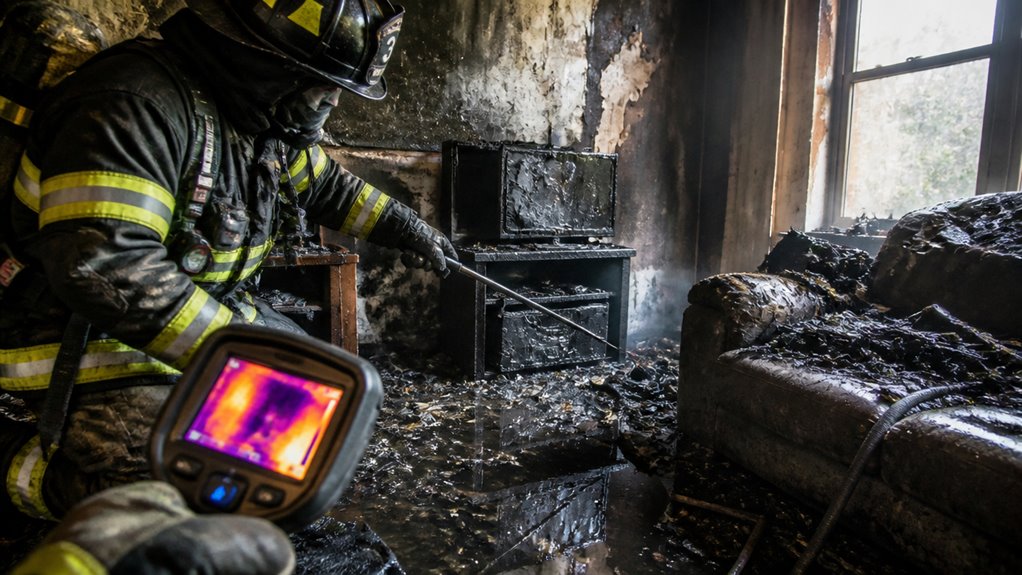
Inspect carefully for hidden smoldering spots using tools like thermal cameras.
Ventilate the area to clear smoke and protect yourself with gloves and masks during cleanup.
Report the incident to authorities and managers. Document damage for insurance and make certain utilities are safely restored.
Finally, service or replace your extinguisher to stay prepared. Following these steps will help guarantee safety and proper recovery.
Key Takeaways
- Confirm the fire is fully extinguished and no flames or embers remain before approaching the area.
- Inspect thoroughly for hidden heat, smoldering spots, and use thermal imaging if available.
- Wear protective gear and ventilate the area to clear smoke and fumes before re-entry.
- Clean up extinguisher residue safely using HEPA-filter vacuum and mild detergent, avoiding abrasive scrubbing.
- Inspect, service, or replace the fire extinguisher after use and ensure proper disposal if needed.
Confirm Fire Is Fully Out Before Approaching
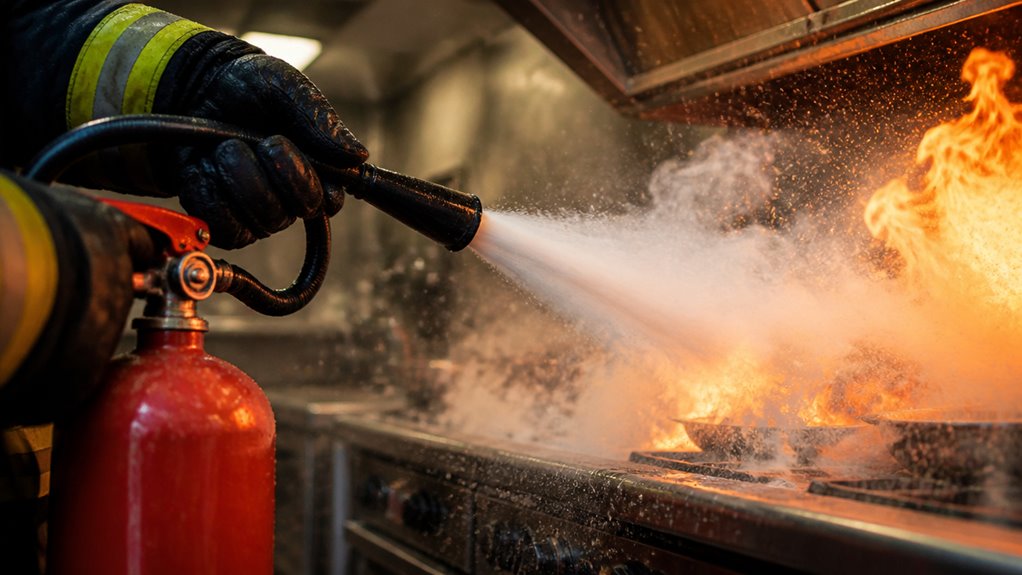
Before you approach the scene, make sure the fire is completely extinguished to avoid reignition or injury.
Ensure the fire is fully out before approaching to prevent reignition or personal injury.
Stand at a safe distance and visually confirm that no flames remain.
Check for hot surfaces or glowing embers, especially in corners or inside bins, using a torch rather than open flames like lighters or matches.
Never touch electrical appliances until they’ve cooled and been inspected by a professional.
If you notice any signs of heat or smoldering, or if you’re uncertain whether the fire is fully out, evacuate immediately and call emergency services.
Prioritize your safety by maintaining caution and vigilance during this critical verification step to prevent the fire from reigniting or causing further harm.
Remember that after use, remaining contents should be sprayed on embers to prevent reignition, as part of effective fire extinguisher usage technique.
Inspect for Hidden Heat and Smoldering Areas
After you’ve put out the fire, it’s super important to check for any hidden hot spots that might flare up again. Grab a torch and take a good look at corners, inside bins, and other tricky spots that are hard to see.
Just make sure you’re not touching any surfaces directly.
And remember, always use safe tools to find those sneaky smoldering areas. You want to be absolutely sure the fire is fully out before you call it a day!
Using a thermal imaging camera can help detect heat beneath debris or walls that aren’t visible to the naked eye.
Check For Hot Spots
Scan the area carefully for hidden heat sources and smoldering spots that could reignite the fire. Use your senses; look for glowing embers, listen for crackling sounds, and cautiously feel for warmth from a safe distance.
Focus on corners, behind furniture, inside bins, and within wall cavities where heat can linger unseen. Don’t rely solely on visual cues; smoldering materials may produce little smoke but can flare up suddenly.
If you find any hot spots, douse them thoroughly with water or apply more extinguishing agent until fully cooled. Repeat your inspection methodically to make certain no areas are missed.
Identifying and addressing hot spots promptly prevents dangerous rekindling and protects property and lives. Always prioritize safety and avoid direct contact with potentially hazardous surfaces.
Additionally, ensure that the fire extinguisher used remains in proper physical condition after use to guarantee readiness for any subsequent emergencies.
Use Safe Inspection Tools
Visual checks for hot spots are necessary, but relying solely on your senses can miss hidden heat sources. To guarantee the fire is fully extinguished, use safe inspection tools designed to detect residual heat and smoldering areas.
Use a thermal imaging camera or infrared thermometer to locate hidden hot spots behind walls or under debris.
Employ a strong flashlight or torch to examine dark corners, inside bins, and under furniture.
Avoid touching surfaces directly; use tools to prevent burns and exposure to toxic residues.
Maintain a safe distance and wear protective gear, including gloves and masks, during inspection.
After extinguishing, ensure you perform regular inspections and adherence to safety standards to confirm that no hidden hazards remain and that fire suppression equipment is intact.
Report Fire to Authorities and Managers
Although the fire may be extinguished, you must promptly report the incident to the Fire Service if there’s any damage or if emergency responders were not contacted earlier.
Notify your building manager, employer, or landlord immediately to guarantee proper follow-up. Document the incident clearly, including time, location, cause, and extinguisher type.
Take photos for insurance and official reports.
Regular maintenance and inspection of fire safety equipment, including smoke alarms, help prevent future incidents and ensure prompt emergency response by reducing false alarms and malfunctions related to smoke alarm maintenance.
| Action | Who to Contact | Information to Provide |
|---|---|---|
| Report to Fire Service | Local Fire Department | Damage details, fire status |
| Notify Manager | Building Manager | Incident summary, safety concerns |
| Document Incident | Yourself/Insurance | Photos, time, cause, extinguisher |
Accurate reporting aids investigation, insurance claims, and future fire prevention.
Ventilate the Area to Clear Smoke and Fumes
Opening windows and doors immediately after extinguishing a fire helps clear smoke and harmful fumes from the area.
You need to ventilate efficiently to reduce health risks and improve air quality.
Here’s how to do it safely and effectively:
Open all accessible windows and doors to promote cross-ventilation.
Use fans or mechanical ventilators to accelerate the removal of smoke in larger spaces.
Leave the area promptly if you experience coughing, dizziness, or breathing difficulty.
Allow sufficient time for fresh air to circulate before re-entering the space.
Effective ventilation supports safe response by reducing lingering toxic combustion products that result from fire.
Protect Yourself From Fire Residue When Returning
Since fire extinguisher residue and smoke particles can irritate your skin, eyes, and respiratory system, you should take precautions before re-entering the affected area.
Always wear protective gloves, long sleeves, and eye protection to prevent direct contact with residue. Use a well-fitted mask or respirator to avoid inhaling harmful particles.
Wear gloves, long sleeves, eye protection, and a mask to prevent contact with residue and inhalation of harmful particles.
Avoid touching your face or rubbing your eyes while inside. If you notice coughing, irritation, or difficulty breathing, leave immediately and seek fresh air.
Keep children and pets away until the area is cleared and safe. Remember, residue can linger on surfaces and in the air, so maintain caution even if the fire seems fully extinguished.
Your health depends on minimizing exposure before you begin cleanup or further inspection. Additionally, be aware that certain extinguishers, such as dry chemical or halon types, can leave toxic residue that requires careful handling.
Clean Up Extinguisher Residue Properly
Once you’ve successfully put out the fire, it’s really important to clean up the powder residue. This helps prevent any damage or irritation later on.
Start by grabbing a vacuum that has a HEPA filter. It’s great for sucking up those loose particles. After you’ve done that, take a damp cloth and a mild detergent to wipe down the surfaces.
And don’t forget! Make sure to rinse the area with clean water afterward. Drying it completely is key to protecting your property. It might seem like a lot, but it’ll be worth it in the end!
Collect contaminated residue and disposal materials in sealed plastic bags to ensure safe handling and proper cleanup procedures.
Remove Powder Residue
Start by thoroughly removing the powder residue left behind after using a fire extinguisher, as it can cause damage or irritation if ignored.
This residue is abrasive and may corrode surfaces or irritate your skin and respiratory system. To clean it effectively, follow these steps:
Use a vacuum cleaner with a HEPA filter to capture loose powder without dispersing it into the air.
Wipe affected areas with a damp cloth and mild detergent to neutralize and lift remaining particles.
Rinse surfaces with clean water to remove detergent and residue, preventing buildup.
Dry everything promptly using towels or mops to avoid moisture damage or mold growth.
Addressing powder residue promptly protects your property and health, ensuring a safer environment after fire suppression. For safety and compliance, always have your extinguisher inspected and refilled by licensed fire protection services after any use.
Clean Surfaces Safely
Tackle extinguisher residue methodically to prevent damage and health risks.
Start by vacuuming loose powder with a HEPA-filter vacuum to avoid airborne particles.
Next, wipe all affected surfaces with a damp cloth and mild detergent.
Rinse with clean water to remove chemical traces.
For foam residue, wear gloves and clean with water and detergent carefully to protect your skin.
Avoid abrasive scrubbing that can damage surfaces.
Dry wet areas promptly using towels or wet vacuums to prevent mold and structural issues.
Remove large debris with appropriate tools like brooms or dustpans, disposing of waste safely.
Maintain proper ventilation during cleaning to reduce inhalation risks.
Follow these steps thoroughly to restore your space safely and minimize lasting damage from extinguisher chemicals.
Because dry chemical powders can cause abrasive and corrosive effects, prompt and thorough cleanup is essential to protect electronic components.
Handle Utilities Safely and Restore Property
When dealing with utilities following a fire, you must prioritize safety by waiting for a certified electrical inspector to verify that all wiring is intact before restoring power.
Never attempt to reconnect utilities yourself, as damaged systems can cause shocks, explosions, or reignite fires.
Once cleared, coordinate with gas providers to safely turn gas back on and relight appliances.
To restore your property effectively, remove valuables from unusable areas to prevent further damage.
Clean unaffected items to eliminate smoke residue before storage.
Wash walls with mild soap and rinse thoroughly, avoiding painting until fully dry.
Dispose of debris properly and maintain good ventilation throughout cleanup.
Following these steps guarantees a safe, structured recovery and minimizes risks during post-fire restoration.
Service or Replace Your Fire Extinguisher After Use
After you’ve used your fire extinguisher, it’s super important to take action right away. You want to make sure it’s all set for any future emergencies, right? If you have a rechargeable extinguisher, it needs some professional love—servicing and refilling to get it back in shape.
On the other hand, if you’re using a disposable unit, you’ll need to replace it if it’s been discharged or is damaged. No ifs, ands, or buts!
And don’t forget about local regulations; they’re there to help you dispose of used or expired extinguishers safely. Always better to be safe than sorry!
Rechargeable Extinguisher Servicing
Take your rechargeable fire extinguisher to a certified servicing company promptly after use to guarantee it’s refilled, inspected, and fully operational.
Don’t delay, as your safety depends on having a reliable extinguisher ready for any future emergencies. The servicing confirms:
Complete refilling with the appropriate extinguishing agent.
Thorough inspection for damage, corrosion, or wear.
Testing of pressure gauges, hoses, and nozzles for proper function.
Verification that the unit meets all safety regulations and standards.
Disposable Extinguisher Replacement
Replace disposable fire extinguishers immediately if you notice the pressure gauge in the red or if the unit has been discharged.
Disposable extinguishers aren’t designed for refilling or servicing, so once used, their effectiveness is compromised.
Continuing to rely on a discharged extinguisher puts you at risk during future emergencies.
After use, inspect the extinguisher for damage, such as dents, corrosion, or clogged nozzles, which can further impair performance.
Always replace it with a new unit that meets current safety standards.
Store the replacement in an accessible location, ensuring everyone in your household or workplace knows where it is.
Timely replacement guarantees you’re prepared and compliant with safety regulations, maintaining your readiness to respond effectively should another fire occur.
Proper Disposal Procedures
Proper disposal of fire extinguishers is critical to guarantee safety and environmental compliance. After using your extinguisher, you must decide whether to service or replace it.
Rechargeable extinguishers require professional refilling and inspection to ensure full functionality. Disposable units need replacement if discharged or if the pressure gauge reads low.
Follow these essential steps:
Take rechargeable extinguishers to a certified service center for maintenance. Replace disposable units promptly after use or if expired. Dispose of used or expired extinguishers according to local hazardous waste regulations.
Regularly inspect hoses and nozzles for blockages to maintain readiness. Handling extinguishers properly protects you, others, and the environment. Don’t skip this crucial step after a fire incident.
Document Fire Damage for Insurance and Records
Documenting fire damage promptly helps guarantee you have accurate records for insurance claims and official reports.
Immediately after confirming the fire is fully extinguished and the area is safe, begin taking clear, detailed photos of all affected areas and items.
Capture wide shots and close-ups to show the extent and specific damage. Note the time, date, and location of the incident in your records.
Be thorough; document smoke, soot, and water damage. Next, contact your insurance company without delay, providing the photos and a written summary of the event.
Keep copies of all communications for reference. Accurate documentation speeds up claim processing and supports any legal or restoration efforts.
Acting swiftly makes certain you don’t miss critical evidence or details essential to your case.
Plan Ongoing Fire Extinguisher Maintenance and Safety
Regularly maintaining your fire extinguisher guarantees it will perform reliably when needed. After extinguishing a fire, plan ongoing maintenance to assure safety and readiness.
Focus on these key steps:
Inspect the pressure gauge; replace or service if in the red or after use.
Check the hose and nozzle for blockages or damage.
Clean the extinguisher’s exterior, removing any residue or moisture.
Arrange professional servicing for rechargeable units to refill and test functionality.
Keep a maintenance log with dates and actions taken. Following these practices helps you avoid unexpected failures and assures your extinguisher remains compliant with safety standards.
Taking action now safeguards your property and lives for the future.
Frequently Asked Questions
How Long Should I Wait Before Re-Entering the Fire-Affected Area?
You should wait until the area is fully ventilated and smoke or fumes have cleared before re-entering.
Open windows and doors to circulate fresh air, using fans if available.
If you experience coughing, dizziness, or breathing difficulty, leave immediately and wait longer.
Wearing a mask helps protect you from residual extinguisher particles.
Give the space enough time to air out properly to guarantee your safety before going back inside.
Can I Reuse the Same Fire Extinguisher After Partially Using It?
You shouldn’t reuse a disposable fire extinguisher once it’s been partially used. It needs replacing.
For rechargeable extinguishers, take them to a certified servicing company for professional refilling and inspection before using again.
Always check the pressure gauge. If it’s in the red or the extinguisher has been discharged, it must be serviced or replaced.
Proper maintenance guarantees your extinguisher works effectively during the next emergency.
What Are the Signs That Electrical Wiring Was Damaged by Fire?
You’ll notice damaged electrical wiring if you see melted insulation, exposed copper wires, or charred spots around outlets and switches.
Flickering lights, frequent breaker trips, or burning smells near electrical panels also signal damage.
Avoid touching or using affected appliances.
Always get a certified electrician to inspect and test the wiring before restoring power.
This prevents hazards like shocks, short circuits, or fire reignition.
How Do I Safely Dispose of Fire-Damaged Personal Belongings?
You should first separate fire-damaged belongings into salvageable and unsalvageable piles.
Wear gloves and a mask to protect yourself from soot and chemicals.
Dispose of unsalvageable items according to local hazardous waste regulations, especially those contaminated by chemicals or foam residue.
For salvageable items, clean thoroughly and store in a safe, dry place.
Always document damaged items for insurance claims before disposal or cleaning.
Should I Notify Neighbors or Tenants After a Fire Incident?
Like ripples spreading from a stone, you should definitely notify neighbors or tenants after a fire.
It’s practical and responsible to inform them about the incident, any potential hazards, and safety precautions.
This helps prevent misinformation and makes certain everyone stays alert.
Prompt communication also fosters trust and cooperation if further steps like evacuations or inspections are needed.
Don’t delay; keeping everyone in the loop is key to community safety.
Final Steps After Extinguishing a Fire
After extinguishing a fire, don’t rush. Confirm it’s fully out before you approach.
Check for hidden heat, report the incident, and ventilate to clear smoke.
Protect yourself from residue, handle utilities carefully, and service your extinguisher promptly.
Document the damage and plan ongoing safety measures.
Remember, fire safety isn’t a one-time act; it’s a continuous commitment.
Stay vigilant, stay prepared, and keep your space secure. Safety never takes a break.