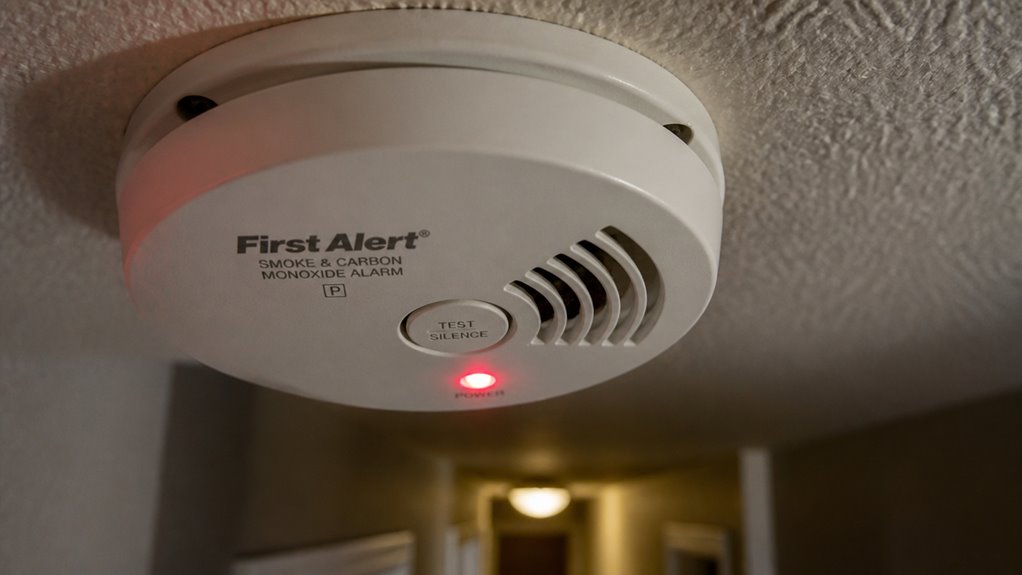

Your First Alert smoke detector blinks red for several reasons: a slow blink means it’s powered on and running self-tests normally. Rapid blinking indicates recent smoke detection but no active alarm.
Three quick blinks suggest a low battery requiring immediate replacement. Irregular patterns often point to sensor contamination or faults.
Persistent or unusual red blinks could signal the unit is near end-of-life and needs replacing. Understanding these signals helps maintain your device’s reliability and safety.
Key Takeaways
- A slow red blink every 60 seconds indicates normal operation and active monitoring of the smoke detector.
- Rapid red blinking signals a recent smoke detection event and a post-alarm monitoring phase.
- Three rapid red blinks with pauses usually warn of low battery and require prompt battery replacement.
- Irregular or continuous red blinking may mean sensor dirt, malfunction, or internal contamination needing cleaning or device replacement.
- Persistent or unusual red blinking can indicate the detector’s end-of-life, signaling it’s time to replace the unit.
Slow Red Blink on First Alert Smoke Detectors
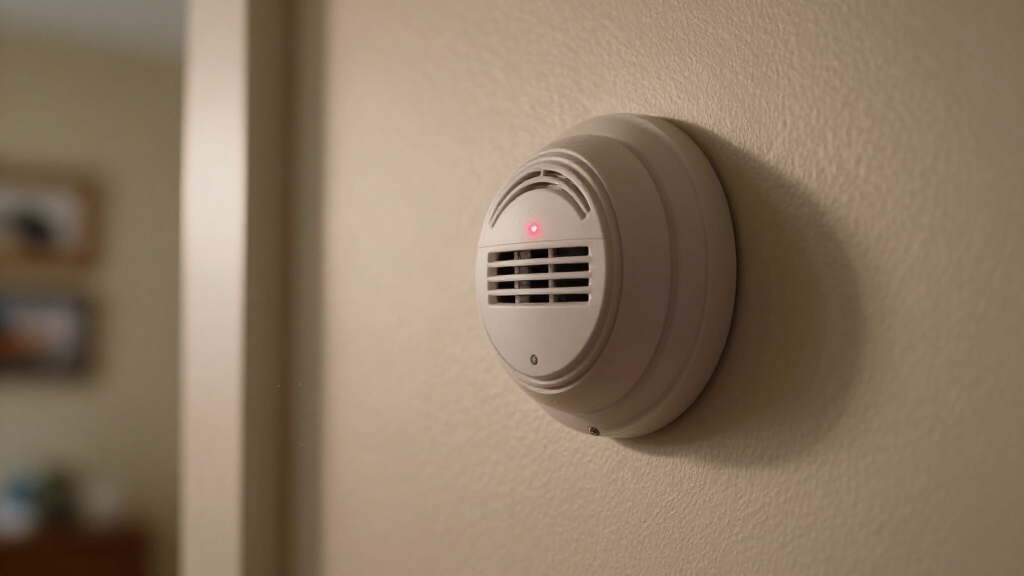
Recognizing a slow red blink on your First Alert smoke detector is crucial for understanding its operational status.
Typically, this slow, periodic red flash occurs approximately every 60 seconds, signaling normal operation and confirming the unit is powered and performing self-tests.
This steady blink without accompanying beeps indicates the device is in active monitoring mode, continuously scanning the environment for smoke particles.
You should note that this pattern varies by model, so always consult your device’s manual for exact indicators.
The slow red blink doesn’t signify faults or alarms but reassures you that the system functions correctly.
If you observe this consistent, spaced red flash, you can be confident your detector remains vigilant and ready to alert you to potential hazards.
For ongoing safety, it is important to test weekly and after battery installation to verify the alarm’s full operation.
Rapid Red Blinking Indicates Recent Smoke Detection
When your First Alert smoke detector blinks red rapidly, it signals that the device has recently detected smoke and has exited full alarm mode.
A rapid red blink on your First Alert smoke detector means it recently sensed smoke and left full alarm mode.
This rapid blinking pattern serves as a post-alarm indicator, confirming a recent smoke event without continuous sounding.
It’s a vital status alert that the sensor remains vigilant after deactivation, ensuring you’re aware of potential residual risk.
You should immediately verify the surrounding environment for any signs of fire or smoke to confirm safety.
If the area is clear, the rapid blinking indicates the detector is in a temporary monitoring phase, having reset from a full alarm state.
Understanding this pattern helps you distinguish between active danger and post-event caution, maintaining awareness of your smoke detector’s operational status.
To ensure ongoing functionality, it is recommended to perform monthly testing of your smoke detector according to safety guidelines.
First Alert Battery Low Red Blink Patterns
Frequently, a First Alert smoke detector signals a low battery by blinking its red LED three times rapidly, followed by a pause. This pattern serves as a clear, early warning, sometimes starting about 30 days before complete battery failure.
You’ll often notice accompanying intermittent beeps emphasizing urgency. Prompt battery replacement prevents unexpected loss of protection and avoids repeated alarm sounds.
The triple red blink pattern is a standardized low-battery indicator on many First Alert models. Lithium battery units use the same pattern to signal end-of-life status.
Ignoring this signal risks system downtime and potential safety hazards. Always consult your specific model’s manual to confirm exact blink codes and recommended battery types.
Act immediately once you observe this pattern to maintain optimal detector performance. Regularly replace batteries with fresh, recommended types to ensure continuous protection and prevent false alerts.
Irregular Red Blinking Signals Sensor or Dirt Issues
If your First Alert smoke detector displays an irregular or continuous red blinking pattern, it often signals sensor contamination or internal malfunction.
An irregular or continuous red blink on your First Alert smoke detector often indicates sensor issues or malfunction.
Dust, dirt, or small insects inside the sensing chamber can obstruct the sensor’s operation, causing abnormal light signals.
You should start by carefully cleaning the detector’s vents and sensor area with compressed air or a soft brush to remove any buildup.
If the irregular blinking persists after cleaning and battery replacement, it may indicate a faulty sensor or internal component failure.
In such cases, continued irregular signals suggest the device is unreliable and should be replaced promptly to maintain effective smoke detection and home safety.
Always consult your model’s manual for specific troubleshooting steps and diagnostics.
For enhanced safety, consider upgrading to a smoke alarm with photoelectric sensor advantages that provide faster and more precise detection of smoldering fires.
Red Blink Patterns That Signal End of Life
After addressing sensor contamination or internal faults, it’s important to recognize that persistent or specific red blink patterns often indicate your First Alert smoke detector has reached the end of its operational life.
These signals typically persist despite battery replacement and cleaning efforts, signaling sensor degradation or internal failure. Key indicators include:
- Constant or repetitive red blinking, unrelated to normal operation or battery warnings
- Persistent error lights or beeps after battery replacement
- Device age exceeding approximately 10 years, verified via manufacturing date
- Failure to reset or respond correctly to test/silence button commands
When you observe these patterns, your detector’s internal components have likely deteriorated beyond functional limits. This state compromises its reliability, necessitating prompt consideration of replacement to maintain effective fire detection. For continued safety, manufacturers generally recommend a 10-year replacement cycle to ensure dependable performance.
How to Troubleshoot and When to Replace Your Detector?
When your First Alert smoke detector shows unusual red blink patterns, start by consulting the device manual to identify the specific code.
Next, press the Test/Silence button to verify responsiveness. If the blinking indicates low battery, replace the battery promptly and clean dust from ventilation slots.
Press the Test/Silence button to check responsiveness; replace the battery and clean vents if low battery is indicated.
Ensure no debris obstructs sensors. If abnormal blinking persists post-maintenance, evaluate environmental factors like humidity or electrical interference.
Should the device continue signaling errors after battery replacement and cleaning, consider its age; detectors typically last around 10 years.
Check the manufacturing date on the unit’s back. If your detector has exceeded its lifespan or malfunctions after troubleshooting, replace it immediately to maintain reliable smoke detection and guarantee safety.
Regular monthly testing is recommended to ensure the detector’s sensors operate accurately and to prevent false alarms.
Frequently Asked Questions
Can I Disable the Red Blinking Without Replacing the Battery?
You can’t disable the red blinking without addressing its cause. If the blinking indicates low battery, replacing the battery is necessary to stop it.
Temporarily silencing might be possible using the Test/Silence button, but the blinking will resume until the battery is replaced.
Ignoring or disabling the light without fixing the issue compromises safety and device functionality. Proper maintenance guarantees reliable smoke detection and prevents false alarms.
Do Different First Alert Models Have Unique Red Blink Meanings?
Yes, different First Alert models have unique red blink meanings. Each model uses specific blink patterns to indicate statuses like normal operation, low battery, or faults.
You should consult your model’s manual to interpret the red blinking correctly. Relying on the exact pattern is essential since some use slow periodic blinks for normal checks, while others signal errors or warnings with faster or multiple blinks.
Always verify per your device’s guide.
How Does Humidity Affect Red Blinking on Smoke Detectors?
Imagine thick steam swirling around your smoke detector like morning fog.
High humidity can cause internal moisture buildup, triggering erratic red blinking as the sensor struggles to differentiate vapor from smoke.
This interference may mimic fault signals or false alarms. You should place the detector away from bathrooms or kitchens and guarantee proper ventilation.
Regular cleaning and monitoring help maintain accurate operation and prevent humidity-induced blinking anomalies.
Can Pets Trigger the Red Blinking Light on My Detector?
Yes, pets can indirectly trigger the red blinking light on your smoke detector. Their fur and dander may accumulate inside the detector’s sensing chamber, causing contamination or false alerts.
This buildup can disrupt normal operation, leading to irregular blinking or alarms. Regular cleaning of the detector and ensuring it’s placed away from pet activity can prevent this.
Always consult your model’s manual for specific maintenance guidelines to maintain proper function.
Is Red Blinking Affected by Electrical Interference in My Home?
Yes, electrical interference in your home can affect the red blinking on your First Alert smoke detector.
While the red light typically signals status or alerts, electromagnetic disturbances from nearby devices or wiring issues may cause irregular blinking patterns or false alarms.
To guarantee accurate operation, keep the detector away from strong electrical sources and verify proper grounding.
If interference persists, consider relocating the unit or consulting a professional electrician.
Check Battery, Smoke History, and Sensor Condition
When your First Alert smoke detector blinks red, it’s speaking a coded language you can’t ignore.
A slow blink whispers battery warnings, while rapid flashes shout recent smoke detection.
Irregular blinks hint at sensor dirt or failure, and persistent red signals warn the device’s final chapter.
Treat these signals like a compass; follow them precisely.
Troubleshoot promptly and replace when needed, ensuring your safety sails smoothly through every alert.