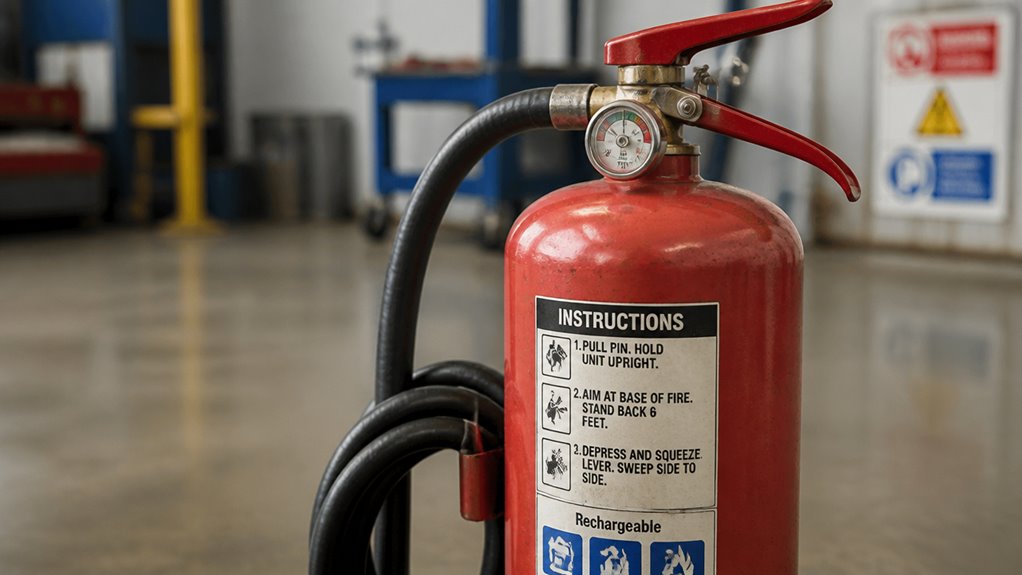

A rechargeable fire extinguisher lets you reuse the same unit after recharging the extinguishing agent and propellant, controlled via a durable metal valve assembly.
You’ll rely on its robust design, including reusable seals and corrosion-resistant components, to guarantee consistent performance.
After each use, qualified technicians inspect, replace worn parts, and restore pressure to maintain readiness.
This system supports multiple agents suited for various hazards, guaranteeing safe, reliable fire protection.
Explore how maintenance, agent types, and compliance standards optimize these devices.
Key Takeaways
- A rechargeable fire extinguisher has a refillable pressure vessel allowing multiple uses after proper recharging and maintenance.
- It features durable metal valve assemblies that control propellant and agent release for efficient fire suppression.
- After use, it requires inspection, seal replacement, and pressure restoration by qualified personnel to ensure readiness.
- Rechargeable extinguishers use compatible extinguishing agents based on fire type and must be serviced following NFPA standards.
- These units reduce waste and long-term costs due to their reusability and robust construction.
What Is a Rechargeable Fire Extinguisher? How It Works?
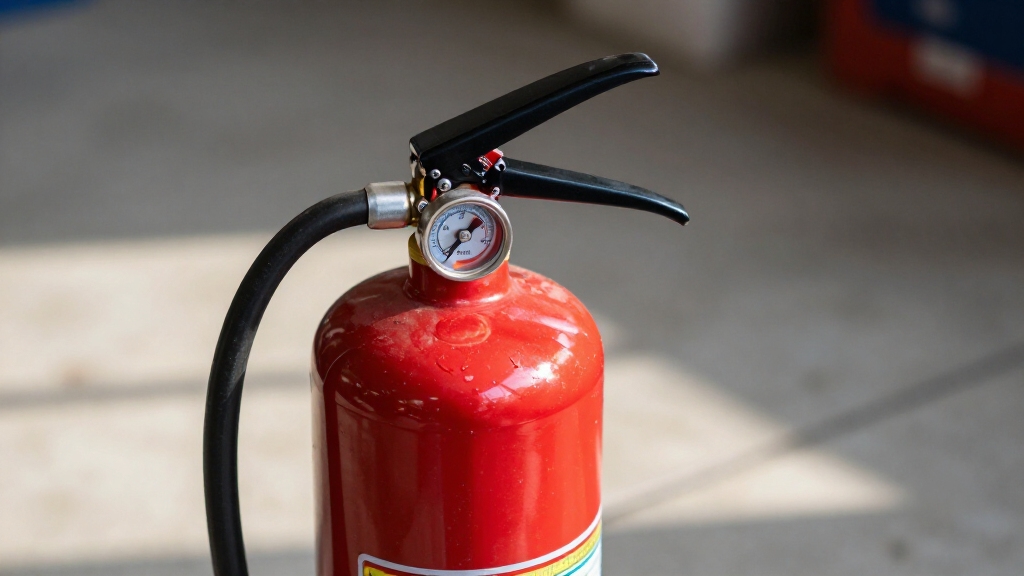
While many fire extinguishers are designed for single use, a rechargeable fire extinguisher offers a reusable solution by allowing you to refill and restore it after discharge.
You’ll find it constructed with a refillable pressure vessel and a durable metal valve assembly, unlike disposable units.
When activated, the lever or firing head releases propellant gas, forcing the extinguishing agent, such as foam, powder, or water, out through the nozzle.
The agent discharges until the pressure drops or the container empties.
After use, you must recharge the extinguisher, replacing seals and restoring pressure to guarantee full functionality.
This system supports repeated maintenance cycles, enabling reliable performance over time when handled by qualified service personnel following established standards.
Professional servicing includes thorough inspection, safe depressurizing, and compliance with NFPA standards to ensure safety and reliability.
Durable Design Features of Rechargeable Fire Extinguishers
You know, rechargeable fire extinguishers are designed to be really tough. They come with sturdy metal valve assemblies that can handle repeated use and pressure cycles without a hitch.
What’s cool is their two-component construction. It separates the extinguishing agent from the propellant system, which really boosts durability and makes servicing them a breeze.
And let’s talk about the reusable seal systems. They allow for reliable resealing after maintenance, so you can be confident that your extinguisher will stay fully operational even after multiple recharges. Pretty neat, right?
Regular hydrostatic testing is also required to ensure the cylinder’s structural integrity and safe reuse over time.
Metal Valve Assemblies
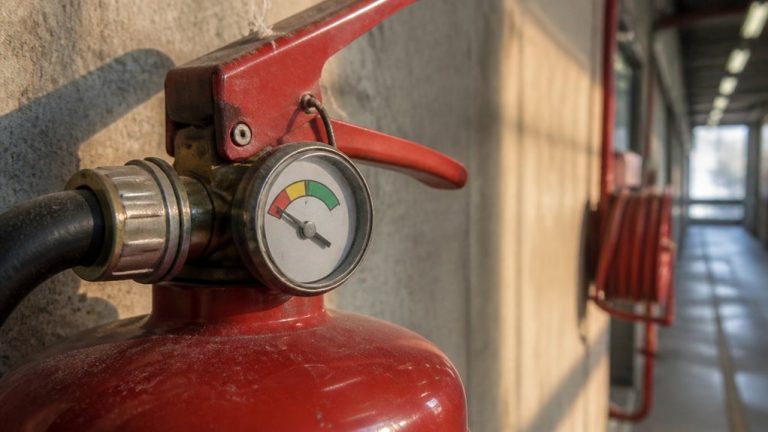
Metal valve assemblies form the backbone of rechargeable fire extinguishers, providing the durability and reliability essential for repeated use and maintenance.
These assemblies are precision-engineered from robust metals like brass or stainless steel to withstand high pressure and corrosive extinguishing agents.
When you handle a rechargeable extinguisher, the metal valve guarantees smooth activation by controlling the release of propellant gas and extinguishing agent without leaks or malfunctions.
Its components include the valve body, discharge lever, and sealing mechanisms, all designed for easy disassembly during servicing.
Because these valves endure frequent inspection, seal replacement, and pressure cycling, their metal construction prevents wear and corrosion, maintaining operational integrity.
Professional servicing by certified technicians ensures these metal valve assemblies are thoroughly inspected and maintained to meet safety standards.
Two-Component Construction
Several key components define the two-part construction of rechargeable fire extinguishers, combining a refillable container for the extinguishing agent with an integrated or separate propellant system.
The container, typically a durable metal cylinder, houses the foam, powder, water, or other approved extinguishing media. The propellant system, either built into the container or housed in a separate gas chamber, pressurizes the agent when activated.
This dual setup guarantees reliable discharge and allows repeated recharging and maintenance. You’ll find metal valve assemblies connecting these components, designed for durability and multiple service cycles.
This construction supports routine inspections, internal servicing, and hydrostatic testing. By understanding this two-component design, you can better appreciate how rechargeable extinguishers maintain operational readiness and comply with safety standards like NFPA 10.
Regular inspection and maintenance of these components are essential to ensure the extinguisher is fully functional and safe to use in emergencies.
Reusable Seal Systems
After understanding the two-component construction of rechargeable fire extinguishers, it’s important to examine the reusable seal systems that secure these components.
These seals guarantee airtight and pressure-tight connections between the extinguishing agent container and the metal valve assembly. This allows repeated disassembly and reassembly during maintenance.
When you handle these systems, you’ll notice key features including:
- High-grade elastomeric seals designed for chemical resistance and durability.
- Metal-to-metal sealing surfaces that prevent leakage under high pressure.
- Tamper-evident seals replaced after each service to confirm unit integrity.
- Modular seal assemblies enabling quick inspection and part replacement.
These reusable seals maintain system integrity across multiple recharge cycles.
They guarantee reliable performance and safety compliance throughout the extinguisher’s service life. Proper disassembly and inspection by trained technicians is essential to ensure these seals function correctly and maintain extinguisher safety.
Extinguishing Agents Used in Rechargeable Fire Extinguishers
Rechargeable fire extinguishers typically use foam, powder, and water as their extinguishing agents. Each of these is designed for specific fire classes, so it’s important to know which one to choose.
When selecting the right agent, consider factors like the type of fire hazard you’re dealing with, its environmental impact, and where you’ll be using it. Understanding these variables really helps you pick an extinguisher that not only suppresses fires effectively but is also reliable for reuse. Rechargeable dry chemical extinguishers operate by releasing dry chemical powders to suppress fires efficiently across multiple fire classes.
Common Extinguishing Media
Rechargeable fire extinguishers rely on a variety of extinguishing agents tailored to different fire hazards and environments. Each agent is chosen for its effectiveness against specific fire classes and operational requirements.
Common media include:
- Water: Ideal for Class A fires; cools and penetrates burning materials.
- Foam: Used on Class A and B fires; forms a barrier to suppress vapors and smother flames.
- Dry Chemical Powder: Versatile for Class A, B, and C fires; interrupts the chemical reaction.
- Carbon Dioxide (CO2): Effective on Class B and electrical fires; displaces oxygen and cools.
Understanding these agents helps you select the proper extinguisher and maintain it to ensure readiness and compliance with safety standards. Rechargeable extinguishers must be serviced by a certified technician who removes the old agent completely before refilling with the correct suppressant.
Agent Selection Factors
When selecting an extinguishing agent for a rechargeable fire extinguisher, you must consider the specific fire hazards present and the environment in which the extinguisher will be used.
Different agents, such as water, foam, dry chemical powder, or clean agents, offer varying effectiveness against Class A, B, C, or electrical fires.
For instance, foam excels on flammable liquid fires but is unsuitable for electrical hazards. You also need to evaluate environmental factors; some agents can cause corrosion or residue that complicates cleanup or damage sensitive equipment.
Additionally, agent compatibility with the extinguisher’s pressure vessel and valve materials is critical to guarantee safe repeated recharging.
For example, carbon dioxide (CO2) extinguishers discharge non-conductive gas, making them ideal for electrical fires and sensitive electronics.
Maintaining and Recharging Rechargeable Fire Extinguishers
Regularly maintaining and recharging fire extinguishers guarantees they perform reliably during emergencies. You need to inspect, service, and recharge your rechargeable extinguisher promptly after any use or as inspections dictate.
Follow these critical steps:
Conduct visual checks for damage, corrosion, leakage, and clogged nozzles. Verify the pressure gauge reads within the green zone or confirm charge by weight if no gauge is present.
Replace tamper seals and worn or damaged parts, including valves and hoses. Perform hydrostatic testing and internal examination per manufacturer and NFPA 10 intervals.
Only qualified personnel should handle recharging to make certain the correct extinguishing agent and propellant quantities are restored. This precise maintenance cycle ensures your extinguisher is always ready and compliant with safety protocols.
Additionally, consistent maintenance and timely replacement of consumables, similar to the recommended battery replacement schedule in safety devices, enhance reliability and service life.
Fire Safety Standards for Rechargeable Fire Extinguishers
Although fire extinguishers serve a critical safety function, they must comply with strict fire safety standards to guarantee reliability and effectiveness.
You need to follow NFPA 10, which mandates regular inspection, maintenance, and testing of rechargeable fire extinguishers.
After each use, recharging is required to ensure full operational readiness.
Additionally, annual maintenance must include visual inspections for damage, pressure gauge checks, and internal examinations when specified.
Hydrostatic testing, performed at intervals based on extinguisher type, verifies the integrity of the pressure vessel.
Only qualified, certified personnel should conduct servicing, recharge, and repairs to maintain compliance and safety.
Extinguishers must be mounted in visible, easily accessible, and unobstructed locations to ensure quick access during emergencies and comply with mounting requirements.
Why Rechargeable Fire Extinguishers Are a Smart Long-Term Choice?
By choosing rechargeable fire extinguishers, you invest in a durable safety solution designed for repeated use and maintenance. These units feature robust metal components and refillable pressure vessels, ensuring longevity and consistent performance.
Over time, this reduces replacement frequency and overall costs. You’ll also benefit from compliance with NFPA 10 standards through routine maintenance and hydrostatic testing. Consider these advantages:
Cost-efficiency: Lower long-term expenses due to reusability and servicing.
Reliability: Maintains pressure and agent effectiveness after each recharge.
Environmental impact: Less waste compared to disposable units.
Versatility: Supports various extinguishing agents tailored to specific hazards.
This makes rechargeable extinguishers a smart investment for sustained fire safety in commercial or industrial environments.
Frequently Asked Questions
How Often Do Rechargeable Fire Extinguishers Need Hydrostatic Testing?
You need to perform hydrostatic testing on rechargeable fire extinguishers every 5 to 12 years, depending on the extinguisher type and manufacturer guidelines.
For example, water, foam, and wet chemical units typically require testing every 5 years, while dry chemical extinguishers may extend to 12 years.
Always follow NFPA 10 standards and ensure qualified technicians conduct the testing to verify the cylinder’s integrity and safe operation before returning it to service.
Can Rechargeable Fire Extinguishers Be Used in Residential Homes?
Can you rely on rechargeable fire extinguishers in your home? Yes, you can.
They’re suitable for residential use, especially if you want a durable, serviceable option.
Just remember, they require regular maintenance, inspection, and timely recharging after any use to remain effective.
You’ll need to follow NFPA 10 standards and make sure qualified personnel handle servicing.
This keeps your extinguisher ready for emergencies and extends its service life markedly.
What Are the Common Signs an Extinguisher Needs Recharging Before Inspection?
You’ll know an extinguisher needs recharging if you notice a low or zero pressure reading on the gauge, visible corrosion or dents on the cylinder, or leakage around seals or valves.
A broken tamper seal is another warning sign. Additionally, if the extinguisher feels unusually light when lifted, it’s likely lost some agent.
These signs indicate reduced effectiveness and require prompt recharging before any formal inspection or testing.
Are There Specific Certifications Required to Service Rechargeable Extinguishers?
Coincidentally, only certified professionals can service rechargeable extinguishers.
You need specific certifications aligned with NFPA 10 standards to recharge, maintain, and test these units.
This guarantees safety and compliance through authorized training and hydrostatic testing qualifications.
Without proper certification, you risk improper service, which compromises functionality and violates regulations.
Always rely on qualified technicians to handle inspections, recharge processes, seal replacements, and any internal maintenance for rechargeable fire extinguishers.
How Do Rechargeable Extinguishers Compare Environmentally to Disposable Types?
You’ll find rechargeable extinguishers more environmentally friendly than disposable ones because you can reuse them multiple times, reducing waste and resource consumption.
Their durable metal construction and refillable design mean fewer units end up in landfills.
Plus, routine maintenance and recharging extend their service life, minimizing manufacturing demand.
Final Answer: What Is a Rechargeable Fire Extinguisher?
When you hold a rechargeable fire extinguisher, envision a reliable guardian ready to spring into action time and again.
Its durable design and effective agents guarantee you’re equipped for emergencies without replacement hassles.
By maintaining and recharging it properly, you keep safety consistent and cost-effective.
Choosing this smart, long-term solution means you’re investing in both protection and sustainability.
This gives you peace of mind that your fire safety is always up to standard and ready when needed.