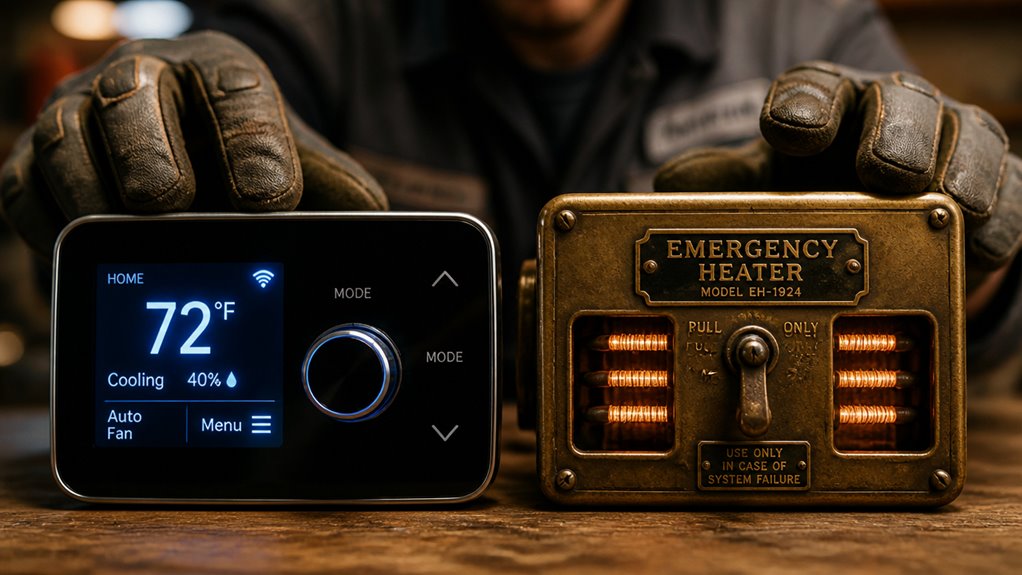

Aux heat and emergency heat aren’t the same even though they use the same electric resistance coils.
Auxiliary heat kicks in automatically as a supplement when your heat pump can’t keep up during cold weather.
Emergency heat you activate manually and it bypasses the heat pump entirely, relying solely on electric coils.
Emergency heat uses more energy and should only be for repairs or malfunctions.
Understanding when and how each mode works can help you optimize comfort and efficiency.
Key Takeaways
- Auxiliary heat supplements the heat pump automatically during cold weather, while emergency heat is a manual override for system malfunctions.
- Both use electric resistance coils, but auxiliary heat runs alongside the compressor; emergency heat disables the compressor entirely.
- Auxiliary heat activates based on control logic; emergency heat requires manual thermostat selection and stays on until turned off.
- Emergency heat consumes significantly more energy and costs more than auxiliary heat due to bypassing the compressor.
- Auxiliary heat is for routine cold weather support; emergency heat is for temporary use during heat pump failures or outdoor unit icing.
What Is Auxiliary Heat and How Does It Work?
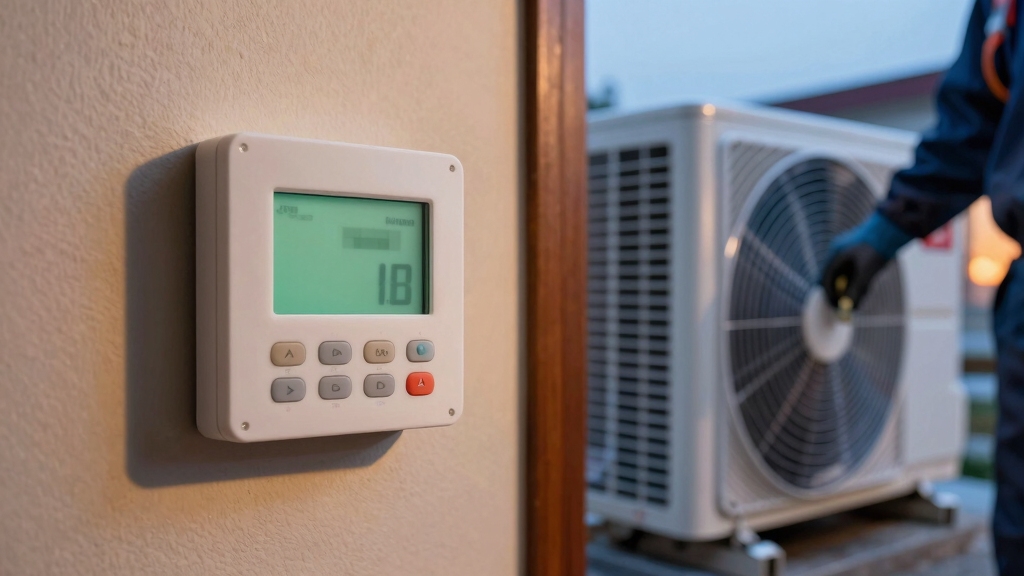
When outdoor temperatures drop below the heat pump’s balance point, your system automatically activates auxiliary heat to supplement the primary heating source.
This auxiliary heat employs electric resistance coils integrated within your indoor air handler to provide additional warmth.
Unlike emergency heat, auxiliary heat engages only when the heat pump compressor is still operational, running concurrently to help meet the thermostat set point efficiently during cold snaps or defrost cycles.
The system’s control logic detects when the heat pump alone can’t maintain the desired temperature and triggers these electric strips to prevent prolonged cold air delivery.
Auxiliary heat deactivates automatically once outdoor temperatures rise or the heat pump regains efficacy, ensuring energy-efficient operation without requiring manual intervention.
It serves as a routine supplement rather than a full heating replacement.
Some modern systems incorporate thermal imaging cameras to monitor heat distribution and optimize auxiliary heat activation.
What Is Emergency Heat and When Should You Use It?
Auxiliary heat supports your heat pump during cold conditions by supplementing its output.
Emergency heat operates differently as a manual override designed for system failures. You should use emergency heat only when your heat pump’s compressor fails or the outdoor unit is iced over.
Activating emergency heat disables the compressor, relying solely on electric resistance coils to warm your home. This mode consumes more energy and costs substantially more, so it’s unsuitable for regular use.
You manually switch emergency heat on via your thermostat and keep it active until repairs are made.
It is important to understand the difference between auxiliary and emergency heat to ensure efficient and safe operation of your system, similar to how choosing the correct power source affects smoke detector reliability.
| Feature | Auxiliary Heat | Emergency Heat |
|---|---|---|
| Activation | Automatic | Manual |
| Compressor Status | Compressor runs | Compressor off |
| Use Case | Cold weather supplement | System failure backup |
Auxiliary Heat vs Emergency Heat: Key Differences
Although auxiliary heat and emergency heat use the same electric resistance coils, they differ markedly in operation and purpose.
Auxiliary heat activates automatically alongside the heat pump compressor during cold conditions or defrost cycles, supplementing to maintain temperature efficiently.
Emergency heat, however, requires manual activation and completely disables the compressor, relying solely on the electric coils as the primary heat source.
You’ll use auxiliary heat routinely when outdoor temperatures drop but the heat pump still functions.
Emergency heat is reserved for system failures like compressor malfunction or refrigerant leaks, serving as a backup until repairs occur.
Additionally, emergency heat consumes far more energy since it bypasses the heat pump’s efficiency, making it unsuitable for regular use.
Understanding these distinctions helps you optimize comfort and energy costs effectively.
Using a programmable thermostat can help manage auxiliary and emergency heat usage to maximize energy savings.
How Auxiliary and Emergency Heat Turn On?
So, here’s the deal: auxiliary heat kicks in automatically. It happens when the outdoor temperature drops or when the system needs a little extra boost. Basically, it’s there to support the heat pump when it’s struggling.
On the flip side, emergency heat is a whole different ballgame. You have to manually turn it on through the thermostat. This setting completely bypasses the heat pump, which makes it a go-to option during a system failure. So, while auxiliary heat is all about keeping things running smoothly, emergency heat is more of a backup plan when things go south.
It’s important to note that some thermostats have built-in safety features like a compressor protection delay to prevent damage during system transitions or power interruptions.
Automatic Vs Manual Activation
When outdoor temperatures fall below the system’s balance point, typically between 30 and 40 degrees Fahrenheit, the heating system detects insufficient warmth and automatically activates the auxiliary heat. This process supplements the heat pump without user intervention, ensuring comfort during cold conditions.
In contrast, emergency heat requires you to manually switch it on via the thermostat, overriding normal operation to run only the backup heat source.
Key differences in activation include:
- Auxiliary heat triggers automatically based on outdoor temperature and system demand.
- Emergency heat engages manually, bypassing the compressor entirely.
- Auxiliary heat runs alongside the heat pump compressor to supplement warmth.
- Emergency heat disables the compressor, relying solely on electric resistance coils.
Understanding these activation methods helps you optimize your heat pump’s performance and energy use. Extended operation of backup systems should consider fuel consumption rates to maintain efficiency and avoid excessive energy use.
Control Logic Differences
Since auxiliary and emergency heat share the same heating elements, their control logic determines when and how these elements activate.
Auxiliary heat turns on automatically when the heat pump struggles due to low outdoor temperatures or rapid temperature drops. Emergency heat requires you to manually select it on the thermostat, completely bypassing the heat pump compressor.
This difference in control logic impacts system operation and energy usage.
Hardwired systems with backup batteries ensure continuous operation during power outages, highlighting the importance of reliable power sources for heating and safety equipment.
| Feature | Auxiliary Heat | Emergency Heat |
|---|---|---|
| Activation | Automatic based on temperature & load | Manual thermostat override |
| Compressor Status | Compressor runs with electric strips | Compressor disabled |
| Use Case | Cold weather supplement | Heat pump failure contingency |
| Duration | Turns off automatically | Stays on until manually switched off |
What Happens to the Heat Pump Compressor in Each Mode?
Understanding how the heat pump compressor behaves in auxiliary and emergency heat modes is vital for proper system operation.
When you rely on auxiliary heat, the compressor keeps running while electric resistance coils provide supplemental warmth.
In contrast, emergency heat completely disables the compressor, causing the outdoor unit to stop.
Key points to note:
Auxiliary heat mode: compressor operates alongside electric coils to boost heating.
Emergency heat mode: compressor shuts off entirely; heating comes solely from backup strips.
Auxiliary heat helps the system reach set temperature faster during cold snaps or defrost cycles.
Emergency heat acts as a manual override in case of compressor failure or malfunction.
This distinction guarantees efficient heating during normal cold conditions and reliable backup during system faults.
It is important to consider that temperature fluctuations can affect system components like compressors, potentially influencing their performance in these modes.
Common Situations for Using Auxiliary vs Emergency Heat
You’ll typically use auxiliary heat during those chilly days when your heat pump just can’t keep up with the temperature you’ve set.
It’s like a little extra boost to help keep your home cozy.
On the flip side, emergency heat is your go-to backup when things go wrong with your heat pump—think compressor breakdowns or refrigerant leaks.
It’s a manual option that kicks in when you really need it.
Knowing when to use each mode can save you some cash on your energy bills and ensure your home stays warm.
Advanced systems can even integrate with automated access control to optimize heating efficiency based on environmental conditions.
Routine Cold Weather Use
When outdoor temperatures drop but remain within a manageable range, your heat pump relies on auxiliary heat to maintain indoor comfort efficiently. This backup heating activates automatically to supplement the heat pump when it can’t meet the thermostat set point alone.
You’ll typically experience auxiliary heat during brief cold snaps, defrost cycles to melt ice on the outdoor coil, moderate temperature dips between 30°F and 40°F, and situations requiring rapid temperature recovery indoors.
Auxiliary heat supplements the compressor without shutting it off, preserving energy efficiency. Unlike emergency heat, it’s designed for routine use and will disengage once conditions improve. You should only consider emergency heat for actual system failures, not for routine cold weather operation.
Heat Pump Failures
Heat pump failures can throw off your home’s heating system, requiring you to decide between auxiliary and emergency heat modes.
When the heat pump compressor fails or the outdoor unit is iced over, you’ll need emergency heat. This mode disables the compressor completely, relying solely on electric resistance coils to maintain warmth.
You must manually switch to emergency heat on your thermostat during these failures. Auxiliary heat, by contrast, kicks in automatically during cold weather when the heat pump can’t keep up but is still operational.
It supplements the compressor by running electric strips alongside it. Using emergency heat continuously increases energy costs and should only be a temporary solution until repairs restore your heat pump’s function.
Recognizing the difference guarantees efficient, safe heating during system malfunctions.
Shared Hardware Behind Auxiliary and Emergency Heat
Auxiliary and emergency heat share identical hardware components, primarily consisting of electric resistance heating coils installed within the indoor air handler.
These coils form the backbone of both heating modes, ensuring reliable supplemental heat when needed. The physical elements don’t differ; what changes is how the system controls their operation.
Key hardware features include:
- Electric resistance coils integrated into the air handler for both functions
- Heat strips designed for rapid supplemental heating
- Wiring and relays enabling activation through thermostat commands
- Durable heating elements capable of sustained operation under different modes
You’ll find that manufacturers use the same hardware but differentiate auxiliary and emergency heat by control logic. This is done through automatic versus manual activation rather than by altering the physical components themselves.
This shared hardware foundation simplifies maintenance and replacement. Proper maintenance of these components is essential to preserve system efficiency and extend the overall forced air heat lifespan.
Why Emergency Heat Costs More Than Auxiliary Heat?
Although both auxiliary and emergency heat rely on the same electric resistance coils, emergency heat costs markedly more to operate because it bypasses the heat pump’s compressor entirely.
When you activate emergency heat, the system disables the outdoor compressor, relying solely on electric strips for heating. This electric resistance heating consumes markedly more energy because it lacks the efficiency of the heat pump’s refrigeration cycle.
In contrast, auxiliary heat supplements the compressor, activating only when outdoor temperatures drop below the balance point. This partial reliance on the compressor maintains greater energy efficiency and reduces operational costs.
Emergency heat runs continuously until manually turned off, causing prolonged high energy consumption. Auxiliary heat cycles automatically, optimizing energy use.
Consequently, emergency heat is a less economical option reserved for system failures, not regular heating needs.
Proper thermostat placement and sensor accuracy play a crucial role in optimizing the efficiency of both auxiliary and emergency heat systems.
Safety Tips and When to Switch to Emergency Heat
When outdoor temperatures drop below 30 degrees or you notice signs like a non-spinning outdoor unit or unusual grinding noises, you should consider switching to emergency heat. This mode bypasses the compressor, relying solely on electric resistance coils. This is less energy-efficient but necessary during system failures.
Switch to emergency heat below 30°F or when your outdoor unit shows signs of malfunction.
Follow these safety tips when using emergency heat:
Only activate emergency heat manually when the heat pump is malfunctioning.
Avoid prolonged use to prevent excessive energy costs and potential overheating.
Monitor your system for unusual noises or lack of outdoor unit operation before switching.
Turn off emergency heat once repairs are made or outdoor temperatures rise above 30°F.
Using emergency heat appropriately guarantees safety and prevents damage to your HVAC system.
Frequently Asked Questions
Can Auxiliary or Emergency Heat Damage My HVAC System if Overused?
Yes, overusing auxiliary or emergency heat can strain your HVAC system.
Auxiliary heat activates automatically and supplements your heat pump efficiently. However, relying on it excessively signals your heat pump’s inefficiency.
Emergency heat bypasses the compressor entirely, consuming more energy and causing wear on electric coils. Prolonged use of emergency heat can lead to higher energy bills and potential damage due to overheating.
Use emergency heat only during compressor failures to protect your system.
How Do I Know if My Thermostat Supports Emergency Heat Mode?
Think of your thermostat as a car dashboard: some models come with an emergency brake light, others don’t.
To check if yours supports emergency heat mode, look for a setting labeled “EM Heat” or “Emergency Heat” on the thermostat’s menu or dial.
Consult the user manual or manufacturer specs for confirmation. If available, the thermostat allows manual activation of backup heating, overriding the heat pump when needed to keep you warm during failures.
Are There Alternative Backup Heating Options Besides Electric Heat Strips?
Yes, you have alternative backup heating options besides electric heat strips. You can consider a gas furnace as a backup, which integrates with your heat pump system for efficient supplemental heating.
Propane or oil furnaces are also viable in some setups. Additionally, some systems support hydronic or radiant heating as secondary sources.
Each alternative offers different installation costs, efficiency levels, and fuel dependencies. Choose based on your climate, budget, and existing infrastructure.
Does Using Emergency Heat Affect My Home’s Humidity Levels?
When you switch to emergency heat, it’s like flipping a switch from a gentle rain to a dry desert breeze. Your home’s humidity drops noticeably.
Emergency heat relies solely on electric resistance coils, which don’t add moisture like heat pumps do. This dry heat can make your indoor air feel less comfortable, potentially causing static electricity and dry skin.
Can I Install Auxiliary Heat Strips in an Existing Heat Pump System?
Yes, you can install auxiliary heat strips in an existing heat pump system, provided your air handler supports electric resistance heating.
You’ll need compatible heat strips sized to your unit’s capacity and proper electrical wiring.
It’s best to consult a licensed HVAC technician to guarantee safe installation, correct compatibility, and compliance with local codes.
Proper installation optimizes system efficiency and guarantees seamless auxiliary heat operation during cold weather.
Choose the Right Heating Mode for Maximum Efficiency
Think of auxiliary heat as your heat pump’s backup engine, quietly kicking in when the cold bites harder. Emergency heat is the full throttle, used only when the main system fails.
You’ll want to rely on auxiliary heat for efficiency and switch to emergency heat sparingly, as it’s costlier.
Understanding these modes helps you keep your home warm without wasting energy or money. This ensures your system runs smoothly through every chill.