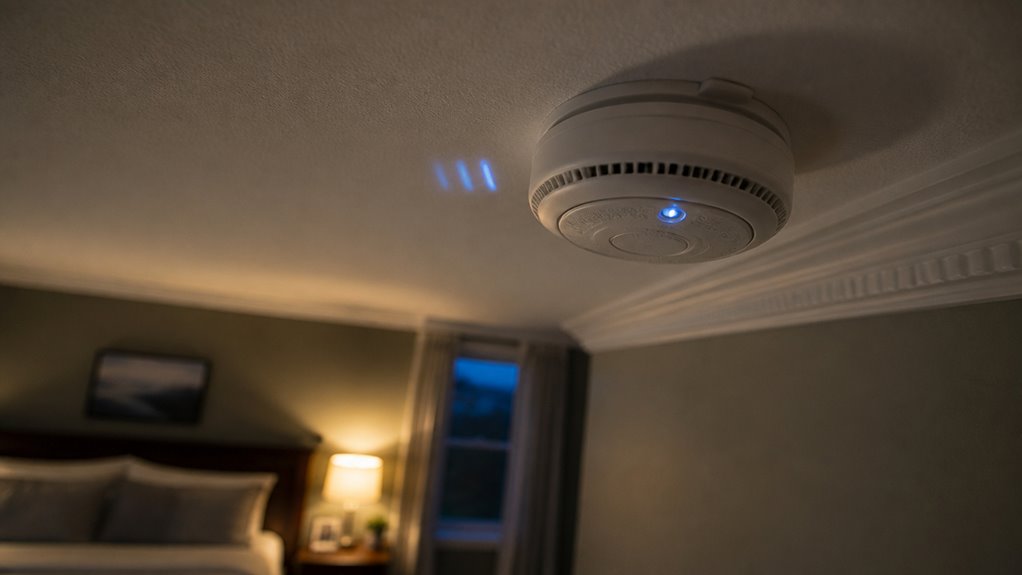

If your smoke detector sounds three rapid beeps repeatedly, take it seriously. They’re signaling smoke or fire and mean immediate danger.
You should evacuate promptly using your escape plan and call 911 from a safe spot. These beeps differ from single chirps that usually warn about low batteries or maintenance.
Sometimes false alarms happen, but never ignore this urgent alert. Understanding these signals better helps you respond correctly and keep your home safe.
Key Takeaways
- Three rapid beeps repeatedly indicate smoke or fire detected, signaling an immediate emergency requiring evacuation.
- The three-beep pattern differs from single chirps, which indicate low battery or maintenance needs.
- Interconnected smoke alarms emit the three-beep alert simultaneously across all linked units.
- Always treat three beeps as a real fire emergency and evacuate immediately without investigation.
- After evacuating, call 911 from a safe location and wait for authorities to declare safety.
What Do 3 Beeps on a Smoke Detector Mean?
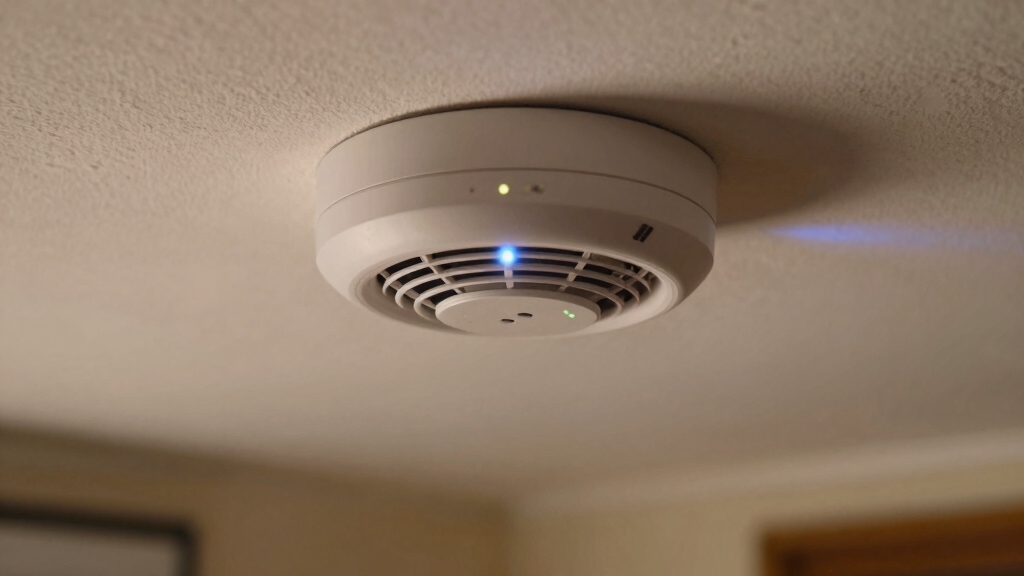
When your smoke detector emits three beeps in a repeating pattern, it means smoke or fire has been detected and you need to act immediately.
This distinct beep-beep-beep signal alerts you that your safety is at risk. You must evacuate your home without delay, call 911 from a safe location, and stay out until authorities confirm it’s safe to return.
This alarm pattern isn’t a low battery warning; that’s a single chirp, so don’t ignore the urgent three-beep signal.
Remember, false alarms can occur due to dust, sensor damage, or battery issues, but you should never assume it’s a malfunction when you hear these beeps.
Treat every three-beep alert as a real emergency and follow your family’s escape plan to make certain your safety.
The pattern repeats continuously until smoke clears or the alarm is silenced by responders.
How to Tell Emergency Beeps From Low Battery Chirps?
Although both emergency beeps and low battery chirps come from your smoke detector, you can quickly distinguish them by their patterns:
Emergency alerts sound as three rapid beeps followed by a pause, signaling immediate danger.
Emergency alerts come as three quick beeps followed by a pause, indicating urgent danger.
In contrast, low battery warnings produce a single chirp every 30 to 60 seconds, indicating it’s time to replace the battery.
When you hear three beeps, treat it as an urgent warning; evacuate and call 911 immediately.
A lone chirp is a maintenance reminder, prompting you to change the battery promptly to keep your alarm functional.
Recognizing these distinct signals helps you respond correctly and maintain your safety.
Don’t ignore any sound; knowing the difference prevents delayed reactions and ensures your smoke detector works when you need it most.
For accurate diagnosis, it’s important to determine the source of the flashing and beeping before taking action.
Common Non-Emergency Causes of 3 Beeps on Smoke Detectors
Smoke detectors occasionally emit three beeps even when there’s no fire emergency. Understanding these non-emergency causes can help you respond appropriately without panic. Often, these beeps signal issues that need your attention but don’t indicate immediate danger.
Here are three common non-emergency causes:
- Malfunctioning sensor: Dirt, dust, or wear can impair the sensor, triggering false alarms.
- Power interruptions: If the main power cuts out and your detector switches to battery backup, you might hear three beeps.
- End-of-life alert: Smoke detectors typically beep three times to signal they need replacing after about 10 years.
Knowing these causes keeps you informed and ready to maintain your smoke detector properly. Additionally, persistent beeping may also indicate a low battery voltage that needs prompt replacement to ensure reliable operation.
What to Do When You Hear 3 Beeps on Your Smoke Detector?
When you hear three beeps from your smoke detector, it’s time to take action.
First things first, evacuate immediately! Follow your family’s escape plan.
Once you’re outside, don’t forget to call 911.
It’s really important not to go back inside until the authorities give you the all-clear.
And while you’re waiting, try to stay calm.
Gather at your designated meeting spot so you can make sure everyone is safe.
Always treat continuous beeping as a sign of dangerous CO levels or a critical malfunction requiring immediate evacuation and emergency contact.
Immediate Evacuation Steps
How should you respond if your smoke detector emits three beeps? This pattern signals an immediate fire emergency, so you must act quickly and decisively.
Follow these steps to evacuate safely:
- Leave immediately: Don’t ignore the alarm or investigate alone. Grab essential items only if they’re within reach and won’t slow you down.
- Use your escape plan: Follow your pre-established exit routes. Avoid elevators and check doors for heat before opening.
- Gather at your meeting spot: Once outside, head to your designated safe location where everyone can be accounted for.
Always remember to call 911 or your local emergency number from a safe location to report the fire and provide exact location details.
Contacting Emergency Services
At the sound of three beeps from your smoke detector, your priority should be to contact emergency services immediately.
Once you’ve evacuated to a safe location, call 911 without delay.
Clearly inform the dispatcher about the alarm, your address, and any signs of smoke or fire.
Stay on the line to answer questions and follow instructions.
Avoid re-entering your home until firefighters declare it safe.
Remember, three beeps indicate a potentially life-threatening situation requiring swift professional response.
Don’t assume the alarm is a false alert or malfunction.
Promptly notifying emergency services guarantees help arrives quickly, minimizing risk to you and others.
Always keep your phone handy during emergencies to maintain communication and provide updates if conditions change.
If your alarm is a local system, manual dialing of 911 is crucial since local alarms do not alert the fire department automatically.
Safety Precautions After Alarm
Because three beeps from your smoke detector signal an emergency, you must act immediately to protect yourself and others.
Don’t ignore these alarms; they mean smoke or fire is detected, and every second counts. Follow these safety precautions:
- Evacuate your home immediately using your planned escape routes. Avoid stopping to collect belongings.
- Once outside, call 911 from a safe location. Never re-enter until professionals declare it safe.
- Gather at your designated meeting spot to make certain everyone is accounted for and inform firefighters if anyone is missing.
Staying calm and moving quickly can save lives. Remember, smoke spreads fast, and your escape time may be as little as 1–2 minutes. Always treat three beeps as a critical warning and respond without delay. For added safety, consider installing wired security cameras to monitor your property and alert you to potential fire hazards early.
Troubleshooting 3-Beep Smoke Detector Alarms: Step-by-Step
When your smoke detector emits three beeps, you need to act promptly but carefully to determine if it’s a real emergency or a malfunction.
First, check for signs of smoke or fire and evacuate immediately if you detect danger.
If there’s no visible threat, begin troubleshooting. Clean the detector to remove dust or debris that might trigger false alarms.
Next, replace the batteries, ensuring correct installation and full charge.
Verify the power supply is uninterrupted, especially if your unit uses battery backup.
If your smoke detector is over 10 years old, consider that sensor wear could cause false alerts.
Consult your user manual for model-specific beep codes.
Following these steps helps you distinguish between real alarms and malfunctions, maintaining safety without unnecessary panic.
Regular maintenance and timely battery replacement are crucial to prevent unexpected alarms and ensure reliable operation of your detector’s power supply.
When and How to Replace Your Smoke Detector After 3 Beeps?
After you’ve ruled out temporary issues like dust or battery problems, it’s important to recognize when your smoke detector itself needs replacement.
Smoke detectors generally last about 10 years. If your unit emits three beeps repeatedly despite troubleshooting, it may be signaling sensor failure or end of life.
Here’s when and how to replace it:
- Check the manufacture date: Replace if older than 10 years or if the date is unclear.
- Purchase a new, compatible model: Make sure it meets current safety standards and fits your home’s layout.
- Install properly: Mount on the ceiling or high on a wall, avoiding corners or drafts, and test immediately after installation.
Regular maintenance, including monthly testing and biannual cleaning, can extend the life of your detector and ensure optimal performance.
Prompt replacement guarantees reliable fire detection and your family’s safety.
Other Smoke and Carbon Monoxide Alarm Beep Patterns Explained
Although the three-beep pattern signals a fire emergency, smoke and carbon monoxide alarms use various other beep sequences to communicate different issues.
For example, a single chirp every 30 to 60 seconds usually means the battery is low and needs replacing.
Continuous beeps often indicate smoke presence nearby, especially in interconnected systems.
Four beeps on a carbon monoxide alarm signal dangerous CO levels, demanding immediate action.
Irregular or random beeping can result from temperature extremes or drafts affecting the sensor.
Combo units may emit multiple beep patterns to warn about either smoke or CO hazards.
Recognizing these patterns helps you respond appropriately and maintain your alarms effectively, ensuring your safety and peace of mind.
Always refer to your model’s manual for exact beep meanings.
Tips to Prevent False 3-Beep Smoke Detector Alarms
To keep those pesky 3-beep smoke detector alarms from going off at the wrong time, it’s a good idea to position your smoke detectors away from kitchens, bathrooms, and HVAC vents. You know how steam and dust can sneak in and trigger them, right?
Also, don’t forget to give your detectors a regular cleaning to get rid of any dust or debris that might cause them to malfunction. A little maintenance goes a long way!
Maintaining humidity below 85% near alarms helps reduce false triggers caused by moisture buildup.
Proper Detector Placement
When placing smoke detectors, positioning them correctly helps prevent false 3-beep alarms caused by dust, steam, or drafts.
You want to avoid locations that trigger unnecessary alerts, ensuring your alarms work reliably when it matters most. Follow these placement tips:
- Install detectors on every level, inside and outside sleeping areas, as recommended by NFPA.
- Keep units at least 10 feet away from cooking appliances and bathrooms to reduce steam and cooking smoke triggers.
- Avoid placing detectors near windows, doors, or air vents where drafts could cause false alarms.
Regular Maintenance Practices
Maintain your smoke detectors regularly to reduce false 3-beep alarms caused by dust, battery issues, or sensor malfunctions.
Start by cleaning the detector’s exterior and vents with a soft brush or vacuum monthly to remove dust buildup.
Replace batteries at least twice a year, ideally during daylight savings changes, assuring correct installation.
Test your alarms monthly by pressing the test button to confirm proper function.
Check for power interruptions and make certain the device is securely mounted without loose wires.
Replace detectors every 10 years or if you notice frequent false alarms despite maintenance.
Avoid placing alarms near fans or windows to prevent drafts from triggering sensors.
Following these steps keeps your smoke detectors reliable and minimizes false emergency alerts.
Why You Should Have Interconnected Smoke Alarms?
Although a single smoke alarm can alert you to danger in one room, interconnected smoke alarms provide a critical advantage by sounding simultaneously throughout your entire home.
This instant, whole-house alert gives you more time to react and evacuate safely.
Here’s why you should install interconnected smoke alarms:
- Faster Awareness: If a fire starts in the basement, alarms upstairs will sound immediately, preventing delayed detection.
- Enhanced Safety: You won’t miss alerts when you’re asleep or in a different room, ensuring everyone hears the warning.
- Simplified Monitoring: One alarm triggers all units, reducing confusion about where the danger is located.
Interconnected alarms markedly increase your home’s fire safety by delivering prompt, thorough warnings that protect you and your family.
How Interconnected Smoke Alarms Affect 3-Beep Alerts?
When interconnected smoke alarms detect smoke, they all sound that familiar 3-beep alert at once. This means you’re going to hear the warning, no matter where you’re in your home. Pretty handy, right?
This synchronization really ramps up your safety by giving you immediate, widespread notification. Plus, it helps everyone in the house coordinate their response. When the alarms go off, it gives your household the best chance to evacuate quickly and safely. It’s all about keeping you and your loved ones protected!
Alarm Synchronization Behavior
Interconnected smoke alarms work together to amplify safety by synchronizing their alerts. If one alarm detects smoke and emits the critical 3-beep emergency signal, all linked alarms will sound simultaneously. This coordination guarantees you’re alerted no matter where you’re in your home.
Here’s how this behavior benefits you:
- Immediate Awareness: All alarms sound together, giving you a clear, unmistakable warning to act fast.
- Comprehensive Coverage: Even if smoke triggers only one detector, every alarm alerts you, reducing missed signals.
- Simplified Response: Synchronization helps you pinpoint the emergency while ensuring every area is notified.
Understanding this feature helps you trust interconnected alarms to protect your household effectively with consistent 3-beep alerts.
Enhanced Home Safety
You’ll often find that interconnected smoke alarms markedly boost your home’s safety by ensuring the 3-beep emergency alert reaches every corner. When one detector senses smoke or fire, all alarms sound simultaneously, giving you and your family immediate, whole-house warning.
This rapid, comprehensive alert helps prevent missed signals, especially in larger or multi-level homes. Since the 3-beep pattern signals emergency smoke detection, interconnected units reduce the chance of delayed evacuation. They also minimize confusion by unifying the alert tone, so you instantly recognize the severity.
To maintain this enhanced safety, regularly test all units together and replace any outdated or malfunctioning alarms. Interconnected systems are an essential upgrade that notably improves your ability to respond promptly and protect everyone inside.
Response Coordination Benefits
By linking smoke alarms throughout your home, the 3-beep emergency alert triggers simultaneously on every unit. This ensures you and your family hear the warning no matter where you are.
This interconnected system enhances response coordination by:
- Providing instant alerts across all rooms, reducing reaction time during an emergency.
- Allowing occupants to evacuate quickly and safely, even if the fire starts far from their location.
- Minimizing confusion with a clear, unified alarm signal that prompts immediate action.
When every alarm sounds together, you avoid missing critical warnings due to distance or noise.
This synchronization supports your family’s safety plan effectively.
It gives you the best chance to escape and call for help promptly. Interconnected alarms turn isolated signals into a powerful, coordinated alert system.
Frequently Asked Questions
How Long Do Smoke Detector Batteries Typically Last?
Smoke detector batteries typically last about 6 months to a year, depending on the type and usage. You should replace them at least once a year or when the detector chirps signaling low battery.
Some newer models come with sealed 10-year batteries, so you don’t need to replace them often. To keep your home safe, test your alarms monthly and replace batteries during daylight saving time changes.
Can Pets Trigger Smoke Detector Alarms?
Yes, pets can trigger smoke detector alarms indirectly. Their fur and dander may accumulate dust inside the sensor, causing false alarms.
Also, pets moving near the detector might disturb dust or airflow, triggering sensitivity in some models.
To prevent this, clean your smoke detector regularly and avoid placing it near pet areas.
Keep your alarms well-maintained to reduce false alerts and ensure they function correctly when real danger arises.
Are There Smart Smoke Detectors With Mobile Alerts?
About 60% of new smoke detectors sold are smart models with mobile alerts. Yes, you can get smart smoke detectors that send notifications directly to your phone.
These devices connect via Wi-Fi, alerting you instantly if smoke or fire is detected, even when you’re away. They often include features like self-testing, battery status updates, and integration with other smart home systems.
This helps you respond faster and keep your home safer.
What Maintenance Is Required Besides Battery Changes?
Besides changing batteries, you need to clean your smoke detector regularly to remove dust and debris that can trigger false alarms or hinder performance.
Test it monthly using the test button to make sure it works properly.
Replace the entire unit every 10 years or when it reaches its end-of-life chirp.
Also, check the power supply for interruptions and avoid placing detectors near fans or windows to prevent false triggers.
How Do Weather Conditions Affect Smoke Detector Sensitivity?
You might think weather doesn’t affect smoke detectors much, but it actually can. Extreme temperatures and high humidity can cause false alarms or reduce sensitivity.
Cold drafts or moisture may interfere with sensors, triggering irregular beeps. To keep your detector reliable, avoid placing it near windows, vents, or HVAC units where weather changes hit directly.
Regular testing guarantees it works well despite environmental factors.
Keep Your Home Protected with Proper Smoke Detector Care
Imagine your smoke detector’s 3 beeps as a car’s check engine light. Urgent but not always an emergency, ignoring that light could lead to bigger issues.
Dismissing these beeps might put your safety at risk. By understanding what those signals mean and acting promptly, you guarantee your home stays secure.
Stay vigilant, troubleshoot promptly, and keep your alarms interconnected to catch problems early. Protect your loved ones effectively.